



Plot Explained Spoilers guaranteed!
Plot Explained

Browse by genre

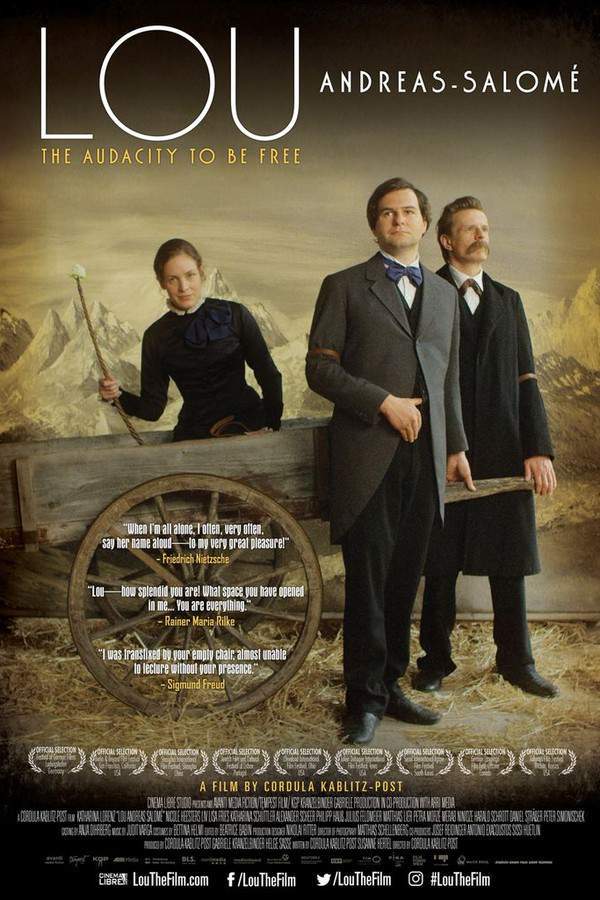
Lou Andreas-Salomé, The Audacity to be Free (2018) movie poster

Timeline

Lou Andreas-Salomé, The Audacity to be Free (2018) Timeline Explained – Every Event in Order

Release, runtime and language
2018 · 113 min · German
Echo score 74
Directed by
Cordula Kablitz-Post
Starring
Liv Lisa Fries, Alexander Scheer, Merab Ninidze, Helena Pieske, Julius Feldmeier, Katharina Lorenz

A celebrated psychoanalyst, Lou Andreas-Salomé, teams up with a young writer, Ernst Pfeiffer, to document her remarkable life story. Through their collaboration, they explore the complexities of her past, uncovering personal struggles and the unconventional choices that shaped her. As they work together, the lines between professional partnership and something deeper become increasingly blurred, revealing the courage and determination of a woman who challenged societal norms.

On this page (6)
  1. 1 Where to watch
  2. 2 Events in order (14)
  3. 3 Timeline questions answered
  4. 4 Movie threads
  5. 5 Movies like Lou Andreas-Salomé, The Audacity to be Free
  6. 6 Every angle

Where to watch

Where to Watch Lou Andreas-Salomé, The Audacity to be Free (2018)

Where can you watch Lou Andreas-Salomé, The Audacity to be Free? Stream, rent or buy it in the US, including on Fawesome, Tubi TV and Amazon Video: current JustWatch availability with up-to-date prices.

Streaming availability powered by JustWatch

14 events in order · contains spoilers

Lou Andreas-Salomé, The Audacity to be Free Timeline: Events in Chronological Order

Every key event of Lou Andreas-Salomé, The Audacity to be Free (2018) in order, scene by scene, with when and where it takes place. Use it to untangle flashbacks, time jumps and parallel storylines, to refresh your memory before the sequel or to find the exact scene you are thinking of.

  1. Birth of Lou Andreas-Salomé

    Lou Andreas-Salomé was born in St. Petersburg in 1861, the youngest child among five brothers and the only girl in her family. Growing up in a cultured environment, Lou often felt like an outsider, which shaped her later rebellious spirit against societal norms.

    When
    1861
    Where
    St. Petersburg
  2. Loss of Lou's Father

    At the age of 16, Lou lost her father, the person she cherished most. This loss profoundly affected her faith and led her to rebel against conventional societal expectations.

    Where
    St. Petersburg
  3. Philosophical Lessons with Henrik Gillot

    Lou sought private philosophical lessons from the Dutch minister Henrik Gillot, developing deep feelings for him. However, when he proposed marriage, Lou realized that she had to flee St. Petersburg to pursue her intellectual aspirations.

    Where
    St. Petersburg
  4. Life at the University of Zürich

    After fleeing to Switzerland, Lou found solace at the University of Zürich. Yet, her health deteriorated due to pneumonia, forcing her to seek recovery in Rome, marking an important shift in her journey.

    Where
    Zürich
  5. Encounter with Paul Rée

    In Rome, at a suffragette salon hosted by Malwide Meyersbug, Lou met Paul Rée, who initially proposed marriage. After declining his offer, their friendship blossomed, leading Lou to meet the philosopher Friedrich Nietzsche.

    Where
    Rome
  6. Friendship with Friedrich Nietzsche

    Lou and Nietzsche developed a deep intellectual bond, sharing ambitious plans for a communal retreat. However, their relationship faced tumult due to the intervention of Nietzsche's sister, who viewed Lou as a rival.

    Where
    Berlin
  7. Marriage to Friedrich Carl Andreas

    Seeking independence and creative freedom, Lou accepted a marriage proposal from Friedrich Carl Andreas, with the condition that their union remain unconsummated. This agreement allowed her to focus fully on her writing, leading to considerable literary success.

  8. Relationship with Rainer Maria Rilke

    Lou initially underestimated Rainer Maria Rilke, a little-known poet, but his persistence won her over. Their love blossomed, yet was fraught with challenges due to Rilke's psychological struggles, ultimately leading Lou to end their relationship.

  9. Drastic Actions Amid Unwanted Pregnancy

    In an effort to escape her emotional turmoil, Lou engaged in a series of brief romances, culminating in an unwanted pregnancy. This crisis forced her to confront her choices and the pain of her past.

    When
    1911
    Where
    Vienna
  10. Consultation with Sigmund Freud

    In Vienna, Lou sought the expertise of Sigmund Freud as she embarked on a psychoanalysis journey. This therapeutic process enabled her to gradually unravel the buried traumas of her youth, bringing her closer to understanding herself.

    When
    1911
    Where
    Vienna
  11. Return to Göttingen

    Years later, in 1933, Lou returned to Göttingen, where her relationship with Ernst Pfeiffer deepened. However, she struggled with her complicated marriage and the challenge of writing her memoirs amidst failing eyesight.

    When
    1933
    Where
    Göttingen
  12. Collaboration with Ernst Pfeiffer

    Lou and Pfeiffer embarked on a shared journey of writing her memoirs, reliving the vibrant experiences of her life. Their bond, however, faced strain as Lou grappled with her past and hesitated to share certain pivotal stories.

  13. Threat of the Gestapo

    As the political climate worsened, Lou and Pfeiffer confronted the looming threat of the Gestapo. The climax of this tension resulted in the burning of Lou's private diaries, symbolizing a devastating loss of her personal history.

    When
    1933
    Where
    Göttingen
  14. Enduring Legacy Through Memoirs

    Despite the turmoil and fear surrounding her, Lou's memoirs ultimately endured, preserving the extraordinary odyssey of her life. These writings serve as a testament to her resilience and her contributions to literature and psychoanalysis.

Last updated: November 04, 2024 at 01:16

Was this helpful?

Timeline questions answered

Lou Andreas-Salomé, The Audacity to be Free Timeline Explained: Your Questions Answered

When does it happen, and why in that order? The questions people ask about the chronology of Lou Andreas-Salomé, The Audacity to be Free (2018): time jumps, flashbacks, cause and effect between scenes and the correct order of events, each answered with spoilers.

Q1

Why did Lou flee St. Petersburg after Henrik Gillot proposed?

Lou fled because she was deeply committed to pursuing her intellectual aspirations and feared that marriage would trap her in the conventional societal roles she had always rebelled against. When Henrik Gillot proposed, it represented the very entanglements she wanted to escape, so she chose freedom over romance to continue her philosophical studies.

  • lou andreas-salome
  • henrik gillot
  • flee st petersburg
  • marriage proposal
  • intellectual freedom
Q2

Why did Lou agree to an unconsummated marriage with Friedrich Carl Andreas?

Lou married Friedrich Carl Andreas, a distinguished Persian literature scholar, specifically because she wanted independence and freedom to focus entirely on her writing. The condition of an unconsummated marriage allowed her to avoid the domestic and sexual obligations of traditional marriage while gaining the social stability and financial support she needed to pursue her literary career.

  • friedrich carl andreas
  • unconsummated marriage
  • lou independence
  • literary career
Q3

Why did Lou break her vow against love for Rainer Maria Rilke?

Lou broke her long-standing vow against romantic entanglements because Rilke's persistent devotion and poetic nature gradually eroded her emotional defenses. Despite her intellectual resolve, Rilke's genuine love and admiration touched her deeply, leading her to experience emotional liberation she had denied herself for years. However, the relationship ultimately ended due to Rilke's severe psychological struggles.

  • rainer maria rilke
  • lou relationship
  • love vow
  • emotional liberation
Q4

What caused the turmoil in Lou's relationship with Friedrich Nietzsche?

Lou and Nietzsche developed a profound intellectual connection, with Nietzsche seeing her as a kindred spirit and even proposing to her. However, their relationship became turbulent primarily due to the interference of Nietzsche's sister Elisabeth, who was intensely jealous of Lou and viewed her as a rival for her brother's affection, creating constant obstacles.

  • friedrich nietzsche
  • elisabeth nietzsche
  • intellectual relationship
  • rivalry
Q5

Why did Lou seek help from Sigmund Freud in Vienna in 1911?

Lou consulted Freud in 1911 as a response to the emotional crisis caused by her unwanted pregnancy and the aftermath of her string of brief romances. The psychoanalysis sessions helped her unravel long-buried childhood traumas, particularly the loss of her father at age 16, which had profoundly shaped her rebellious behavior and fear of intimacy.

  • sigmund freud
  • psychoanalysis
  • vienna 1911
  • childhood trauma
  • unwanted pregnancy
Q6

Why did the Gestapo burn Lou's private diaries?

The Gestapo burned Lou's private diaries as part of their persecution of intellectuals during the Nazi regime in 1933. With the political climate worsening in Göttingen, Lou and Pfeiffer faced the threat of arrest, and burning the diaries was a desperate measure to destroy personal and potentially incriminating writings that could have been used against her.

  • gestapo
  • burned diaries
  • nazi regime
  • 1933
  • persecution
Q7

What was Ernst Pfeiffer's real motivation for helping Lou write her memoirs?

While Pfeiffer presented himself as a publisher seeking help with marital troubles, his true motivation was a deep admiration for Lou and a desire to establish a romantic connection with her. He used the memoir collaboration as a way to get close to her, though their relationship eventually developed into a genuine bond as they worked together.

  • ernst pfeiffer
  • memoir collaboration
  • hidden motives
  • romantic interest
Q8

What led to Lou's unwanted pregnancy and drastic actions?

Lou's unwanted pregnancy resulted from a series of brief romantic relationships she engaged in after ending things with Rilke, seeking to numb her emotional pain. The crisis forced her to confront her past traumas and ultimately led her to seek psychoanalytic help from Freud in Vienna to understand the patterns in her life.

  • unwanted pregnancy
  • brief romances
  • emotional pain
  • crisis
Q9

Why did Lou feel like an outsider in her own family?

Lou felt like an outsider because she was the only girl among five brothers in her family. Despite growing up in a cultured and nurturing environment, this dynamic left her isolated and different from her siblings, which contributed to her rebellious spirit and later rejection of traditional gender roles.

  • outsider
  • five brothers
  • family dynamics
  • rebellion
Q10

How did losing her father at 16 shape Lou's future choices?

Losing her father, the person she was closest to, at age 16 completely shattered Lou's faith in divinity and triggered her rebellion against societal and religious norms. This profound loss became the foundational trauma that drove many of her unconventional choices, including her refusal of marriage, her pursuit of intellectual freedom, and her later struggle with intimate relationships.

  • father death
  • loss
  • trauma
  • rebellion
  • societal norms

Movie threads

More Movies Like Lou Andreas-Salomé, The Audacity to be Free, by Mood & Story

Curated lists built around what makes Lou Andreas-Salomé, The Audacity to be Free tick: the same mood, the same kind of story or the same emotional payoff. Each list explains why these movies belong together.

Bittersweet Biographies of Defiant Women like Lou Andreas-Salomé, The Audacity to be Free

Intimate stories of women who challenged convention and paid the price. Looking for more movies like Lou Andreas-Salomé, The Audacity to be Free? This collection features similar biographical dramas about brilliant women who defied societal norms. These stories share a bittersweet tone, heavy emotional weight, and a focus on the complex price of intellectual and personal freedom.

  • biographical
  • defiant
  • melancholic
  • resilient
  • lonely
  • intellectual
  • Tone: melancholic, bittersweet, reflective
  • Pacing: steady, methodical
Why these movies?

The story pattern: Stories in this thread typically follow a chronological or reflective look at a historical woman's life, emphasizing the conflict between her ambitions and the constraints of her society. The narrative arc often involves significant relationships and professional achievements, but is grounded in the personal losses and solitude that came with her defiance, leading to a poignant, bittersweet conclusion.

Why they belong together: Movies are grouped here for their shared focus on female historical figures, a melancholic and reflective tone, and a narrative that weighs intellectual victory against personal cost. They feature steady pacing, moderate complexity, and leave the viewer with a heavy, bittersweet feeling of admiration and sorrow.

Movies about Complicated Collaborations like Lou Andreas-Salomé, The Audacity to be Free

Stories where a shared project leads to deeply complicated emotional entanglements. If you liked the dynamic between Lou and Ernst in Lou Andreas-Salomé, The Audacity to be Free, explore these films about complex professional partnerships. These stories feature intimate, character-driven narratives where collaboration leads to blurred personal boundaries, psychological depth, and a steady, reflective pace.

  • intimate
  • psychological
  • collaborative
  • complicated
  • reflective
  • revelatory
  • Tone: intimate, psychologically complex, bittersweet
  • Pacing: steady, reflective
Why these movies?

The story pattern: The narrative pattern involves two characters brought together by a shared intellectual or creative goal. As they work closely, the film uses their collaboration as a frame to explore past trauma, present desires, and psychological complexities. The central tension revolves around whether their relationship will remain professional or transform into something more profound and risky, often concluding with ambiguous or bittersweet resolutions.

Why they belong together: These films are connected by their core premise of a transformative collaboration that serves as a catalyst for emotional and psychological unpacking. They share an intimate mood, steady pacing, moderate complexity, and a focus on the tension that arises when professional boundaries are tested by personal connection.

If you liked this

Movies Like Lou Andreas-Salomé, The Audacity to be Free

Similar movies to Lou Andreas-Salomé, The Audacity to be Free: the same genre, themes or kind of story. Each one comes with its own plot summary, timeline and ending explained.

Browse all movie summaries

Every angle

Lou Andreas-Salomé, The Audacity to be Free (2018) Explained: Plot, Timeline & Characters

Everything about Lou Andreas-Salomé, The Audacity to be Free in one place: what happens in the plot summary, the timeline in chronological order, the characters and meaning and a spoiler-free summary. What's After the Movie adds the cast, box office and post-credit scenes.

Coming soon on iOS and Android

The Plot Explained Movie Summary App

Plot summaries, endings explained and timelines on your phone. Catch up on any movie in minutes, save your favorites and never miss a twist again.

Be the first to know when we launch. Your email stays private, always.

Learn more about the app