Year: 2017
Runtime: 82 mins
Language: Korean
Director: Pang Eun-jin
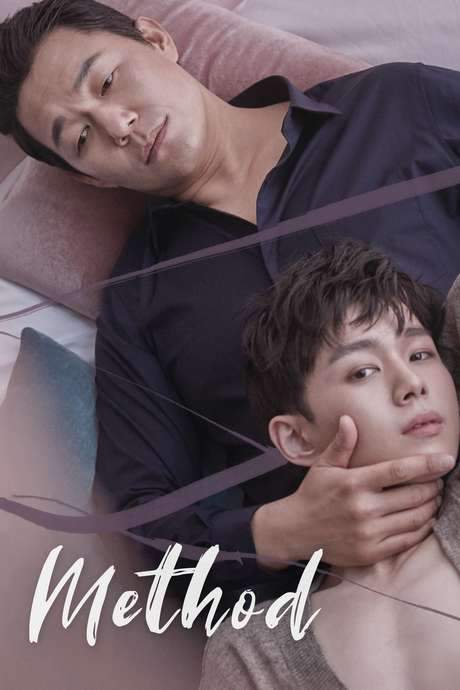
A seasoned actor and a rising pop star are paired as leads in a gay romantic play. As the actor guides the pop star through method acting techniques, the boundaries between their roles and their personal lives become increasingly blurred. Their professional relationship evolves into a complex attraction, challenging them to confront their own identities and desires.
Warning: spoilers below!
Haven’t seen Method yet? This summary contains major spoilers. Bookmark the page, watch the movie, and come back for the full breakdown. If you're ready, scroll on and relive the story!
Read the complete plot breakdown of Method (2017), including all key story events, major twists, and the ending explained in detail. Discover what really happened, and what it all means.
On the stage production Unchain, Jae-ha, played by Park Sung-woong, embodies Walter, while Young-woo, played by Oh Seung-hoon, embodies Singer. The two begin with a tense dynamic: Young-woo arrives late and shows little interest in the work, which prompts Jae-ha to push him toward discipline and craft. As rehearsals unfold, Young-woo becomes increasingly drawn to Jae-ha’s relentless passion for his craft, and he starts to devote himself to the role—reading the books Jae-ha lends him and tagging along on outings to hunt for props. Jae-ha himself is renowned for his method acting, fully inhabiting his character to the point of letting that persona seep into his daily life. Hearing about this, Young-woo secretly adopts a similar approach, and, through this intense immersion, he grows to love Jae-ha.
Jae-ha’s girlfriend Hee-won, Yoon Seung-ah, begins to sense the deepening connection between the two actors as they spend more time together. The tension in the theater grows as Jae-ha becomes increasingly tense and conflicted, unsure about his feelings for Young-woo. A pivotal moment comes when Jae-ha accidentally hurts Young-woo during a rehearsal, and later, in the emptiness of the theater, the two share a kiss that Hee-won witnesses. The situation escalates when Jae-ha drags Young-woo into Hee-won’s storage shed, where Young-woo acknowledges his feelings for Jae-ha and they kiss again. The trio’s dynamics spill into real life as they drive to the beach, where Young-woo posts pictures of them on Instagram, triggering rumors about their relationship. Soon, Young-woo’s manager and Hee-won confront them about the truth of their bond.
The day of the press conference for Unchain, Young-woo reveals that he posted those photos on purpose to share their love with the world. He asks Jae-ha if he loves him, but Jae-ha remains silent; at the press conference, he downplays the romance, insisting they were only acting and urging people to stop prying into their private lives and focus on the play. Devastated, Young-woo visits Jae-ha’s house while Hee-won and Jae-ha sleep, and the next day, Hee-won discovers another presence in the house after Jae-ha leaves, accompanied by the broken pieces of one of her sculptures.
In the first performance, Young-woo arrives late, and during their scenes his lines reveal that he hurt Hee-won, enraging Jae-ha. He asks Jae-ha to kiss him, and whispers that the kiss was not in the script. In the final scene, Young-woo acts out his character’s suicide but chooses not to use the safety mechanism, hanging briefly before Jae-ha supports him through the moment. After Young-woo wakes, he tells Jae-ha that he is now the perfect Singer, while Jae-ha remains only a mediocre Walter. The couple’s love feels real, yet they recognize they can’t pursue a life together outside their roles. Young-woo leaves behind the prop finger in the studio, signaling the end of their potential relationship. Ultimately, Jae-ha leaves the theater with Hee-won, the only person willing to accept him and his flaws.
Last updated: October 09, 2025 at 15:56
Explore frequently asked questions about Method (2017) with spoiler-rich answers covering the full plot summary, major story beats, character motivations, hidden details, and ending meaning. This movie summary FAQ helps explain confusing scenes, plot twists, and narrative decisions in clear, searchable detail.
Jae-ha remains silent because he cannot reconcile his public image with his private feelings. As a seasoned actor with a career to maintain, admitting to a romantic relationship with another man would invite scrutiny and potentially damage his reputation. By downplaying the romance and insisting they were only acting, Jae-ha chooses his professional standing over the relationship, though this decision devastates Young-woo who had publicly declared his love.
This silence is foreshadowed by Jae-ha's growing tension and conflict throughout rehearsals, as he struggles to balance his feelings with his public persona.
Young-woo deliberately posts the photos to force their relationship into the public eye. Tired of hiding their attraction, he wants to share their love openly with the world rather than keeping it secret. This act of defiance stems from his emotional vulnerability and his desire for authenticity, but it also puts immense pressure on Jae-ha who is not ready to go public.
Young-woo's shift from disinterested to fully invested in the role foreshadows his willingness to fully commit, even when that commitment risks public exposure.
Young-woo means that he has completely transcended the boundary between acting and reality, he has become Singer entirely, even to the point of genuinely experiencing the character's pain. In contrast, Jae-ha remains unable to fully surrender to genuine emotion; he can only perform the role technically. Young-woo's statement reflects that he has lost himself in the love they developed through the play, making his performance more emotionally authentic than Jae-ha's.
This realization comes from Young-woo's secret adoption of method acting, where he genuinely lived as Singer and fell in love with Jae-ha as Walter.
Jae-ha chooses Hee-won because she is the only person willing to accept him with all his flaws, his method acting extremes, his emotional unavailability, and his betrayal. Their relationship, though damaged, represents a stable reality outside the theater. Jae-ha and Young-woo's love, while real within the confines of the play, cannot survive in the real world where their roles must end. Hee-won's willingness to stay despite knowing everything makes her the practical choice for a man who cannot fully give himself over to passion.
This choice is foreshadowed by Jae-ha's hesitation and tension throughout the film, as he consistently prioritizes his craft and public image over emotional vulnerability.
The prop finger represents the final connection between Singer and Young-woo, and by leaving it behind in the studio, Young-woo symbolically relinquishes his role as Singer and his dream of being with Jae-ha. The finger, used in the play's suicide scene as a symbolic act, becomes a tangible reminder of the character he embodied and the love story that existed only within the performance. Abandoning it signals his acceptance that their relationship cannot extend beyond the stage.
The prop finger was central to the final scene where Young-woo performs his character's suicide, the moment where he and Jae-ha are most emotionally connected yet most separated from reality.
Young-woo's late arrival is both a continuation of his initial behavior from the start of rehearsals and a deliberate act of rebellion following the devastating press conference. The timing also allows him to deliver lines that implicate Hee-won's hurt, provoking Jae-ha's anger. By arriving late and then asking for an unscripted kiss, Young-woo continues to blur the lines between the play and his personal vendetta, using the performance to express his real emotions.
Young-woo's late arrival mirrors his initial attitude at the beginning of rehearsals, showing how the emotional turmoil has brought him full circle.
Method acting causes real feelings because both actors fully immerse themselves in their characters, allowing the emotional intimacy of Walter and Singer's relationship to bleed into their real lives. Jae-ha, known for his intense method approach, lives as Walter constantly, and Young-woo, inspired by Jae-ha's dedication, secretly adopts the same approach. Through this shared vulnerability and constant proximity during rehearsals, prop hunts, and discussions about the character, genuine emotional bonds form that mirror the characters' love story.
The foreshadowing is evident from the beginning: Jae-ha's method acting reputation and Young-woo's curiosity about it establish the mechanism for their eventual attraction.
Hee-won discovers evidence that someone else was in the house, a presence she infers is Young-woo, who visited during the night while she and Jae-ha slept. The broken sculpture further confirms that an intruder had been there, likely in an emotional state. This discovery intensifies the stakes for Hee-won, revealing that not only is her boyfriend's betrayal ongoing, but the other man has now entered their private space.
This discovery follows directly from Young-woo's nighttime visit after the press conference, where he sought reassurance from Jae-ha but received none.
The storage shed scene is crucial because it is where Young-woo explicitly confesses his feelings to Jae-ha, moving their relationship from an unspoken attraction into an acknowledged romance. Unlike the first kiss in the empty theater which was spontaneous, this moment represents a deliberate choice by Young-woo to pursue his feelings. The location, Hee-won's shed, adds a layer of betrayal and secrecy, as they are physically on Hee-won's property while emotionally betraying her.
This confession follows the pattern of their deepening intimacy throughout rehearsals, where Young-woo increasingly mirrors Jae-ha's dedication.
Jae-ha injures Young-woo accidentally during a tense rehearsal, likely due to the emotional intensity building between them. As their personal feelings grow, their professional interactions become charged with unexpressed desire and frustration. The injury represents the dangerous boundary they're crossing, where professional collaboration and personal emotion become inseparable, leading to physical harm in their heightened emotional state.
This moment intensifies the emotional stakes that have been building since Young-woo began his method acting transformation and developed genuine feelings for Jae-ha.
Discover curated groups of movies connected by mood, themes, and story style. Browse collections built around emotion, atmosphere, and narrative focus to easily find films that match what you feel like watching right now.
Stories where intense creative collaboration spirals into a destructive real-life romance.For viewers who liked the dangerous blend of art and life in Method, this section features movies like it that explore obsessive relationships born from creative collaboration. These tense, passionate dramas often feature method acting, queer romance, and a heavy emotional weight.
Stories in this thread typically follow two artists whose professional collaboration requires deep emotional and psychological connection. As they push the boundaries of their craft, their on-stage or on-screen personas begin to infect their off-stage lives, leading to a volatile and consuming romance that questions the very nature of identity and desire.
These movies are grouped by their shared focus on the dangerous intersection of performance and personal life. They share a tense, claustrophobic atmosphere, a steady pace that builds psychological tension, and a heavy emotional weight centered on themes of identity crisis and self-destruction.
Films where an intense relationship creates a suffocating, psychologically fraught atmosphere.If you liked the claustrophobic tension and obsessive character dynamics in Method, this list features similar movies. These are heavy dramas with high intensity, a steady pace, and a focus on psychological unraveling within a tightly focused relationship.
The narrative pattern involves two characters drawn into an increasingly inseparable and volatile bond. The world outside their relationship often fades away, replaced by a pressured, intimate environment where every interaction is charged. The story charts their psychological descent as they grapple with dependency, manipulation, and the loss of self.
These films are united by their overpowering mood of claustrophobia and psychological tension. They share a high-intensity, heavy emotional weight, and a steady pacing that meticulously builds unease. The central relationship is the engine for anxiety, passion, and often a bittersweet or bleak resolution.
Don't stop at just watching - explore Method in full detail. From the complete plot summary and scene-by-scene timeline to character breakdowns, thematic analysis, and a deep dive into the ending - every page helps you truly understand what Method is all about. Plus, discover what's next after the movie.
Track the full timeline of Method with every major event arranged chronologically. Perfect for decoding non-linear storytelling, flashbacks, or parallel narratives with a clear scene-by-scene breakdown.
Discover the characters, locations, and core themes that shape Method. Get insights into symbolic elements, setting significance, and deeper narrative meaning - ideal for thematic analysis and movie breakdowns.