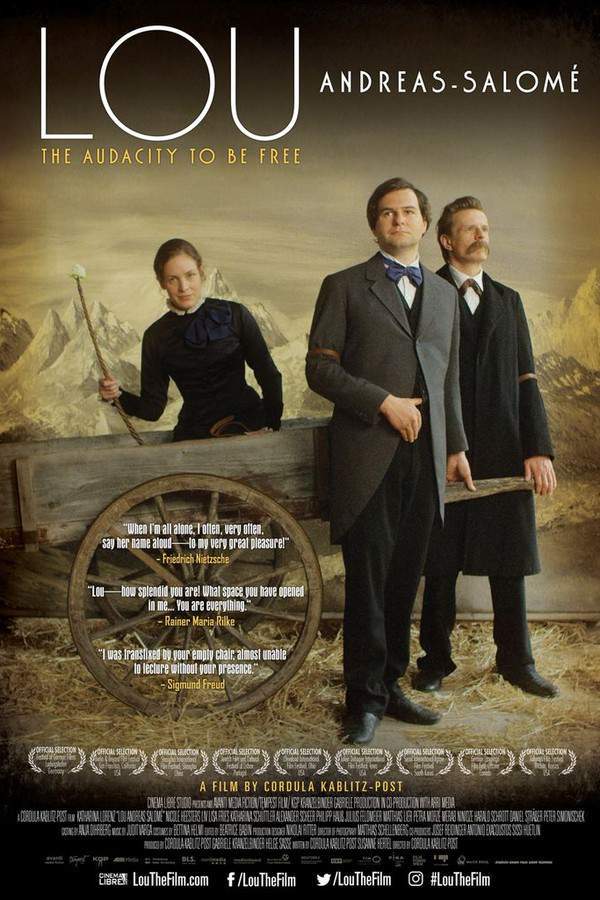
A celebrated psychoanalyst, Lou Andreas-Salomé, teams up with a young writer, Ernst Pfeiffer, to document her remarkable life story. Through their collaboration, they explore the complexities of her past, uncovering personal struggles and the unconventional choices that shaped her. As they work together, the lines between professional partnership and something deeper become increasingly blurred, revealing the courage and determination of a woman who challenged societal norms.
Warning: spoilers below!
Haven’t seen Lou Andreas-Salomé, The Audacity to be Free yet? This summary contains major spoilers. Bookmark the page, watch the movie, and come back for the full breakdown. If you're ready, scroll on and relive the story!
Read the complete plot breakdown of Lou Andreas-Salomé, The Audacity to be Free (2018), including all key story events, major twists, and the ending explained in detail. Discover what really happened—and what it all means.
In 1933, amidst the rise of the Nazis and grappling with her isolation, the celebrated novelist and psychoanalyst Lou Andreas-Salomé finds herself residing in Göttingen, Germany, living a life overshadowed by illness and despair. Everything changes when a 40-year-old publisher, Ernst Pfeiffer, steps into her world, stirring memories of her great love, Rainer Maria Rilke. As Lou begins to open up emotionally once more, Pfeiffer, who admires her deeply, pretends to seek assistance for his marital troubles while subtly hoping to establish a connection with her.
Through a shared journey of reminiscence, he assists her in writing her memoirs, coaxing Lou to relive the vibrant moments that have shaped her existence. Yet, she holds back key parts of her narrative, leaving things unsaid.
Born in St. Petersburg in 1861, Lou was the youngest child among five brothers and the only girl. Her upbringing, though cultured and nurturing, often left her feeling like an outsider. The bond with her strict mother was strong, but it was her father who captured her affection. After losing him at the age of 16, her faith in divinity crumbled, leading her to rebellion against societal norms.
Refusing the confines of the church, she persuades a Dutch minister, Henrik Gillot, to provide her with private philosophical lessons, only to develop deep feelings for him. However, their relationship becomes complicated when he proposes marriage, which prompts Lou to flee St. Petersburg, swearing off romantic entanglements to pursue her intellectual aspirations.
Lou finds solace at the University of Zürich, yet a bout of pneumonia takes her to Rome for recuperation. There, amidst the suffragette’s salon hosted by Malwide Meyersbug, she meets Paul Rée, a friendship blossoming only after Lou declines his marriage proposal. This leads to her introduction to the enigmatic philosopher Friedrich Nietzsche, who perceives Lou as a kindred spirit. Despite a shared unrequited love for her, they craft ambitious plans for a communal intellectual retreat.
However, Lou’s time with Nietzsche is tumultuous due to the interferences of his sister, Elisabeth Nietzsche, who views Lou as a rival to her brother’s affections. Struggling against the jealousy and possessiveness of Rée as they relocate to Berlin, Lou’s literary success surges, while Rée stalls in his career.
Seeking independence, she ultimately accepts a marriage proposal from Friedrich Carl Andreas, a distinguished scholar of Persian literature, under the condition that their union remains unconsummated. Heartbroken, Rée exits her life forever, allowing Lou to immerse herself wholly in her writing. Despite achieving various aspirations, her chronic bronchitis lingers, and she toils incessantly, producing book after book.
When Lou encounters Rainer Maria Rilke—then a little-known poet—she initially underestimates him. However, their relationship evolves, and she finds herself captivated by his persistence, leading her to break her vow against love. Although she feels liberated by her emotions, the relationship remains doomed due to Rilke’s profound psychological struggles, and Lou eventually ends this chapter of her life.
In an attempt to numb her pain, Lou engages in a string of brief romances, leading her to drastic actions that threaten her very existence when faced with an unwanted pregnancy. The narrative shifts to Vienna in 1911, where Lou consults Sigmund Freud and embarks on the psychoanalysis journey, slowly unraveling the long-buried traumas of her youth.
Returning to Göttingen in 1933, Lou’s relationship with Pfeiffer deepens, but complications arise when he challenges her about her troubled marriage. Rejecting his confrontations, she attempts to write her memoir alone, only to contend with failing eyesight. Their bond is later renewed, and together they face the ominous threat of the Gestapo, culminating in the burning of her private diaries. Despite the fear and turmoil, Lou’s memoirs endure, preserving her extraordinary life’s odyssey for posterity.

Last Updated: November 04, 2024 at 01:16
Discover curated groups of movies connected by mood, themes, and story style. Browse collections built around emotion, atmosphere, and narrative focus to easily find films that match what you feel like watching right now.
Intimate stories of women who challenged convention and paid the price.Looking for more movies like Lou Andreas-Salomé, The Audacity to be Free? This collection features similar biographical dramas about brilliant women who defied societal norms. These stories share a bittersweet tone, heavy emotional weight, and a focus on the complex price of intellectual and personal freedom.
Stories in this thread typically follow a chronological or reflective look at a historical woman's life, emphasizing the conflict between her ambitions and the constraints of her society. The narrative arc often involves significant relationships and professional achievements, but is grounded in the personal losses and solitude that came with her defiance, leading to a poignant, bittersweet conclusion.
Movies are grouped here for their shared focus on female historical figures, a melancholic and reflective tone, and a narrative that weighs intellectual victory against personal cost. They feature steady pacing, moderate complexity, and leave the viewer with a heavy, bittersweet feeling of admiration and sorrow.
Stories where a shared project leads to deeply complicated emotional entanglements.If you liked the dynamic between Lou and Ernst in Lou Andreas-Salomé, The Audacity to be Free, explore these films about complex professional partnerships. These stories feature intimate, character-driven narratives where collaboration leads to blurred personal boundaries, psychological depth, and a steady, reflective pace.
The narrative pattern involves two characters brought together by a shared intellectual or creative goal. As they work closely, the film uses their collaboration as a frame to explore past trauma, present desires, and psychological complexities. The central tension revolves around whether their relationship will remain professional or transform into something more profound and risky, often concluding with ambiguous or bittersweet resolutions.
These films are connected by their core premise of a transformative collaboration that serves as a catalyst for emotional and psychological unpacking. They share an intimate mood, steady pacing, moderate complexity, and a focus on the tension that arises when professional boundaries are tested by personal connection.
Don't stop at just watching — explore Lou Andreas-Salomé, The Audacity to be Free in full detail. From the complete plot summary and scene-by-scene timeline to character breakdowns, thematic analysis, and a deep dive into the ending — every page helps you truly understand what Lou Andreas-Salomé, The Audacity to be Free is all about. Plus, discover what's next after the movie.
Track the full timeline of Lou Andreas-Salomé, The Audacity to be Free with every major event arranged chronologically. Perfect for decoding non-linear storytelling, flashbacks, or parallel narratives with a clear scene-by-scene breakdown.
Discover the characters, locations, and core themes that shape Lou Andreas-Salomé, The Audacity to be Free. Get insights into symbolic elements, setting significance, and deeper narrative meaning — ideal for thematic analysis and movie breakdowns.
Get a quick, spoiler-free overview of Lou Andreas-Salomé, The Audacity to be Free that covers the main plot points and key details without revealing any major twists or spoilers. Perfect for those who want to know what to expect before diving in.
Visit What's After the Movie to explore more about Lou Andreas-Salomé, The Audacity to be Free: box office results, cast and crew info, production details, post-credit scenes, and external links — all in one place for movie fans and researchers.
Discover movies like Lou Andreas-Salomé, The Audacity to be Free that share similar genres, themes, and storytelling elements. Whether you’re drawn to the atmosphere, character arcs, or plot structure, these curated recommendations will help you explore more films you’ll love.
Lou Andreas-Salomé, The Audacity to be Free (2018) Scene-by-Scene Movie Timeline
Lou Andreas-Salomé, The Audacity to be Free (2018) Movie Characters, Themes & Settings
Lou Andreas-Salomé, The Audacity to be Free (2018) Spoiler-Free Summary & Key Flow
Movies Like Lou Andreas-Salomé, The Audacity to be Free – Similar Titles You’ll Enjoy
Dangerous Liaisons (2022) Ending Explained & Film Insights
Full Moon in Paris (1984) Full Movie Breakdown
Curiosa (2021) Movie Recap & Themes
A Dangerous Method (2011) Spoiler-Packed Plot Recap
Liberté (2019) Full Movie Breakdown
Curiosa (2019) Full Summary & Key Details
Lovers of the Café Flore (2006) Movie Recap & Themes
Erotic Symphony (1980) Story Summary & Characters
Amorosa (1986) Plot Summary & Ending Explained
Camille Claudel (1988) Plot Summary & Ending Explained
Luise (2023) Story Summary & Characters
Salomé (1976) Full Movie Breakdown
Anatomy of a Relationship (1976) Full Movie Breakdown
The Salamander (1971) Plot Summary & Ending Explained
Louise, One Word of Love (1972) Full Movie Breakdown