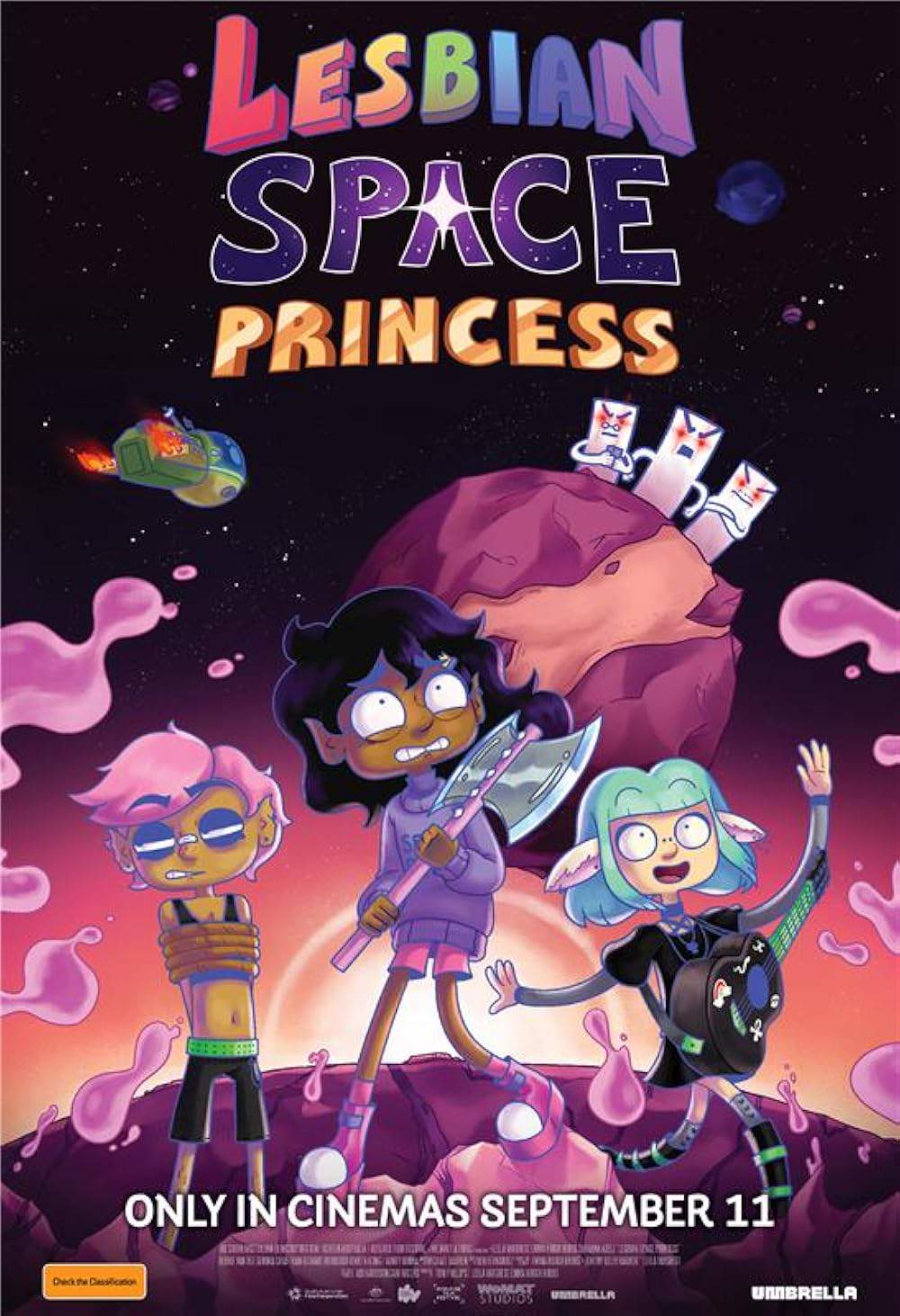
In a galaxy-spanning tale with a quiet, introspective rhythm, the anxious and introverted protagonist Saira, Shabana Azeez, lives a sheltered life on the planet Clitopolis, where she is the princess and the daughter of two neglectful lesbian queens. Her world is narrow and predictable, until a heart-wrenching breakup with Kiki unsettles the balance she clings to. Kiki, her partner of two weeks, is kidnapped by the enigmatic and hostile "Straight White Maliens," who intend to use her as bait to steal Saira's labrys and power their legendary device, the so-called chick magnet. This jarring act thrusts Saira into a dangerous, outward journey that challenges everything she has known about herself, love, and power.
Unlike the other lesbians of Clitopolis, Saira has not yet learned to summon her labrys, a symbol of lesbian power that seems to exist as a test she has failed to pass. Her parents’ disappointment weighs heavily on her as she confronts the gap between what she desires and what she can achieve. Driven by a stubborn mix of fear and resolve, she steals a "Problematic Ship" to forge a path across the galaxy in an effort to rescue Kiki and reclaim any sense of control over her own fate. On this voyage, she encounters Willow, Gemma Chua-Tran, a former gay-pop idol who was stranded on an abandoned moon crystal mine. Willow’s presence offers a counterpoint to Saira’s guarded future-facing mindset, and together they form a tentative alliance that hints at something warmer amid the vast uncertainty of space.
Their alliance leads them to Blade, a flamboyant drag queen who inhabits a space between performance and survival. Blade becomes a teacher of sorts, guiding Saira toward learning to be kinder to herself, a key step toward summoning her labrys. The process is not smooth: Blade makes a bold move to steal Saira’s labrys, but Willow and Saira push back with a stubborn resilience, ending the confrontation with Blade's decapitation in a brutal clash of consequences and self-preservation. The moment is stark and shockingly blunt, underscoring the perilous moral terrain Saira navigates on her quest.
In the wake of these trials, Willow and Saira share a brief, charged connection. The closeness born of shared danger evolves into a relationship that is short-lived, as Saira recognizes that her primary mission remains saving Kiki. The tension between personal affection and the duty she feels to right the wrong that occurred to Kiki intensifies as they reach another pivotal moment in their journey.
Reaching the planet controlled by the Straight White Maliens, Saira makes a crucial choice: she hands over her labrys to facilitate the rescue of Kiki. Yet when Kiki declines to re-enter a relationship with her, Saira’s self-doubts surge anew, and her labrys dematerialises. The Maliens seize the moment and attack, but Saira此前 falls back into self-doubt and must summon the courage to reawaken the labrys. With the labrys restored, she channels its power to energize the Maliens’ chick magnet, a turn of events that exposes a pivotal realization: the Maliens have overvalued their desire for attention from women and decide to date each other as a throuple, reshaping their own social dynamics.
Ultimately, Saira returns to Clitopolis as a happily single individual who has learned to love herself once more. Her journey leaves her more open socially, and the credits imply continued growth: she travels with her mothers to Blade, who remains alive despite his earlier decapitation, for family therapy; she receives Willow’s new hit album, a testament to the experiences she shared; and she embarks on new adventures aboard the Ship, which has become an ally rather than a foe.
Throughout this cinematic arc, the film maintains a measured, contemplative tone even as it plunges through cosmic dangers and provocative ideas. It treats themes of identity, power, desire, and self-worth with a steady, reflective hand, never rushing the emotional beats or the outer-space spectacle. The result is a narrative that invites viewers to consider how fear and insecurity can shape one’s choices, how healing can come from self-acceptance, and how courage—sometimes in small, personal steps—can reshape a life and the worlds around it.