




Plot Explained Spoilers guaranteed!
Plot Explained

Browse by genre

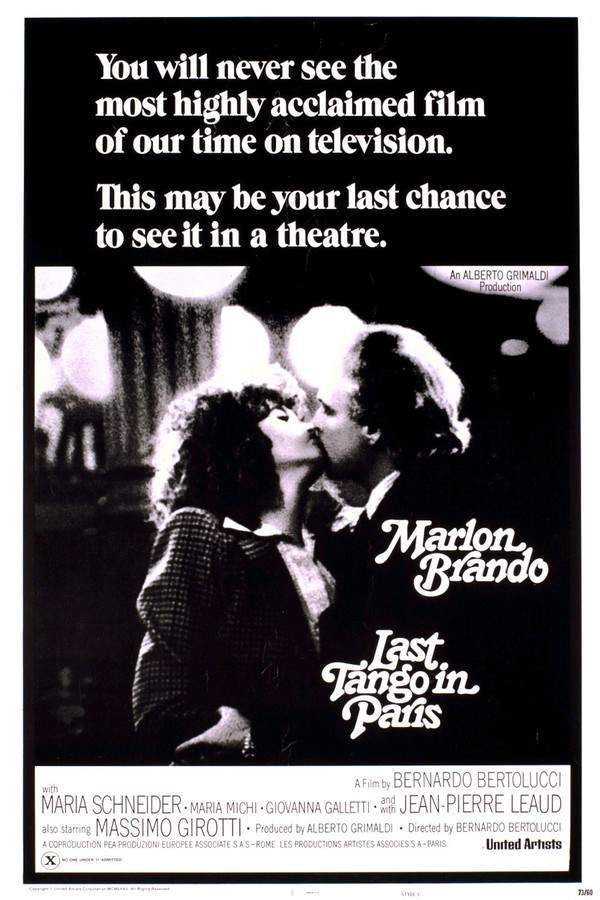
Last Tango in Paris (1973) movie poster

Plot Summary

Last Tango in Paris (1973) Plot Summary Explained

Release, runtime and language
1973 · 136 min · French
Directed by
Bernardo Bertolucci
Starring
Marlon Brando, Maria Schneider
Budget
$1.3M

In Paris, a grieving American expatriate, Paul, seeks comfort in a passionate and anonymous relationship with a young French woman named Jeanne. Their intense physical connection unfolds against the backdrop of the City of Love, as they attempt to escape personal tragedies and find solace in each other. However, as their affair deepens, unresolved emotional burdens and unspoken vulnerabilities begin to surface, threatening to shatter their fragile connection.

On this page (6)
  1. 1 Where to watch
  2. 2 What happens: full plot
  3. 3 Plot questions answered
  4. 4 Movie threads
  5. 5 Movies like Last Tango in Paris
  6. 6 Every angle

Where to watch

Where to Watch Last Tango in Paris (1973)

Where can you watch Last Tango in Paris? Stream, rent or buy it in the US, including on Fandango At Home, Google Play Movies and YouTube: current JustWatch availability with up-to-date prices.

Streaming availability powered by JustWatch

Full plot summary · contains spoilers

What Happens in Last Tango in Paris: Full Plot Summary

The whole story of Last Tango in Paris (1973) explained, from the opening scene to the final frame: every key event, every twist and what it all adds up to. Read it as a quick recap before the sequel, to check a scene you missed, or to finally understand what really happened.

Paul, a middle-aged American hotel owner, is still in mourning after the tragic suicide of his wife, Rosa. Amidst his sorrow, he encounters Jeanne, a young and engaged woman from Paris, during a visit to an apartment they both wish to rent. This chance meeting leads to an anonymous and tumultuous sexual relationship, with Paul imposing strict boundaries: they refrain from sharing personal details, including their names—a rule that leaves Jeanne feeling frustrated and disheartened.

As the intimacy deepens, the relationship takes a dark turn when Paul commits an act of violence against Jeanne. Despite this, Jeanne finds herself inexplicably drawn back to him, unable to sever their ties. At the same time, she is involved with a film actor who is infatuated with her, yet she grows weary of his tendency to film their private moments, complicating her emotions further.

Their affair persists until one day, Paul decides to abruptly leave Jeanne. When she arrives at the apartment, she is heartbroken to discover that he has vanished without any explanation. Following a poignant flashback of Paul at his wife's viewing, he unexpectedly encounters Jeanne on the street, expressing his desire to rekindle their relationship. Sharing the painful story of his late wife, they then enter a tango bar, where Paul continues to open up about his life, stripping away the anonymity that initially characterized their bond.

This shift blindsides Jeanne, leading her to realize that she cannot continue their relationship. She tells Paul unequivocally that she wants nothing more to do with him. However, he, refusing to accept her rejection, pursues her through the winding streets of Paris. Despite Jeanne's desperate protests and threats of calling the police, he follows her all the way to her mother's residence, forcing his way into her apartment.

In a climactic confrontation, Paul mocks Jeanne for her attempt to flee and while professing his love, demands to know her name. In a moment of desperation, Jeanne retrieves a gun from a drawer, finally revealing her name to Paul before she pulls the trigger. Mortally wounded, he staggers onto the balcony and collapses. As he gasps for breath, Jeanne, in a state of shock, murmurs to herself that he was merely a stranger who tried to assault her, grappling with the reality of the situation and bracing herself for the inevitable questioning by the authorities.

Last updated: November 16, 2024 at 14:51

Was this helpful?

Plot questions answered

Last Tango in Paris Plot Explained: Your Questions Answered

The questions people ask most about Last Tango in Paris (1973): what happens in the confusing scenes, why the characters do what they do, the twists, hidden details and what the ending means. Each answer contains spoilers.

Q1

Why does Paul refuse to tell Jeanne his name?

Paul imposes anonymity as a psychological defense mechanism. After his wife Rosa's suicide, he is unable to form genuine emotional connections without confronting his grief. By keeping their relationship physically anonymous, Paul attempts to escape his pain through pure physicality while avoiding the vulnerability that comes with personal disclosure. This boundary allows him to use Jeanne as an emotional outlet without risking the painful memories associated with intimacy.

  • paul anonymity
  • psychological trauma
  • grief
  • emotional escape
Q2

Why does Paul assault Jeanne in the apartment?

Paul's violence stems from his unprocessed grief and psychological breakdown. Unable to reconcile his sexual relationship with Jeanne while still mourning Rosa, Paul erupts in a moment of explosive rage. The assault represents the toxic intersection of desire and grief, he is simultaneously drawn to Jeanne and tormented by the guilt of moving on from his dead wife. This violent outburst is the first major sign that his grief has made him emotionally unstable and dangerous.

Foreshadowing: The film establishes Paul's deep emotional turmoil from the opening scenes, showing his inability to function after Rosa's suicide.

  • paul assault
  • violence
  • grief
  • psychological breakdown
  • emotional turmoil
Q3

Why does Jeanne go back to Paul after he attacks her?

Jeanne's return reflects the complicated psychological grip Paul has on her despite the violence. Their anonymous relationship created an intense, addictive dynamic that Jeanne cannot easily walk away from. Additionally, the violence paradoxically deepens the connection in a unhealthy way, the intensity of the assault makes her feel more deeply entangled with him. Jeanne also lacks closure; Paul has revealed nothing about himself, leaving her emotionally invested in understanding what happened.

  • jeanne return
  • trauma bond
  • unhealthy relationship
  • emotional entanglement
Q4

Why does Paul leave Jeanne without any explanation?

Paul's sudden departure represents his inability to maintain the anonymous arrangement once genuine feelings begin developing. When he realizes he is starting to care for Jeanne, he retreats rather than face the vulnerability this entails. His pattern is to escape emotional intimacy, leaving is another form of the same psychological defense he established at the beginning by refusing to share names. Paul would rather disappear than risk confronting his feelings head-on.

  • paul leaves
  • abandonment
  • emotional escape
  • running away
Q5

Why does Jeanne reject Paul after he finally opens up about his wife?

Jeanne realizes that Paul's revelation about Rosa does not represent genuine change, it is simply more manipulation. For the entire relationship, Paul withheld personal information while demanding Jeanne accept whatever he offered. Now that he finally shares something significant, Jeanne recognizes it as another control tactic rather than authentic vulnerability. His confession comes too late and feels like a manipulation to keep her hooked. She understands that a man capable of violence and anonymity cannot suddenly become emotionally available.

Foreshadowing: Throughout their relationship, Paul has used information as power, revealing nothing while expecting Jeanne to remain committed.

  • jeanne rejection
  • paul confession
  • manipulation
  • emotional unavailability
Q6

Why does Paul chase Jeanne through the streets of Paris?

Paul's pursuit escalates from obsession and refusal to accept rejection. When Jeanne clearly states she wants nothing more to do with him, Paul cannot accept this rejection because doing so would mean confronting his own worthlessness and emotional failure. His grief has twisted into possessive behavior, he sees Jeanne as the only thing keeping him from complete emotional collapse. The chase represents his final desperate attempt to maintain control over something in his life, even as he destroys it.

  • paul pursuit
  • obsession
  • rejection
  • desperate chase
  • control
Q7

Why does Jeanne shoot Paul at the climax?

Jeanne shoots Paul in a moment of desperate self-preservation. After Paul forces his way into her mother's apartment, mocks her attempts to flee, and professes love while simultaneously threatening her, Jeanne perceives herself in imminent danger. The gun represents her only means of stopping an unpredictable, violent man who has invaded her safe space. Her action is not premeditated but reactive, she reaches for the only tool she believes can protect her from what she sees as an attack.

Foreshadowing: Paul's earlier act of violence against Jeanne establishes that he is physically capable of harming her, making her fear for her life credible.

  • jeanne shooting
  • self-defense
  • climax
  • violence
  • danger
Q8

What does Jeanne mean when she says Paul was just a stranger?

Jeanne's statement that Paul was a stranger who tried to assault her is a psychological defense mechanism. By reducing him to a nameless aggressor, she attempts to process the traumatic events and absolve herself of guilt regarding killing him. This reframing allows her to face the authorities without admitting to a crime of passion or acknowledging any emotional connection to her attacker. It is her mind's way of coping with the horror of having shot a man she was intimate with, transforming a complex relationship into a simple narrative of victim and perpetrator.

  • jeanne stranger
  • psychological defense
  • guilt
  • self-justification
  • trauma response
Q9

Why does Paul take Jeanne to a tango bar after meeting her on the street?

The tango bar represents Paul's first attempt at genuine intimacy and honesty. By bringing Jeanne to a public, emotionally charged space and finally sharing the story of his wife's suicide, Paul is attempting to transition their relationship from anonymous physicality to real connection. However, this shift comes too abruptly and overwhelms Jeanne. The tango, a dance of passion and conflict, symbolizes the turbulent nature of their entire relationship, it is intense, dramatic, and ultimately destructive.

  • tango bar
  • honesty
  • transition
  • intimacy
  • symbolic dance
Q10

How does Rosa's suicide drive Paul's behavior throughout the film?

Rosa's suicide is the central trauma that shapes every aspect of Paul's behavior. His grief manifests as emotional avoidance, which is why he insists on anonymous relationships. His guilt manifests as self-destructive behavior, including the violence against Jeanne. His inability to process loss drives him to seek escape in physical connection while refusing genuine intimacy. Ultimately, Rosa's death sets in motion a chain of events where Paul uses Jeanne as a tool to escape his pain, and when that fails, he pursues her with the same desperation with which he tries to outrun his grief.

Foreshadowing: The film opens with Paul deeply affected by Rosa's suicide, establishing the root cause of all his subsequent actions.

  • rosa suicide
  • grief
  • trauma
  • cause and effect
  • emotional damage

Movie threads

More Movies Like Last Tango in Paris, by Mood & Story

Curated lists built around what makes Last Tango in Paris tick: the same mood, the same kind of story or the same emotional payoff. Each list explains why these movies belong together.

Emotionally Destructive Romances like Last Tango in Paris

Love affairs that are a battlefield for grief and psychological pain. Explore movies like 'Last Tango in Paris' where romance is a conduit for pain rather than pleasure. These films center on intense, toxic relationships fueled by grief, obsession, and self-destructive behavior, offering a raw and psychologically complex viewing experience for those seeking heavy emotional drama.

  • raw
  • obsessive
  • desperate
  • angst-ridden
  • claustrophobic
  • unsettling
  • Tone: dark, raw, bleak
  • Pacing: variable, beginning intense then unraveling
Why these movies?

The story pattern: The narrative typically follows two characters who enter a potent, often anonymous, physical relationship to escape their emotional turmoil. This initial agreement of no-strings-attached intimacy inevitably collapses as personal vulnerabilities surface, leading to a breakdown characterized by psychological manipulation, desperation, and a bleak, often violent, conclusion.

Why they belong together: These films are grouped by their shared core: a romance that is not redemptive but devastating. They possess a high emotional weight, a dark tone, and explore the dangerous intersection of physical desire and psychological unravelling, making the viewing experience intense and unsettling.

Claustrophobic Character Studies like Last Tango in Paris

Intense films where characters are trapped by their own minds and choices. Discover films similar to 'Last Tango in Paris' that are intense, character-driven dramas. These movies use a confined setting or a tight two-person dynamic to create a claustrophobic atmosphere, delving deep into the raw and often disturbing psychology of their protagonists facing grief and despair.

  • claustrophobic
  • raw
  • psychological
  • angst-ridden
  • unsettling
  • intense
  • Tone: dark, melancholic, unsettling
  • Pacing: slow to variable burn, intense
Why these movies?

The story pattern: The story is less about external plot and more about the internal landscape of the characters. The narrative structure often feels like a pressure cooker, where emotions and tensions gradually build within a confined relationship or location, leading to an explosive and cathartic, yet deeply tragic, release.

Why they belong together: They share a high-intensity, raw mood and a focus on psychological depth over complex plotting. The pacing is often deliberate or variable, allowing the audience to feel trapped alongside the characters, experiencing their angst and desperation firsthand in an immersive, emotionally heavy way.

If you liked this

Movies Like Last Tango in Paris

Similar movies to Last Tango in Paris: the same genre, themes or kind of story. Each one comes with its own plot summary, timeline and ending explained.

Browse all movie summaries

Every angle

Last Tango in Paris (1973) Explained: Plot, Timeline & Characters

Everything about Last Tango in Paris in one place: what happens in the plot summary, the timeline in chronological order, the characters and meaning and a spoiler-free summary. What's After the Movie adds the cast, box office and post-credit scenes.

Coming soon on iOS and Android

The Plot Explained Movie Summary App

Plot summaries, endings explained and timelines on your phone. Catch up on any movie in minutes, save your favorites and never miss a twist again.

Be the first to know when we launch. Your email stays private, always.

Learn more about the app