Plot Explained Spoilers guaranteed!
Plot Explained

Browse by genre

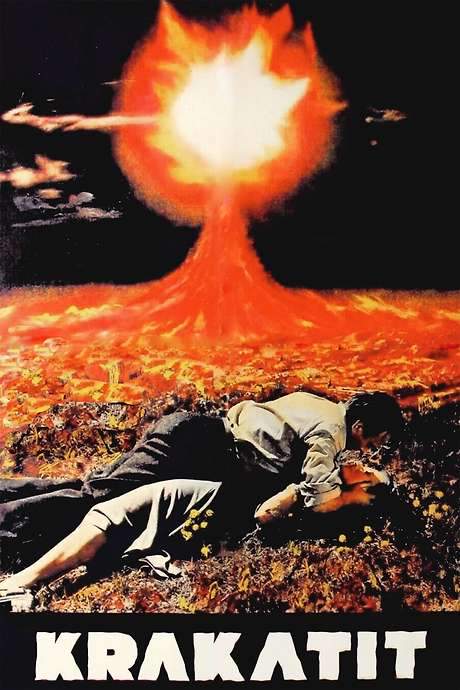
Krakatit (1948) movie poster

Plot Summary

Krakatit (1948) Plot Summary Explained

Release, runtime and language
1948 · 110 mins · Czech
Loading streaming availability…
Directed by
Otakar Vávra
Starring
Jiří Plachý, Vlasta Fabianová, Eduard Linkers, Zvonimir Rogoz, Bedřich Vrbský, Zdeněk Hodr

In early 20th century Czechoslovakia, a gravely ill chemist recalls his discovery of a powerful explosive and how it landed in the hands of anarchists.

On this page (6)
  1. 1 Where to watch
  2. 2 What happens: full plot
  3. 3 Plot questions answered
  4. 4 Movie threads
  5. 5 Movies like Krakatit
  6. 6 Every angle
Loading streaming availability…

Full plot summary · contains spoilers

What Happens in Krakatit: Full Plot Summary

The whole story of Krakatit (1948) explained, from the opening scene to the final frame: every key event, every twist and what it all adds up to. Read it as a quick recap before the sequel, to check a scene you missed, or to finally understand what really happened.

A barely conscious, unidentified man is brought into intensive care, where a doctor and a nurse tend to severe burns on his hands and decide to administer oxygen. The scene quickly shifts to a delirious street episode, where the man encounters an old classmate named Jiří Tomeš. The man, who is revealed to be Karel Höger as Prokop, speaks incoherently about a blast and something he calls krakatit.

In a dreamlike sequence, a university professor questions Prokop about krakatit. He explains that it is a powerful explosive named after Krakatoa and even recites a rough formula, a detail that Jiří secretly notes down. When Prokop wakes, he finds his door answered by a veiled woman who asks him to carry a letter to Jiří. We soon follow Prokop as he travels to visit Jiří’s countryside doctor father, aided briefly by an old mail carrier who helps him through the snow. Prokop’s strength falters, and he collapses, leaving him to be cared for by the doctor and his daughter, Anči. During his slow recovery, Prokop cannot recall what happened, and the memory remains shrouded until he reads a newspaper story about krakatit being marketed by a mysterious figure named Carson.

Eduard Linkers as Carson explains that Jiří had sold Prokop’s krakatit stock and the accompanying formula to Balttin Works, a distant weapons company. Their experiments reveal that krakatit can be detonated remotely via high-frequency signals, but they lack the practical production method. They press Prokop to work with them, offering employment to continue the research. When Prokop refuses, Balttin forces him to the royal Balttin palace to work in a chemical laboratory.

At the palace, Prokop enters a burgeoning romance with a princess, commonly referred to as Wilhelmina Hagen, a relationship that becomes entwined with his obsession. Yet his heart also yearns for the veiled woman he met earlier, whom he cannot forget. The Balttin executives propose a dangerous bargain: Prokop would be granted a marriage arrangement with the princess if he surrenders krakatit. Enraged, Prokop destroys the laboratory where he has been held, and with his coat loaded with explosives, he confronts the princess—whose face dissolves in the chaos. He manages to escape the palace with assistance from an ambassador, Jiří Plachý, who portrays the d’Hémon figure.

On the run, they encounter a secret circle of former world leaders and profiteers who worship war and hail Prokop as “Comrade Krakatit.” As the crowd scrambles for the krakatit powder, Prokop and d’Hémon slip away and briefly cross paths with the veiled woman once more. They ascend to the top of a hill made of magnetite, where Prokop’s old laboratory has been relocated to a hidden radio station. There, d’Hémon persuades Prokop to press a button, unleashing stockpiles of krakatit to explode across European capitals. The explosions are so powerful that they seem to foreshadow a controllable war, a plan that shatters Prokop’s trust as d’Hémon vanishes.

Alone, Prokop finds himself in a bleak, concrete landscape and eventually reaches an enclosed factory. He asks to see Jiří Tomeš and is refused, but he does meet a lab assistant, to whom he hands the letter from the veiled woman. He then walks away as the factory explodes in the distance. An old mail carrier appears again, offering a lift and urging Prokop to invent something that makes people’s lives easier instead of killing them. Back at the hospital, the doctor reports that Prokop’s breathing has returned to normal and that the oxygen mask can be removed, signaling a rare moment of peace after a harrowing chain of choices.

Last updated: October 09, 2025 at 11:24

Was this helpful?

Plot questions answered

Krakatit Plot Explained: Your Questions Answered

The questions people ask most about Krakatit (1948): what happens in the confusing scenes, why the characters do what they do, the twists, hidden details and what the ending means. Each answer contains spoilers.

Q1

Why did Jiří sell Prokop's krakatit formula to Balttin Works?

Jiří Tomeš sold Prokop's krakatit stock and formula to Balttin Works, a weapons company, for profit. When Prokop was delirious and unable to protect his discovery, Jiří took advantage of the situation to make money from the powerful explosive formula. This betrayal sets in motion the entire conspiracy around krakatit.

Foreshadowing: Earlier in the dream sequence, Jiří secretly notes down the formula while the professor questions Prokop, revealing his opportunistic nature from the start.

  • jiří tomeš
  • betrayal
  • balttin works
  • formula sold
  • profit
Q2

What is krakatit and how was it created?

Krakatit is a powerful explosive created by Prokop, named after the volcanic island Krakatoa. In the dream sequence, Prokop explains the rough formula to a university professor. The explosive has the unique capability to be detonated remotely via high-frequency signals, making it far more dangerous than conventional explosives.

Foreshadowing: The name itself, derived from Krakatoa, foreshadows the catastrophic destructive potential of the invention.

  • krakatit
  • explosive
  • formula
  • remote detonation
  • high-frequency signals
Q3

Who is the veiled woman and what was her letter about?

The veiled woman appears at Jiří's apartment asking Prokop to deliver a letter to Jiří. Her identity and the letter's contents remain mysterious throughout most of the film. At the end, Prokop finally delivers the letter to a lab assistant at Jiří's distant laboratory, though the specific message is never revealed to the viewer.

Foreshadowing: The veiled woman's appearance early in the story creates intrigue that carries through to the climax, where her letter becomes a final unresolved thread.

  • veiled woman
  • letter
  • jiří
  • delivery
  • mystery
Q4

Why did Prokop press the button to detonate krakatit across Europe?

Prokop was persuaded by d'Hémon, an ambassador who helped him escape the palace. At the hidden radio station on the magnetite hill, d'Hémon manipulated Prokop into pressing the button, claiming the explosions would spark a 'controllable war.' Prokop, traumatized and manipulated, complied, only to realize afterward that d'Hémon vanished and the destruction was far more catastrophic than promised.

Foreshadowing: The secret society's worship of war and their greeting of Prokop as 'Comrade Krakatit' foreshadows his role in enabling global destruction.

  • prokop
  • button
  • detonation
  • europe
  • dhémon
  • controllable war
Q5

What happened to Princess Wilhelmina Hagen during the explosion?

When Prokop confronted the princess in the palace after refusing to surrender krakatit, he had his coat loaded with explosives. During the confrontation, the laboratory detonated, and the princess's face visibly dissolves in the blast, appearing to kill or severely disfigure her. This violent moment represents the destructive impact of Prokop's invention on even his most personal relationships.

Foreshadowing: The earlier romance between Prokop and the princess was always entangled with his captivity, making this betrayal and destruction inevitable.

  • princess wilhelmina hagen
  • explosion
  • face dissolved
  • palace
  • confrontation
Q6

Why did Balttin force Prokop to work in their palace laboratory?

Balttin Works had acquired Prokop's existing stock of krakatit and the formula through Jiří's sale, but they lacked the practical production method to create more. To force Prokop to cooperate, they brought him to the royal Balttin palace and imprisoned him in a chemical laboratory, offering him employment and even the princess as a marriage incentive to extract his knowledge.

Foreshadowing: The newspaper story mentioning Carson's promotion of krakatit reveals that Prokop's invention was already out of his control before he fully understood the danger.

  • balttin
  • carson
  • forced labor
  • palace laboratory
  • production method
Q7

What was the secret society that worshipped war and called Prokop Comrade Krakatit?

After escaping the palace, Prokop and d'Hémon encounter a secret circle of former world leaders and profiteers who actively worship war. They hail Prokop as 'Comrade Krakatit,' treating his explosive as a tool to restart global conflict. This group represents the exploitative forces that seek to profit from scientific destruction, and they scramble for the spilled krakatit powder during the chaos.

Foreshadowing: This encounter reveals the broader conspiracy manipulating Prokop's invention for geopolitical profit.

  • secret society
  • war worship
  • comrade krakatit
  • former leaders
  • profiteers
Q8

Why was Prokop's laboratory moved to the magnetite hill?

Prokop's old laboratory was relocated to a hidden radio station on top of a hill made of magnetite. This location was chosen because magnetite's magnetic properties likely helped amplify the high-frequency signals needed to remotely detonate the stockpiled krakatit across European capitals. The remote, isolated setting also served to keep the operation secret.

Foreshadowing: The earlier explanation that krakatit can be detonated via high-frequency signals铺垫了这一技术的实际应用地点。

  • magnetite hill
  • radio station
  • remote detonation
  • laboratory
  • high-frequency signals
Q9

What does the ending with the mail carrier suggest about Prokop's future?

At the end, the old mail carrier reappears and gives Prokop a lift toward civilization, urging him to invent something that makes people's lives easier instead of killing them. This symbolic moment suggests Prokop may finally use his scientific skills for peaceful purposes. Back at the hospital, his breathing returns to normal and the oxygen mask is removed, indicating a rare moment of peace after the harrowing chain of destructive choices.

Foreshadowing: The mail carrier's earlier help to Prokop in the countryside established his role as a moral compass throughout the story.

  • mail carrier
  • peace
  • invention
  • new beginning
  • oxygen mask
Q10

Who is Carson and why was he marketing krakatit?

Carson works for Balttin Works, the weapons company that purchased Prokop's krakatit from Jiří. He explains to Prokop that they have the explosive stock and formula but lack the production method. Carson represents the commercial and military exploitation of Prokop's discovery, marketing krakatit as a weapon while attempting to force Prokop to reveal how to manufacture more.

Foreshadowing: Carson's role demonstrates how scientific discoveries are commodified and weaponized by corporate and military interests.

  • carson
  • balttin works
  • marketing
  • weapon
  • corporate exploitation
Q11

Why is Prokop hospitalized with severe burns at the beginning?

Prokop is found barely conscious with severe burns on his hands, caused by the laboratory explosion that created krakatit. He is delirious and cannot remember what happened, wandering the streets until his old classmate Jiří Tomeš recognizes him. The opening hospital scene establishes his fragile state and the mystery surrounding his invention's origin.

Foreshadowing: The burns foreshadow the destructive power of krakatit and the personal cost of Prokop's scientific achievement.

  • prokop
  • burns
  • hospital
  • explosion
  • memory loss

Movie threads

More Movies Like Krakatit, by Mood & Story

Curated lists built around what makes Krakatit tick: the same mood, the same kind of story or the same emotional payoff. Each list explains why these movies belong together.

Fever dream psychological thrillers like Krakatit

Stories where reality unravels through a paranoid and delirious lens. If you liked the delirious and paranoid atmosphere of Krakatit, explore more movies that use a fever dream structure. These films often feature scientists or protagonists in a psychological tailspin, blending conspiracy with a shaky grip on reality in a similar dark and intense way.

  • feverish
  • dreamlike
  • paranoid
  • delirious
  • anxious
  • psychological
  • Tone: dark, paranoid, delirious
  • Pacing: variable, disorienting
Why these movies?

The story pattern: Narratives in this thread are often non-linear and subjective, prioritizing the internal experience of a tormented protagonist over objective events. The plot unfolds as a series of ominous and surreal encounters, driven by paranoia, guilt, or external manipulation, leading to a climactic confrontation with a horrifying truth.

Why they belong together: Movies are grouped here based on their shared use of a dreamlike, disorienting narrative structure to explore themes of psychological disintegration. They create a cohesive viewing experience defined by high tension, a dark tone, and a feeling of oppressive uncertainty that keeps the audience questioning what is real.

Movies about scientific hubris and ethical dilemmas like Krakatit

Brilliant minds confront the catastrophic consequences of their world-changing discoveries. For viewers who appreciated Krakatit's exploration of a scientist's nightmare, this section features similar films about dangerous inventions and ethical collapse. These stories share a heavy emotional weight, dark tone, and focus on the responsibility and guilt that comes with power.

  • philosophical
  • bleak
  • anxious
  • oppressive
  • ethical dilemma
  • conspiracy
  • Tone: dark, bleak, philosophical
  • Pacing: variable, building dread
Why these movies?

The story pattern: The narrative arc typically begins with a triumphant discovery, which quickly spirals into a nightmare as the invention is exploited by malicious forces. The protagonist's journey is one of escalating desperation and moral reckoning, often culminating in a bittersweet or bleak ending that underscores the high cost of knowledge without wisdom.

Why they belong together: These films are united by their core theme of scientific responsibility and the dark side of progress. They deliver a coherent experience of intellectual dread and heavy moral questioning, featuring high-stakes plots, complex protagonists, and a consistently dark, anxious mood.

If you liked this

Movies Like Krakatit

Similar movies to Krakatit: the same genre, themes or kind of story. Each one comes with its own plot summary, timeline and ending explained.

Browse all movie summaries

Every angle

Krakatit (1948) Explained: Plot, Timeline & Characters

Everything about Krakatit in one place: what happens in the plot summary, the timeline in chronological order, the characters and meaning and a spoiler-free summary. What's After the Movie adds the cast, box office and post-credit scenes.

Coming soon on iOS and Android

The Plot Explained Movie Summary App

Plot summaries, endings explained and timelines on your phone. Catch up on any movie in minutes, save your favorites and never miss a twist again.

Be the first to know when we launch. Your email stays private, always.

Learn more about the app