Plot Explained Spoilers guaranteed!
Plot Explained

Browse by genre

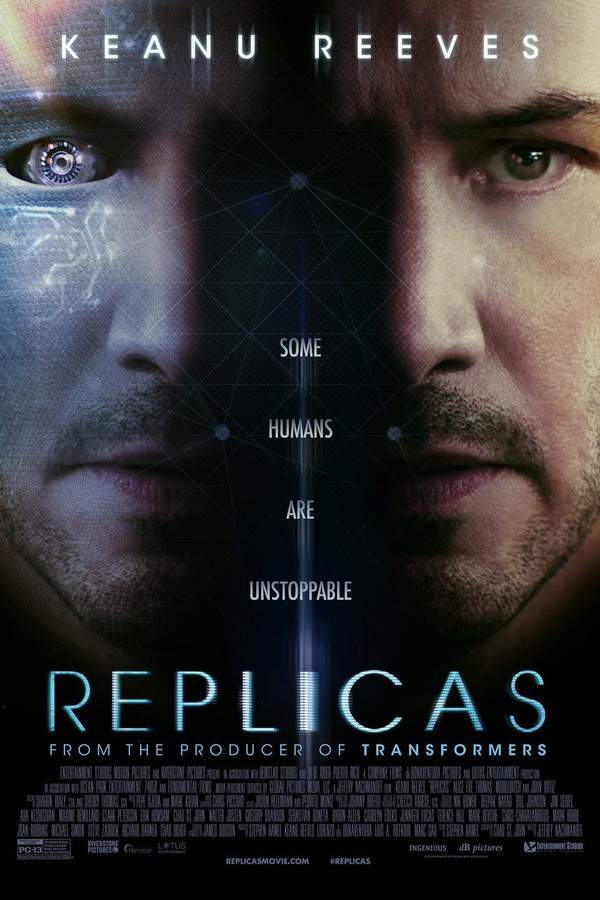
Replicas (2019) movie poster

Plot Summary

Replicas (2019) Plot Summary Explained

Release, runtime and language
2019 · 107 min · English
Echo score 28
JustWatch #8,112 1
Directed by
Jeffrey Nachmanoff
Starring
Keanu Reeves, Thomas Middleditch, John Ortiz, Emily Alyn Lind, Nyasha Hatendi, Emjay Anthony
Budget
$30M

After suffering a tragic loss, neuroscientist William Foster becomes driven to find a way to bring his family back. He secretly begins a controversial cloning project with the help of a colleague, recreating the bodies of his deceased loved ones. As the replicas develop, Foster grapples with the ethical implications of his actions and confronts unforeseen consequences that challenge his understanding of life, death, and what it means to be human.

On this page (6)
  1. 1 Where to watch
  2. 2 What happens: full plot
  3. 3 Plot questions answered
  4. 4 Movie threads
  5. 5 Movies like Replicas
  6. 6 Every angle

Where to watch

Where to Watch Replicas (2019)

Where can you watch Replicas? Stream, rent or buy it in the US, including on Amazon Prime Video, Fawesome and Tubi TV: current JustWatch availability with up-to-date prices.

Streaming availability powered by JustWatch

Full plot summary · contains spoilers

What Happens in Replicas: Full Plot Summary

The whole story of Replicas (2019) explained, from the opening scene to the final frame: every key event, every twist and what it all adds up to. Read it as a quick recap before the sequel, to check a scene you missed, or to finally understand what really happened.

William Foster, portrayed by Keanu Reeves, is a brilliant scientist specializing in synthetic biology and the intricate mapping of neural pathways into alternative host bodies. Alongside his team members, Ed Whittle, played by Thomas Middleditch, and Scott, portrayed by Nyasha Hatendi, he works under the supervision of his boss, Jones, played by John Ortiz. William's groundbreaking research allows him to imprint minds into new synthetic bodies; however, his trials face significant challenges as the subjects often reject their new forms.

Tragedy strikes when William's family—his wife, Mona, played by Alice Eve, and their children, Matt, portrayed by Emjay Anthony, Sophie, played by Emily Alyn Lind, and Zoe, portrayed by Aria Leabu—are killed in a tragic car accident. Grief-stricken and desperate to bring them back, William employs his unique expertise to create biological clones of his family. With the reluctant assistance of Ed, he maps their brains and designs the clones to ensure their minds can successfully merge with their new biological bodies. Facing limitations with only three cloning pods available from Biodyne’s lab, William must make a heart-wrenching decision about which family member to exclude, ultimately choosing to omit Zoe and erasing her memory from the others.

As he successfully resurrects his family, William opts not to reveal their true nature or the circumstances of their revival. After 17 days, the clones are ready, and he manages to transfer their memories into their new bodies. However, the pressure mounts as William fabricates a web of lies to evade suspicion from his boss and neighbors, all the while grappling with his duties at work that demand he imprint another mind into a synthetic body. Understanding that the cloning process involves acceptance of a biological form, he takes a significant risk by deciding to imprint his own consciousness into a synthetic host, creating an algorithm designed to trick the mind into accepting the artificial body.

Conflict arises when Mona senses something amiss and confronts William about the situation. In a moment of vulnerability, he reveals the truth about their deaths and the cloning. However, he withholds the information regarding Zoe, even though remnants of her existence linger throughout their home. This concealed truth fuels tension with the corporate entities, as Jones threatens to claim the cloned family as property belonging to Biodyne.

In a dramatic turn of events, Jones takes action against William, leading to Mona, Sophie, and Matt being kidnapped. Under pressure, William learns that Ed was the informant who caused this betrayal. In a desperate strategy, Jones assaults Ed to manipulate William into surrendering the algorithm. Unbeknownst to them, William transfers his stored memories into the synthetic host, creating a robot version of himself.

As Robot William and human William unite, they prepare to battle for the freedom of their cloned family. A confrontation ensues that culminates in Robot William eliminating Jones and his accomplices, albeit at the cost of Ed's life. Following this chaos, William seizes the opportunity to imprint against Jones’s mind, reshaping his new reality. Seventeen days later, as William welcomes a new clone of Zoe, he finds that Jones now operates under his command, assisting affluent individuals seeking a second chance at life, thus completing a full circle of ambition and redemption.
Last updated: May 12, 2025 at 07:04

Was this helpful?

Plot questions answered

Replicas Plot Explained: Your Questions Answered

The questions people ask most about Replicas (2019): what happens in the confusing scenes, why the characters do what they do, the twists, hidden details and what the ending means. Each answer contains spoilers.

Q1

Why was Zoe excluded from the cloning process?

William only had three cloning pods available from Biodyne's lab, forcing him to make a heartbreaking choice. He randomly selected Zoe to be the one family member not cloned, effectively erasing her from existence. He then erased her memory from Mona, Matt, and Sophie so they would not know she was missing.

Foreshadowing: The tragic car accident earlier establishes the desperate circumstances that lead to this impossible decision.

  • zoe
  • cloning pods
  • family decision
  • memory erasure
Q2

How did William transfer memories into the clones?

William collaborated with his colleague Ed to map the brains of his deceased family members. Over 17 days, he designed the clones to be biologically compatible with their original neural patterns, then transferred their memories into the new synthetic bodies. The process required the clones to accept their new biological forms.

Foreshadowing: William's earlier work on mapping neural pathways into alternative host bodies establishes this capability.

  • memory transfer
  • neural mapping
  • clones
  • ed whittle
Q3

Why did William create a synthetic version of himself?

William created a robotic version of himself using a special algorithm because he needed a powerful ally to fight against Jones and rescue his kidnapped family. He realized that his own life was in danger and that he needed a duplicate with no legal status or fear of death to help him in the confrontation.
Foreshadowing: His earlier work on imprinting minds into synthetic bodies provides the foundation for this risky experiment.

  • synthetic william
  • robot
  • algorithm
  • jones confrontation
Q4

What happened to Ed after the confrontation with Jones?

Ed was killed during the climactic battle. Jones shot Ed to pressure William into surrendering the algorithm. Later, both the human William and Robot William fought against Jones and his thugs, with Robot William ultimately killing Jones. William mourns Ed's sacrifice after the battle.

Foreshadowing: Ed's earlier betrayal as the informant who reported William to Jones sets up this tragic outcome.

  • ed whittle death
  • jones
  • sacrifice
  • betrayal
Q5

How did William gain control over Jones at the end?

After defeating Jones in the confrontation, William used his mind-imprinting technology to transfer his own consciousness into Jones's body. This gave him complete control over his former boss, essentially turning Jones into a loyal subordinate who now assists William in helping wealthy clients seek second chances at life.

Foreshadowing: Williams earlier decision to destroy the algorithm was a misdirection, as he had already planned this ultimate use of the technology.

  • jones control
  • mind imprinting
  • william victory
  • algorithm
Q6

Why did Mona confront William about the cloning?

Mona sensed that something was fundamentally wrong with her family situation and the strange occurrences in their home. When she pressed William for answers, he eventually revealed the truth about their deaths in the car accident and the cloning process. However, he still withheld information about Zoe being excluded from the cloning.

Foreshadowing: The lingering presence of Zoe's belongings throughout their home provides subtle hints that trouble Mona.

  • mona confrontation
  • truth reveal
  • cloning discovery
Q7

Why did Biodyne claim the cloned family as property?

Biodyne, the corporation William worked for, viewed his cloning research as corporate property. Since William used the company's resources and technology to create the clones, Jones argued that Mona, Matt, and Sophie legally belonged to Biodyne. This threat prompted William to take increasingly desperate actions to protect his family.

Foreshadowing: Williams secret use of Biodyne's lab resources establishes the corporate leverage over him.

  • biodyne
  • corporate property
  • jones
  • cloning ownership
Q8

Why did the clones need to accept their new bodies?

The cloning process required subjects to psychologically and biologically accept their new synthetic bodies. Previous attempts at mind transfer often failed because the subjects rejected their new forms. William developed his algorithm specifically to trick the mind into accepting the artificial body as its own, which is why he took such a significant risk imprinting himself.

Foreshadowing: Williams early struggles with failed imprinting attempts at work establish this critical limitation.
  • synthetic bodies
  • body acceptance
  • mind transfer
  • rejection
Q9

Why did Jones kidnap Mona, Sophie, and Matt?

Jones kidnapped William's cloned family to force him to surrender the algorithm for imprinting minds into synthetic bodies. With this technology, Jones could control and monetize the cloning process. The kidnapping was his leverage to compel William's compliance after learning about the cloning project.

Foreshadowing: Jones's earlier threat to claim the clones as Biodyne property escalates into this direct action.
  • kidnapping
  • mona
  • sophie
  • matt
  • jones pressure
  • algorithm
Q10

What was the difference between the human William and robot William?

The human William was the original consciousness transferred into a biological clone, while Robot William was created when the original William transferred his stored memories into a synthetic host using the special algorithm. The robot was designed to be stronger and expendable, helping to fight Jones while the human William survived to reunite with his family.

Foreshadowing: Williams earlier decision to imprint himself into a synthetic body sets up the creation of his robotic duplicate.

  • human william
  • robot william
  • two versions
  • synthetic host
Q11

Why did the cloning process take 17 days?

The 17-day period was required for the cloning process to complete and for the clones to become ready for memory transfer. William spent this time mapping neural pathways, designing compatible biological bodies, and preparing for the delicate memory implantation. The same 17-day timeline repeated when he later cloned Zoe.
Foreshadowing: The first 17-day period establishes the technical requirements that repeat when Zoe is cloned.

  • 17 days
  • cloning timeline
  • preparation
  • neural mapping
Q12

Why did William erase Zoe's memory from his family?

William erased Zoe's memory from Mona, Matt, and Sophie to prevent emotional trauma and maintain the illusion that their family was complete with just three members. Since he could only clone three people due to pod limitations, removing Zoe entirely seemed easier than explaining her absence to grieving family members who believed they all survived the accident.

Foreshadowing: The earlier random selection of Zoe for exclusion logically leads to this difficult consequence.

  • memory erase
  • zoe exclusion
  • family deception
  • ethical choice

Movie threads

More Movies Like Replicas, by Mood & Story

Curated lists built around what makes Replicas tick: the same mood, the same kind of story or the same emotional payoff. Each list explains why these movies belong together.

Sci-Fi Ethical Dilemmas Like in Replicas

Stories where scientific ambition clashes with devastating moral consequences. If you enjoyed the high-stakes moral conflict in Replicas, this collection features movies like it. Discover similar science fiction stories centered on human cloning, artificial life, and the heavy price of scientific breakthroughs that challenge our humanity.

  • ethically fraught
  • anxious
  • somber
  • grieving
  • desperate
  • paranoid
  • Tone: dark, ethically fraught
  • Pacing: fast, high-stakes
Why these movies?

The story pattern: The narrative typically follows a scientist or inventor who, driven by personal tragedy or unwavering ambition, crosses a profound ethical boundary. Their creation—be it clones, AI, or another form of life—spirals out of control, forcing them to confront the unforeseen and often tragic ramifications of their actions.

Why they belong together: These films are grouped together by their shared focus on the ethical quandaries of science. They create a dark, intense, and anxious mood, exploring themes of grief, identity, and the heavy responsibility of creation, often leading to bittersweet or bleak conclusions.

Thrillers About Grief and Desperation Like in Replicas

Characters pushed to extreme limits by overwhelming personal loss. For viewers who appreciated the raw emotion and high-stakes desperation in Replicas. This selection includes similar thriller and drama movies where protagonists, shattered by tragedy, commit desperate acts to reclaim what they've lost, facing severe consequences.

  • grieving
  • desperate
  • claustrophobic
  • tense
  • paranoid
  • somber
  • Tone: dark, somber, desperate
  • Pacing: fast, relentless
Why these movies?

The story pattern: The journey begins with a catastrophic personal loss that destabilizes the protagonist. Their desperation fuels a single-minded, often illegal or unethical mission to reverse their fate. The plot accelerates as they weave a web of lies, confront external threats, and grapple with the decaying reality of their new creation.

Why they belong together: These films share a core emotional engine: a protagonist acting out of profound grief. They deliver a heavy, claustrophobic, and tense experience, combining fast pacing with dark themes. The focus is on the psychological unraveling and moral cost of desperate measures.

If you liked this

Movies Like Replicas

Similar movies to Replicas: the same genre, themes or kind of story. Each one comes with its own plot summary, timeline and ending explained.

Browse all movie summaries

Every angle

Replicas (2019) Explained: Plot, Timeline & Characters

Everything about Replicas in one place: what happens in the plot summary, the timeline in chronological order, the characters and meaning and a spoiler-free summary. What's After the Movie adds the cast, box office and post-credit scenes.

Coming soon on iOS and Android

The Plot Explained Movie Summary App

Plot summaries, endings explained and timelines on your phone. Catch up on any movie in minutes, save your favorites and never miss a twist again.

Be the first to know when we launch. Your email stays private, always.

Learn more about the app