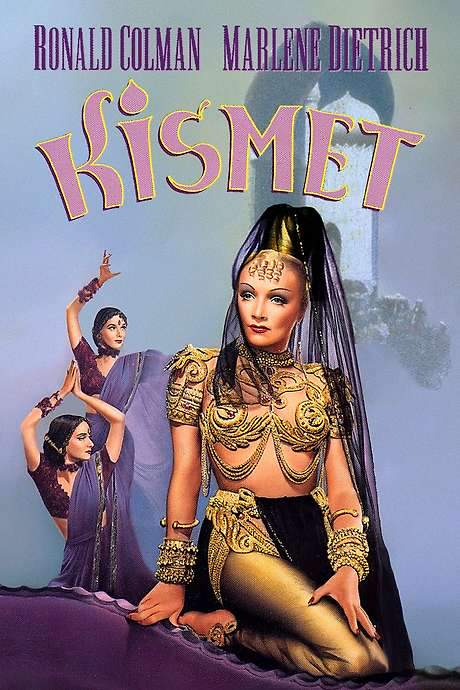
Set in a Baghdad that feels like a storybook come to life, where the city glitters with a newly minted shine, this tale follows Hafiz, a middle‑aged beggar and magician who drifts between two identities. By day he parades as the self-styled King of Beggars, and by night he transforms into the mysterious Prince of Hassir. In his nocturnal guise, he encounters Jamilla, the Queen of the Grand Vizier's harem, a woman who knows he is playing a role yet remains unexpectedly drawn to him. Their dynamic becomes a delicate cat-and-mouse of attraction, bold showmanship, and shared secrets, set against the backdrop of palace politics.
Across the city, a young and curious Caliph disguises himself as the “son of the Royal Gardener,” wandering the streets to understand the people he rules. His undercover journey is rooted in a wary relationship with his trusted adviser, Agha, whose stern counsel and oversight frame the Caliph’s every decision. During these street explorations, the Caliph meets Marsinah, Hafiz’s daughter, and a tender romance begins to bloom. The Caliph’s intrigue deepens when he encounters the Prince of Hassir and is quietly amused by Hafiz’s deft magic tricks—especially the moment a knife seems to materialize from a handkerchief, a stunt that wows him but also foreshadows danger.
To shelter his daughter within a world of fairy-tale promises, Hafiz has built tall walls around his home. He believes in elevating Marsinah beyond ordinary life, and his plan—though unorthodox—aims to position her for a union with royalty. Marsinah’s nurse, Karsha, often challenges Hafiz with a blunt bite of reality, muttering a firm “Bah!” whenever his dreams threaten to outsize what is practical. Yet Marsinah confides in her nurse, revealing how she has fallen for the son of a gardener, not for aristocracy. Karsha keeps this confession close, knowing the future Hafiz imagines for his daughter might never align with her heart’s desire.
The plot thickens as Marsinah speaks openly of Hafiz’s promise of a prince who would tear down the walls that guard her world. The Caliph returns to his palace with the intention of proposing to Marsinah, setting the stage for a collision between love, status, and power. On a separate track, Hafiz witnesses an assassination attempt on the Caliph by an agent of the Grand Vizier, who is swiftly killed by the Vizier’s own men. The Caliph’s suspicions shift toward the Vizier, who seems increasingly entangled in a web of plots. Hafiz, meanwhile, perceives an opportunity: if Marsinah could wed the Vizier, the two worlds of ordinary life and royal ambition could be brought together—and perhaps even stabilized.
Predictions of a future alliance prompt Hafiz to act. He steals fine clothes from the market and enters the Vizier’s circle as the Prince of Hassir, offering Marsinah’s hand in marriage. The Vizier welcomes the prospect with wine, music, and dancing girls, while Jamilla—sensing the stakes—reluctantly agrees to perform when she realizes the guest’s true identity. In a private moment, Hafiz asks Jamilla to abandon the Vizier and marry him, but she refuses the moment it would endanger her own seat of power. Marsinah, for her part, faces a stark choice: continue under Hafiz’s dream or step into a life she has glimpsed as queenly but perilous.
Hafiz’s deception is soon exposed, and he is arrested for theft of the fancy clothing. The Vizier’s palace is placed under Caliph’s guard to secure his compliance, and Hafiz bargains for a grimly pragmatic outcome: his own hands back, his life spared, and Marsinah elevated to be the Grand Vizier’s wife. The bargain hinges on a final display of Hafiz’s knife trick, a demonstration meant to prove his cunning and win the Vizier’s cooperation.
As the plan unfolds, Hafiz—with the Vizier’s influence behind the scenes—prepares to meet the Caliph in a public setting, hoping to clinch Marsinah’s betrothal. The Caliph, aware of the ruse, is wary of the source of the petition and, at a critical moment, learns that the man he has known as Hafiz is the same young ruler who has captured his daughter’s heart. The attempted manipulation unravels quickly: the Caliph sidesteps the blade, and chaos ensues as the Vizier escapes and orders Marsinah killed. Hafiz rushes to protect his daughter, but a confrontation in the harem ends with the Vizier slain and Hafiz taken into custody by palace guards.
The punishment is stark but foreordained: the Caliph dissolves Hafiz’s twofold identity by appointing him as a Prince of the barren lands of Hassir, and he is banished from Baghdad by sunset unless the walls are demolished. Hafiz accepts, asking only that the walls be torn down when the time comes to claim Marsinah. In a climactic reversal, the Caliph’s troops tear down the walls, and he rides in on a white horse, with Marsinah and Jamilla by his side. The revelation unfolds—Marsinah’s gardener’s son is the Caliph all along—and the lovers are united. Hafiz, now a genuine Prince of Hassir in name, eyes the future with a mixed sense of loss and kinship. Exiled from Baghdad, he watches his daughter wed the Caliph, and with Jamilla beside him, they depart for Hassir, fulfilling Hafiz’s long‑standing kismet and sealing the story in a quiet, hopeful final note.