



Plot Explained Spoilers guaranteed!
Plot Explained

Browse by genre

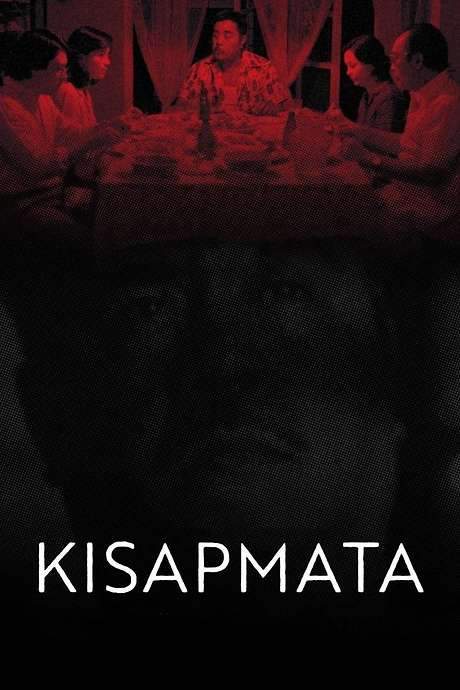
Kisapmata (1981) movie poster

Plot Summary

Kisapmata (1981) Plot Summary Explained

Release, runtime and language
1981 · 99 mins · Tagalog
Directed by
Mike de Leon
Starring
Charito Solis, Juan Rodrigo, Charo Santos-Concio, Jay Ilagan, Ruben Rustia, Aida Carmona

A quiet life is upended when retired police sergeant Mang, who dominates his wife and daughter, faces a crisis. Daughter Mila becomes pregnant and is forced to marry Noel, prompting Mang to try extending his control over his new son‑in‑law. Noel resists, leading to a tense confrontation that threatens the family’s suffocating world.

On this page (6)
  1. 1 Where to watch
  2. 2 What happens: full plot
  3. 3 Plot questions answered
  4. 4 Movie threads
  5. 5 Movies like Kisapmata
  6. 6 Every angle

Where to watch

Where to Watch Kisapmata (1981)

Where can you watch Kisapmata? Stream, rent or buy it in the US, including on Plex: current JustWatch availability with up-to-date prices.

Streaming availability powered by JustWatch

Full plot summary · contains spoilers

What Happens in Kisapmata: Full Plot Summary

The whole story of Kisapmata (1981) explained, from the opening scene to the final frame: every key event, every twist and what it all adds up to. Read it as a quick recap before the sequel, to check a scene you missed, or to finally understand what really happened.

Mila Carandang, Charo Santos-Concio, reluctantly tells her domineering father, Tatang Dadong Carandang, Vic Silayan, a retired policeman, that she is pregnant. She asks permission from her father to marry her co-worker Noel Manalansan, Jay Ilagan. Dadong begrudgingly gives his permission when his unreasonable demands for a hefty dowry are met.

After the wedding, Dadong insists that the newlyweds stay in his house. Despite protestations, the young couple acquiesce. During their time living in the Carandang house, Mila tells Noel that she must stay with her sick mother Dely, much to Noel's annoyance as he wants to move out with Mila as soon as possible. One evening, Noel is forced to find other accommodations after he is locked out of the house.

Although still fearful of her father, Mila decides to escape. She and Noel stay with Noel's father, Ruben Rustia. The young couple, however, return to the Carandang house to gather their belongings. Dadong pleads with Mila to stay, saying he has an interest in the baby she is carrying (suggesting that he has been carrying an incestuous relationship with his daughter). As Mila and Noel stand firm on leaving, a depressed Dadong pulls out his gun, and shoots Dely, Noel, Mila, and finally himself.

Last updated: February 18, 2026 at 23:45

Was this helpful?

Plot questions answered

Kisapmata Plot Explained: Your Questions Answered

The questions people ask most about Kisapmata (1981): what happens in the confusing scenes, why the characters do what they do, the twists, hidden details and what the ending means. Each answer contains spoilers.

Q1

Why does Dadong agree to let Mila marry Noel?

Dadong agrees to the marriage only after his unreasonable demand for a hefty dowry is met. Despite his controlling nature, he cannot outright refuse because Mila is pregnant and the situation would become socially unacceptable. However, granting permission under his terms allows him to maintain financial control over the couple and keep them within his authority.

Foreshadowing: Earlier scenes show Dadong's pattern of using money as leverage to control his family.

  • dadong
  • marriage
  • dowry
  • control
  • permission
Q2

Why does Dadong insist the newlyweds stay in his house?

Dadong forces Mila and Noel to remain in his house because keeping them under his roof allows him to maintain his control over them. He cannot tolerate the idea of his daughter living outside his authority. This arrangement ensures he can monitor their movements and continue exerting power over their lives.

Foreshadowing: From the wedding scene, Dadong's outward acceptance masks the underlying desire to keep the couple dependent on him.

  • dadong
  • house
  • control
  • newlyweds
  • living arrangement
Q3

What does Dadong mean when he says he has an interest in the baby?

When Dadong pleads with Mila to stay and claims an interest in her baby, he is implying an incestuous relationship with his own daughter. This disturbing revelation is the climax of his pathological behavior and explains why he cannot let her leave, he views the unborn child as his own, not Noel's.

Foreshadowing: Throughout the film, Dadong's control over Mila goes beyond typical paternal authority, hinting at deeper psychological depravity.

  • dadong
  • baby
  • incest
  • disturbing
  • revelation
Q4

Why does Mila stay with her sick mother instead of moving out with Noel?

Mila remains at the Carandang house to care for her sick mother Dely, despite wanting to escape with Noel. This reflects her conflicting loyalties, she fears her father but feels morally obligated to care for her ailing mother. This internal conflict keeps her trapped in the toxic household longer.

Foreshadowing: Mila's reluctance to confront her father and her sense of duty to her mother are established early in the film.

  • mila
  • mother
  • sick
  • obligation
  • caretaking
Q5

What triggers Dadong to shoot everyone?

Dadong's violence erupts when Mila and Noel firmly refuse to stay, signaling his complete loss of control. His disturbing admission about the baby has been rejected, and he cannot bear the idea of his daughter living freely with another man. Rather than let them go, he destroys them all and himself.

Foreshadowing: The confrontation escalates directly from Dadong's plea about the baby, and his grip on the gun was shown earlier in the film.

  • dadong
  • shooting
  • violence
  • control
  • rejection
Q6

Why does Dadong kill Dely first?

Dadong shoots Dely first because she is the easiest target and represents another person who has defied his authority. With Mila's mother gone, he removes an obstacle to his control over Mila. It also demonstrates his complete ruthlessness, he spares no one who stands in his way, even his own wife.

Foreshadowing: Dely's illness already isolates her, making her vulnerable in the household hierarchy.

  • dely
  • shooting
  • first
  • violence
  • target
Q7

Why do Mila and Noel return to the house after escaping?

Mila and Noel return to the Carandang house to collect their belongings, believing they had secured a safe distance at Noel's father's house. This decision proves fatal, they walk back into the heart of Dadong's territory, giving him the opportunity to confront and destroy them.

Foreshadowing: The escape scene shows they left with little, making the return for possessions a logical but tragic choice.

  • return
  • belongings
  • fatal
  • mistake
  • trap
Q8

Why is Noel locked out of the house?

Noel is locked out of the house one evening, forcing him to find alternative accommodation. This is another manifestation of Dadong's control, he effectively punishes Noel by denying him access to his own home and wife. The incident highlights Noel's growing desperation and the couple's lack of true autonomy.

Foreshadowing: Earlier scenes establish Dadong's pattern of using the house as a tool of control.

  • noel
  • locked out
  • punishment
  • accommodation
  • desperation
Q9

What does the title Kisapmata mean?

Kisapmata is a Filipino term meaning "in the blink of an eye" or "in a split second." The title refers to how quickly the family's peaceful facade collapses into tragedy, Dadong's violent rampage happens in an instant, transforming their lives forever.

Foreshadowing: The film's steady pacing builds tension before the sudden, brutal conclusion.

  • kisapmata
  • title
  • meaning
  • filipino
  • blink of an eye
Q10

Why can't Noel protect Mila from her father?

Noel is powerless to protect Mila because Dadong is an armed retired police sergeant who wields both physical authority and psychological control over his family. Noel has no legal standing or physical advantage, and his attempts to assert independence are consistently undermined by Dadong's manipulations and the family's fear of him.

Foreshadowing: Noel's frustration builds throughout the film as each escape attempt fails.

  • noel
  • protection
  • father
  • powerless
  • police sergeant

Movie threads

More Movies Like Kisapmata, by Mood & Story

Curated lists built around what makes Kisapmata tick: the same mood, the same kind of story or the same emotional payoff. Each list explains why these movies belong together.

Domestic thrillers of psychological control like Kisapmata

Stories where home becomes a prison and family ties are instruments of control. If you were gripped by the oppressive family dynamics in Kisapmata, this section features movies like it. Explore other thrillers and dramas where toxic family control leads to psychological terror and desperate, tragic confrontations.

  • claustrophobic
  • oppressive
  • tense
  • dreadful
  • psychological
  • bleak
  • Tone: dark, tense, oppressive
  • Pacing: steady, deliberate
Why these movies?

The story pattern: These narratives follow characters trapped in a domestic setting by a dominating family figure. The story escalates as the controlled individual attempts to resist or escape, leading to an intense confrontation that rarely ends well, emphasizing the destructive power of familial abuse.

Why they belong together: Movies in this thread share a focus on the home as a source of terror, driven by a central character's psychological domination over their family. They create a similar feeling of dread and claustrophobia through steady pacing and bleak, heavy emotional stakes.

Slow burn tragedies with bleak endings like Kisapmata

A steady, inexorable march towards a devastating and inevitable conclusion. For viewers who appreciated the grim, steady build of Kisapmata, this section finds similar movies. Discover other intense dramas and thrillers where a sense of dread grows steadily towards an unavoidable and devastating conclusion.

  • bleak
  • dreadful
  • tense
  • tragic
  • oppressive
  • heavy
  • Tone: bleak, dreadful, tragic
  • Pacing: steady, slow burn
Why these movies?

The story pattern: The narrative structure is linear and straightforward, avoiding twists in favor of a clear, grim trajectory. The focus is on the psychological toll on the characters as they are pushed towards a breaking point, resulting in a finale that offers little to no hope.

Why they belong together: These films are united by their methodical pacing and heavy, oppressive mood. They prioritize the building of unbearable dread over cheap thrills, leading to conclusions that are emotionally devastating and thematically bleak, leaving a lasting impact on the viewer.

If you liked this

Movies Like Kisapmata

Similar movies to Kisapmata: the same genre, themes or kind of story. Each one comes with its own plot summary, timeline and ending explained.

Browse all movie summaries

Every angle

Kisapmata (1981) Explained: Plot, Timeline & Characters

Everything about Kisapmata in one place: what happens in the plot summary, the timeline in chronological order, the characters and meaning and a spoiler-free summary. What's After the Movie adds the cast, box office and post-credit scenes.

Coming soon on iOS and Android

The Plot Explained Movie Summary App

Plot summaries, endings explained and timelines on your phone. Catch up on any movie in minutes, save your favorites and never miss a twist again.

Be the first to know when we launch. Your email stays private, always.

Learn more about the app