Plot Explained Spoilers guaranteed!
Plot Explained

Browse by genre

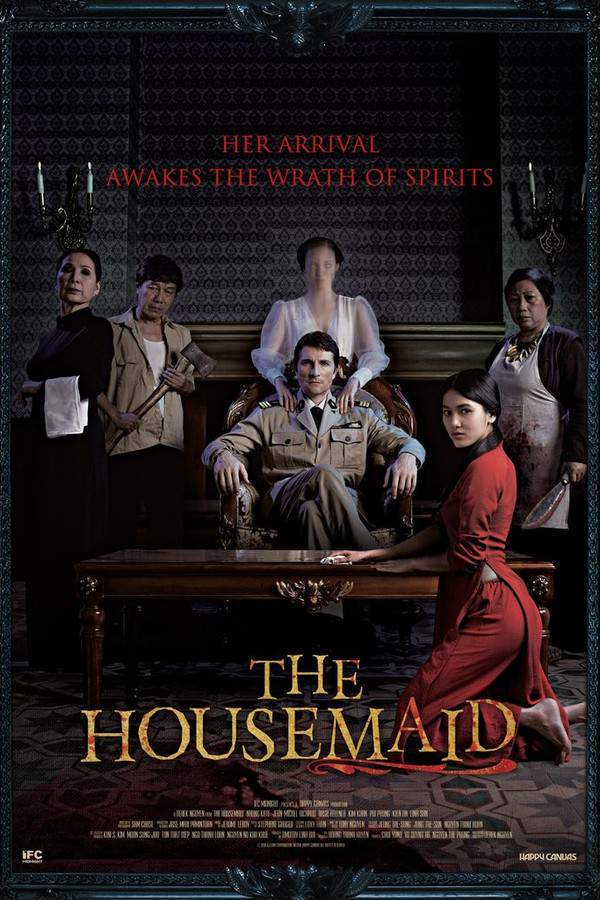
The Housemaid (2011) movie poster

Plot Summary

The Housemaid (2011) Plot Summary Explained

Release, runtime and language
2011 · 106 min · English
Loading streaming availability…
Directed by
Sang-soo Im

Within a wealthy household, a young and inexperienced housemaid finds herself entangled in a dangerous and seductive game. The patriarch’s attention compromises her innocence, sparking a tense power struggle with the family’s formidable women: the pregnant wife, her controlling mother-in-law, and a resentful housekeeper. As the situation intensifies, the housemaid, Eun-yi, must use her wits to navigate the escalating conflict and fight for her freedom and well-being.

On this page (5)
  1. 1 Where to watch
  2. 2 What happens: full plot
  3. 3 Plot questions answered
  4. 4 Movie threads
  5. 5 Every angle
Loading streaming availability…

Full plot summary · contains spoilers

What Happens in The Housemaid: Full Plot Summary

The whole story of The Housemaid (2011) explained, from the opening scene to the final frame: every key event, every twist and what it all adds up to. Read it as a quick recap before the sequel, to check a scene you missed, or to finally understand what really happened.

The film opens on a crowded city street where tragedy interrupts the day: a young woman jumps to her death from a building ledge. Eun-yi, who works in a bustling restaurant, is drawn to the scene and persuades her coworker and roommate to drive her there, lingering over the chalk outline that marks where the woman’s body lay. The next morning, an older woman named Byeong-sik (also known as Miss Cho) visits her small apartment and quietly expresses interest in offering a job. The encounter marks the beginning of a fraught sequence of power, desire, and social divide that will pull Eun-yi into a family life she did not anticipate.

Eun-yi is hired as an au pair for Hae-ra, who is pregnant with twins, and her very wealthy husband Hoon. Her primary duty is to care for the couple’s young daughter, Nami, a task that allows Eun-yi to form a gentle bond with the child. As she settles into the rhythm of the household, Hoon begins to flirt with Eun-yi, offering glasses of wine and playing the piano as a lure, and the two eventually slip into a sexual relationship. Despite the affair, Eun-yi remains outwardly warm toward Hae-ra, the oblivious wife, even expressing genuine delight at the progress of Hae-ra’s pregnancy and the life growing inside her.

Meanwhile, the other live-in maid, Byeong-sik (Miss Cho), witnesses the affair. She tries to pry details from Eun-yi, but Eun-yi keeps her distance. Later, Miss Cho shares her suspicions with Hae-ra’s mother, Mi-hee, who visits the home and orchestrates a chilling “accident.” A ladder at the top of the stairs becomes the stage for a fall; Eun-yi clings to a chandelier as she pleads to be pulled over the railing, but Mi-hee does not help. The fall leaves Eun-yi with a concussion, and she spends the night in the hospital. In a bitter twist of fate, Eun-yi discovers she is pregnant and begins to weigh whether abortion might be the safer option.

The affair becomes public within the family’s circle, and Mi-hee instructs Hae-ra to ignore it, arguing that all wealthy husbands cheat and that a life of quiet luxury is worth preserving. That night, Hae-ra confronts Eun-yi with a golf club but cannot bring herself to strike. The next day, Hae-ra and her mother forcefully confront Eun-yi, offering a large sum—$100,000—to get an abortion and leave. Knowing Eun-yi would not terminate her pregnancy for money, Hae-ra instead takes matters into her own hands by poisoning the herbal medicines Eun-yi takes daily. The next chapter follows as Hae-ra goes to the hospital and gives birth to her twin sons, while Hoon visits, and Hae-ra’s ill will toward him is made clear.

Furious, Hoon returns home to find Eun-yi in his bathtub, where she reveals that she is pregnant with his child and plans to keep the baby. Eun-yi then collapses from the lingering effects of the poisoning, and Mi-hee arranges an abortion without Eun-yi’s consent. After the procedure, Miss Cho reveals to Eun-yi that she was the one who told Mi-hee about the pregnancy. Although angry, Eun-yi forgives Miss Cho and vows to seek revenge on the family. As she recovers, Eun-yi quietly plans her return to the house, aided by Miss Cho, and secretly enters again.

Hoon eventually discovers Eun-yi breastfeeding one of the newborns. Hae-ra orders Miss Cho to expel her, but Miss Cho refuses and quits on the spot. In a climactic turn of events, Eun-yi confronts the entire family—Hae-ra, Mi-hee, Hoon, and Nami—and, in a harrowing moment, hangs herself from the chandelier and sets her body ablaze, leaving the family to watch in horror.

The final scene shifts to a stark, snowy outdoors where the family gathers to celebrate Nami’s birthday, all speaking English as if to sever ties with the world they know. Hae-ra sings “Happy Birthday,” and Hoon hands a glass of champagne to Nami, a moment that underscores a sense of detachment and unspoken insanity that lingers over the family as the camera lingers on Nami’s gaze.
Last updated: November 22, 2025 at 15:58

Was this helpful?

Plot questions answered

The Housemaid Plot Explained: Your Questions Answered

The questions people ask most about The Housemaid (2011): what happens in the confusing scenes, why the characters do what they do, the twists, hidden details and what the ending means. Each answer contains spoilers.

Q1

Why does Eun-yi linger at the suicide scene in the opening?

Eun-yi is drawn to the chalk outline because it represents a premonition of her own fate. The opening suicide, where a young woman jumps to her death, foreshadows Eun-yi's own tragic end. Her fascination signals that she intuitively understands the vulnerability of young women in the city and hints at her eventual psychological unraveling.

Foreshadowing: The opening suicide directly parallels Eun-yi's own death at the climax, where she hangs herself from a chandelier and sets herself on fire.

  • opening scene
  • suicide
  • chalk outline
  • premonition
  • foreshadowing
Q2

Why does Miss Cho tell Mi-hee about the affair?

Miss Cho betrays Eun-yi because she is resentful of being地位和 ignored in the household. As the longtime housekeeper, she feels invisible and unappreciated by the family. By revealing the affair to Mi-hee, she seeks to regain some power and relevance within the household hierarchy, though her motivations shift later when she helps Eun-yi seek revenge.

Foreshadowing: Miss Cho's initial betrayal sets up the later twist where she becomes Eun-yi's ally, showing her complex allegiances.

  • miss cho
  • betrayal
  • mi-hee
  • affair
  • power struggle
  • housekeeper
Q3

Why does Mi-hee arrange the ladder accident?

Mi-hee orchestrates the ladder fall to eliminate Eun-yi discreetly after learning about the affair. Rather than confronting the situation directly, she stages an 'accident' that leaves Eun-yi with a concussion. This method allows Mi-hee to protect the family's reputation while removing a threat to her daughter's marriage. When Eun-yi clings to the chandelier pleading for help, Mi-hee's deliberate refusal reveals her capacity for cold, calculated violence.

Foreshadowing: The chandelier becomes the site of Eun-yi's suicide at the climax, directly reversing the earlier moment where she clung to it for survival.

  • mi-hee
  • ladder accident
  • staged
  • chandelier
  • concussion
  • attempt to kill
Q4

Why does Hae-ra poison Eun-yi's herbal medicine?

Hae-ra poisons Eun-yi because she refuses the $100,000 bribe to get an abortion and leave. Realizing Eun-yi would not terminate her pregnancy for money, Hae-ra takes matters into her own hands by tampering with the herbal medicine packets Eun-yi drinks daily. This silent, passive-aggressive method reflects Hae-ra's character - she cannot bring herself to confront Eun-yi directly with the golf club, yet she actively chooses to poison her.

Foreshadowing: The poisoning weakens Eun-yi and leads to the hospital stay where she learns she is pregnant, pushing the conflict toward its tragic climax.

  • hae-ra
  • poisoning
  • herbal medicine
  • abortion
  • pregnancy
  • betrayal
Q6

Why does Eun-yi forgive Miss Cho after she revealed the pregnancy?

Eun-yi forgives Miss Cho because she recognizes that holding onto anger will not help her achieve revenge against the family. Rather than waste energy on rage at the woman who betrayed her, Eun-yi calculates that she needs allies. Miss Cho knows the household's secrets and weaknesses, making her a valuable asset for Eun-yi's return. This pragmatic forgiveness shows Eun-yi's transformation from naive victim to calculating survivor.

Foreshadowing: Miss Cho's subsequent help allows Eun-yi to sneak back into the house, setting up the final confrontation.

  • miss cho
  • forgiveness
  • revenge
  • alliance
  • betrayal
  • transformation
Q7

Why is Eun-yi breastfeeding one of Hae-ra's newborns?

Eun-yi breastfeeds one of the twins as a deliberate psychological attack on the family. Having been denied her own child through forced abortion, she uses this shocking act to provoke Hae-ra and assert her presence. The act is meant to unsettle the family and claim a form of maternal power within the household, demonstrating that she will not be discarded easily.

Foreshadowing: This act sends Hae-ra over the edge and triggers the final confrontation where Eun-yi takes her own life.

  • breastfeeding
  • newborns
  • twins
  • provocation
  • psychological attack
  • hae-ra
Q8

Why does Eun-yi hang herself from the chandelier and set herself on fire?

Eun-yi's suicide is a final act of revenge rather than mere desperation. By hanging from the same chandelier she previously clung to for survival, she completes the tragic arc. Setting herself on fire ensures the family must witness and live with this horrifying image forever. She denies them the relief of her simple disappearance and instead leaves them with a permanent psychological scar - a final reversal of power after being victimized throughout the film.

Foreshadowing: This moment echoes both the opening suicide and her earlier fall from the chandelier, creating a tragic symmetry.

  • suicide
  • chandelier
  • fire
  • revenge
  • final confrontation
  • self-destruction
Q9

Why does the family celebrate Nami's birthday in English in the snow?

The final scene shows the family speaking English and celebrating Nami's birthday outdoors in the snow, which symbolizes their attempt to distance themselves from Korean society and the traumatic events. Speaking English represents their desire to be seen as cosmopolitan and Western, separating themselves from the scandal and their complicity in Eun-yi's death. The cold, stark snow landscape reflects their emotional detachment and the hollowness of their continued existence after witnessing such horror.

  • final scene
  • english
  • snow
  • nami birthday
  • detachment
  • family facade
  • surreal ending
Q10

Why does Mi-hee tell Hae-ra to ignore the affair?

Mi-hee advises Hae-ra to ignore the affair because she believes maintaining a luxurious lifestyle is more important than confronting infidelity. Her philosophy is that all wealthy husbands have affairs, and a wife should tolerate this to preserve her comfortable position. This pragmatic, morally bankrupt advice reveals Mi-hee's worldview - she values social status and material security over dignity or justice, setting the stage for the family's continued abuse of Eun-yi.

Foreshadowing: This acceptance of infidelity emboldens Hae-ra to take more extreme measures when her initial passive approach fails.

  • mi-hee
  • ignore affair
  • hae-ra
  • wealthy husband
  • tolerance
  • manipulation
Q11

Why does Hae-ra fail to strike Eun-yi with the golf club?

Hae-ra confronts Eun-yi with a golf club but cannot bring herself to strike, revealing her fundamental weakness despite her anger. She lacks the physical and psychological capability to commit violent act directly - she is more comfortable with passive aggression and silent manipulation. This moment underscores that Hae-ra is ultimately a product of her mother's influence, preferring to poison Eun-yi rather than face her openly.

Foreshadowing: The failed confrontation leads Hae-ra to resort to poisoning, which becomes her primary method of dealing with Eun-yi.

  • hae-ra
  • golf club
  • confrontation
  • weakness
  • passive aggression
  • inability to kill

Movie threads

More Movies Like The Housemaid, by Mood & Story

Curated lists built around what makes The Housemaid tick: the same mood, the same kind of story or the same emotional payoff. Each list explains why these movies belong together.

Thrillers about domestic power struggles like The Housemaid

Tense psychological thrillers where a home becomes a battlefield. If you liked the tense, claustrophobic power games in The Housemaid, explore more movies where wealthy households hide dark secrets and brutal psychological battles. These films feature manipulative characters, class tension, and a steady, suffocating build-up of dread within a single setting.

  • claustrophobic
  • tense
  • oppressive
  • psychological
  • unsettling
  • vengeful
  • Tone: dark, tense, oppressive
  • Pacing: steady, methodical build
Why these movies?

The story pattern: These narratives typically involve an individual of lower status entering a wealthy, closed-off family system. The story unfolds as a methodical power struggle, where alliances shift, secrets are weaponized, and the protagonist must navigate a web of manipulation to survive, often culminating in a dramatic and destructive confrontation.

Why they belong together: These films are grouped by their shared setting of a luxurious but oppressive household, a central theme of psychological manipulation between classes, and a consistently dark, tense tone that creates a feeling of inescapable dread.

Bleak revenge thrillers with tragic endings like The Housemaid

Stories where revenge leads to self-destruction and tragic endings. For viewers who appreciated the tragic, fiery climax of The Housemaid, this list features movies about revenge that backfires. These are heavy psychological dramas and thrillers where the quest for payback leads to self-destruction, offering no clean wins and ending on a profoundly bleak note.

  • bleak
  • tragic
  • vengeful
  • melancholic
  • heavy
  • unsettling
  • Tone: dark, bleak, melancholic
  • Pacing: steady, relentless
Why these movies?

The story pattern: The narrative follows a victim who, after enduring significant trauma, decides to take revenge. However, their actions spiral out of control, often hurting themselves as much as their targets. The journey is psychologically heavy, and the ending provides no relief, instead underscoring the futility and tragic cost of their vengeance.

Why they belong together: These films share a specific, somber emotional arc: a heavy emotional weight, a dark tone, and a conclusively bleak ending feel. They explore the theme of revenge not as empowerment but as a corrupting, self-destructive force.

Every angle

The Housemaid (2011) Explained: Plot, Timeline & Characters

Everything about The Housemaid in one place: what happens in the plot summary, the timeline in chronological order, the characters and meaning and a spoiler-free summary. What's After the Movie adds the cast, box office and post-credit scenes.

Coming soon on iOS and Android

The Plot Explained Movie Summary App

Plot summaries, endings explained and timelines on your phone. Catch up on any movie in minutes, save your favorites and never miss a twist again.

Be the first to know when we launch. Your email stays private, always.

Learn more about the app