Year: 1984
Runtime: 188 mins
Language: Italian
Directors: Paolo Taviani, Vittorio Taviani
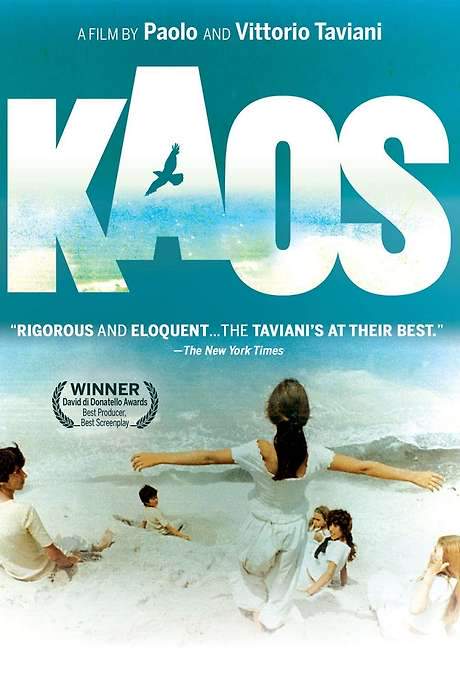
Five stories center on a werewolf, a feudal landlord, peasants, a ghost, and a mother and her sons.
Find where to stream, rent, or buy Kaos (1984) in the US with current JustWatch availability, up-to-date pricing, and platform listings for subscription, rental, and digital purchase options.
Warning: spoilers below!
Haven’t seen Kaos yet? This summary contains major spoilers. Bookmark the page, watch the movie, and come back for the full breakdown. If you're ready, scroll on and relive the story!
Read the complete plot breakdown of Kaos (1984), including all key story events, major twists, and the ending explained in detail. Discover what really happened, and what it all means.
Across Sicily, in the late 19th century and the early 20th, a tapestry of four stories unfolds with a quiet, intimate realism. A crow acts as a roaming thread that ties the tales together: captured by villagers in a brief opening moment, bells are tied to its neck and it is freed to circle above them, its ringing serving as a herald that can signal misfortune or renewal, all underscored by a recurring musical leitmotif. The crow also stands as a symbol of social marginalization, since in the opening scene it is caught while incubating eggs despite being male; the peasants torment it before releasing it, a image that frames the film’s moral center. In the first tale L’altro figlio, Mariagrazia, Margarita Lozano appears as a key figure who navigates the pressures of family and tradition within a society on the cusp of change. The piece gently explores how those on the edges of respectability endure, endure, then attempt to find footing within stubborn social constraints.
The stories deliberately focus on social outcasts, and the dramatic arc of the first three offers moments of painful acceptance, renewal, and quiet triumph. In the second tale, Mal di luna, the world is seen through the eyes of the man at its margins, with Batà, Claudio Bigagli among the cast, and through the lives threaded by Saro, Massimo Bonetti. The uneasy tenderness of the era surfaces as Saro’s fate brushes against the lives of those around him, touching Sidora, Enrica Maria Modugno as a figure who embodies the era’s fragile optimism, and the segment Colloquio con la madre where Luigi Pirandello, Omero Antonutti, speaks with his mother, Regina Bianchi. These threads explore the tension between social judgment and personal longing, hinting at renewal and consolation even in the wake of hardship. The same circle returns to Francesca, the girl in L’altro figlio and Requiem, who is portrayed by Laura Mollica, weaving a throughline of youth, memory, and the weight of expectation across the films’ mosaic.
The film remains essentially anchored in realism, yet it is threaded with delicate, fleeting surreal moments that catch the eye. In nearly every episode there are subtle allusions to other parts of the film—surprises that become more apparent on repeated viewings. A restrained silence punctuates key moments, creating a counterpoint to the plot’s sometimes brisk, social realism. This quiet surrealism appears in scenes such as the cruel game of Rocco Trupia’s gang in the first story, the dance around the jar in the third, and the dispersal of a demonstration in the fourth, each interrupting the normal rhythm with a calm, almost breathless stillness that lingers after the moment passes.
The latter chapters broaden the scope of the storytelling, drawing in new faces and settings while preserving the same core interest in people living on the fringes of their communities. In La giara, the final tale, the circle closes with the peasants from the opening reappearing as the lives on the margins intersect once more. Here Sara, Mariella Lo Sardo, along with Zi’ Dima, Franco Franchi, Don Lollò, Ciccio Ingrassia, and Jeli, Giovanni Marsala, inhabit a story built around social bonds, rumor, and stubborn endurance. The way these figures interact, with dignity and a touch of humor, underscores the film’s belief in resilience and community even when life is hard.
Throughout, the film’s voice stays calm, observant, and human. It is not afraid to linger on small, almost invisible moments—the look of a child, a shared silenced breath, a gesture that says more than words—while still offering a clear throughline about marginal lives, their trials, and their quiet victories. The crow’s leitmotif returns as a soft reminder that fortune can bend, sometimes gently, sometimes with a rough edge, and that the world’s margins hold stories worth telling with honesty and care. The result is a piece that feels both true to its place and time and generous in its attention to people who live just outside the center of the village’s gaze.
Last updated: February 18, 2026 at 23:44
Explore frequently asked questions about Kaos (1984) with spoiler-rich answers covering the full plot summary, major story beats, character motivations, hidden details, and ending meaning. This movie summary FAQ helps explain confusing scenes, plot twists, and narrative decisions in clear, searchable detail.
The crow represents both a herald of fortune and a symbol of social marginalization. In the opening scene, peasants trap a male crow while it incubates eggs, bind a bell to its neck, and torment it before releasing it, this cruelty toward a marginalized creature establishes the film's moral center. The bell's ringing throughout the film foreshadows misfortune or renewal, and its return at the end seals the cycle of stories about people living on society's fringes.
The crow's bell appears in the opening scene and returns as a leitmotif connecting all four episodes.
The stories are linked thematically through their focus on social outcasts and structurally through recurring visual and musical motifs. The same circle of peasants from the opening reappears in the final story, closing the frame. The crow serves as a continuous thread, and elements like Francesca (the girl in L'altro figlio and Requiem) weave through multiple tales, creating subtle connections that become clearer on repeated viewings.
Early episodes contain subtle allusions to later stories that reward attentive viewing.
The film blends social realism with delicate surreal moments that interrupt the action with a quiet, almost breathless stillness, such as the restrained silence in the second story and the ceremonial dance around the jar in the third. These pauses invite deeper contemplation and underscore the emotional undertone beneath the surface narrative, rewarding attentive viewers with moments of poetic wonder without breaking the realistic framework.
These surreal interludes appear consistently across almost every episode.
The title draws from the Greek word for chaos, though the film presents not disorder but rather the lives of marginalized Sicilians often overlooked by mainstream society. These are lives that exist on the fringes, the 'chaos' of social outcasts living outside the village's central gaze, presented with dignity and humanity rather than actual disorder.
In the first story L'altro figlio, a social outcast endures humiliation from Rocco Trupia's gang, which subjects him to a cruel game. By the evening's end, he reconciles with his condition and begins accepting himself, a quiet, intimate moment of personal turning that contrasts with the village's earlier hostility.
The cruel game serves as a test of endurance that shapes his eventual acceptance.
The second story follows Saro, whose fate touches those around him including Sidora, who embodies the era's fragile optimism. Through a gesture of kindness from someone in the community, the outcast experiences renewal of hope, suggesting that marginal figures can find solace and belonging within traditional Sicilian life despite social judgment and personal longing.
The story hints at renewal and consolation even in the wake of hardship.
In the third story, the outcast faces a challenging situation and proves his courage, achieving a form of victory within the community. His arc moves from marginalization toward respected strength, aligning with the film's broader theme of renewal through adversity.
The victory builds on the endurance tested in earlier stories.
In La giara, the final tale, the peasants from the opening return as Sara, Zi' Dima, Don Lollò, and Jeli interact with dignity and humor around themes of social bonds, rumor, and stubborn endurance. The circle closes as lives on the margins intersect once more, completing the cyclical structure and reinforcing the film's belief in community resilience.
The return of the opening peasants creates a frame that completes the narrative cycle.
The setting captures a period of transition in Sicilian society, where traditional structures were changing and people on the margins struggled to find footing within stubborn social constraints. This historical context grounds the film's themes of social exclusion, family pressure, and the delicate balance between rejection and belonging in a tightly knit community.
Francesca appears in both L'altro figlio and Requiem, portrayed by Laura Mollica, weaving a throughline of youth, memory, and the weight of expectation across the film's mosaic. Her recurrence connects the anthology's separate tales and emphasizes the film's interest in how individual stories echo across time and community.
Her appearances create subtle threads that become more apparent on repeated viewings.
Discover curated groups of movies connected by mood, themes, and story style. Browse collections built around emotion, atmosphere, and narrative focus to easily find films that match what you feel like watching right now.
Interwoven stories exploring the quiet struggles and dreams of society's forgotten.If you enjoyed the interconnected stories in Kaos, explore more movies like it. This collection features similar anthology films that use a poetic lens to examine the lives of social outcasts with a slow, melancholic pace.
Narratives in this thread are composed of multiple, loosely connected stories that share a common setting or theme. They unfold at a deliberate pace, emphasizing character introspection and symbolic moments over conventional plot progression, often culminating in a mixed or contemplative conclusion.
These films are grouped together for their shared structure and thematic focus. They use the anthology format to explore themes of marginalization and rural life through a lens of surrealism and social realism, creating a uniquely meditative and reflective viewing experience.
Where everyday life is punctuated by surreal and symbolic moments of magic.Fans of the dreamlike and surreal atmosphere in Kaos will enjoy these similar films. Discover movies that blend realistic rural drama with poetic fantasy elements, creating a contemplative and symbolic vibe.
Stories in this thread unfold gradually in a world that looks like our own, but where the rules are softly bent. Fantastical events are presented matter-of-factly, serving as metaphors for internal struggles or social commentary. The narrative prioritizes mood and symbolism over fast-paced action.
These movies share a specific blend of tone and style: a slow, deliberate pace, a melancholic or reflective mood, and the seamless integration of surreal elements into a socially realistic framework. They create a unique, dreamlike atmosphere that feels both familiar and strangely magical.
Don't stop at just watching - explore Kaos in full detail. From the complete plot summary and scene-by-scene timeline to character breakdowns, thematic analysis, and a deep dive into the ending - every page helps you truly understand what Kaos is all about. Plus, discover what's next after the movie.
Track the full timeline of Kaos with every major event arranged chronologically. Perfect for decoding non-linear storytelling, flashbacks, or parallel narratives with a clear scene-by-scene breakdown.
Discover the characters, locations, and core themes that shape Kaos. Get insights into symbolic elements, setting significance, and deeper narrative meaning - ideal for thematic analysis and movie breakdowns.
Discover movies like Kaos that share similar genres, themes, and storytelling elements. Whether you’re drawn to the atmosphere, character arcs, or plot structure, these curated recommendations will help you explore more films you’ll love.
Kaos (1984) Scene-by-Scene Movie Timeline
Kaos (1984) Movie Characters, Themes & Settings
Kaos (1984) Spoiler-Free Summary & Key Flow
Movies Like Kaos – Similar Titles You’ll Enjoy
Tale of Tales (2016) Plot Summary & Ending Explained
Sicilian Ghost Story (2018) Movie Recap & Themes
The Mother of Tears (2007) Plot Summary & Ending Explained
Rampo Noir (2005) Complete Plot Breakdown
The Beast and the Magic Sword (1983) Detailed Story Recap
She-Wolf (1983) Detailed Story Recap
Nomads (1986) Detailed Story Recap
Sex, Demons and Death (1975) Full Summary & Key Details
Arcana (1972) Plot Summary & Ending Explained
Hour of the Wolf (1968) Ending Explained & Film Insights
Vampyros Lesbos (1971) Story Summary & Characters
Nude for Satan (1974) Detailed Story Recap
Amazing Stories (1994) Ending Explained & Film Insights
Werewolf Woman (1976) Detailed Story Recap
Man, Woman and Beast (1977) Film Overview & Timeline