Plot Explained Spoilers guaranteed!
Plot Explained

Browse by genre

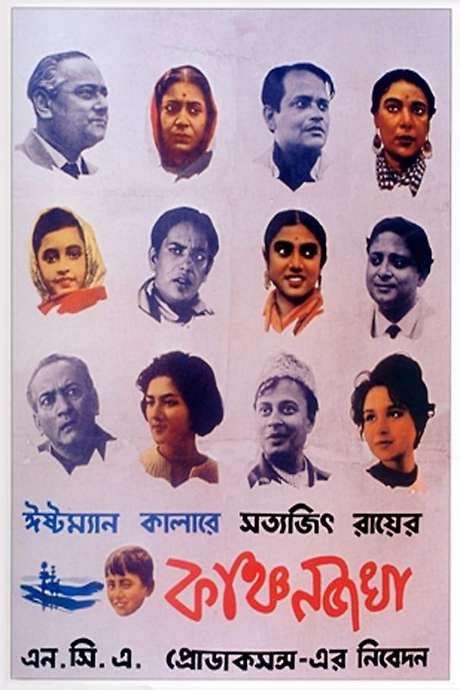
Kanchenjungha (1962) movie poster

Plot Summary

Kanchenjungha (1962) Plot Summary Explained

Release, runtime and language
1962 · 102 mins · Bengali, Bangla
Directed by
Satyajit Ray
Starring
Arun Mukherjee, Alokananda Roy, Karuna Banerjee, N. Viswanathan, Vidya Sinha, Anil Chatterjee

Set against the misty Himalayan foothills and unfolding in real time, the film weaves together a series of intricate family dramas. Through their interactions the Bengali auteur probes post‑colonial India's class and generational divides, while also highlighting the optimism and aspirations of a society in transition.

On this page (5)
  1. 1 What happens: full plot
  2. 2 Plot questions answered
  3. 3 Movie threads
  4. 4 Movies like Kanchenjungha
  5. 5 Every angle

Full plot summary · contains spoilers

What Happens in Kanchenjungha: Full Plot Summary

The whole story of Kanchenjungha (1962) explained, from the opening scene to the final frame: every key event, every twist and what it all adds up to. Read it as a quick recap before the sequel, to check a scene you missed, or to finally understand what really happened.

A wealthy family from Calcutta, led by Indranath Chaudhuri, spends the last day of a vacation in Darjeeling, a hill town at the foot of Mount Kanchenjungha. The peak has remained elusive all trip, and the father uses the setting to press his plan: he wants his daughter to marry a man of his choosing, and he hopes that if they are left alone with the chosen suitor for a stretch, the man will finally propose. The family dynamic is dominated by Indranath’s will, but his wife, Labanya Roy Chaudhuri, watches with wary eyes as the idea takes shape and tensions begin to surface.

The heart of the film unfolds through long walks and long conversations that render the daughter’s feelings in real time, while the mother’s reservations and the broader family opposition weigh on every step. An outsider, Ashoke, a young student who has refused a job offer from Indranath, enters the frame. Although nothing romantic blossoms between him and the daughter, his presence—and the mountains surrounding them—coupled with the fallout of her sister’s failed marriage, nudges the daughter toward rejecting the proposed match.

As the day wears on, Indranath reaches a rendezvous point, expecting to find his family and the successful suitor waiting for him. Instead, no one appears. When the mist finally lifts, the peak of Kanchenjungha stands in full view, a silent monument to the natural grandeur around them. Yet Indranath remains preoccupied, seemingly unable to pause and take in the moment, leaving the final image to linger on the tension between duty, desire, and the elusive promise of perspective.

Last updated: March 05, 2026 at 18:41

Was this helpful?

Plot questions answered

Kanchenjungha Plot Explained: Your Questions Answered

The questions people ask most about Kanchenjungha (1962): what happens in the confusing scenes, why the characters do what they do, the twists, hidden details and what the ending means. Each answer contains spoilers.

Q1

Why does Indranath want to arrange his daughter's marriage?

Indranath believes that leaving his daughter alone with his chosen suitor during the Darjeeling trip will naturally lead the man to propose. He views marriage as a strategic arrangement that secures his daughter's future and maintains the family's social standing, treating it as a paternal duty rather than recognizing his daughter's right to choose.

Foreshadowing: From the start of the day, Indranath openly discusses his plan with the family, showing his determination to control the outcome.

  • Indranath
  • arranged marriage
  • daughter
  • control
  • family status
Q2

Why does the daughter reject the proposed suitor?

The daughter rejects the suitor after meeting Ashoke, a young student who has refused her father's job offer, and after learning about her sister's failed marriage. Ashoke's independent spirit and the cautionary example of her sister's unhappy union make her realize that happiness cannot be manufactured through parental designs. She chooses personal autonomy over her father's plans.

Foreshadowing: The sister's failed marriage is mentioned earlier, serving as a warning about what happens when duty overrides genuine compatibility.

  • daughter
  • suitor
  • rejection
  • Ashoke
  • independence
  • choice
Q3

What role does Ashoke play in the story?

Ashoke serves as a contrast to the father and the planned suitor. As a young student who has refused Indranath's job offer, he represents independence and self-determination. Though nothing romantic develops between him and the daughter, his presence and his refusal to be controlled by Indranath inspire her to reject her father's arrangement.

Foreshadowing: Ashoke is introduced after the family's discussions about marriage begin, appearing as an outsider who lives by his own rules.

  • Ashoke
  • outsider
  • independence
  • student
  • job offer
Q4

How does the sister's failed marriage influence the daughter?

The news of her sister's failed marriage serves as a pivotal turning point for the daughter. It demonstrates that arranged marriages based on circumstance rather than mutual affection can lead to unhappiness. This real family example reinforces her growing conviction that she cannot allow her father to dictate her future.

Foreshadowing: The sister's marriage trouble is introduced as the family tensions mount, becoming a reference point for the daughter's deliberations.

  • sister
  • failed marriage
  • family example
  • unhappiness
Q5

Why does no one appear at the rendezvous point?

Indranath reaches the rendezvous expecting to find his family and the suitor waiting, but finds no one because his daughter has already decided to reject the proposed match. Her choice not to meet him there represents the breaking point in his control over the family dynamics, leaving him isolated with his unfulfilled expectations.

Foreshadowing: The daughter's reluctance and growing resistance during the earlier conversations foreshadow this rejection.

  • rendezvous
  • rejection
  • Indranath
  • absence
  • control
Q6

What does the appearance of Kanchenjungha signify at the end?

When the mist clears and Kanchenjungha emerges in full view, it represents a moment of transcendent beauty and perspective that the father completely misses. The mountain serves as a metaphor for what Indranath cannot see, his daughter's true feelings and the emptiness of his plans. The majestic view highlights his preoccupation with control at the expense of appreciating what truly matters.

Foreshadowing: The mountain remains elusive throughout the film, building toward this moment of revelation that only the audience fully witnesses.

  • Kanchenjungha
  • mountain
  • mist
  • symbolism
  • perspective
Q7

Why can't Indranath appreciate the mountain view at the end?

Indranath remains too absorbed in his marriage plans and sense of betrayal to notice the mountain. His fixation on controlling his daughter's future blinds him to the natural grandeur surrounding him, symbolizing his emotional distance from his family and his inability to see beyond his own preoccupations.

Foreshadowing: Throughout the day, Indranath's conversations focus exclusively on the marriage arrangement, showing his narrowed focus.

  • Indranath
  • mountain
  • preoccupation
  • control
  • blindness
Q8

What is the family dynamic around the marriage decision?

The family is divided between Indranath's authoritarian control and the quiet resistance of his wife and daughter. While Indranath dominates the conversation and pushes his plan, his wife watches with wary eyes, and the daughter gradually finds the courage to oppose him. The tension reflects broader generational and class divides in post-colonial India.

Foreshadowing: The mother's reservations are established early, and her silent disapproval creates a counterweight to the father's authority.

  • family
  • dynamic
  • marriage
  • control
  • resistance
  • generational conflict
Q9

Why does the film unfold in real time with long walks?

The real-time structure with extended walks and conversations allows the viewer to experience the daughter's internal conflict as it develops naturally. The pacing mirrors the gradual unfolding of her emotions and the mounting pressure from her father's plans, making her eventual decision feel earned rather than sudden.

Foreshadowing: The title cards establishing 'long walks and long conversations' set the deliberate pacing from the beginning.

  • real time
  • pacing
  • walks
  • conversations
  • narrative structure
Q10

Why is the Darjeeling setting important to the story?

Darjeeling and its mountainous landscape serve as both a physical and emotional backdrop. The misty foothills mirror the family's obscured relationships and the daughter's uncertain future. The landscape's grandeur provides the contrast needed for the ending, when the peak becomes visible, it highlights what the father fails to see, while the daughter seemingly finds clarity.

Foreshadowing: The mountain's elusiveness throughout the day builds toward the climactic moment of clarity when it finally appears.

  • Darjeeling
  • mountains
  • setting
  • landscape
  • mist
  • Kanchenjungha

Movie threads

More Movies Like Kanchenjungha, by Mood & Story

Curated lists built around what makes Kanchenjungha tick: the same mood, the same kind of story or the same emotional payoff. Each list explains why these movies belong together.

Slow-Burn Family Conflicts like in Kanchenjungha

Stories where family tensions simmer beneath a quiet surface, erupting through dialogue. If you enjoyed the quiet, simmering tensions of Kanchenjungha, explore more movies like it. This list features atmospheric dramas where family conflicts unfold slowly through dialogue, capturing the weight of tradition and the quiet struggle for personal freedom.

  • family dynamics
  • slow burn
  • tense
  • contemplative
  • oppressive
  • psychological
  • Tone: melancholic, contemplative
  • Pacing: slow, deliberate
Why these movies?

The story pattern: These narratives often take place over a short, condensed timeframe, focusing on a family gathering or event that acts as a pressure cooker. The plot advances through nuanced conversations and subtle power struggles, leading to a moment of quiet but significant rebellion or change.

Why they belong together: Movies in this thread share a deliberate, slow pacing that allows character dynamics to develop authentically. They prioritize atmosphere and psychological realism over plot twists, creating a melancholic, reflective mood centered on the complexities of familial relationships.

Atmospheric Real-Time Dramas like Kanchenjungha

Movies that unfold in real time, capturing a slice of life with profound depth. Fans of Kanchenjungha's real-time storytelling will appreciate these similar movies. Discover character-driven stories where the plot unfolds continuously, often in a single location, creating an immersive and contemplative cinematic experience.

  • atmospheric
  • real time
  • contemplative
  • slow burn
  • character study
  • slice of life
  • Tone: contemplative, atmospheric
  • Pacing: slow, steady
Why these movies?

The story pattern: The narrative follows events as they happen chronologically, without significant time jumps. This structure creates a sense of immediacy and intimacy, focusing on character development and subtle thematic exploration rather than a complex, twisting plot.

Why they belong together: These films are grouped by their shared structural choice of real-time storytelling, which creates a unique, immersive vibe. They often feature a slow, observational pace, a strong sense of atmosphere, and a focus on the nuances of human interaction within a constrained timeframe.

If you liked this

Movies Like Kanchenjungha

Similar movies to Kanchenjungha: the same genre, themes or kind of story. Each one comes with its own plot summary, timeline and ending explained.

Browse all movie summaries

Every angle

Kanchenjungha (1962) Explained: Plot, Timeline & Characters

Everything about Kanchenjungha in one place: what happens in the plot summary, the timeline in chronological order, the characters and meaning and a spoiler-free summary. What's After the Movie adds the cast, box office and post-credit scenes.

Coming soon on iOS and Android

The Plot Explained Movie Summary App

Plot summaries, endings explained and timelines on your phone. Catch up on any movie in minutes, save your favorites and never miss a twist again.

Be the first to know when we launch. Your email stays private, always.

Learn more about the app