Plot Explained Spoilers guaranteed!
Plot Explained

Browse by genre

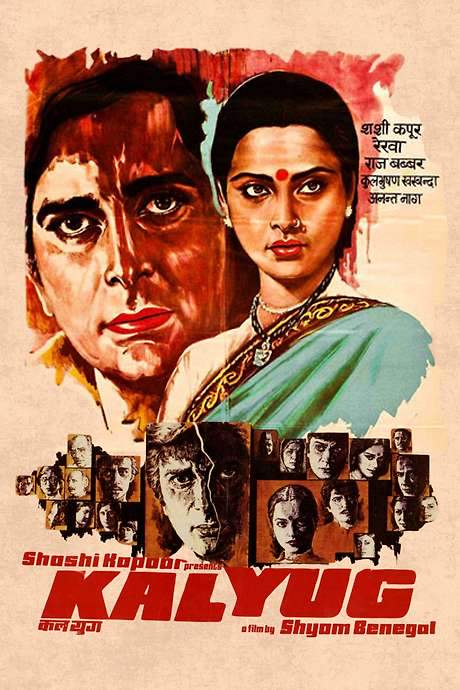
Kalyug (1981) movie poster

Plot Summary

Kalyug (1981) Plot Summary Explained

Release, runtime and language
1981 · 152 mins · Hindi
Directed by
Shyam Benegal
Starring
Om Puri, Shashi Kapoor, Supriya Pathak, Kulbhushan Kharbanda, Anant Nag, Rekha

A tale of intrigue and rivalry between two wealthy brothers as they conspire to create havoc in the other’s life.

On this page (5)
  1. 1 What happens: full plot
  2. 2 Plot questions answered
  3. 3 Movie threads
  4. 4 Movies like Kalyug
  5. 5 Every angle

Full plot summary · contains spoilers

What Happens in Kalyug: Full Plot Summary

The whole story of Kalyug (1981) explained, from the opening scene to the final frame: every key event, every twist and what it all adds up to. Read it as a quick recap before the sequel, to check a scene you missed, or to finally understand what really happened.

This is a tale of intrigue, plots and the inevitable war between two families.

Two pioneering brothers in business, Ramchand and A.K. Hangal Bhishamchand, built a thriving enterprise that spans generations. Bhishamchand, a lifelong bachelor, raised Ramchand's two sons after his demise and gave the family business a firm foundation. Khubchand, the elder son of Ramchand, fathered Dhanraj and Sandeepraj Akash Khurana. Puranchand, Khubchand's younger brother, had died years earlier, leaving three sons: Dharamraj [Raj Babbar], Balraj [Kulbhushan Kharbanda], and Bharatraj [Anant Nag]. Another pivotal figure is Karan Singh/Karna [Shashi Kapoor], an orphan brought up by Bhishamchand.

A sequence of events reveals a long-hidden feud between the two branches of the family. Despite Bhishamchand's efforts to mediate and keep the peace, tensions simmer and then flare into violence. Dhanraj's men strike first by killing Balraj's young son, a brutal act that deepens the rift and pushes the families toward revenge. In a calculated move of retaliation, Bharatraj murders Karan, widening the chasm and pulling closer those who bear the scars of past loyalties.

As the conflict escalates, long-buried skeletons from the family cupboard come into public view, further poisoning relations and eroding trust. Each revelation adds fuel to the fire, staining memories and complicating choices for everyone involved. The feud spirals beyond reconciliation, culminating in the destruction of both households and underscoring the brittleness of moral values in the face of greed, pride, and retaliation.

In the end, the story offers a stark meditation on how ambition can corrode family bonds and how revenge can hollow out generations. The arc emphasizes the cost of power struggles, the fragility of trust, and the way loyalties are tested when old grievances come to light, leaving little room for redemption in a world where pride and vendetta drive every decision.

Last updated: February 18, 2026 at 23:45

Was this helpful?

Plot questions answered

Kalyug Plot Explained: Your Questions Answered

The questions people ask most about Kalyug (1981): what happens in the confusing scenes, why the characters do what they do, the twists, hidden details and what the ending means. Each answer contains spoilers.

Q1

Why did Bhishamchand raise Ramchand's sons after his death?

Bhishamchand raised his brother Ramchand's two sons after Ramchand's death, taking responsibility for their upbringing and continuing to guide the family business. This act established him as the patriarch who kept both branches of the family connected through the shared enterprise.

Foreshadowing: The bond created by Bhishamchand's guardianship would later be tested as the two family branches turned against each other.

  • bhishamchand
  • ramchand
  • sons
  • family business
  • adoption
Q2

What caused the hidden feud between the two family branches?

A long-hidden feud simmered between the two branches of the family, descendants of Ramchand through Khubchand and descendants of Puranchand. Old grievances, debts, and ambitions gradually surfaced, creating antagonism between the families despite their shared lineage and business interests.

Foreshadowing: The seeds of conflict were planted early but remained suppressed until tensions escalated.

  • feud
  • family rivalry
  • hidden conflict
  • ancestral grievance
Q3

Why did Dhanraj's men kill Balraj's young son?

Dhanraj's men deliberately killed Balraj's young son as the first major act of violence in the escalating conflict. This brutal murder was a calculated strike intended to harm Balraj and push the families further toward open warfare, marking the transition from covert hostility to overt violence.

Foreshadowing: This killing directly triggered the cycle of revenge that consumes the family.

  • dhanraj
  • balraj
  • son murder
  • first violence
  • revenge killing
Q4

Why did Bharatraj kill Karan?

Bharatraj murdered Karan in retaliation for the killing of Balraj's son. This vengeful act was meant to strike back at the opposing family, but it also pulled Bhishamchand, who had raised Karan, deeper into the feud, adding personal tragedy to the expanding conflict.

Foreshadowing: Karan's murder shattered whatever remaining neutrality Bhishamchand maintained.

  • bharatraj
  • karan
  • karna
  • murder
  • revenge
  • retaliation
Q5

What skeletons from the family cupboard were revealed?

As the feud escalated, past betrayals and secrets buried within the family came to light. These revelations exposed hidden betrayals, old debts, and long-standing resentments that had been kept private. The exposure of these skeletons further poisoned relations and eroded whatever trust remained between the two sides.

Foreshadowing: The secrets dated back to the founding generation and revealed the fragile foundation of family unity.

  • secrets
  • betrayals
  • family secrets
  • revelations
  • skeletons
Q6

Why couldn't Bhishamchand prevent the family war?

Bhishamchand attempted to mediate between the two factions, but his efforts failed because the mistrust between the families had become too deep. Once the first murder occurred, the cycle of revenge became unstoppable, and his position as peacekeeper was undermined as both sides accused him of bias.

Foreshadowing: His earlier mediation attempts proved futile against the mounting tide of violence.

  • bhishamchand
  • mediation
  • peacekeeping
  • failure
  • negotiation
Q7

How did the feud lead to the destruction of both families?

The conflict escalated from individual acts of revenge into an all-out war between the two families and their business interests. Each retaliation bred further retaliation, with alliances shifting and loyalties fracturing. The violence ultimately destroyed both households completely, leaving ruin as the final outcome.

Foreshadowing: The destruction was inevitable once the cycle of murder and revenge began.

  • escalation
  • destruction
  • war
  • both families
  • collapse
Q8

What is the moral message of Kalyug about family betrayal?

The story delivers a stark warning about how ambition, greed, and pride can corrode family bonds. It illustrates how revenge and vendetta hollow out generations, leaving no room for redemption. The narrative emphasizes that once family loyalty is replaced by rivalry, the destruction becomes irreversible.

Foreshadowing: The title Kalyug itself references the era of moral decay in Hindu mythology.

  • moral message
  • family bonds
  • revenge
  • greed
  • power struggle
  • destruction
Q9

Why was Karan a flashpoint between the families?

Karan, an orphan raised by Bhishamchand, became a bridge, and a flashpoint, between the two family branches. His position as Bhishamchand's ward made him symbolically important to both sides of the feud. When Bharatraj killed him, it represented not just a personal murder but an attack on Bhishamchand's legacy and authority.

Foreshadowing: Karan's upbringing by Bhishamchand made him a target for those seeking to wound the patriarch.

  • karan
  • orphan
  • bhishamchand
  • flashpoint
  • symbolic victim
Q10

What divided Ramchand's and Puranchand's descendants?

The two branches descended from Ramchand (through his son Khubchand) and Puranchand (who died earlier, leaving three sons: Dharamraj, Balraj, and Bharatraj). The division was both generational and financial, rooted in inheritance disputes and competing ambitions for control of the family business built by Ramchand and Bhishamchand.

Foreshadowing: The business empire itself became the prize that fueled the divide.

  • family branches
  • descendants
  • inheritance
  • business rivalry
  • puranchand
  • ramchand

Movie threads

More Movies Like Kalyug, by Mood & Story

Curated lists built around what makes Kalyug tick: the same mood, the same kind of story or the same emotional payoff. Each list explains why these movies belong together.

Familial Feuds and Moral Collapse like in Kalyug

Stories of dynastic families consumed by internal hatred and revenge. For viewers who appreciated the intense family dynamics of Kalyug, this section features movies about bitter family feuds, business rivalries, and the tragic moral decay that destroys a dynasty. Find similar stories of revenge and betrayal.

  • tragic
  • brooding
  • family feud
  • moral decay
  • revenge
  • betrayal
  • Tone: dark, tragic, oppressive
  • Pacing: steady, deliberate
Why these movies?

The story pattern: The narrative typically follows a methodical unraveling, starting with a simmering conflict between family members. This resentment escalates through calculated acts of revenge, often crossing moral lines, and culminates in a devastating, bleak conclusion where the family legacy is completely destroyed.

Why they belong together: These films are grouped by their shared focus on the dark, heavy theme of a family turning against itself. They share a brooding, oppressive tone, high emotional weight, and a plot structure centered on the inevitable consequences of hatred and corruption within a domestic sphere.

Slow Burn Tragedies of Fate like in Kalyug

A deliberate, tense build-up towards an inescapably bleak conclusion. If you liked the steady, tension-filled pacing and bleak conclusion of Kalyug, this section collects movies with a similar slow-burn structure. These are heavy dramas where a grim fate feels inevitable, creating a suspenseful and emotionally draining experience.

  • slow burn
  • tension-filled
  • bleak
  • fated
  • tragic
  • suspenseful
  • Tone: bleak, tense, melancholic
  • Pacing: steady, slow burn
Why these movies?

The story pattern: The narrative pattern is one of escalating tension and foreshadowed tragedy. Characters often feel trapped by their circumstances or flaws, and the plot moves with a relentless, steady pace towards a climax that is both shocking and seemingly inevitable, leaving a profound sense of loss.

Why they belong together: These movies share a specific mix of a steady, deliberate pace and a high-tension, dark tone that culminates in a bleak ending. The viewing experience is defined by a heavy, brooding mood and a sense of tragic inevitability that resonates long after the film ends.

If you liked this

Movies Like Kalyug

Similar movies to Kalyug: the same genre, themes or kind of story. Each one comes with its own plot summary, timeline and ending explained.

Browse all movie summaries

Every angle

Kalyug (1981) Explained: Plot, Timeline & Characters

Everything about Kalyug in one place: what happens in the plot summary, the timeline in chronological order, the characters and meaning and a spoiler-free summary. What's After the Movie adds the cast, box office and post-credit scenes.

Coming soon on iOS and Android

The Plot Explained Movie Summary App

Plot summaries, endings explained and timelines on your phone. Catch up on any movie in minutes, save your favorites and never miss a twist again.

Be the first to know when we launch. Your email stays private, always.

Learn more about the app