Plot Explained Spoilers guaranteed!
Plot Explained

Browse by genre

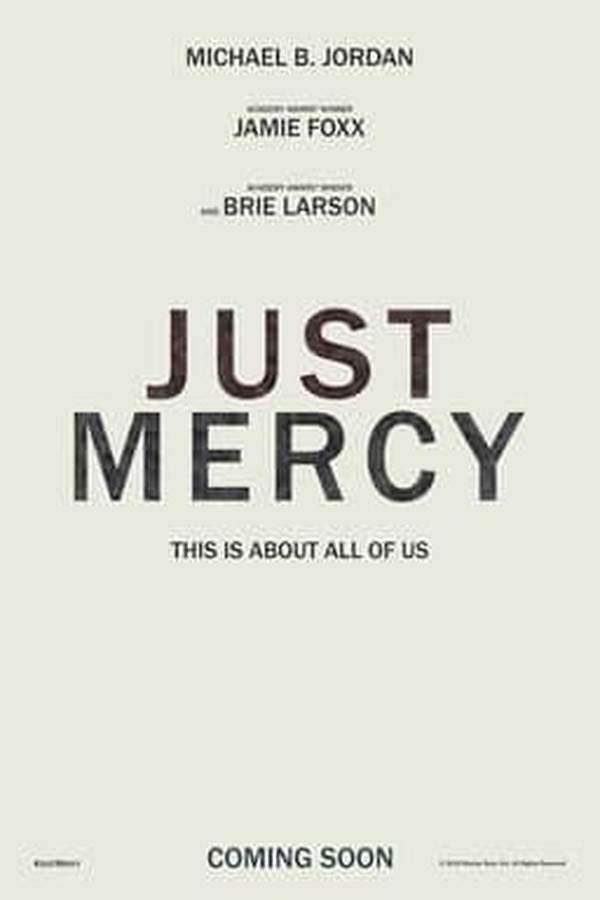
Just Mercy (2019) movie poster

Timeline

Just Mercy (2019) Timeline Explained – Every Event in Order

Release, runtime and language
2019 · 137 min · English
Echo score 75
Loading streaming availability…
Directed by
Destin Cretton
Starring
Brie Larson, Jamie Foxx, Michael B. Jordan, Andrene Ward-Hammond, O'Shea Jackson Jr., Rob Morgan
Budget
$25M

A gifted lawyer, Bryan Stevenson, forsakes a promising career to champion the rights of those wrongly accused or denied justice in Alabama. Partnering with local advocate Eva Ansley, he takes on the case of Walter McMillian, a man sentenced to death despite compelling evidence proving his innocence. Stevenson and Ansley face significant challenges as they fight to overturn the conviction and expose the flaws in the justice system, determined to secure Walter’s freedom and reveal the truth.

On this page (7)
  1. 1 Where to watch
  2. 2 Events in order (15)
  3. 3 Timeline questions answered
  4. 4 The book behind the movie
  5. 5 Movie threads
  6. 6 Movies like Just Mercy
  7. 7 Every angle
Loading streaming availability…

15 events in order · contains spoilers

Just Mercy Timeline: Events in Chronological Order

Every key event of Just Mercy (2019) in order, scene by scene, with when and where it takes place. Use it to untangle flashbacks, time jumps and parallel storylines, to refresh your memory before the sequel or to find the exact scene you are thinking of.

  1. Bryan Stevenson graduates from Harvard

    In 1989, Bryan Stevenson completes his education at Harvard Law School with a vision to provide legal support to those who cannot afford it. Armed with idealism and determination, he sets out to make a difference in the lives of marginalized individuals facing injustice.

    When
    1989
    Where
    Harvard University
  2. Stevenson moves to Alabama

    Determined to confront social injustices, Bryan relocates to Alabama to offer legal assistance. He faces warnings from his mother about the dangers he might encounter, yet his commitment to his mission remains unshaken.

    Where
    Alabama
  3. Establishment of the Equal Justice Initiative

    Partnering with Eva Ansley, Stevenson founds the Equal Justice Initiative (EJI). This organization aims to provide legal support to marginalized clients, particularly those on death row who struggle against a flawed legal system.

    Where
    Alabama
  4. First encounters at the prison

    During Bryan's initial visits to the prison, he faces derision from the guards, who treat him with disrespect. He endures a harsh strip-search that illustrates the challenges he will face while advocating for inmates.

    Where
    Prison in Alabama
  5. The case of Walter 'Johnny D.' McMillian

    Stevenson takes on the case of Walter McMillian, a Black man wrongfully convicted of murdering Ronda Morrison in 1986. With no forensic evidence against him, Walter's conviction is based solely on unreliable witness testimony.

    When
    1986
    Where
    Alabama
  6. Walter's arrest by Sheriff Tate

    Walter McMillian's life changes dramatically when he is arrested by Sheriff Tate. This act shatters Walter's previous life, filled with promise and success, as he becomes entangled in a deeply flawed judicial system.

    When
    1986
    Where
    Monroeville, Alabama
  7. Investigation into witness testimony

    As Bryan investigates, he discovers that the key witness, Ralph Myers, provided contradictory statements to gain leniency. Stevenson's persistence uncovers serious inconsistencies in Myers's testimony, raising doubts about Walter's conviction.

    Where
    Alabama
  8. Confronting the prosecution

    Stevenson approaches prosecutor Tommy Chapman, seeking to present evidence of Walter's innocence. However, Chapman dismisses Stevenson's arguments, highlighting the resistance faced when attempting to unveil the truth.

    Where
    Alabama
  9. Bryan witnesses an execution

    The emotional toll of his work becomes undeniable when Stevenson witnesses an execution firsthand. This harrowing experience amplifies his understanding of the brutal realities faced within the justice system he battles against.

    Where
    Alabama
  10. Public appeal for a retrial

    In a bid to rally public support, Stevenson appears on national television to highlight the injustices of Walter's case. This highly publicized appeal adds pressure on the judicial system for a reconsideration of the wrongful conviction.

    Where
    National TV
  11. Unexpected support from Chapman

    In a surprising turn, prosecutor Tommy Chapman agrees to support Stevenson's motion for a retrial. This pivotal moment demonstrates a shift in the pursuit of justice for Walter McMillian, amplifying hope for his exoneration.

    Where
    Courtroom in Alabama
  12. Overturning McMillian's conviction

    A triumphant courtroom scene unfolds as Walter McMillian's conviction is overturned, a moment of justice long overdue. His emotional reunion with family highlights the toll of wrongful incarceration and the fight for justice.

    Where
    Courtroom in Alabama
  13. Continuing the fight for justice

    The story concludes with Stevenson and Ansley continuing their efforts to seek justice for wrongfully convicted individuals. Their relentless dedication emphasizes the ongoing battle against systemic injustices in the legal system.

    Where
    Alabama
  14. Stevenson's success in freeing Anthony Ray Hinton

    Further showcasing his dedication, Stevenson successfully helps Anthony Ray Hinton secure his freedom after years on death row. This achievement reinforces the ongoing mission to address flaws in the justice system.

    Where
    Alabama
  15. The legacy of Walter McMillian

    Walter McMillian remains a significant part of Bryan Stevenson's life until his passing in 2013. Subsequent investigations unveil more evidence of McMillian's innocence, leaving the case partially unresolved while reinforcing the necessity for justice.

    When
    2013
    Where
    Alabama

Last updated: November 08, 2024 at 00:13

Was this helpful?

Timeline questions answered

Just Mercy Timeline Explained: Your Questions Answered

When does it happen, and why in that order? The questions people ask about the chronology of Just Mercy (2019): time jumps, flashbacks, cause and effect between scenes and the correct order of events, each answered with spoilers.

Q1

Why was Walter McMillian convicted when there was no forensic evidence?

Walter McMillian was convicted solely on the testimony of Ralph Myers, a convicted felon who provided conflicting accounts. There was no forensic evidence linking him to the murder of Ronda Morrison. His conviction was secured through unreliable witness testimony and the deeply flawed Alabama justice system, where prosecutors pursued capital punishment without substantive evidence, largely due to racial bias.

  • walter mcmillian
  • ralph myers
  • wrongful conviction
  • ronda morrison
  • eyewitness testimony
Q2

Why did Ralph Myers lie during his testimony against Walter McMillian?

Ralph Myers lied because he was seeking leniency in his own criminal case. As a convicted felon facing charges, Myers was motivated to cooperate with prosecutors by providing testimony that supported the state's case against McMillian, hoping this would result in a more favorable sentence for himself.

  • ralph myers
  • false testimony
  • witness
  • leniency
  • deal
Q3

Why did Sheriff Tate target Walter McMillian for the murder?

Sheriff Tate arrested McMillian despite lacking evidence because of pervasive racial bias in the Alabama justice system. As the film states, in that region, an African American was often deemed guilty from birth. McMillian's success as a Black businessman with a thriving pulping business made him a target for a system eager to convict someone regardless of guilt.

  • sheriff tate
  • racial bias
  • arrest
  • racism
  • alabama
Q4

Why did Bryan Stevenson witness an execution, and what was its significance?

Stevenson witnessed an execution to fully understand the gravity and brutal reality of the death penalty system he was fighting against. This firsthand experience of witnessing a man being put to death intensified his emotional resolve and deepened his understanding of the irreversible consequences of wrongful convictions and a flawed justice system.

  • execution
  • death penalty
  • emotional toll
  • witness
Q5

Why did prosecutor Tommy Chapman suddenly support the retrial?

After initially dismissing Stevenson's arguments, Chapman unexpectedly joined the motion for a retrial. This surprising turn came after Stevenson gathered substantial evidence exposing the unreliability of Myers's testimony and appeared on national television, generating public pressure. Chapman's change of heart represented a pivotal moment in the fight for Walter's exoneration.

  • tommy chapman
  • prosecutor
  • retrial
  • reversal
  • public pressure
Q6

What happened to Herbert Lee Richardson, and why does his case matter?

Herbert Lee Richardson was another death row inmate whose case represented the broader systemic failures Stevenson was fighting. Richardson faced a dire outcome due to lack of adequate representation and mental health considerations. His case, along with Walter's, illustrates how the justice system fails marginalized defendants, reinforcing the film's central themes about systemic injustice.

  • herbert lee richardson
  • death row
  • inadequate representation
  • mental health
Q7

How was Walter McMillian finally freed from prison?

Stevenson secured McMillian's freedom by meticulously investigating the case and gathering evidence that exposed the contradictions and coercion in Ralph Myers's testimony. He took the fight to national television to rally public support, ultimately convincing prosecutor Tommy Chapman to join his motion. The conviction was overturned in a courtroom triumph, allowing McMillian to reunite with his family after years of wrongful imprisonment.

  • exoneration
  • freed
  • retrial
  • evidence
  • courtroom
Q8

What happened to the real killer of Ronda Morrison?

The true killer of Ronda Morrison was never officially brought to justice. Subsequent investigations suggested a white individual was likely responsible for the murder, but the case remains officially unresolved. The epilogue highlights this bitter reality, that while Walter was freed, the actual perpetrator escaped accountability, underscoring the film's message about systemic flaws in the justice system.

  • ronda morrison
  • unsolved
  • true killer
  • investigation
Q9

Why did Bryan Stevenson choose to work in Alabama after graduating from Harvard?

After graduating from Harvard Law School in 1989, Stevenson deliberately chose to work in Alabama because he wanted to help people who couldn't afford legal representation, particularly those wrongfully convicted or facing disproportionate sentences. He was driven by a commitment to confront social injustices, especially the mass incarceration of African Americans, and to challenge the systemic racism embedded in the criminal justice system.

  • bryan stevenson
  • harvard
  • alabama
  • motivation
  • equal justice initiative
Q10

What was the outcome of Anthony Ray Hinton's case that was mentioned at the end?

Anthony Ray Hinton was another wrongfully convicted death row inmate whom Stevenson successfully helped free after decades of imprisonment. His case, mentioned in the epilogue, demonstrates that Stevenson's work extended beyond Walter McMillian, continuing the fight against wrongful convictions and systemic injustice in the Alabama justice system.

  • anthony ray hinton
  • death row
  • exoneration
  • continued fight

Movie threads

More Movies Like Just Mercy, by Mood & Story

Curated lists built around what makes Just Mercy tick: the same mood, the same kind of story or the same emotional payoff. Each list explains why these movies belong together.

True Stories of Fighting Injustice like Just Mercy

Gripping true stories of individuals fighting against a corrupt system. For viewers seeking movies like Just Mercy, this list features powerful dramas based on true events. These films share a focus on social justice, legal battles against systemic corruption, and the inspiring perseverance of individuals determined to expose the truth, offering a similar tense and hopeful viewing experience.

  • gripping
  • urgent
  • hopeful
  • outraged
  • sobering
  • inspiring
  • Tone: tense, hopeful, sobering
  • Pacing: steady, procedural
Why these movies?

The story pattern: These narratives typically follow a protagonist, often a lawyer, journalist, or activist, as they methodically investigate a grave injustice. They face institutional resistance and personal risk, building their case piece by piece against a steady, procedural pacing. The climax is not an action set piece but a legal or moral victory that, while significant, often underscores the ongoing nature of the systemic problem.

Why they belong together: They are grouped by their shared foundation in real events, their focus on exposing corruption or bias within powerful systems, and their emotionally heavy tone that balances tense, high-stakes drama with a thread of hopeful determination.

Movies with Bittersweet Endings like Just Mercy

Stories where a hard-won success is shadowed by lasting scars. If you liked the poignant ending of Just Mercy, this collection features dramas where the emotional journey leads to a bittersweet conclusion. These films deliver a sense of hard-earned hope or justice, but also honestly address the lasting pain and unresolved issues, resulting in a powerfully realistic and heavy emotional impact similar to Just Mercy.

  • bittersweet
  • sobering
  • heavy
  • hopeful
  • melancholic
  • cathartic
  • Tone: bittersweet, heavy, sobering
  • Pacing: steady, character-driven
Why these movies?

The story pattern: The journey in these films involves overcoming immense obstacles, often life-and-death struggles, leading to a pivotal success for the main characters. However, the resolution deliberately highlights what was lost along the way or the broader problems that remain unsolved. This narrative pattern emphasizes realism and emotional complexity over a simple, happy ending.

Why they belong together: They are united by their shared emotional arc: a blend of hope and sorrow, triumph and tragedy. The dominant mood is heavy, and the endings are specifically crafted to be bittersweet, leaving the viewer with a mix of relief and sober reflection.

If you liked this

Movies Like Just Mercy

Similar movies to Just Mercy: the same genre, themes or kind of story. Each one comes with its own plot summary, timeline and ending explained.

Browse all movie summaries

Every angle

Just Mercy (2019) Explained: Plot, Ending, Timeline & Characters

Everything about Just Mercy in one place: what happens in the plot summary, the timeline in chronological order, the characters and meaning, the ending explained and a spoiler-free summary. What's After the Movie adds the cast, box office and post-credit scenes.

Coming soon on iOS and Android

The Plot Explained Movie Summary App

Plot summaries, endings explained and timelines on your phone. Catch up on any movie in minutes, save your favorites and never miss a twist again.

Be the first to know when we launch. Your email stays private, always.

Learn more about the app