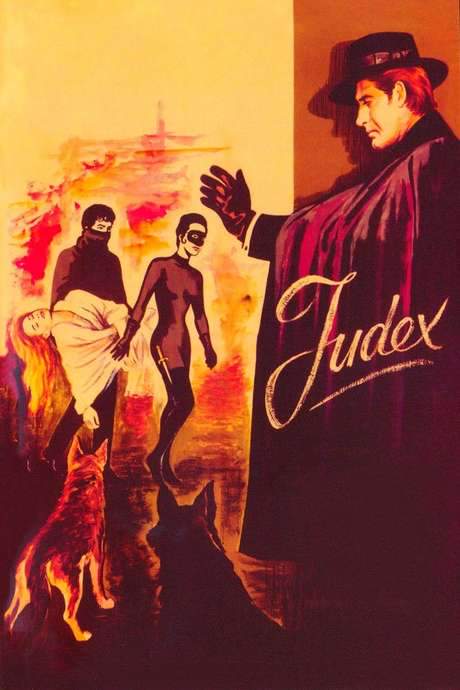
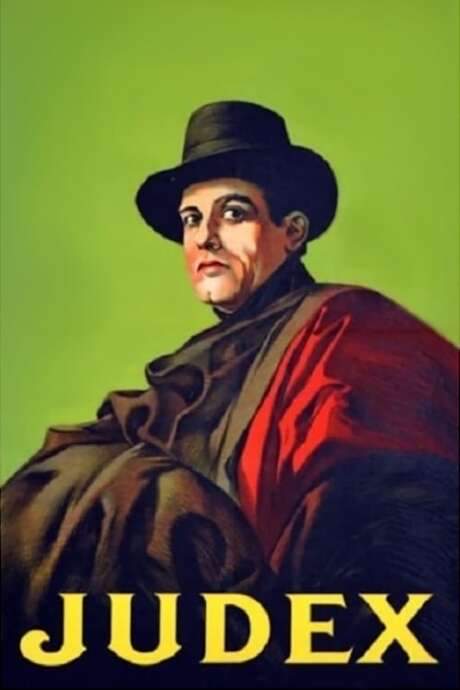
Favraux, a banker who has built vast wealth through swindles and blackmail, lives behind marble walls where trust is scarce and danger lurks behind every door. One night, a chilling note arrives, signed only by Judex, demanding that he return the embezzled funds to the victims or face consequences. To protect himself, Favraux hires the private detective Cocantin to keep watch at a masked party planned to celebrate the engagement of his widowed daughter, Jacqueline Favraux, who is a mother to a small daughter named Alice.
Unknown to the family, Alice’s governess is actually Diana Monti, a cat burglar who goes by the name Marie Verdier. Diana, played by the captivating Diana Monti, harbors no real love for Favraux and has her own ruthless plan: to marry him and seize his fortune, only to murder him after the wedding to secure wealth without affection. Diana’s.Double life creates a tense mazelike atmosphere around the house, where appearances mask hidden motives and every smile can be a trap.
At the engagement party, guests are entertained by a mysterious masked figure wearing a bird’s head, who performs tricks that captivate the crowd. It is later revealed that this magician is actually Judex, quietly maintaining a close watch on Jacqueline. As the night unfolds, Favraux seems to die of a heart attack as he begins to announce his engagement to Diana, a grim moment that foreshadows the tangled fates ahead.
During Favraux’s funeral, Jacqueline discovers the Judex letter and begins to see the truth behind her father’s fortune. Knowing that her father amassed wealth through illicit means, she renounces most of her inheritance, reserving only a portion to support Alice. That night, Judex acts to reverse the apparent death: Favraux is alive but drugged, and Judex removes him from the coffin, imprisoning him in an abandoned castle.
Diana’s schemes to kidnap Jacqueline—and even snatch Alice—continue, but are thwarted by Judex and the loyal support of the detective at hand. Although Favraux remains alive, his spirit is crushed by the prospect of losing the woman he loved to a fortune he had never earned, and he ultimately takes his own life. Meanwhile, Judex faces Diana’s network of accomplices, and the dramatic rescue culminates on a building’s rooftop.
On the outside of the structure, Daisy, a circus acrobat and friend of Cocantin, scales the wall to assist in capturing Diana. The two women clash—Diana in black against Daisy in white—and the confrontation ends with Diana’s death. In the end, Judex and Jacqueline are briefly reunited, walking along a quiet beach as a subtle tribute to the era that inspired the tale and the director behind it, signaling a fragile hope after a time not easily remembered.
The film closes with a poignant tableau: a quiet exchange of trust and resolve between Judex and Jacqueline, set against the endless sea, while the memory of Louis Feuillade’s influence lingers, honoring a difficult chapter from 1914 that the story nods to with reverence.