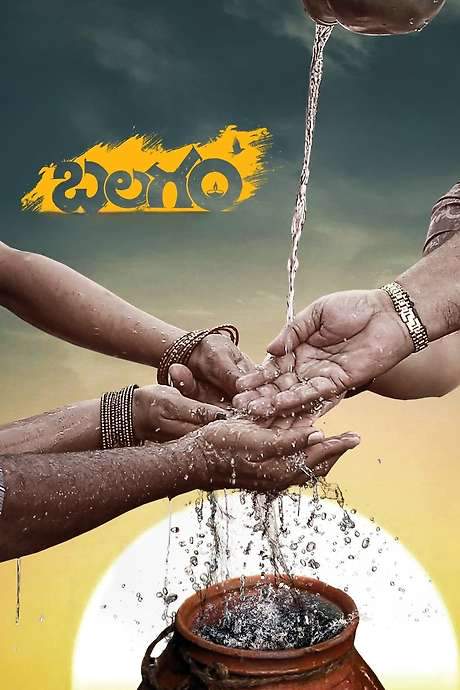
Jayamma is a hard-working, principled woman who commands deep respect from everyone in her village. She and her family see the entire community as part of their own, and they never hesitate to lend a hand when others need financial support for functions or celebrations. The villagers, in turn, follow Jayamma’s strict code of conduct and rely on her guidance to keep peaceful order in the community. The story also introduces a hillside Shiva temple run by a priest who lacks motivation and spends much of his time drinking and gambling, which makes villagers wary of his temple except on Mondays, when some come to seek blessings.
In this same village, a love story unfolds around the temple priest’s daughter, who returns the affection of a lazy priest, setting up a delicate dynamic between duty, tradition, and desire. Meanwhile, a young man named Yesu Babu is drawn to Jayamma’s elder daughter Pushpa and attempts to win her heart by bearing gifts, including silver anklets. Pushpa responds with mutual interest and companionship, adding romance to the village’s tapestry of ties and loyalties.
A crisis arrives when Jayamma’s husband experiences severe heart pain, and a doctor reveals that surgery is essential, costing ₹400,000. Jayamma hopes to secure the money through the customary gifts from the villagers for the first family event, inviting everyone and intending to use the funds to save her husband. But the harvest of goodwill falls far short—she receives only ₹77,000, a sharp shock that tests her resolve. Refusing to accept defeat, Jayamma sets out to collect the remaining funds by visiting each household and seeking aid, while also appealing to the village council for justice and collective support. The clock ticks, and as days pass, only a handful of villagers remain willing to contribute.
The path forward is met with resistance. The elder brother of Jayamma’s husband refuses to help, bound by long-standing family disputes and estrangement from the Jayamma family. A second obstacle arises when a villager whose child falls ill points to a supposed “black magic” practitioner—an uneducated, mute wanderer who roams the forest. The villagers insist on banishing this figure, hoping to lift the curse by expelling the man they blame. However, a twist emerges: the so-called black magic healer is actually an ayurvedic practitioner, and the child’s illness is being treated by him as a friend helps him search for a cure. The child recovers, and the village, seeing the truth, apologizes to Jayamma and offers support again.
The temple priest’s promised contribution hinges on marriage to a lover who belongs to a lower caste, provoking a harsh decision from the village head that drives the lovers out of the community. Yet the villagers later recognize their error and allow the priest to marry his beloved, restoring some measure of social harmony.
Meanwhile, tension brews around Pushpa’s romance with Yesu Babu. When Yesu spends the gifted money on anklets, Pushpa’s protective mother hides the boy in their attic; Jayamma ultimately discovers them, and the lovers flee into the forest, only to be captured by naxals. Jayamma intervenes to rescue them and sternly warns the boy to steer clear of her daughter’s life. The grateful father of the boy expresses his thanks and helps with funds, easing some of the family strain. In a related turn, Jayamma’s sister-in-law helps mend the long-standing rift between families by aiding Jayamma during this trying period.
Tragedy and resilience echo through the years. The story notes that Jayamma’s brother-in-law dies from the same illness as his brother, and in turn, her sister-in-law acts to end the family enmity by standing with Jayamma financially and emotionally.
Two years pass, and a new test arrives when Jayamma’s husband again falls gravely ill, this time due to a delay in the prior surgery. The community learns that Jayamma is coordinating celebrations for her younger daughter, and fear and superstition spread. The villagers begin to withdraw, haunted by the sense that the family’s fortunes are tied to ongoing, costly rites and public gatherings. As the tale closes, the once tight-knit village confronts its fears and the consequences of long-festooned obligations, leaving Jayamma to stand as both caretaker and reconciler in the face of renewed hardship.