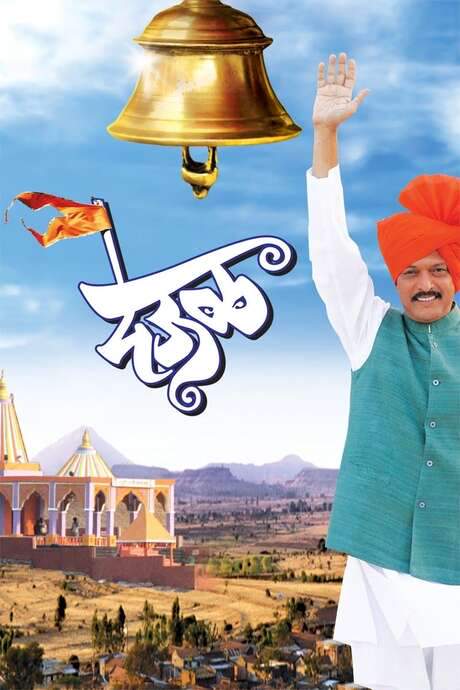
Year: 2011
Runtime: 139 mins
Language: Marathi
Director: Umesh Vinayak Kulkarni
Keshya, a simple villager believes that god has arrived in his village but everyone disbelieves him. Later when the politics plays its part things take a drastic change
Find where to stream, rent, or buy Deool (2011) in the US with current JustWatch availability, up-to-date pricing, and platform listings for subscription, rental, and digital purchase options.
Warning: spoilers below!
Haven’t seen Deool yet? This summary contains major spoilers. Bookmark the page, watch the movie, and come back for the full breakdown. If you're ready, scroll on and relive the story!
Read the complete plot breakdown of Deool (2011), including all key story events, major twists, and the ending explained in detail. Discover what really happened, and what it all means.
In the rural heart of Maharashtra, the quiet village of Mangrul sits at a crossroads between faith and ambition. Keshya, Girish Kulkarni, a simple village youth who works for Bhau Nana Patekar as a cow stockman, leads one of Bhau’s cows named “KARDI” to a hill where an Audumber tree (Ficus racemosa) stands. As the cow nudges the tree, a moment of wonder unfolds when a vision of Dattatreya appears before Keshya in a vivid avatar, a sight that unsettles him and stirs a buzz of curiosity through the village.
The event shocks and excites in equal measure, and the village’s elder, Anna, Dilip Prabhavalkar, urges caution. He warns that faith is deeply personal, and such experiences should not be broadcast or misused. Yet it is already set in motion; a journalist, Kishore Kadam, teams up with a group of young villagers who lean toward politics and sensationalism, turning the sighting into a hot news item.
A wave of demand follows—the villagers press for the construction of a Dattatreya temple. Bhau is hesitant, arguing that the village would be better served by practical investments rather than sacred monuments. Anna shares a parallel vision of tangible progress, expressing a desire to build a hospital that would benefit Mangrul’s residents. Despite Bhau’s reluctance, growing public fervor and the pressure from various quarters push the project forward, and the temple takes shape.
Mangrul’s landscape begins to shift as the temple draws visitors and attention, transforming the village into a place of pilgrimage and commerce. The once peaceful community now experiences a 360-degree turn toward commercialization, with merchants, pilgrims, and media presence altering the daily rhythm of life. Yet not everyone is comfortable with this evolution; Anna remains wary that sacred purpose might be eclipsed by profit, and the town wrestles with the moral balance between progress and faith.
Ultimately, the tale raises a pointed question about ethics and necessity: is it acceptable for a sacred space to catalyze economic development, or does such use risk diluting the very faith it aims to honor?
Last updated: February 24, 2026 at 14:06
Explore frequently asked questions about Deool (2011) with spoiler-rich answers covering the full plot summary, major story beats, character motivations, hidden details, and ending meaning. This movie summary FAQ helps explain confusing scenes, plot twists, and narrative decisions in clear, searchable detail.
Keshya was taking Bhau's cow named Kard to a hill near Mangrul where an Audumber tree (Ficus racemosa) stood. When the cow nudged the tree, Keshya experienced a divine vision of Lord Dattatreya appearing before him in a vivid avatar. The experience left him deeply shaken and convinced that a genuine miracle had occurred, which he then proclaimed to the entire village.
Bhau argued that building a temple would not serve the village's practical needs. He believed that the money would be better spent on tangible improvements like a hospital that would directly benefit the residents of Mangrul. His opposition represented a conflict between faith-driven spending and pragmatic development.
Anna, the village elder, cautioned against sensationalizing the divine appearance and revealed his vision of building a hospital for the villagers. He believed this would be a more meaningful public service than constructing a temple, emphasizing measured progress and practical welfare over religious monuments.
Once the temple was constructed, Mangrul transformed from a quiet rural village into a place of pilgrimage and commerce. Pilgrims began visiting, merchants set up businesses around the site, and media attention increased. The once peaceful community experienced a complete 360-degree turn toward commercialization, fundamentally altering daily life.
Journalist Kishore Kadam teamed up with politically minded young villagers to sensationalize the divine sighting. They amplified the news to attract attention and fuel demands for a temple, turning a personal spiritual experience into a hot news item that drove public discourse and accelerated the temple project.
The film poses a pointed question: is it acceptable for a sacred space like a temple to catalyze economic development, or does such use risk diluting the very faith it aims to honor? As progress accelerates, the religious sentiment becomes eclipsed by commercialization, testing the community's moral balance between prosperity and devotion.
Anna feared that sacred purpose would be eclipsed by profit as the temple drew pilgrims and commerce. He worried that faith was being co-opted for material gain rather than remaining a genuine spiritual pursuit, and he continuously critiqued the village's direction, insisting on keeping faith and public welfare in balance.
After experiencing the vision, Keshya loudly claimed that Dattatreya had appeared for him, spreading the news across Mangrul. The rumor sparked curiosity and debate throughout the village, with some seeing it as a sacred sign and others worrying about turning faith into spectacle. His personal experience quickly became village news.
The demand for a Dattatreya temple arose from the growing buzz around the divine vision. Villagers wanted a sacred site to honor what they believed was the genuine appearance of Lord Dattatreya. Pressured by public fervor and the sensationalized media coverage, the demand gained legitimacy and eventually led to temple construction despite opposition.
Political ambitions played a significant role as young villagers leaned toward politics and sensationalism, turning the sighting into a hot news item. The journalist and politically minded youths twisted the event to attract attention and fuel temple demands, showing how faith can become a tool for political mobilization and public pressure.
Discover curated groups of movies connected by mood, themes, and story style. Browse collections built around emotion, atmosphere, and narrative focus to easily find films that match what you feel like watching right now.
Stories of pure ideals crushed by cynical social and political realities.For viewers who appreciated the cynical transformation in Deool, this section features movies like Deool that explore how pure faith or idealism is exploited by political and commercial forces, leading to a bittersweet loss of innocence.
These narratives typically begin with a character or community possessing a simple, sincere belief. This idealism is then confronted by external forces—often political opportunism or commercial greed—that twist the original理想 into something cynical. The story arc follows the gradual disillusionment and the ethical conflict that arises, culminating in an ending that is thoughtful rather than triumphant.
Movies are grouped here because they share a core narrative of innocence confronted by cynicism. They feature a steady pacing that allows the tension to build from a personal conviction to a broader social commentary, and they consistently deliver a bittersweet, contemplative mood.
Observational dramas about tradition clashing with change in rural settings.If you liked the portrayal of a village's upheaval in Deool, explore these similar movies about rural communities facing drastic change. These films share a steady pace and a focus on the social and personal costs of progress.
The narrative pattern centers on a tight-knit, traditional community. An external catalyst—be it a miracle, a development project, or a new ideology—disrupts the established social order. The film then observes the ensuing conflicts, the clash between old values and new ambitions, and the lasting impact on the community's soul, often leaving a sense of loss amidst change.
These movies are grouped by their shared setting and central conflict: the erosion of rural simplicity. They possess a steady, observational pacing that lets the social commentary unfold naturally, and they carry a medium emotional weight rooted in the loss of a way of life.
Don't stop at just watching - explore Deool in full detail. From the complete plot summary and scene-by-scene timeline to character breakdowns, thematic analysis, and a deep dive into the ending - every page helps you truly understand what Deool is all about. Plus, discover what's next after the movie.
Track the full timeline of Deool with every major event arranged chronologically. Perfect for decoding non-linear storytelling, flashbacks, or parallel narratives with a clear scene-by-scene breakdown.
Discover the characters, locations, and core themes that shape Deool. Get insights into symbolic elements, setting significance, and deeper narrative meaning - ideal for thematic analysis and movie breakdowns.