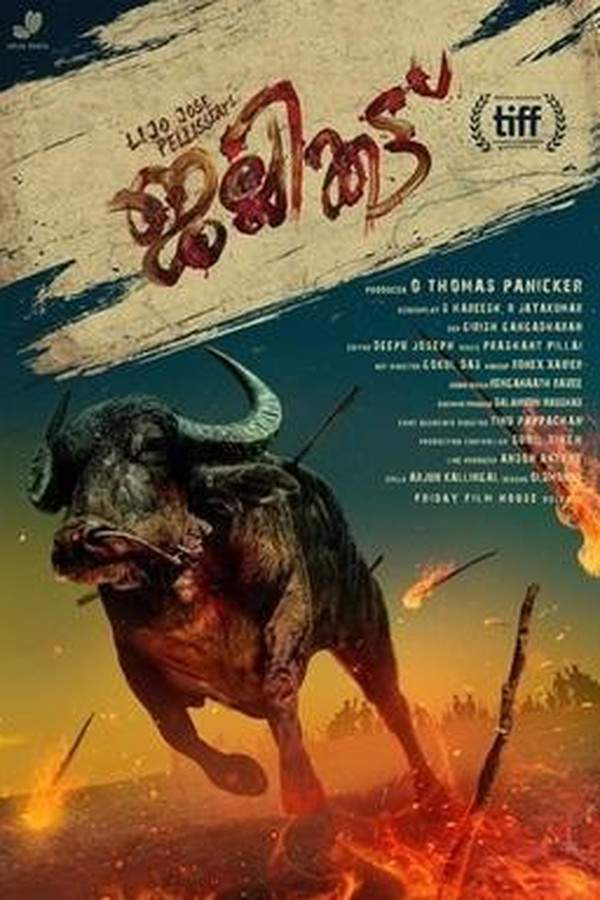
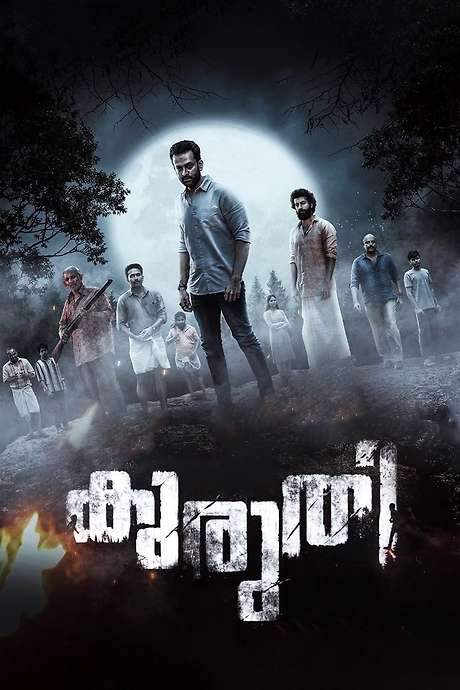
Kalan Varkey Chemban Vinod Jose is a rural Kerala butcher who begins each day before dawn, working with his assistant Antony Antony Varghese to slaughter a buffalo and prep its meat for the market. One morning, the bound buffalo breaks free and darts into the surrounding hills, setting off a chain of fear and urgency across the village. As dusk turns to day, a huge haystack blaze wakes everyone up, and the search for the animal becomes a village-wide obsession. The pursuit grows frantic as the buffalo repeatedly slips away, leaving behind a trail of collateral damage: crops trampled at a rubber plantation, a vendor’s cart overturned, and even the local bank and convenience store wrecked. Accusations fly, and soon the villagers cast their anger on Varkey, convinced that the animal is the root of all they’re losing.
The local police refuse to intervene, arguing that killing cattle is illegal and offering only cautions to stay indoors until the danger passes. Desperate, the villagers summon Kuttachan Sabumon Abdusamad, a famed local poacher, to help. Antony watches the homecoming of Kuttachan with mixed feelings, reminded of a bitter history: the two men were rivals over Sophie, Varkey’s sister. As Kuttachan sharpens his deadly buckshot by converting a metal bucket handle into shotgun ammunition, the crowd debates who deserves the lion’s share of the kill.
The disturbance spills beyond the animals, dragging up old grudges and exposing fault lines in the social fabric. The disruption complicates daily life—fireworks spark, voices rise, and petty vandalism surfaces amid the growing frustration. A wealthy villager named Kuriachan, who had planned an elaborate buffalo feast for his daughter’s wedding, sets out in search of alternatives when the hunt disrupts his plans; he is captured by a group of workers and brought to the search in a symbolic, if humiliating, good-luck display. His daughter, meanwhile, attempts to elope, only to be caught and scolded by a neighbor, underscoring how the chase unsettles personal lives as well as public order.
Night falls and the buffalo is finally found at the bottom of a well. Antony claims credit, insisting that the plan to drive it into the well was his idea all along. Kuttachan wants to finish the job with a shot, but Antony argues that the animal must be pulled up first so they can butcher it together. Varkey, at the center of the storm, remains largely indifferent, even taking a nap as the argument swirls around him. A scaffold is built to lower Antony, who moves to secure ropes around the buffalo’s legs and neck. A heavy rain begins to fall, and the ropes slip as the buffalo thrashes toward the surface. In the confusion, a villager is killed, the buffalo disappears back into the forest, and blame falls squarely on Antony.
With the hunt devolving into chaos, the village factions splinter into competing groups, each pressing its own plan to trap the animal and claim the reward. One faction even torches a police patrol car, frustrated by the absence of police help. Amid the frenzy, Kuriachan’s wedding plans crumble, and his daughter’s attempts to defy tradition are thwarted by the mounting pressure of the chase. Night deepens the confusion, but the beast remains elusive, and the village’s unity fractures as fear and pride push people toward reckless acts.
In the final act, Antony and the remaining villagers corner the buffalo near a river and a bridge, where it becomes stuck in mud. Antony drives a stabbing strike to the animal and proclaims that he deserves credit for the kill. The crowd surges with the force of a crowd-turned-avalanche, stoning the buffalo and injuring many in the process while the landscape is consumed by torches, crude weapons, and a primal hunger to be the one who killed it. The scene swells into a surreal coda: the screen fades to black, then reopens on a stark, primitive tableau—prehistoric men in loincloths racing through darkness, chasing a buffalo as if to suggest that this hunt is a relic as old as humanity itself.
The film closes on this stark juxtaposition, leaving the outcome of the hunt ambiguous and highlighting the way fear, competition, and collective frenzy can unravel a community. The story lingers in the memory, offering a humane examination of how a single animal becomes a catalyst for revenge, pride, and social rupture, while quietly reminding us of the enduring, instinctual pull of the hunt that binds a village together even as it tears them apart.