Plot Explained Spoilers guaranteed!
Plot Explained

Browse by genre

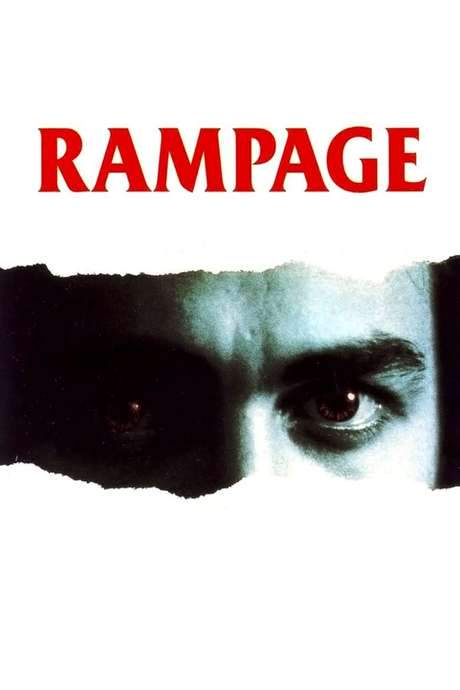
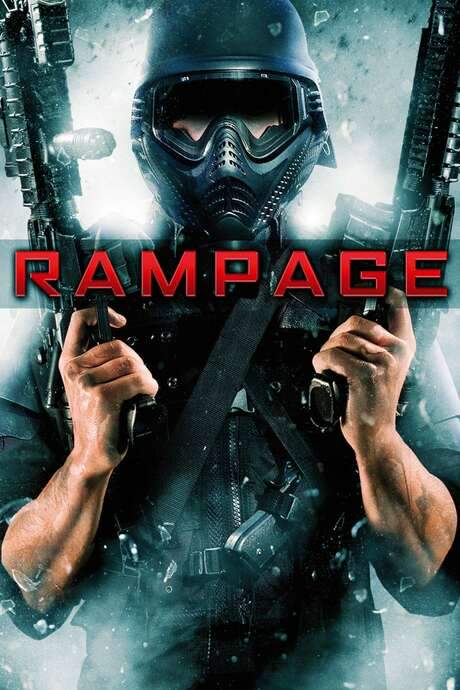
Rampage (2009) movie poster

Plot Summary

Rampage (2009) Plot Summary Explained

Release, runtime and language
2009 · 84 mins · English
JustWatch #11,093 9
Directed by
Uwe Boll
Starring
Brendan Fletcher, Shaun Sipos, Katharine Isabelle, Matt Frewer, Brent Hodge, Mark Brandon

Ruthless vengeance drives Bill Williamson, whose small‑town life has become a stifling monotony that gnaws at him. Trapped in the meaningless grind and powerless before a looming global collapse, he spirals into madness, devising a shockingly violent scheme that threatens to flood the streets with blood and shake society to its core.

On this page (6)
  1. 1 Where to watch
  2. 2 What happens: full plot
  3. 3 Plot questions answered
  4. 4 Movie threads
  5. 5 Movies like Rampage
  6. 6 Every angle

Where to watch

Where to Watch Rampage (2009)

Where can you watch Rampage? Stream, rent or buy it in the US, including on Amazon Prime Video, Fawesome and Hoopla: current JustWatch availability with up-to-date prices.

Streaming availability powered by JustWatch

Full plot summary · contains spoilers

What Happens in Rampage: Full Plot Summary

The whole story of Rampage (2009) explained, from the opening scene to the final frame: every key event, every twist and what it all adds up to. Read it as a quick recap before the sequel, to check a scene you missed, or to finally understand what really happened.

In Tenderville, Oregon, Bill Williamson, Brendan Fletcher, a 23-year-old living with his parents, trudges through a life defined by a low-paid mechanic’s routine, overwhelmed by the constant swirl of TV sets, radios, and the loud political chatter of his only friend, Evan Drince, Shaun Sipos, a 21-year-old who seems intent on shaking up the town with his outspoken views. When his parents urge him to move out, he leaves for work, pausing to grab coffee and exchanging a sharp rebuke with the shop owner over a disappointing cup. At the shop, the seed of discontent grows; the confrontation foreshadows a night of escalating bravado that will soon spill out into the streets.

Back at home, Bill takes a macabre turn: he prints counterfeit money and assembles an AR-500 steel suit of armor, complete with a ballistic helmet and a paintball mask. With two submachine guns, two semiautomatic pistols, and two knives stowed away, he strides into the center of town, a walking contradiction between vulnerability and invincible armor. His first act of chaos targets the police, whom he incapacitates by detonating a bomb-laden van in their headquarters using a remote control. Then he walks the streets, firing at random with the submachine guns, all while taunting the coffee shop owner as onlookers scatter. When two officers return fire, his armor absorbs the bullets, and he kills both officers in the line of sight. He makes a chilling detour into a salon where several women are hiding; he removes his mask to order a drink, but then, realizing his moment of exposure, he returns and kills everyone present.

The spree continues as Bill slips into a bingo parlor, where he orders a sandwich and harasses the host, leaving without firing a shot because he deems the elderly patrons already near the edge of life. He then enters a local bank and wipes out the security guard before turning his attention to the employees and customers who attempt to subdue him. The raid culminates in a swift robbery; the manager is forced to empty a safe’s contents into a plastic trash bag. Outside, Bill secretly exchanges the stolen money for his own counterfeit bills and burns the bag in a trash can, shouting that money is worthless and a core cause of the world’s problems. The violence intensifies as he later murders a restaurant waitress to reinforce the notion that Evan — who had argued with the waitress earlier — might be the killer.

Concerned and curious, Bill then reaches out to Evan by phone. Evan, who has retreated to a forest nearby for a staged mano-a-mano paintball challenge, becomes a willing participant in the cat-and-mouse game that unfolds. Bill heads toward the forest, with Sheriff Melvoy, Michael Paré, leading a cadre of officers in pursuit. Explosives light the chase as Bill tears away from the city, and the standoff lands him in the forest where the net tightens around him. In a tense ambush, Bill mortally wounds Sheriff Melvoy by stabbing him and leaves him to die as he presses onward.

In the forest, Bill finds Evan and immobilizes him with a stun gun, then coldly places one of his pistols in Evan’s hand and shoots him in the head, creating the illusion of a suicide. He then piles Evan’s armor onto the body, dons the armor himself, and departs the forest with the weapons, burning any remaining evidence in a barrel. He returns home to facing his parents, who recount horrific stories about the day’s killings as they watch the news unfold. The broadcasts reveal the killer’s identity as Evan and report that the rampage has claimed at least 93 lives.

Back in his room, Bill prepares to leave, packing the stolen money into a briefcase. Meanwhile, the world learns more about Evan’s father, an activist from the Vietnam era who is being arrested and who claims his son’s innocence while pointing the finger at Bill. The story closes with Bill recording a home video in which he announces a departure on a personal quest to shrink the global population. The film ends with the somber note that he disappears from the public eye, and two years later, his video memoir resurfaces on the Internet, leaving a haunting legacy of a town forever changed by one man’s apocalyptic vision.
Last updated: October 07, 2025 at 08:41

Was this helpful?

Plot questions answered

Rampage Plot Explained: Your Questions Answered

The questions people ask most about Rampage (2009): what happens in the confusing scenes, why the characters do what they do, the twists, hidden details and what the ending means. Each answer contains spoilers.

Q1

Why does Bill Williamson go on a killing rampage?

Bill's rampage stems from deep existential despair. He feels trapped in a meaningless life as a low-paid mechanic in a small town, constantly bombarded by news of global problems like economic collapse and environmental decay through TV and radio. His only friend, Evan, amplifies his alienation with radical political views. When his parents pressure him to move out, Bill reaches his breaking point and decides to lashes out at society he sees as irredeemably broken, believing violence is the only way to make a meaningful impact on a collapsing world.

Foreshadowing: Earlier scenes show Bill's growing discontent as he argues with the coffee shop owner and observes the political chatter around him, establishing his psychological deterioration.

  • bill williamson motivation
  • rampage原因
  • why mass shooting
  • bill frustration
  • existential despair
Q2

Why does Bill kill the women in the salon?

Bill enters the salon while hiding, removes his helmet to drink, which accidentally reveals his identity to the women inside. Realizing he has been seen and could be identified, he makes a calculated decision to eliminate all witnesses. This act demonstrates his cold, methodical approach, he won't leave loose ends that could lead to his capture. The massacre also showcases the escalating nature of his violence, as he now kills indiscriminately rather than selectively.

Foreshadowing: His earlier confrontation with the coffee shop owner foreshadows his willingness to confront and threaten civilians who cross his path.

  • salon massacre
  • why kill witnesses
  • bill identity revealed
  • killing civilians
Q3

Why does Bill frame Evan for the murders?

Bill frames Evan to create a perfect scapegoat and ensure his own escape. By staging Evan's death as a suicide with the armor and weapons, Bill makes it appear that Evan was the sole perpetrator who then took his own life. This explains why the killings stopped and provides a false narrative that deflects suspicion from Bill. Additionally, framing his only friend allows Bill to weaponize his relationship with Evan, using Evan's identity as a shield for his own continued freedom.

Foreshadowing: Bill calls Evan to the forest under the pretense of a paintball challenge, deliberately drawing him into the endgame of his plan.

  • evan drince framed
  • bill frames friend
  • who is blamed
  • rampage culprit
Q4

How does Bill escape from the police during the manhunt?

Bill uses multiple tactics to evade capture. He detonates a bomb-laden van at the police headquarters at the start of his attack, incapacitating law enforcement. While fleeing into the forest, he uses explosives to kill pursuing officers and exploit the terrain. Most crucially, he stages Evan's death as a suicide, complete with Evan's armor and weapons, creating false evidence that points to Evan as the lone killer. This misdirection allows Bill to slip away unnoticed while investigators focus on the wrong suspect.

Foreshadowing: His preparation with counterfeit money and armor shows his meticulous planning, Bill plans every detail including his escape route.

  • bill escape
  • police pursuit
  • how escaped
  • forest chase
Q5

What happens to Sheriff Melvoy?

Sheriff Melvoy leads the police pursuit of Bill into the forest. During the chase, Bill ambushes Melvoy, stabbing him and leaving him mortally wounded to die. This eliminates the primary law enforcement leader coordinating the manhunt, which further disrupts the police response and buys Bill time to reach Evan and execute the final part of his plan.

Foreshadowing: The pursuit escalates as Bill uses explosives to eliminate officers, showing his willingness to kill law enforcement directly.

  • sheriff melvoy death
  • police chief killed
  • law enforcement pursuit
Q6

Why does Bill burn the money he stole from the bank?

Bill robs the bank but then burns the stolen cash, exchanging it for his own counterfeit bills first. He does this to demonstrate his ideological stance that money is worthless and represents the corrupt system he despise. By burning the real money and declaring that currency is a core cause of the world's problems, Bill reinforces his nihilistic worldview. The counterfeit bills he plants or keeps serve no practical monetary value, they're symbolic of his rejection of economic structures.

Foreshadowing: Bill's earlier discontent with his low-paying job and his friend's political rants establish his deep resentment toward economic systems.

  • bank robbery
  • burn money
  • counterfeit bills
  • money worthless
Q7

Why does Bill kill Evan?

Bill kills Evan to eliminate the only person who might recognize him and connect him to the crimes. Evan is Bill's only real relationship, which makes him the most dangerous witness. Additionally, killing Evan allows Bill to stage the perfect crime, placing Evan's corpse in the armor with the weapons makes it appear that Evan was the rampage killer who then committed suicide. This serves both as elimination of a potential witness and as the centerpiece of Bill's framed narrative.

Foreshadowing: Bill's phone call to Evan inviting him to a paintball confrontation in the forest is clearly a trap, showing Bill had planned this betrayal from the start.

  • evan killed
  • why kill friend
  • bill betrays evan
  • staged suicide
Q8

What is Bill's final message about reducing the population?

At the end, Bill records a home video in which he announces he is leaving Tenderville on a personal quest to shrink the global population. This reveals his ultimate motive: he sees overpopulation and societal decay as fundamental problems causing world suffering. His rampage was not just about宣泄愤怒 but the beginning of what he believes is a necessary mission to reduce humanity through violence. The film ends with his video resurfacing two years later, confirming he disappeared to continue his self-appointed apocalyptic task.

Foreshadowing: Bill's nihilistic dialogue throughout the film, combined with his statement that money and society are worthless, establishes his belief that radical action is justified against humanity.

  • population reduction
  • apocalyptic mission
  • bill final video
  • global population goal
Q9

Why does Bill spare the people at the bingo parlor?

Bill enters a bingo parlor, harasses the host, but leaves without shooting anyone. He rationalizes that the elderly patrons are already near death, making them irrelevant to his mission. This moment reveals Bill's distorted logic, he sees his violence as purposeful, targeting those he deems to have meaningful lives worth ending. Sparing the bingo parlor demonstrates his idiosyncratic moral code, where he picks and chooses victims based on his own twisted criteria rather than pure indiscriminate violence.

Foreshadowing: This selective killing shows Bill views himself as a judge of who deserves to live or die based on his personal criteria.

  • bingo parlor spared
  • elderly spared
  • selective killing
Q10

How does Bill afford the weapons and armor?

Bill prints counterfeit money at home, which he uses to finance his operation. He produces fake currency that appears convincing enough for his purposes. The counterfeit money serves multiple functions: funding his weapon purchases, armor construction, and providing a decoy during the bank robbery where he swaps stolen cash for his own fake bills before burning the real money. This explains how a mechanics with no apparent wealth could afford an arsenal including submachine guns, pistols, knives, and a custom steel armor suit.

Foreshadowing: The timeline shows Bill printing counterfeit money and building armor as a preparation phase before the attack begins.

  • counterfeit money financing
  • bill weapons cost
  • armor purchase
  • how afford arsenal

Movie threads

More Movies Like Rampage, by Mood & Story

Curated lists built around what makes Rampage tick: the same mood, the same kind of story or the same emotional payoff. Each list explains why these movies belong together.

Movies about methodical madness like Rampage

Stories of a character's chilling, calculated spiral into violent insanity. If you were fascinated by the calculated descent into violence in Rampage, this list features movies like it. Explore similar stories of characters who meticulously plan their destructive acts, portraying a chillingly methodical spiral into madness rather than a chaotic outburst.

  • methodical
  • disturbing
  • grim
  • oppressive
  • calculating
  • cold
  • Tone: dark, grim, oppressive
  • Pacing: steady, methodical build
Why these movies?

The story pattern: These narratives typically follow a character who feels profoundly alienated, powerless, or wronged by society. Their response is not impulsive rage but a carefully constructed plan for vengeance or purification. The story traces the development of this plan, creating a sense of dreadful inevitability as the character moves step-by-step toward a violent culmination.

Why they belong together: Movies are grouped here based on their shared focus on a protagonist who plans violence with cold, logical precision. They share a dark, oppressive tone, heavy emotional weight, and a narrative that often leads to a bleak conclusion, emphasizing the horrifying rationality behind the madness.
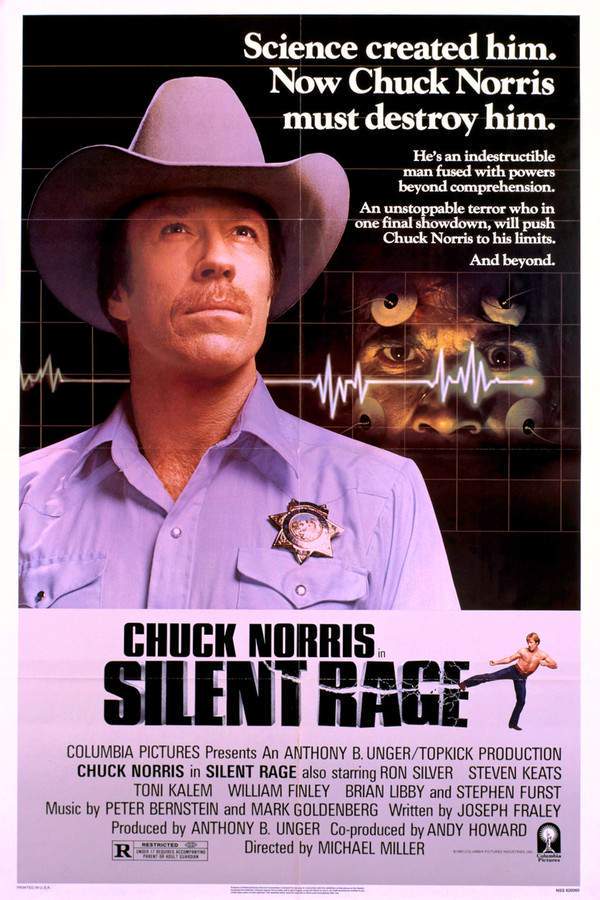
Bleak stories of one-person apocalypses like Rampage

A single individual unleashes chaotic violence that shatters a community. For viewers who appreciated the societal collapse triggered by one man in Rampage, this collection features similar movies. Discover films about lone wolves who wage war on their community, creating a sense of bleak, chaotic violence and exploring themes of homegrown terrorism and mass trauma.

  • chaotic
  • furious
  • bleak
  • oppressive
  • shattering
  • traumatic
  • Tone: dark, bleak, chaotic
  • Pacing: fast, chaotic action
Why these movies?

The story pattern: The narrative pattern revolves around an isolated individual who decides to tear down the world around them. The story follows the execution of their violent campaign, the panic and helplessness of the community, and often ends with the perpetrator succeeding or escaping, highlighting the fragility of societal order and the permanence of the trauma inflicted.

Why they belong together: These films are connected by their core premise: a single person as an agent of catastrophic change. They share a fast, chaotic pacing during action sequences, a consistently dark and bleak tone, high intensity, and an ending that offers no catharsis, only the chilling reality of the damage done.

If you liked this

Movies Like Rampage

Similar movies to Rampage: the same genre, themes or kind of story. Each one comes with its own plot summary, timeline and ending explained.

Browse all movie summaries

Every angle

Rampage (2009) Explained: Plot, Timeline & Characters

Everything about Rampage in one place: what happens in the plot summary, the timeline in chronological order, the characters and meaning and a spoiler-free summary. What's After the Movie adds the cast, box office and post-credit scenes.

Coming soon on iOS and Android

The Plot Explained Movie Summary App

Plot summaries, endings explained and timelines on your phone. Catch up on any movie in minutes, save your favorites and never miss a twist again.
Be the first to know when we launch. Your email stays private, always.

Learn more about the app