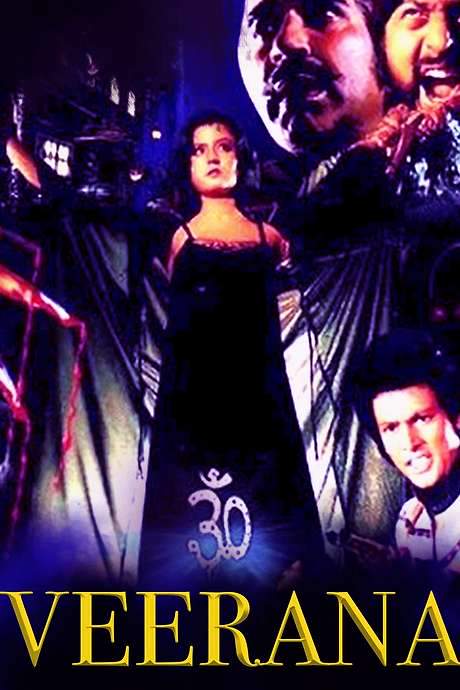
Thakur Jwala Prasad is murdered by his wife on their wedding night, a brutal act that seals his fate. Thrust into a dark afterlife, his spirit returns as a malevolent force bent on revenge, targeting the brides who wear the traditional red bridal sarees. To enact this vengeance, the spirit must possess a living body, transforming into a terrifying, monstrous version whenever a bride is near. The possessed person otherwise appears completely ordinary, so the danger remains hidden in plain sight. The only way to end the haunting is to stab the chest of the possessed body, yet the spirit proves elusive, slyly transferring to new hosts before any mortal weapon can finish it off.
At a remote estate, a troubling pattern emerges: newly wedded brides vanish as their palanquins approach a temple, and their bodies vanish without a trace. The estate is ruled by the benevolent Thakur Saab [Sanjeev Kumar], a respected figure who governs with a measured calm that hides the growing unease among his people. His only son, Shera [Shatrughan Sinha], a brash and roguish figure, drags the family name through reckless escapades and clashes constantly with Lakhan [Sunil Dutt], a courageous and principled villager who stands up for what is right. The two men are instantly at odds, a fault line that becomes a central axis of the drama. Lakhan is in love with Reshma [Reena Roy], a village girl whose quiet strength hides a readiness to fight for what she wants; at the same time, Shanti [Bindiya Goswami], Thakur Saab’s daughter, harbors her own feelings for Lakhan, creating a tangle of affections that complicates loyalties and choices. Champa [Rekha], a bold and vibrant soul, loves Shera, even as his roguish charm pushes her to test the limits of true devotion.
As the disappearances weigh heavily on the village, suspicion shifts from one scapegoat to another. Some whisper about a local vagrant with a troubled mind, while others point their fingers at the nearby temple priest, meleeing with rumors that swirl around the sanctum and the red-draped brides. Others still blame Shera, whose charm and arrogance make him an easy target for anger and fear. The mounting paranoia reaches a fever pitch when Lakhan’s younger sister Gauri [Neetu Singh] vanishes during her bridal procession. A glinting earring is found near the priest’s shoes, driving the villagers to accuse him—though the priest proves his innocence only to reveal that the village’s grief is deeper than mere scapegoating. Lakhan also suspects Amar [Jeetendra], Gauri’s former lover, but the truth unsettles him: they had both chosen a desperate path and, in a twist of fate, had taken their own lives because they could not bridge the gulf between them. The broader truth remains elusive, and the absence of clear answers only fuels fear.
In the midst of this, Shera attempts to assert control over Reshma, pressing his suit through a dangerous gambit. He tries to coerce the blind Vaidji—who is, in fact, not blind at all—into approving their union, leveraging this dubious leverage against Reshma. The ruse collapses when Vaidji comes clean before everyone, stripping Shera of any leverage and forcing him to confront the reality that Reshma’s future lies with Lakhan. Vaidji’s revelation also impels Lakhan and Reshma toward a deeper commitment, and Thakur Saab’s daughter Shanti’s engagement is rearranged, as she realizes Lakhan’s love for Reshma is genuine. Meanwhile, the pair’s wedding journey continues with a sense of urgent risk, and Lakhan agrees to protect Shanti by accompanying her palanquin to her destination. The journey is tinged with tragedy and a hint of superstition—Shanti reaches her goal not because of fate alone, but because she refuses to wear the red saree that the village associates with danger and misfortune, a superstition that mirrors the village’s fear of the unknown.
The suspicion that has haunted Thakur Saab begins to coalesce around him, particularly because only he and Lakhan know about the plan to safeguard Shanti. Thakur Saab’s fragile composure shatters under the weight of fear and guilt, and he contemplates taking his own life. His wife, however, reveals a crucial truth: Shera knew about the altered plan and the need to protect Shanti. This revelation deepens the moral dilemma: no matter who the true culprit is, Thakur Saab vows to see justice done, even if it means confronting his own son. In a tense confrontation, Shera attempts a kidnapping of Reshma, but Lakhan intervenes, and a fire threatens to consume both, with Champa leaping into the fray to rescue the man she loves. Her act of devotion underscores a key theme: choices born of love and loyalty can redeem even those who seem most flawed.
The burgeoning alliance between Lakhan and Reshma culminates in their marriage, a ceremony that seems to seal a fragile peace. Yet the final test arrives when Reshma’s palanquin reaches the temple and a monstrous figure seizes her. Lakhan and Shera pursue the abductors into a dark cave, where they discover the true culprit of the village’s terror: a disguised vagrant who is, in fact, a policeman investigating the missing brides. The trio fights the monstrous assailant, and Lakhan delivers a decisive stab to the chest. The truth unravels in a final, shattering twist: the monstrous being is Thakur Saab himself, but his spirit fights to hold back the evil Jwala Prasad from possessing someone else. In a selfless act, Thakur Saab allows the evil spirit to be laid to rest, and he dies wine of the struggle, his sacrifice ensuring that the cycle of vengeance is broken.
In the aftermath, Lakhan and Reshma begin a new life together, their love tempered by the trials they endured. The village slowly returns to a cautious calm, the temple’s shadows receding as the truth of the murders and the dual spirits is laid bare. Champa’s steadfast devotion remains a beacon for Shera’s own path toward redemption, suggesting that even the most wayward hearts can change when faced with the cost of their choices. The tale blends mystery, romance, and moral complexity, offering a gaze into a community haunted by fear and the shadow of a vengeful past, teased into the open by acts of courage, sacrifice, and a stubborn refusal to surrender to despair.