Plot Explained Spoilers guaranteed!
Plot Explained

Browse by genre

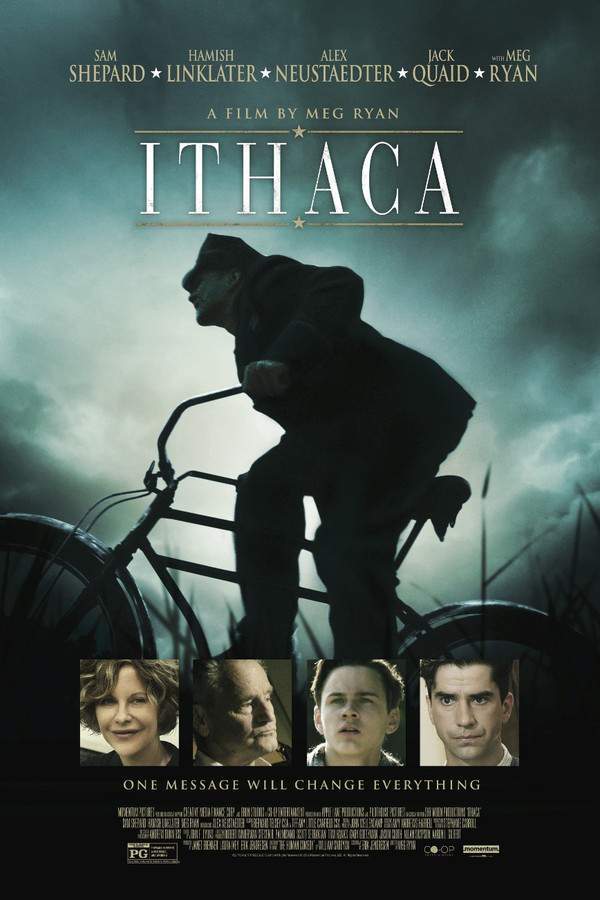
Ithaca (2016) movie poster

Plot Summary

Ithaca (2016) Plot Summary Explained

Release, runtime and language
2016 · 96 min · English
Loading streaming availability…

During World War II, a young boy named Homer Macauley finds purpose and hope in his small town. While his brother serves overseas, Homer takes on the vital role of delivering important messages, revealing the harsh realities of the war to Ithaca's residents. Through his responsibilities, he matures quickly, confronting difficult truths about life, loss, and the strength found in community.

On this page (6)
  1. 1 Where to watch
  2. 2 What happens: full plot
  3. 3 Plot questions answered
  4. 4 Movie threads
  5. 5 Movies like Ithaca
  6. 6 Every angle
Loading streaming availability…

Full plot summary · contains spoilers

What Happens in Ithaca: Full Plot Summary

The whole story of Ithaca (2016) explained, from the opening scene to the final frame: every key event, every twist and what it all adds up to. Read it as a quick recap before the sequel, to check a scene you missed, or to finally understand what really happened.

In 1942, a young boy named Homer Macauley, only 14 years old, takes on the work of delivering telegrams to help support his widowed mother, Katie, his older sister Bess, and his four-year-old brother Ulysses in the small fictional town of Ithaca, CA. His dream is simple yet brave: to become the best and fastest bicycle telegraph messenger in town, gliding through streets with a sense of purpose that belies his years.

The very first telegram Homer delivers lands with a heavy moment of truth. It is for a Hispanic woman who cannot read English well, and she asks him to read the message aloud. The content is stark and heartbreaking: a telegram from the Secretary of Defense announcing that her son has died in the war. That single moment plants a seed of seriousness in Homer’s heart, as he realizes that these messages are not just numbers and names but lives touched by distant conflicts.

Back home, the war’s reach continues to unfold through letters from Homer’s older brother, Marcus, who is serving far away. Marcus writes regularly, sharing stories of life on the front and the emotional weight of his absence. He also reminds Homer that, in his absence, he is the man of the house, a role that fills Homer with a mix of pride and pressure. The family’s burden is compounded by the recent death of their father in the war, leaving Katie to manage everything with courage but obvious strain.

On the job, Homer assumes a quiet responsibility beyond his years. He helps the telegrapher Willie Grogan stay alert—waking him with cold water and strong coffee when needed—so the office keeps moving smoothly. Through his rounds, Homer begins to hear and carry messages of love, longing, hope, pain, and death. Each day’s work chips away at his boyish innocence as he longs for a telegram that will bring Marcus back, a signal that the world continues to turn despite the heavy losses surrounding them.

Homer also wrestles with his feelings about his younger brother, Ulysses. He is envious of Ulysses’s apparent fearlessness and obliviousness to the war’s dangers. The contrast sharpens as Homer wrestles with the weight of responsibility and the pull of youthful curiosity. In the telegraph office, he often checks in, hoping to be called upon to prove his own courage or usefulness.

Katie, meanwhile, experiences moments that feel almost otherworldly—she sometimes believes she sees her late husband, Matthew. These glimpses speak to a family clinging to memory and faith in the midst of upheaval. The house is never free from little tremors of fear and superstition, like when the young Ulysses is startled by a half-man, half-machine window display that seems to loom over the storefronts and the street outside.

One night, Homer reads aloud a letter from Marcus to Mr. Grogan, sharing the heavy sentiment that if Marcus’s brother dies, he will shut himself off completely from the world. The letter reveals the deep emotional toll of war on a family’s morale and on the individual who imagines the future he will have to bear.

The story takes a poignant turn the following day when Homer goes to check on Mr. Grogan only to discover that the elder telegrapher has died after typing one last, dreaded message. The news hits with an abrupt finality: the war’s reach has claimed another life, another family’s calm, and another generation’s certainty. Toby, Marcus’s fellow soldier, and Homer then make their way to the Macauleys’ home to deliver Marcus’s death notice, a moment that seals Marcus’s absence and marks the family’s ongoing struggle to endure.

Through these events, the narrative threads together themes of duty, resilience, and the subtle heroism of everyday life during wartime. Homer grows from a boy who wants to impress with speed and efficiency into a young person who carries the weight of others’ stories—love, loss, and the fear of what the war will take next. The film offers a clear, human portrait of how a community responds to grief, how families support one another, and how a teenager’s sense of purpose can broaden to include tenderness, empathy, and courage in the face of uncertainty.

Last updated: October 09, 2025 at 16:14

Was this helpful?

Plot questions answered

Ithaca Plot Explained: Your Questions Answered

The questions people ask most about Ithaca (2016): what happens in the confusing scenes, why the characters do what they do, the twists, hidden details and what the ending means. Each answer contains spoilers.

Q1

Why does Homer take on the job of delivering telegrams at age 14?

Homer takes the job to help support his widowed mother Katie, his older sister Bess, and his four-year-old brother Ulysses. Their father has already died in the war, leaving the family without a male provider. Marcus, Homer's older brother, is serving overseas, so Homer steps up as the man of the house to contribute financially and take on adult responsibilities.

  • Homer Macauley
  • telegraph messenger
  • family responsibility
  • WWII
Q2

Why does Homer's first telegram delivery affect him so strongly?

Homer's first delivery is a death notice from the Secretary of Defense to a Hispanic woman who cannot read English. He must read aloud that her son has died in the war. This moment shatters his childish view of telegrams as just messages and numbers, forcing him to confront that he is delivering news of death and loss to families in his own town.

  • first telegram
  • death notice
  • war casualty
  • Homer
Q3

Why does Katie sometimes see visions of her late husband Matthew?

Katie sees visions of Matthew as a manifestation of her grief and longing for her deceased husband. These moments reflect how the war permeates home life, while the fighting happens overseas, the emotional toll hits families in Ithaca. Her visions show that the family is still processing the death of their father and struggling to move forward while clinging to memory.

  • Katie
  • Matthew
  • visions
  • grief
  • widow
Q4

Why is Homer envious of his younger brother Ulysses?

Homer envies Ulysses because his four-year-old brother appears fearless and oblivious to the war's dangers, while Homer carries the heavy weight of responsibility as the man of the house. Ulysses can remain innocent and carefree, but Homer has been forced to grow up quickly, delivering messages about death and loss every day.

  • Homer
  • Ulysses
  • envy
  • childhood
  • responsibility
Q5

What causes Mr. Grogan's death at the telegraph office?

Mr. Grogan dies after typing one last telegram message he had dreaded, likely a death notice. The physical and emotional strain of delivering terrible news over the years, combined with the stress of the job during wartime, proves fatal. His death underscores how the war's reach claims lives even among those working far from the front lines.

  • Willie Grogan
  • telegraph office
  • death
  • stress
Q6

How does Marcus die in the war?

The exact circumstances of Marcus's death are not detailed in the summary. What is known is that Toby, a fellow soldier, arrives with Homer to deliver the news that Marcus has died in combat. Marcus had been writing letters from the front, expressing his fear of losing his brother and his emotional burden of war.

  • Marcus Macauley
  • death in war
  • Toby
  • combat
Q7

Why does Marcus write about fearing his brother will die?

In one of his letters, Marcus tells Mr. Grogan that if his brother dies, he will shut himself off completely from the world. This reveals the deep emotional toll the war has on soldiers, Marcus fears not only his own death but also the possibility that his younger brother Homer could be killed, adding another layer of family trauma.

  • Marcus letter
  • fear
  • brother death
  • emotional toll
Q8

What is the significance of the half-man, half-machine window display that frightens Ulysses?

The half-man, half-machine display represents the era's industrial pressure and the blurring line between human and machine during wartime production. It serves as a surreal symbol of how war transforms everything, even everyday life in small-town America. The frightening image unsettles the youngest family member, showing how the war's presence infiltrates even the most innocent corners of life.

  • Ulysses
  • window display
  • war
  • symbolism
  • fear
Q9

Why does Homer help Mr. Grogan stay awake at the telegraph office?

Homer helps keep Willie Grogan alert by waking him with cold water and strong coffee so the telegraph office continues operating smoothly. This shows Homer taking on responsibility beyond his years, ensuring that death notices and war messages still get delivered, even when the elderly Grogan is exhausted from the emotionally draining work.

  • Willie Grogan
  • telegraph office
  • Homer
  • responsibility
Q10

Why does Homer want to become the fastest telegraph messenger?

Homer wants to be the best and fastest messenger as a way to prove his usefulness and maturity despite his young age. This ambition reflects his desire to measure up to his absent father and older brother Marcus, fulfilling his role as the man of the house while also seeking a sense of purpose and accomplishment during the war.

  • Homer
  • fastest messenger
  • ambition
  • purpose
Q11

How does delivering telegrams change Homer as a person?

As Homer delivers messages of love, longing, hope, pain, and death daily, his boyish innocence fades and he becomes aware of harsher realities. Each telegram teaches him that happiness and tragedy arrive on the same route. He matures from a boy who wants to impress with speed into a young person who carries the weight of others' stories with empathy and courage.

  • Homer
  • maturity
  • telegrams
  • innocence
  • growth
Q12

Why is the setting of Ithaca, CA important to the story?

Ithaca represents a small American town far from the front lines yet deeply affected by the war. The fictional setting allows the film to show how war touches ordinary communities through telegrams, the only connection between soldiers overseas and their families at home. The intimate setting amplifies the personal impact of each message delivered.

  • Ithaca
  • setting
  • small town
  • WWII
  • community

Movie threads

More Movies Like Ithaca, by Mood & Story

Curated lists built around what makes Ithaca tick: the same mood, the same kind of story or the same emotional payoff. Each list explains why these movies belong together.

Somber coming-of-age stories like Ithaca

Stories of youth shaped by profound loss, leading to a quiet, hard-won maturity. Discover movies like Ithaca that explore poignant, character-driven narratives about young people grappling with grief and responsibility. If you liked the heartfelt, melancholic journey of Homer Macauley, these films offer similar stories of quiet maturation set against a backdrop of personal loss.

  • melancholic
  • somber
  • heartfelt
  • grieving
  • reflective
  • nostalgic
  • Tone: melancholic, heartfelt
  • Pacing: slow, reflective
Why these movies?

The story pattern: The narrative follows a young protagonist whose ordinary world is shattered by a significant loss or harsh truth. Forced to confront adult realities, they undertake a responsibility that accelerates their growth, moving from innocence towards a bittersweet, reflective maturity. The journey is internal and emotional, emphasizing personal change over external action.

Why they belong together: Movies in this thread are grouped by their shared exploration of youth indelibly marked by sorrow. They share a melancholic tone, slow pacing that allows for reflection, and a heavy emotional weight centered on a character's quiet, profound transformation in the face of adversity.

Wartime homefront dramas similar to Ithaca

Intimate stories of communities and families waiting, worrying, and mourning far from the battlefield. If you appreciated Ithaca's focus on a small town coping with World War II, this collection features similar movies about the homefront experience. These dramas capture the slow, somber atmosphere of waiting, the personal impact of loss, and the strength of community bonds during times of war.

  • nostalgic
  • somber
  • grieving
  • quiet
  • heartfelt
  • reflective
  • Tone: melancholic, somber
  • Pacing: slow, lingering
Why these movies?

The story pattern: The narrative centers on a community or family as they receive news from the war, often through letters or messengers. The structure is built around anticipation and dread, punctuated by moments of personal tragedy. The story explores how individuals support each other, find purpose in daily duties, and ultimately endure collective loss.

Why they belong together: These films are united by their specific setting and mood: the homefront during a major war. They share a slow, deliberate pacing that mirrors the experience of waiting, a melancholic tone born from anxiety and loss, and a thematic focus on duty, community, and the personal cost of global conflicts.

If you liked this

Movies Like Ithaca

Similar movies to Ithaca: the same genre, themes or kind of story. Each one comes with its own plot summary, timeline and ending explained.

Browse all movie summaries

Every angle

Ithaca (2016) Explained: Plot, Timeline & Characters

Everything about Ithaca in one place: what happens in the plot summary, the timeline in chronological order, the characters and meaning and a spoiler-free summary. What's After the Movie adds the cast, box office and post-credit scenes.

Coming soon on iOS and Android

The Plot Explained Movie Summary App

Plot summaries, endings explained and timelines on your phone. Catch up on any movie in minutes, save your favorites and never miss a twist again.

Be the first to know when we launch. Your email stays private, always.

Learn more about the app