Plot Explained Spoilers guaranteed!
Plot Explained

Browse by genre

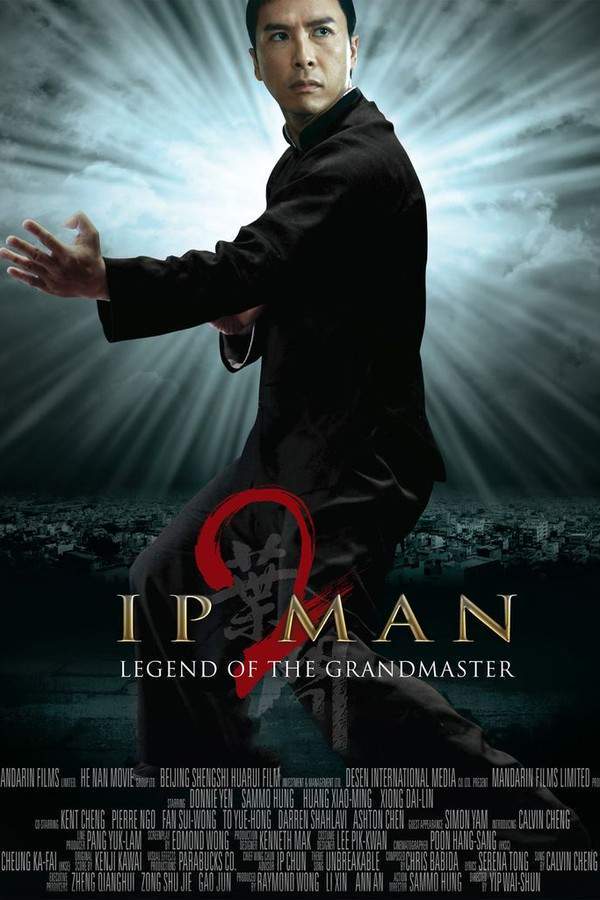
Ip Man (2010) movie poster

Plot Summary

Ip Man (2010) Plot Summary Explained

Release, runtime and language
2010 · 106 min · Chinese
JustWatch #7,273 17
Directed by
Wilson Yip
Starring
Donnie Yen, Ka Tung Lam, Simon Yam, Siu-Wong Fan

During the 1930s in Foshan, China, martial arts master Ip Man faces hardship and conflict under the oppressive Japanese occupation. He staunchly refuses to compromise his principles by teaching the invaders, leading to challenges and confrontations. Demonstrating remarkable courage and humility, Ip Man finds himself embroiled in a series of intense battles, ultimately clashing with General Miura, considered Japan's most formidable warrior, in a decisive and dangerous showdown.

On this page (6)
  1. 1 Where to watch
  2. 2 What happens: full plot
  3. 3 Plot questions answered
  4. 4 Movie threads
  5. 5 Movies like Ip Man
  6. 6 Every angle

Where to watch

Where to Watch Ip Man (2010)

Where can you watch Ip Man? Stream, rent or buy it in the US, including on FlixFling, fuboTV and Hi-YAH: current JustWatch availability with up-to-date prices.

Streaming availability powered by JustWatch

Full plot summary · contains spoilers

What Happens in Ip Man: Full Plot Summary

The whole story of Ip Man (2010) explained, from the opening scene to the final frame: every key event, every twist and what it all adds up to. Read it as a quick recap before the sequel, to check a scene you missed, or to finally understand what really happened.

In the 1930s, Foshan stands as a vibrant center for Southern Chinese martial arts, bustling with various schools that compete and vie for talented disciples. Among these martial arts masters, Ip Man (Donnie Yen), the esteemed Wing Chun expert, remains remarkably humble. Although he possesses unparalleled skills, he leads a serene life, preferring to avoid public attention, dedicating his time to family, friends, and training. Unfortunately, his dedication to martial arts creates tension at home, as his wife often feels neglected due to his frequent training sessions and discussions about martial arts.

Despite not actively training others, Ip Man earns respect in Foshan through friendly and informal competitions with other local masters. His reputation skyrockets after he faces off against Jin Shanzhao, a brash and skilled Northern Chinese martial artist, and triumphs, which enkindles local pride among his fellow Southern stylists.

The peace of Foshan is shattered amid the Japanese invasion in 1937, turning the town upside down. With the Japanese commandeering his home as their headquarters, Ip and his family plunge into poverty, forced to move into a run-down dwelling. To provide for his loved ones, he reluctantly takes on a grueling job at a coal mine. General Miura (Hiroyuki Ikeuchi), a Karate expert, organizes vicious competitions where Chinese martial artists pit their skills against his military cadets, offering a meager reward of rice for each victory. Initially, Ip hesitates to join these brutal matches. However, upon discovering the disappearance of his friend Lin, he resolves to participate to uncover the truth.

Tragically, Ip arrives only to witness Lin's execution at the hands of Lieutenant Sato for taking rice after a previous contest. Infuriated by the loss of his friend, Ip challenges ten Karateka simultaneously. Despite having abstained from practicing Wing Chun to conserve scarce rations, he unleashes a ferocious display of martial prowess, demolishing the attackers and catching the attention of General Miura, who desires to observe more of Ip's skills.

As time passes, Miura's impatience grows due to Ip’s absence from the arena, prompting him to dispatch Sato and soldiers to find him. In a confrontational moment, Sato threatens Ip's wife, provoking Ip to defeat the soldiers with ease. Later, he seeks the help of his friend Chow Ching-Chuen (Simon Yam), who is plagued by extortion from a bandit group led by Jin Shanzhao. Ip offers to train Chow’s factory workers in self-defense using Wing Chun techniques. When the gang attempts to shake down the cotton mill again, the workers valiantly counterattack with their newfound skills, and Ip arrives to handle the situation, decisively taking down Jin Shanzhao and warning him to stay away.

Eventually, the Japanese forces discover Ip at the cotton mill. General Miura proposes that Ip teach martial arts to the soldiers in exchange for his life, but Ip staunchly refuses and challenges Miura for a public match, which the general accepts, knowing that declining would be dishonorable. The confrontation draws a crowd in the town square of Foshan. At first, the duel appears evenly matched, but soon, Ip's unmatched technique overwhelms Miura, who finds himself outmatched and suffers a devastating defeat.

With the general incapacitated and lying on the ground, victory is bittersweet for Ip as he glimpses his family amidst the adoring crowd. However, the triumph leads to chaos when Sato retaliates by firing at Ip, igniting a tumultuous fight between the Chinese spectators and the Japanese soldiers, culminating in a climactic moment when Li Zhao avenges a fallen comrade by killing Sato.

Amid the tumult, Ip is forcibly escorted away, yet the story does not end there. The epilogue unveils that he successfully escapes to Hong Kong, aided by his friend Chow Ching-Chuen, where he establishes a Wing Chun school, eventually becoming a mentor to future martial arts legends, including Bruce Lee.
Last updated: November 03, 2024 at 13:42

Was this helpful?

Plot questions answered

Ip Man Plot Explained: Your Questions Answered

The questions people ask most about Ip Man (2010): what happens in the confusing scenes, why the characters do what they do, the twists, hidden details and what the ending means. Each answer contains spoilers.

Q1

Why did Ip Man refuse to teach martial arts to the Japanese?

Ip Man refused because he viewed teaching the enemy as a betrayal of his Chinese heritage and martial arts principles. General Miura offered him this deal as an alternative to death, but Ip chose to fight instead. His refusal represented his steadfast refusal to compromise his dignity or assist the occupiers in any way.

  • principles
  • dignity
  • honor
  • japanese occupation
  • resistance
Q2

Why did Ip Man challenge ten Japanese Karateka at once?

Ip Man was fueled by rage after witnessing his friend Lin execution. Lin was killed by Lieutenant Sato for allegedly taking rice after a previous competition. The senseless murder of his friend drove Ip to retaliate by taking on all ten fighters in one devastating bout.

Foreshadowing: Earlier, Ip hesitates to join the competitions, but Lin's disappearance prompts him to investigate.

  • lin
  • revenge
  • ten fighters
  • karateka
  • execution
Q3

How did Ip Man find out what happened to his friend Lin?

Ip joined the Japanese competitions specifically to discover Lin's whereabouts. When he arrived at the arena, he witnessed Lin's execution firsthand, seeing his friend killed by Lieutenant Sato for taking rice. This horrifying revelation triggered Ip's furious response against the ten Karateka.

  • lin
  • sato
  • execution
  • finding friend
  • discovery
Q4

Why did Ip Man train the factory workers in Wing Chun?

Ip Man trained Chow Ching-Chuen's factory workers to help his friend, who was being extorted by Jin Shanzhao's gang. Rather than fighting the bandits himself permanently, Ip taught the workers Wing Chun techniques so they could defend themselves against future harassment. This decision empowered the workers and aligned with his philosophy of using martial arts for protection.

Foreshadowing: Chow Ching-Chuen is established as Ip's friend who is troubled by bandit extortion.

  • wing chun
  • factory workers
  • chow
  • self-defense
  • training
Q5

What happened to Ip Man after he defeated General Miura?

After defeating General Miura, chaos erupted when Lieutenant Sato fired at Ip Man from behind. This sparked a violent clash between Chinese spectators and Japanese soldiers. During the turmoil, Ip was forcibly taken away by Japanese forces, though the specific outcome of his capture remains unclear. He ultimately escaped to Hong Kong with Chow Ching-Chuen's help.

  • miura
  • sato
  • chaos
  • escape
  • capture
Q6

Why did Lieutenant Sato attack Ip Man after the match?

Lieutenant Sato attacked Ip Man out of revenge and desperation after watching his superior, General Miura, be defeated publicly. Rather than accepting the loss honorably, Sato shot at Ip from behind, igniting the violent confrontation between Chinese civilians and Japanese soldiers that followed.

  • sato
  • revenge
  • shooting
  • miura defeat
  • betrayal
Q7

How did Ip Man escape to Hong Kong?

Ip Man escaped to Hong Kong with assistance from his friend Chow Ching-Chuen. Following the chaotic confrontation in Foshan where Ip was forcibly taken away, Chow helped arrange his passage out of Japanese-occupied China. In Hong Kong, Ip established a Wing Chun school that would eventually train Bruce Lee.

  • hong kong
  • escape
  • chow
  • bruce lee
  • wing chun school
Q8

Why was Ip Man working in a coal mine?

Ip Man was forced to work at a coal mine because the Japanese invasion stripped him of his home and livelihood. The Japanese commandeered his house for their headquarters, pushing Ip and his family into poverty. With no other means to support his family, he took the grueling coal mine job.

  • poverty
  • coal mine
  • japanese occupation
  • family
  • survival
Q9

How did Ip Man defeat Jin Shanzhao at the cotton mill?

Ip Man defeated Jin Shanzhao using his superior Wing Chun skills after the bandit leader attempted to extort Chow's cotton mill again. The factory workers, trained by Ip in Wing Chun, initially fought back, and Ip personally intervened to decisively defeat Jin, warning him to stay away from the workers.

Foreshadowing: Ip's earlier victory against Jin in Foshan established his superior fighting ability.

  • jin shanzhao
  • cotton mill
  • wing chun
  • bandits
  • defeat
Q10

Why did the Japanese offer rice rewards for the martial arts competitions?

General Miura organized these brutal competitions as a form of psychological warfare. The Japanese offered meager rice rewards to humiliate Chinese martial artists by making them fight like circus performers for food. Lin was executed for taking this rice, highlighting the cruel and degrading nature of the occupation.
  • rice
  • miura
  • humiliation
  • competitions
  • psychological warfare
Q11

Why did Ip Man's wife feel neglected?

Ip Man's wife felt neglected because he devoted most of his time to martial arts training and discussions with other masters, leaving her and the family with little attention. Even after losing their home to Japanese occupation, Ip continued his martial pursuits, creating ongoing tension in their marriage.

Foreshadowing: The tension at home is introduced early in the film during Ip's peaceful life in Foshan.

  • wife
  • family
  • neglect
  • martial arts
  • tension
Q12

Why did Ip Man avoid fighting in the Japanese competitions at first?

Ip Man initially abstained from the Japanese competitions to conserve what little energy and rations he had from working in the coal mine. He also preferred to avoid drawing attention to himself under Japanese occupation. However, his friend's disappearance and subsequent execution compelled him to break his self-imposed restraint.

  • restraint
  • ration
  • coal mine
  • competitions
  • hesitation

Movie threads

More Movies Like Ip Man, by Mood & Story

Curated lists built around what makes Ip Man tick: the same mood, the same kind of story or the same emotional payoff. Each list explains why these movies belong together.

Stories of principled defiance like Ip Man

Solitary heroes uphold their honor against an overwhelming hostile force. Discover movies like Ip Man that feature skilled, honorable individuals forced to confront overwhelming oppression. If you admired the themes of resilience, cultural pride, and standing up for one's principles against a hostile force, this thread gathers similar powerful dramas and action films.

  • patriotic
  • tense
  • resilient
  • determined
  • somber
  • triumphant
  • Tone: tense, somber, determined
  • Pacing: steady, building to a climax
Why these movies?

The story pattern: The narrative typically follows a linear path from a state of peace or mastery, through a catastrophic incursion by a powerful enemy. The protagonist endures significant personal loss and suffering, refusing to compromise their core values. This resistance builds towards a high-stakes, cathartic confrontation where the hero's victory is as much about spirit as it is about physical prowess, often set against a backdrop of historical conflict.

Why they belong together: These films are grouped by their shared focus on a resonant archetype: the principled master. They combine a heavy emotional weight with tense, high-intensity action, creating a compelling blend of personal drama and symbolic struggle. The tone is consistently somber and determined, with a steady pacing that builds deliberately towards a pivotal clash.

Movies with bitterswartime endings like Ip Man

Stories where personal victory is overshadowed by the scars of conflict. If the ending of Ip Man resonated with you—a personal win amidst larger tragedy—explore this thread. Find similar movies where characters achieve a costly victory during wartime, leaving them with a bittersweet feeling rather than pure celebration. These stories balance triumph with heavy emotional consequences.

  • bittersweet
  • somber
  • resilient
  • triumphant
  • costly victory
  • wartime drama
  • Tone: somber, tense, bittersweet
  • Pacing: steady, character-driven
Why these movies?

The story pattern: The narrative arc involves a protagonist navigating the extreme hardships of a wartime setting, often suffering deep personal losses. Their ultimate victory—whether in a duel, an escape, or an act of rebellion—is meaningful but doesn't end the war or erase the suffering. The conclusion emphasizes the high price paid, creating an ending that is impactful and realistic, blending hope for the future with acknowledgment of profound sacrifice.

Why they belong together: These films share a specific emotional mix and narrative structure. They deliver the catharsis of a climactic victory but temper it with the sobering reality of a larger, ongoing tragedy. The tone is a consistent blend of tension and somber reflection, with a heavy emotional weight and a pacing that builds steadily towards a conclusion that is both triumphant and mournful.

If you liked this

Movies Like Ip Man

Similar movies to Ip Man: the same genre, themes or kind of story. Each one comes with its own plot summary, timeline and ending explained.

Browse all movie summaries

Every angle

Ip Man (2010) Explained: Plot, Timeline & Characters

Everything about Ip Man in one place: what happens in the plot summary, the timeline in chronological order, the characters and meaning and a spoiler-free summary. What's After the Movie adds the cast, box office and post-credit scenes.

Coming soon on iOS and Android

The Plot Explained Movie Summary App

Plot summaries, endings explained and timelines on your phone. Catch up on any movie in minutes, save your favorites and never miss a twist again.

Be the first to know when we launch. Your email stays private, always.

Learn more about the app