Plot Explained Spoilers guaranteed!
Plot Explained

Browse by genre

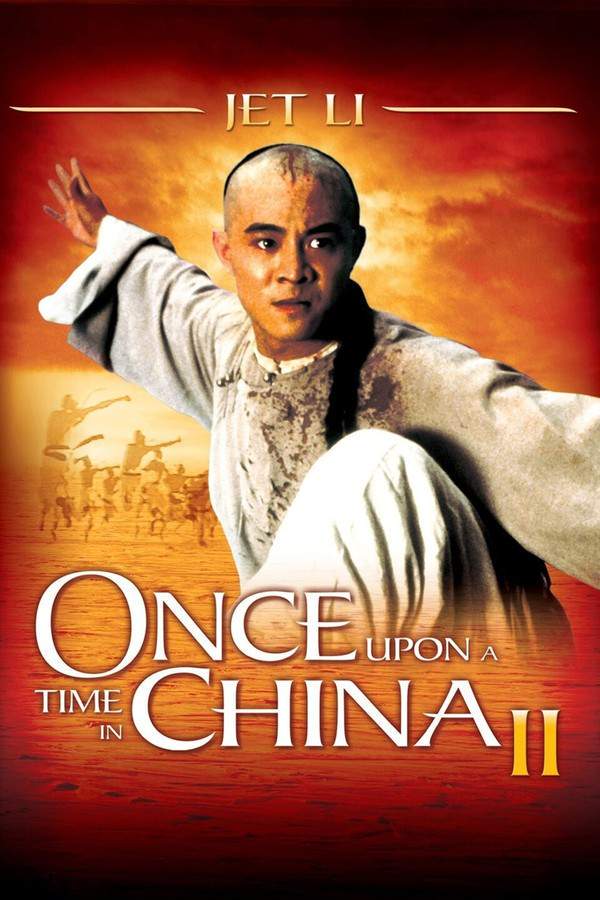
Once Upon a Time in China (1991) movie poster

Plot Summary

Once Upon a Time in China (1991) Plot Summary Explained

Release, runtime and language
1991 · 133 mins · Cantonese
JustWatch #9,100 18
Directed by
Tsui Hark
Starring
Jet Li, Mark King, Jacky Cheung, Mike Leeder, Xiong Xinxin, Wu Ma

In late‑19th‑century Canton, legendary kung fu master Wong Fei‑Hung confronts foreign powers as they loot and destabilize China. The film blends spectacular martial‑arts choreography with a patriotic fight for cultural preservation, highlighting Wong’s determination to protect his people and heritage.

On this page (6)
  1. 1 Where to watch
  2. 2 What happens: full plot
  3. 3 Plot questions answered
  4. 4 Movie threads
  5. 5 Movies like Once Upon a Time in China
  6. 6 Every angle

Where to watch

Where to Watch Once Upon a Time in China (1991)

Where can you watch Once Upon a Time in China? Stream, rent or buy it in the US, including on HBO Max, Shout! Factory TV and Amazon Video: current JustWatch availability with up-to-date prices.

Streaming availability powered by JustWatch

Full plot summary · contains spoilers

What Happens in Once Upon a Time in China: Full Plot Summary

The whole story of Once Upon a Time in China (1991) explained, from the opening scene to the final frame: every key event, every twist and what it all adds up to. Read it as a quick recap before the sequel, to check a scene you missed, or to finally understand what really happened.

The film unfolds in Foshan, China, in the late 19th century under the Qing dynasty, where the town’s pride and heat of life center around Wong Fei-hung, Foshan’s renowned martial arts instructor who also runs the Po-chi-lam clinic. Jet Li brings this legendary figure to vivid life as he trains three apprentices—Porky Wing, Bucktooth So, and Kai—and navigates a world where tradition, honor, and survival constantly collide. Wong’s life is intertwined with the romantic thread of Siu-kwan, the daughter of a sworn brother of his grandfather, known to all as 13th Aunt; their bond is tender yet tempered by the strict social norms of their time, a tension that adds both warmth and restraint to their growing feelings. Rosamund Kwan Chi-Lam lends nuance to 13th Aunt, imbuing the romance with quiet dignity.

Leung Foon, a member of an opera troupe traveling through Foshan, enters Wong’s orbit by chance. He is instantly drawn to 13th Aunt, sparking a lighthearted, if awkward, courtship that sits beside more urgent matters. Leung’s arrival also drags him into the town’s turmoil, particularly the threat from the Shaho Gang, a ruthless cadre that extorts local businesses and unsettles the peace with brutal force. The Shaho Gang’s presence precipitates a clash that threads through the film—from a tense restaurant confrontation where the Governor and Wong briefly clash to a wider struggle that tests loyalty, courage, and the law’s reach.

The conflict intensifies when a fierce fight erupts between the Shaho Gang and Foshan’s militia, drawing in the Governor and leading to costly consequences for Wong and his apprentices. Although Wong defeats the gang’s leader and claims a measure of justice, the absence of reliable witnesses allows the mastermind to walk free, underscoring a pervasive injustice that weighs heavily on Wong and his allies. Kent Cheng Jak-Si as Porky Wing, Jacky Cheung as Bucktooth So, and Yuen Biao as Leung Foon stand with him, their fates suddenly linked to the town’s fragile rule of law.

Meanwhile, a new figure enters: the northern fighter known as Iron Robe Yim Chun Tung, champion-in-waiting and a magnet for bold ambitions. Yen Shi-Kwan embodies Yim’s swagger and hunger to prove himself, even as Wong begins to see through his show of prowess. Leung Foon, ambitious and youthful, chooses to follow Yim’s path, hoping to carve out his own place in Foshan’s martial landscape. The community’s fragile balance further sours when disaster strikes Po-chi-lam itself: a fire set by the Shaho Gang in retaliation, devastating the beloved clinic and forcing Wong to confront the cost of violence in the name of order.

A Jesuit priest identifies the Shaho Gang as the culprits behind the arson, driving them to seek shelter with Jackson, an American businessman who runs a dangerous underground operation. In a grim alliance, the gang helps Jackson traffic Chinese women to America, weaving a web of vice that threatens more than just the town’s peace. The Shaho Gang and Jackson’s men ambush a public performance in which the Governor and Wong are present, wounding many innocent people and killing a priest who sacrifices himself to block a fatal shot. The Governor’s anger lands on Wong, who is forced to choose between his oath to protect Foshan and the harsh reality of political power.

In the aftermath, a newly arrived Chinese labourer who has escaped from America speaks of brutal mistreatment and the harsh realities of life abroad, amplifying Wong’s resolve to safeguard his people from exploitation. As tensions rise, Iron Vest Yim challenges Wong to a rematch to prove he is the stronger fighter, only for a confrontation that ends unresolved at first. Leung Foon, now temporarily cast out from the opera troupe, remains torn between his loyalty to Wong, his love for 13th Aunt, and his own hunger for recognition.

When a security sweep by the Governor’s men drives fugitives from Po-chi-lam, Wong surrenders and ends up imprisoned along with his apprentices, unable to participate in the anticipated rematch. The Shaho Gang uses this moment to recruit Yim, despite Leung Foon’s objection, in a bid to consolidate power and carry out their next move. In a brutal turn of events, the gang abducts 13th Aunt, and the labourer who spoke of America is killed. Bucktooth So escapes imprisonment and races to warn Wong, but the guards release Wong and his apprentices out of respect for his standing and contributions.

Wong and his allies don disguises and stage a daring assault on Jackson’s base to rescue 13th Aunt and the captured women. A climactic melee erupts: Wong faces Yim again, this time exposing the deception in Yim’s fighting, tearing Yim’s queue with a decisive move, and the apprentices and Leung Foon overpower Jackson’s guards. Just as Wong is about to board Jackson’s ship, Yim reappears seeking a final duel, only to be fatally shot by Jackson’s men. Yim, dying, imparts a stark truth: > martial arts stand no chance against guns.

Back on the ship, the Shaho Gang’s leader meets his end in a furnace, and Jackson seizes the Governor at gunpoint. Wong’s quick thinking turns the tide: he uses his fingers to flick an unused bullet into Jackson’s forehead, killing him and saving the Governor. With the immediate threats neutralized, Wong welcomes Leung Foon as a new apprentice, completing a circle of mentorship and loyalty. The film closes with a celebratory group photo at Po-chi-lam, a testament to resilience, community, and the enduring bond between teacher, students, and family.

Last updated: October 10, 2025 at 16:04

Was this helpful?

Plot questions answered

Once Upon a Time in China Plot Explained: Your Questions Answered

The questions people ask most about Once Upon a Time in China (1991): what happens in the confusing scenes, why the characters do what they do, the twists, hidden details and what the ending means. Each answer contains spoilers.

Q1

Why is the Shaho Gang leader released by authorities despite Wong capturing him?

The authorities release the Shaho Gang leader because there are no reliable witnesses willing to testify against him. Despite Wong tracking down and defeating the gang's leader, the lack of witness testimony leaves the authorities unable to convict him, and he walks free.

Foreshadowing: Earlier, the Shaho Gang terrorizes Foshan with impunity, suggesting they have enough power to avoid legal consequences.

  • shaho gang leader
  • arrested
  • released
  • witnesses
  • authorities
  • Foshan
Q2

Why does the Governor blame Wong for the theatre ambush?

The Governor blames Wong for the theatre attack because the ambush occurs while Wong is present as his bodyguard. Although Wong is not responsible for the attack, the Governor holds him accountable for failing to prevent the violence that wounds many civilians and kills a priest.

Foreshadowing: The earlier restaurant confrontation establishes tension between the Governor and Wong over how to handle the gang threats.

  • governor
  • blame
  • Wong
  • theatre ambush
  • attack
  • responsibility
Q3

Why does Leung Foon leave Wong to follow the northern fighter Yim?

Leung Foon chooses to follow Yim because he is ambitious and wants to prove himself in Foshan's martial arts scene. Seeing Yim's confident swagger and apparent skill, Leung hopes that following Yim's path will help him carve out his own reputation and place in the town.

Foreshadowing: Leung's arrival in Foshan is driven by his desire for recognition, and his courtship of 13th Aunt adds pressure to establish himself.

  • Leung Foon
  • Yim
  • follow
  • ambition
  • martial arts
  • Foshan
Q4

Why does Iron Vest Yim agree to join the Shaho Gang?

Yim joins the Shaho Gang after Wong and his apprentices are imprisoned, seeing an opportunity to consolidate power during their absence. The gang recruits him to carry out their next move, and Leung Foon objects to this alliance.

Foreshadowing: Yim's earlier challenge to Wong and his desire to prove himself creates tension with the established martial arts order.

  • Yim
  • Iron Vest
  • Shaho Gang
  • joins
  • recruitment
  • betrayal
Q5

Why does Wong surrender to the authorities and get imprisoned?

Wong surrenders when the Governor's men conduct a security sweep of Po-chi-lam searching for fugitives. Rather than resist the authorities and escalate the conflict, Wong submits to arrest along with his apprentices, even though this prevents him from facing Yim's rematch challenge.

Foreshadowing: Wong's earlier clashes with the Governor have already created tension between his oath to protect Foshan and the reality of political power.

  • Wong
  • surrender
  • prison
  • authorities
  • Governor
  • Po-chi-lam
  • arrest
Q6

How does Wong manage to kill Jackson with a bullet flick?

Wong kills Jackson by using his martial arts skill to flick an unused bullet directly into Jackson's forehead. When Jackson holds the Governor hostage at gunpoint, Wong's quick thinking and precise finger technique allows him to turn the weapon against Jackson, killing him instantly.

Foreshadowing: Wong's legendary kung fu mastery has been demonstrated throughout the film, making this feat consistent with his character.

  • Wong
  • Jackson
  • bullet
  • flick
  • kill
  • Governor
  • ship
  • martial arts
Q7

What does Yim's death reveal about the film's theme?

Yim's death, shot by Jackson's men during their final duel, delivers the bitter realization that traditional martial arts stand no chance against modern firearms. His dying words encapsulate the film's theme that the old world of honor and combat is being overshadowed by new technology and foreign power.

Foreshadowing: Yim's earlier challenges to Wong and his confident belief in his Iron Vest technique foreshadow his eventual shock at being defeated by gunfire.

  • Yim
  • death
  • guns
  • martial arts
  • theme
  • modernization
  • tradition
Q8

Why is tearing Yim's queue significant during their fight?

When Wong fights Yim in the climactic battle, he tears Yim's queue (the traditional Chinese hairstyle imposed by the Qing dynasty). This act symbolically defeats Yim's claim to traditional Chinese martial virtue and exposes Yim's dishonesty, as Wong reveals Yim had been cheating with a hidden spearhead.

Foreshadowing: Yim's earlier arrival in Foshan and his claim to follow Wong's path are undercut by his dishonest fighting style.

  • Yim
  • queue
  • tearing
  • fight
  • cheating
  • spearhead
  • honor
Q9

Why do the Shaho Gang abduct 13th Aunt?

The Shaho Gang abducts 13th Aunt as a strategic move to weaken Wong and his allies. With Wong imprisoned, the gang seizes this opportunity to strike at someone close to him, using her as leverage while carrying out their collaboration with Jackson's trafficking operation.

Foreshadowing: 13th Aunt's romantic relationship with Wong and her connection to his household make her a vulnerable target.

  • 13th Aunt
  • abduction
  • Shaho Gang
  • kidnap
  • Wong
  • leverage
Q10

Why does the Shaho Gang burn down Po-chi-lam clinic?

The Shaho Gang sets fire to Po-chi-lam in retaliation for Wong's repeated interference with their extortions and his capture of their leader. The arson is meant to punish Wong and destroy a central part of Foshan's community, forcing him to confront the cost of his resistance.

Foreshadowing: The earlier restaurant confrontation and Wong's defeat of the gang leader establish the gang's intense grudge against him.

  • Po-chi-lam
  • fire
  • arson
  • Shaho Gang
  • revenge
  • clinic
  • burnt
Q11

Why does Wong accept Leung Foon as his fourth apprentice at the end?

Wong accepts Leung Foon as his fourth apprentice because Leung has proven his loyalty and bravery throughout the crisis. Despite briefly following Yim, Leung ultimately stood with Wong during the rescue mission, demonstrating his commitment to the martial arts master and his values.

Foreshadowing: Leung's earlier crush on 13th Aunt and his desire to prove himself create the foundation for his eventual mentorship.

  • Leung Foon
  • apprentice
  • Wong
  • becomes
  • fourth
  • mentorship
  • ending
Q12

Why does Jackson traffic Chinese women to America?

Jackson runs an underground operation that exploits Chinese women for profit, trafficking them to America. The Shaho Gang provides protection and assistance for this operation in exchange for Jackson's protection from foreign authorities, creating a dangerous alliance between local criminals and foreign exploitation.

Foreshadowing: The escaped labourer's testimony about brutal mistreatment in America establishes the reality of this exploitation.

  • Jackson
  • trafficking
  • women
  • America
  • Shaho Gang
  • exploitation
  • underground

Movie threads

More Movies Like Once Upon a Time in China, by Mood & Story

Curated lists built around what makes Once Upon a Time in China tick: the same mood, the same kind of story or the same emotional payoff. Each list explains why these movies belong together.

Patriotic Epics of Cultural Resistance like Once Upon a Time in China

Stories where heroes defend their culture against overwhelming foreign threats. Explore movies like 'Once Upon a Time in China' where iconic heroes lead the fight against cultural erosion. These films blend intense martial arts or historical action with heavy themes of patriotism, honor, and defending one's heritage from external forces, resulting in emotionally charged and bittersweet journeys.

  • patriotic
  • tense
  • action-packed
  • determined
  • melancholic
  • hopeful
  • Tone: tense, patriotic, determined
  • Pacing: fast, relentless
Why these movies?

The story pattern: The narrative follows a clear, straightforward path: a community or nation faces an existential threat from a powerful external force. A principled leader emerges, using their unique skills (like martial arts) to inspire resistance. The conflict escalates through intense battles, forcing the hero to grapple with the effectiveness of tradition in a changing world. The climax provides a costly victory that secures the community's immediate safety but leaves a melancholic awareness of an irreversible cultural shift.

Why they belong together: These movies are grouped together because they share a potent mix of high-intensity action, a tense and determined tone, and the heavy emotional core of a patriotic struggle. They feature fast-paced plots centered on a clear moral conflict between preservation and exploitation, culminating in endings that are hopeful yet sobering.

Martial Arts Films with Emotional Depth like Once Upon a Time in China

Action films where spectacular fight scenes carry significant emotional and thematic weight. If you liked the deep themes in 'Once Upon a Time in China', discover more martial arts movies where the fighting is deeply connected to the story. These films feature incredible action choreography while also exploring heavy themes like cultural identity, corruption, and the moral cost of violence.

  • action-packed
  • intense
  • determined
  • heavy
  • hopeful
  • chaotic
  • Tone: tense, determined, heavy
  • Pacing: fast, action-driven
Why these movies?

The story pattern: The plot is often straightforward, serving as a vehicle to explore a central theme through physical conflict. The protagonist's martial prowess is a direct expression of their moral code. Each major fight sequence is a narrative turning point, revealing character, advancing the thematic argument, and raising the emotional stakes. The story moves quickly from one set piece to the next, but the action always feels purposeful, contributing to a finale that resolves the physical conflict while leaving a lasting emotional impact.

Why they belong together: These films are united by their masterful blend of fast-paced, high-intensity action with a heavy emotional core. The tone is primarily tense and determined, with the visual poetry of the fight choreography serving a deeper narrative purpose. They appeal to viewers who want exhilarating combat that is also thoughtful and meaningful.

If you liked this

Movies Like Once Upon a Time in China

Similar movies to Once Upon a Time in China: the same genre, themes or kind of story. Each one comes with its own plot summary, timeline and ending explained.

Browse all movie summaries

Every angle

Once Upon a Time in China (1991) Explained: Plot, Timeline & Characters

Everything about Once Upon a Time in China in one place: what happens in the plot summary, the timeline in chronological order, the characters and meaning and a spoiler-free summary. What's After the Movie adds the cast, box office and post-credit scenes.

Coming soon on iOS and Android

The Plot Explained Movie Summary App

Plot summaries, endings explained and timelines on your phone. Catch up on any movie in minutes, save your favorites and never miss a twist again.

Be the first to know when we launch. Your email stays private, always.

Learn more about the app