Plot Explained Spoilers guaranteed!
Plot Explained

Browse by genre

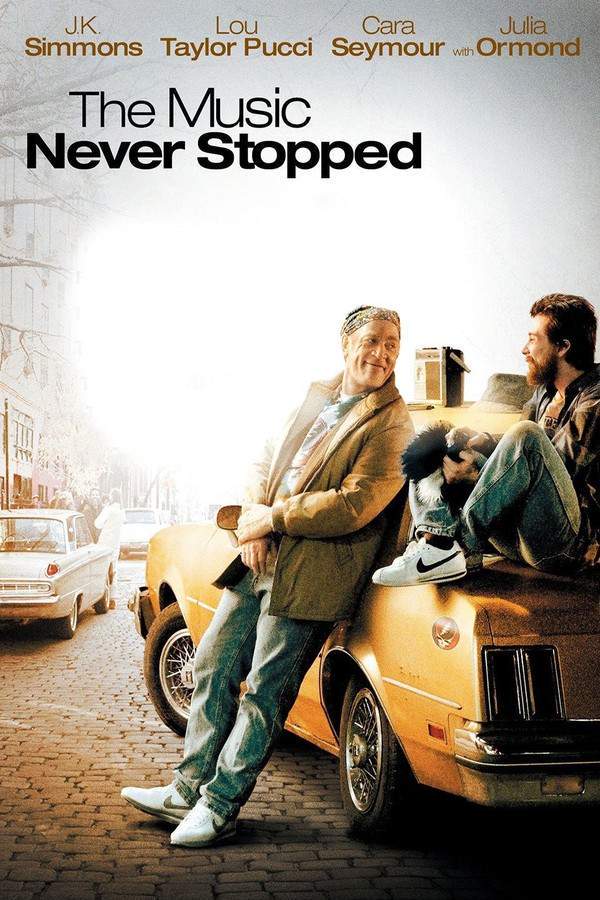
The Music Never Stopped (2011) movie poster

Plot Summary

The Music Never Stopped (2011) Plot Summary Explained

Release, runtime and language
2011 · 106 min · English
JustWatch #11,883 7
Directed by
Jim Kohlberg

A father and son find themselves on an unexpected journey as they confront past traumas and deal with the effects of a brain injury. The story explores the complexities of their relationship and the generational differences stemming from the 1960s, all set to a soundtrack of beloved songs by Bob Dylan, The Beatles, and The Grateful Dead. It’s a moving story about reconciliation and the restorative influence of music.

On this page (6)
  1. 1 Where to watch
  2. 2 What happens: full plot
  3. 3 Plot questions answered
  4. 4 Movie threads
  5. 5 Movies like The Music Never Stopped
  6. 6 Every angle

Where to watch

Where to Watch The Music Never Stopped (2011)

Where can you watch The Music Never Stopped? Stream, rent or buy it in the US, including on Amazon Prime Video, Kanopy and Amazon MX Player: current JustWatch availability with up-to-date prices.

Streaming availability powered by JustWatch

Full plot summary · contains spoilers

What Happens in The Music Never Stopped: Full Plot Summary

The whole story of The Music Never Stopped (2011) explained, from the opening scene to the final frame: every key event, every twist and what it all adds up to. Read it as a quick recap before the sequel, to check a scene you missed, or to finally understand what really happened.

As Henry Sawyer (J.K. Simmons) and his wife Helen (Cara Seymour) confront the devastating news about their estranged son Gabriel (Lou Taylor Pucci), who has been hospitalized with a brain tumor, they are plunged into a sea of painful memories from their past. This revelation that Gabriel, living as a homeless drifter, is suffering from anterograde amnesia, prevents him from recalling much of his life or forming new memories. It serves as a stark reminder of the unresolved issues that have haunted their family.

Adding to Henry's turmoil is his unexpected job loss, which leaves him feeling adrift and powerless. In contrast, Helen steps up, diligently working to finance Gabriel's treatment while encouraging Henry to actively participate in their son’s recovery. Initially, Henry grapples with a mix of anger and hurt that has festered over years of separation, making it difficult for him to reconnect.

Fond memories begin to emerge from Henry's recollections, particularly those tied to their shared love of music from Gabriel's teenage years. Studies suggest that music can significantly aid individuals suffering memory loss, prompting Henry to seek the help of therapist Dianne. To everyone's astonishment, including Dianne's, Henry transforms into a more expressive and animated version of himself when familiar tunes from his youth are played.

As Henry navigates his memories, he recalls moments of closeness with Gabriel as a child, but also the disagreements that erupted as Gabriel entered adolescence—particularly over his girlfriend and his hesitance to pursue higher education. A defining moment occurred one transformative evening during a concert at the high school where Gabriel's band was performing. The atmosphere changed drastically when another student burned an American flag on stage—a moment that struck a deep chord with Henry, whose uncle had lost his life in World War II. In a fit of outrage, he stormed out, leading to a heated argument at home that tragically ended with Gabriel running away, creating a rift that lasted years.

Now, as they are once again forced to face each other due to Gabriel's health crisis, Henry seeks to reconcile his past with his current reality. Struggling to connect with his son, he comes to realize that the progress Gabriel makes isn’t merely due to their shared musical connection, but also tied to the very music Henry once believed had ruined Gabriel’s life. With Helen's compassionate insights and heartfelt apologies, Henry begins to make conscious efforts to bridge the chasm that has developed between him and Gabriel.

In an unprecedented act of reconciliation, Henry sets aside his long-held musical preferences to embrace Gabriel's tastes, signaling the dawn of a new, genuine connection. This evolving understanding leads Henry to open up about his past errors, sharing the heart-wrenching news that a dear friend from their younger days fell victim to the Vietnam War. This revelation emphasizes the importance of Henry's efforts to create fresh memories with Gabriel.

As Henry's health deteriorates and he suffers a heart attack, he finds himself hospitalized yet again. It is during his recovery that he receives the exhilarating news of winning tickets to see The Grateful Dead, Gabriel’s cherished band. Despite his doctor’s concerns regarding his fragile condition, Henry’s resolve to experience this special event with Gabriel solidifies. At the concert, they both delve into the music, experiencing the joy of "Touch of Grey" together for the very first time. Upon returning to their care facility, they share a heartfelt hug that beautifully encapsulates the depth of their renewed bond.

In the aftermath of Henry's passing, Gabriel finds himself engulfed in grief, grappling with the loss of his beloved father figure. The funeral takes an unexpected turn when the priest selects “Touch of Grey,” a song Henry had passionately claimed was his favorite. Overwhelmed with emotion, Gabriel recalls the unforgettable first time they listened to the song together at the concert. This poignant moment reaffirms that their connection remained unbroken, transcending even the bounds of life and death.
Last updated: November 21, 2024 at 11:57

Was this helpful?

Plot questions answered

The Music Never Stopped Plot Explained: Your Questions Answered

The questions people ask most about The Music Never Stopped (2011): what happens in the confusing scenes, why the characters do what they do, the twists, hidden details and what the ending means. Each answer contains spoilers.

Q1

Why did Henry leave Gabriel's concert after the flag burning?

Henry's reaction stemmed from deep personal trauma. His uncle died in World War II, so when a student burned an American flag on stage during Gabriel's high school concert, Henry saw it as a profound disrespect to his uncle's sacrifice and everything his family stood for. He stormed out in outrage, which led to a heated argument with Gabriel at home, causing Gabriel to run away and creating the rift that lasted for years.

  • flag burning
  • Henry Gabriel argument
  • concert incident
  • running away
Q2

How does Gabriel's amnesia affect his daily life?

Gabriel suffers from anterograde amnesia caused by his brain tumor, which prevents him from forming new memories. He cannot recall recent events or recognize people he has met, even briefly. This means every interaction feels new to him, making it extremely difficult for Henry and Helen to connect with their son. The condition is why music becomes so important, it provides a bridge to access existing memories without requiring new ones to be formed.

  • anterograde amnesia
  • brain tumor
  • memory loss
  • Gabriel condition
Q3

Why does Henry start listening to Gabriel's music?

Henry initially despised the music Gabriel loved, the Beatles, Bob Dylan, and The Grateful Dead, because he associated it with the period when Gabriel rejected his values and ran away. However, when therapist Dianne suggests using music to reach Gabriel, Henry discovers that familiar songs from his own youth trigger emotional responses in Gabriel. This shared musical connection becomes the pathway for reconciliation, and Henry eventually learns to appreciate Gabriel's favorite bands as a genuine act of love and acceptance.

  • Henry music
  • Grateful Dead
  • Beatles
  • Bob Dylan
  • reconciliation through music
Q4

Why is Touch of Grey so important to Henry and Gabriel?

Touch of Grey by The Grateful Dead becomes the song that defines Henry and Gabriel's reconciliation. It's the first song they listen to together at the concert, creating a joyful shared memory. The song gains further significance at Henry's funeral when the priest plays it, Gabriel realizes Henry had claimed it was his favorite (though it was actually Gabriel's), showing Henry had been silently embracing his son's world all along. The song symbolizes their bond transcending differences and even death.
  • Touch of Grey
  • Grateful Dead concert
  • father son bond
  • funeral song
Q5

Why does Henry tell Gabriel about his friend who died in Vietnam?

Henry shares this painful memory as a breakthrough moment in their reconciliation. The story about his friend who died in the Vietnam War explains why Henry was so deeply offended by the flag burning incident, it wasn't just abstract patriotism but connected to his real loss. By revealing this vulnerability, Henry allows Gabriel to see his father's human pain, deepening their emotional connection and showing that Henry's anger came from grief rather than simple disapproval.

  • Vietnam War
  • Henry friend died
  • flag burning meaning
  • past trauma
Q6

How does Henry losing his job affect the family?

Henry's job loss compounds his feelings of helplessness during Gabriel's health crisis. Previously feeling powerless to help his son, now he cannot even provide financially. This leaves him feeling like a failure at the very moment his family needs him most. Meanwhile, Helen steps up to financially support Gabriel's treatment, temporarily becoming the family's anchor. The job loss forces Henry to confront his identity and find new ways to contribute, ultimately through emotional presence and musical connection rather than financial provision.

  • Henry job loss
  • financial stress
  • Helen support
  • family dynamics
Q7

How does music therapy help Gabriel?

Research shown in the movie demonstrates that music can reach patients with memory loss by accessing emotional and procedural memories stored in different brain regions than factual memories. Though Gabriel cannot form new memories, familiar songs from his past evoke emotional responses and can temporarily bring him back to meaningful moments. Dianne, the therapist, facilitates this approach, but it's Henry's willingness to engage with the music that truly bridges the gap with Gabriel, allowing them to communicate when words fail.

  • music therapy
  • Dianne therapist
  • memory recovery
  • brain injury treatment
Q8

Why is Henry so angry with Gabriel at the beginning?

Henry's anger masks deep hurt from years of separation. When Gabriel ran away after the flag burning incident, it felt like a rejection of everything Henry valued, family, country, and traditional values. The years of estrangement left Henry feeling betrayed and abandoned. His coldness toward Gabriel isn't really about the music or the flag; it's about the pain of losing his son and the unresolved conflict over Gabriel's choices regarding his girlfriend and education. The anger is a defense mechanism against vulnerability.

  • Henry anger
  • estranged son
  • Gabriel running away
  • father son conflict
Q9

Why was Gabriel living as a homeless drifter?

After the argument with Henry following the flag burning incident, Gabriel ran away from home as a teenager and never returned. The summary doesn't detail his exact path to homelessness, but his estrangement from his parents suggests he lacked support systems. His brain tumor was discovered when he was hospitalized as a homeless individual, indicating he had been living on the streets for some time. The rift with Henry appear to have prevented any family reconciliation that might have provided Gabriel with stability.

  • Gabriel homeless
  • drifter
  • estrangement
  • living on streets
Q10

Does Henry die at the end of the movie?

Yes, Henry passes away after the memorable Grateful Dead concert with Gabriel. He had suffered a heart attack earlier and attended the concert against his doctor's advice, prioritizing the experience with his son over his declining health. His death occurs off-screen between the concert scene and the funeral. The funeral scene provides closure when the priest plays Touch of Grey, allowing Gabriel to reflect on their hard-won reconciliation and the lasting impact of their musical connection.

  • Henry death
  • funeral
  • Touch of Grey
  • movie ending
Q11

Why does Henry say Touch of Grey is his favorite song?

When Henry wins tickets to the Grateful Dead concert, he tells everyone it's to see his favorite band, though he initially claims Touch of Grey as his favorite song too. In reality, Touch of Grey is Gabriel's favorite, not Henry's. However, this small deception reveals Henry's genuine transformation, he is willing to adopt his son's preferences and step into Gabriel's world to strengthen their bond. At the funeral, this detail becomes deeply poignant when Gabriel realizes Henry had been silently meeting him where he was.

  • Henry favorite song
  • Gabriel favorite
  • Pretending
  • concert tickets

Movie threads

More Movies Like The Music Never Stopped, by Mood & Story

Curated lists built around what makes The Music Never Stopped tick: the same mood, the same kind of story or the same emotional payoff. Each list explains why these movies belong together.

Movies about music healing family divides like The Music Never Stopped

Stories where music becomes the bridge to mend fractured family bonds. Explore movies like The Music Never Stopped that use music as a powerful emotional tool. These similar drama stories feature broken families finding a path to reconciliation, often through a shared connection to iconic artists or songs that mend old wounds and bridge generational gaps.

  • nostalgic
  • redemptive
  • emotional
  • hopeful
  • melancholic
  • heartfelt
  • Tone: bittersweet, heartfelt
  • Pacing: steady, character-driven
Why these movies?

The story pattern: Stories in this thread typically involve a central conflict, often generational or based on past mistakes, that has fractured a family. A catalyst, such as an illness or a shared rediscovery of music, forces characters to confront this history. The narrative follows their emotional journey as music from a specific era acts as a key, unlocking memories and facilitating difficult conversations, leading to a hard-worn, emotionally resonant connection that is tinged with the sadness of lost time but brightened by newfound understanding.

Why they belong together: These movies are grouped because they share a specific focus on music not just as a soundtrack, but as an active narrative force for healing. They balance heavy emotional themes of loss and regret with the hopeful, connective power of melody and memory, resulting in a deeply moving and bittersweet viewing experience centered on family dynamics.

Character-driven memory loss dramas like The Music Never Stopped

Intimate stories about rebuilding identity and relationships after memory is damaged. If you liked The Music Never Stopped, discover similar movies about memory loss and brain injury. These emotionally heavy dramas focus on the slow, steady process of loved ones reconnecting with a person whose past and personality have been fractured, resulting in poignant and bittersweet narratives.

  • reflective
  • melancholic
  • emotional
  • heartfelt
  • poignant
  • psychological
  • Tone: melancholic, reflective
  • Pacing: steady, methodical
Why these movies?

The story pattern: The narrative pattern involves a central character whose access to their own history or personality is compromised due to an injury or illness. The plot is not driven by external events or major twists, but by the meticulous, often painful, process of their caregivers—usually family—trying to reach them. The journey is one of rediscovery, not recovery, focusing on building a new connection based on the fragments of memory and personality that can be accessed, leading to an ending that acknowledges profound loss but also celebrates the love that endured.

Why they belong together: These films are grouped by their shared focus on the psychological and emotional impact of memory loss. They prioritize a steady, introspective pacing and a heavy emotional weight, creating a deeply reflective experience centered on the core questions of identity and the bonds that transcend memory.

If you liked this

Movies Like The Music Never Stopped

Similar movies to The Music Never Stopped: the same genre, themes or kind of story. Each one comes with its own plot summary, timeline and ending explained.

Browse all movie summaries

Every angle

The Music Never Stopped (2011) Explained: Plot, Timeline & Characters

Everything about The Music Never Stopped in one place: what happens in the plot summary, the timeline in chronological order, the characters and meaning and a spoiler-free summary. What's After the Movie adds the cast, box office and post-credit scenes.

Coming soon on iOS and Android

The Plot Explained Movie Summary App

Plot summaries, endings explained and timelines on your phone. Catch up on any movie in minutes, save your favorites and never miss a twist again.

Be the first to know when we launch. Your email stays private, always.


Learn more about the app