











Plot Explained Spoilers guaranteed!
Plot Explained

Browse by genre

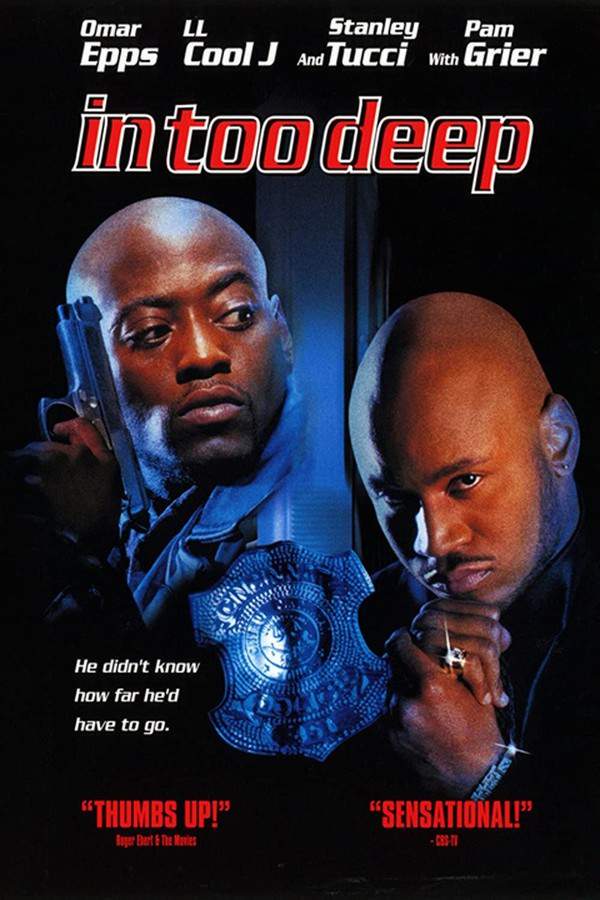
In Too Deep (1999) movie poster

Timeline

In Too Deep (1999) Timeline Explained – Every Event in Order

Release, runtime and language
1999 · 95 min · English
JustWatch #31,294
Directed by
Michael Rymer

A gritty drama follows Dwayne Gittens, a notorious figure known as "God" in Cincinnati's criminal underworld. Undercover officer Jeffrey Cole attempts to bring him down by infiltrating Gittens' empire, aided by his girlfriend and a determined commander. As Cole delves deeper into the dangerous world of crime, he struggles with his duty and finds himself increasingly drawn to the gangster lifestyle, blurring the lines between right and wrong.

On this page (6)
  1. 1 Where to watch
  2. 2 Events in order (13)
  3. 3 Timeline questions answered
  4. 4 Movie threads
  5. 5 Movies like In Too Deep
  6. 6 Every angle

Where to watch

Where to Watch In Too Deep (1999)

Where can you watch In Too Deep? Stream, rent or buy it in the US, including on fuboTV, MGM Plus and Philo: current JustWatch availability with up-to-date prices.

Streaming availability powered by JustWatch

13 events in order · contains spoilers

In Too Deep Timeline: Events in Chronological Order

Every key event of In Too Deep (1999) in order, scene by scene, with when and where it takes place. Use it to untangle flashbacks, time jumps and parallel storylines, to refresh your memory before the sequel or to find the exact scene you are thinking of.

  1. Graduation and first undercover assignment

    Jeffrey Cole graduates from the Cincinnati police academy and, on the same day, lands an undercover assignment that earns praise from his superiors. He adopts the alias J. Reid, claiming to be from Akron to blend with the drug network. He must prove he has street cred to earn a place in God’s crew. This marks the start of his dangerous double life.

    When
    Graduation day
    Where
    Cincinnati, Ohio
  2. Goes undercover as J. Reid to join God’s crew

    Cole goes undercover posing as a drug dealer under the name J. Reid from Akron, Ohio. He must prove loyalty by accompanying God on missions and earning acceptance into the crew. At one point he chases a target but deliberately misses his shots, signaling cautious loyalty while maintaining his cover. The early undercover phase tests his nerve and deception.

    When
    Soon after undercover start
    Where
    Akron, Ohio
  3. Mission with God’s crew; an order to kill target; Cole misses

    God sends Cole on a mission to kill a man, forcing him to demonstrate his resolve. Cole chases the target but intentionally misses his shots, showing restraint and keeping his cover intact. The crew suspects loyalty but also notes his unusual aim, a sign of Cole’s internal conflict. The operation cements his status inside God’s circle.

    When
    Early mission
  4. Bonds with Breezy T.

    During the undercover assignment, Cole grows close to Breezy T., a member of God's crew. The growing relationship helps him blend in and gain trust, but it also tightens the risks of exposure. His personal ties begin to blur the line between officer and criminal in his mind.

    When
    During undercover infiltration
  5. D'Ambrosio fears the line between cop and criminal; woods retreat

    Captain Preston D'Ambrosio becomes worried that Cole is losing himself to J. Reid, blurring lines between lawman and criminal. He orders a forced hiatus, sending Cole to a remote woods retreat to regain perspective. The retreat forces Cole to confront his identity and the costs of his undercover life.

    When
    Mid-undercover period
    Where
    Woods retreat, remote area
  6. Meets Myra and starts dating

    During the hiatus, Cole meets Myra, an aspiring model, through a photography class. They begin dating, and Myra’s presence pulls him toward a life outside undercover. D'Ambrosio notices the change as Cole’s priorities shift away from the operation.

    When
    During hiatus
    Where
    Photography class
  7. Reassignment to Gittens case; higher-ups insist on continuing undercover

    DA Daniel Connelly and DEA agent Rick Scott overrule the hiatus decision and insist Cole is the only undercover officer who has penetrated God’s crew as deeply as he has. Cole is reassigned to the Gittens case and returns to undercover work. Myra gradually distances herself as Cole dives back into the operation.

    When
    After hiatus
  8. Gittens grows more ruthless; Cole sees the violence escalate

    Cole witnesses Dwayne Gittens’s growing ruthlessness, including torture and killings of subordinates as he tightens his grip on the operation. The violence unsettles Cole and deepens his internal conflict about where he truly stands. His grip on reality begins to blur as he stays undercover longer.

    When
    During undercover operation
  9. Sting plan leads to standoff; Angela Wilson intervenes

    D'Ambrosio orders a sting to catch Gittens during a supplier meeting, while Connelly and Scott push the plan despite risks. Police arrive and a gunfight erupts, with Cole choosing to shield Gittens during the chaotic standoff. Detective Angela Wilson talks him down and reminds him that he is Jeffrey Cole, not J. Reid.

    When
    Sting operation
  10. Trial and conviction

    Gittens is read his Miranda rights and the case moves to trial. Cole testifies against Gittens, providing insider detail that helps secure the conviction. He also puts in a good word for Breezy T., aiding in reducing his sentence, as the evidence and testimony seal Gittens’s fate.

    When
    Trial phase
    Where
    Courthouse
  11. Press conference and aftermath

    Following the conviction, Connelly and Scott hold a press conference as Cole and Myra drive away. Cole switches off the car radio, recognizing that his undercover work was essential to bringing Gittens down. Myra reminds him of the costs and the purpose of his actions, highlighting the personal toll of the job.

    When
    After conviction
    Where
    In car; press conference location
  12. Epilogue: teaching new undercover officers

    In the closing scenes, Cole is shown teaching new, young officers about undercover work. He stresses the importance of keeping a firm guard on one’s cover and avoiding going too deep. The film ends with a cautionary note about the personal price of undercover life.

    When
    Epilogue
    Where
    Police training facility
  13. The story’s real-life basis

    The film is based on the true story of Darryl 'God' Whiting and Boston Housing Officer Jeff Coy. Coy’s suicide three years after the case is noted, alongside Whiting’s life sentence, grounding the events in real life. The credits acknowledge these real-world inspirations and outcomes.

    When
    End credits

Last updated: November 22, 2025 at 15:58

Was this helpful?

Timeline questions answered

In Too Deep Timeline Explained: Your Questions Answered

When does it happen, and why in that order? The questions people ask about the chronology of In Too Deep (1999): time jumps, flashbacks, cause and effect between scenes and the correct order of events, each answered with spoilers.

Q1

Why does Cole deliberately miss his shots when ordered to kill the target?

Cole intentionally misses his shots to maintain his cover while avoiding committing murder. As an undercover officer, he must prove his loyalty to God’s crew to stay embedded in the organization, but he cannot actually kill an innocent person without crossing a moral line he cannot return from. This calculated misfire demonstrates his internal conflict between his duty as a police officer and the criminal persona he must maintain.

Foreshadowing: Earlier, Cole is warned that he must prove street credibility to be accepted into God’s inner circle, setting up the tension between performing loyalty and retaining his moral compass.

  • undercover
  • loyalty
  • moral conflict
  • mission
  • J. Reid
Q2

Why is Cole sent to a woods retreat during his undercover operation?

Captain Preston D'Ambrosio orders Cole to a remote woods retreat because he fears Cole is losing his identity as a police officer and becoming too absorbed in his J. Reid persona. The longer Cole stays undercover, the more his sense of self blurs between lawman and criminal. The hiatus is meant to help him reconnect with his true identity and recover psychologically before the danger escalates further.

Foreshadowing: D'Ambrosio had already expressed concern about Cole blurring the lines between cop and criminal, making the retreat a direct response to his growing unease.

  • identity crisis
  • D'Ambrosio
  • psychological toll
  • undercover life
Q3

Why does Cole shield Gittens during the police standoff?

During the sting operation, Cole physically shields Gittens because his J. Reid persona has become so deeply embedded that he cannot instantly revert to his Jeffrey Cole identity. After months of living as a criminal, earning God’s trust, and forming genuine bonds with crew members, Cole experiences a genuine identity crisis. In that moment, J. Reid’s loyalty to the man he has worked alongside overrides his duty as a police officer.

Foreshadowing: Throughout the film, Cole’s growing connection to Breezy T. and his immersion in the criminal world foreshadow his inability to easily switch back to his lawman identity.

  • identity crisis
  • J. Reid
  • standoff
  • loyalty
  • undercover persona
Q4

How does Angela Wilson manage to talk Cole down during the standoff?

Angela Wilson succeeds because she addresses Cole directly as Jeffrey Cole, using his real name to pierce through the J. Reid persona. She reminds him of who he truly is, a police officer, rather than letting him remain trapped in the identity he has been living. Her approach targets the psychological core of his conflict: the blurring of his two identities, and she gives him a clear path back to his true self.

Foreshadowing: Earlier, D'Ambrosio expresses deep concern about Cole losing himself to the undercover role, establishing the vulnerability that Wilson exploits to reach him.

  • Angela Wilson
  • Jeffrey Cole
  • identity
  • intervention
  • police officer
Q5

Why does Cole help Breezy T. get a reduced sentence?

Cole advocates for Breezy T. because during his time undercover, he formed a genuine human connection with him despite their circumstances. Breezy T. was one of the few people in God’s crew who trusted Cole, and that bond became real even though it began as manipulation. Cole’s testimony against Gittens allows him to use his credibility to vouch for Breezy T., showing that his undercover experience created complex emotional ties that transcend his original mission.

Foreshadowing: The timeline explicitly notes Cole's growing closeness with Breezy T. during the undercover infiltration, which later complicates his professional obligations.

  • Breezy T.
  • reduced sentence
  • testimony
  • bond
  • loyalty
Q6

Why does Myra distance herself from Cole after he returns to undercover work?

Myra senses the danger that comes with Cole’s undercover work and recognizes the psychological changes in him. When Cole is pulled back into the Gittens case against his initial wishes, Myra sees that the man she dated during his hiatus is disappearing again, replaced by the darker J. Reid persona. Her distance reflects her awareness that she cannot compete with the criminal world Cole is embedded in and that his true identity is being consumed by the mission.

Foreshadowing: During the hiatus, Cole meets Myra in a photography class and experiences a glimpse of normal life, making his return to undercover work a deliberate choice to abandon that normality.

  • Myra
  • relationship
  • distance
  • danger
  • undercover life
Q7

What does Gittens' final look at Cole before being hauled away signify?

Gittens' final ambiguous look at Cole carries layers of meaning, possibly mutual respect between two men who understood each other’s worlds, or a warning that their connection transcends the courtroom. Throughout the film, God treats Cole as a trusted inner circle member, and despite knowing Cole was the informant, Gittens may acknowledge that Cole operated within a code God himself could respect. The look leaves interpretation open, underscoring the complexity of their relationship.

Foreshadowing: Gittens repeatedly tests Cole’s loyalty through violent missions, and Cole consistently passes these tests, albeit with calculated moral compromises, earning God’s trust.

  • Gittens
  • final look
  • conviction
  • respect
  • ambiguous ending
Q8

Why does Cole become an instructor for new undercover officers in the epilogue?

Cole teaches new undercover officers because his experience in the Gittens case profoundly changed him, and he wants to prevent others from suffering the same psychological damage. His time deep undercover nearly destroyed his identity, and by training the next generation, he passes on hard-learned lessons about maintaining the boundary between the cover and the person. The epilogue serves as a cautionary conclusion, showing that Cole’s journey has come full circle but left lasting scars.

Foreshadowing: The entire film builds toward the toll of undercover work, with D'Ambrosio’s warnings and Cole’s own struggles setting up this reflective ending.

  • teaching
  • undercover training
  • caution
  • identity
  • aftermath
Q9

What is the real-life inspiration behind In Too Deep?

In Too Deep is based on the true stories of Darryl "God" Whiting, a Cincinnati drug kingpin, and Boston Housing Officer Jeff Coy, an undercover officer who infiltrated Whiting’s operation. Coy tragically took his own life three years after the case, while Whiting was convicted and sentenced to life without parole plus 240 years. The film draws from these real events to emphasize the genuine dangers and psychological toll of undercover police work.

Foreshadowing: The opening and closing framing establishes the story as a true account inspired by real cases, grounding the narrative in documented reality.

  • real story
  • Darryl Whiting
  • Jeff Coy
  • based on true events
  • drug kingpin

Movie threads

More Movies Like In Too Deep, by Mood & Story

Curated lists built around what makes In Too Deep tick: the same mood, the same kind of story or the same emotional payoff. Each list explains why these movies belong together.

Undercover Identity Crisis Thrillers like In Too Deep

Police officers lose themselves in the criminal roles they are forced to play. If you liked the psychological tension of In Too Deep, explore more movies like it about undercover agents facing an identity crisis. These similar crime dramas and thrillers feature cops whose morals are tested as they infiltrate dangerous criminal organizations.

  • morally complex
  • claustrophobic
  • anxious
  • gritty
  • suspenseful
  • psychologically intense
  • Tone: tense, morally complex
  • Pacing: steady, methodical
Why these movies?

The story pattern: The narrative typically involves a law enforcement officer accepting a deep-cover assignment to take down a major criminal figure. As they spend more time in the role, adopting the mannerisms and lifestyle, they experience a growing affinity for the power and freedom of the criminal world, leading to internal conflict and a crisis of identity.

Why they belong together: Movies are grouped here because they share a core focus on the psychological deterioration of an undercover operative. They create a tense, claustrophobic mood by trapping the protagonist in a lie, exploring themes of loyalty, corruption, and the fragile nature of the self.

Gritty Stories of Moral Descent like In Too Deep

Stories where the pursuit of justice leads to a loss of innocence. Find movies similar to In Too Deep that explore a bleak moral spiral. If you liked its gritty realism and bittersweet ending, you'll appreciate these other heavy dramas and thrillers about characters losing their way in a corrupt world.

  • gritty
  • bleak
  • morally complex
  • sobering
  • anxious
  • heavy
  • Tone: tense, bleak, sobering
  • Pacing: steady, character-driven
Why these movies?

The story pattern: These narratives often follow a well-intentioned individual—a cop, a journalist, or an ordinary person—into a dark underworld. The initial goal is righteous, but exposure to violence, power, and moral ambiguity causes them to adopt the very tactics they sought to oppose, resulting in a Pyrrhic victory that feels more like a defeat.

Why they belong together: These films are united by a somber, gritty mood and a focus on the theme of moral ambiguity. They are characterized by a steady pacing that allows the descent to feel inevitable, a high intensity of emotion and danger, and endings that are bittersweet or bleak, acknowledging the cost of the journey.

If you liked this

Movies Like In Too Deep

Similar movies to In Too Deep: the same genre, themes or kind of story. Each one comes with its own plot summary, timeline and ending explained.

Browse all movie summaries

Every angle

In Too Deep (1999) Explained: Plot, Timeline & Characters

Everything about In Too Deep in one place: what happens in the plot summary, the timeline in chronological order, the characters and meaning and a spoiler-free summary. What's After the Movie adds the cast, box office and post-credit scenes.

Coming soon on iOS and Android

The Plot Explained Movie Summary App

Plot summaries, endings explained and timelines on your phone. Catch up on any movie in minutes, save your favorites and never miss a twist again.

Be the first to know when we launch. Your email stays private, always.

Learn more about the app