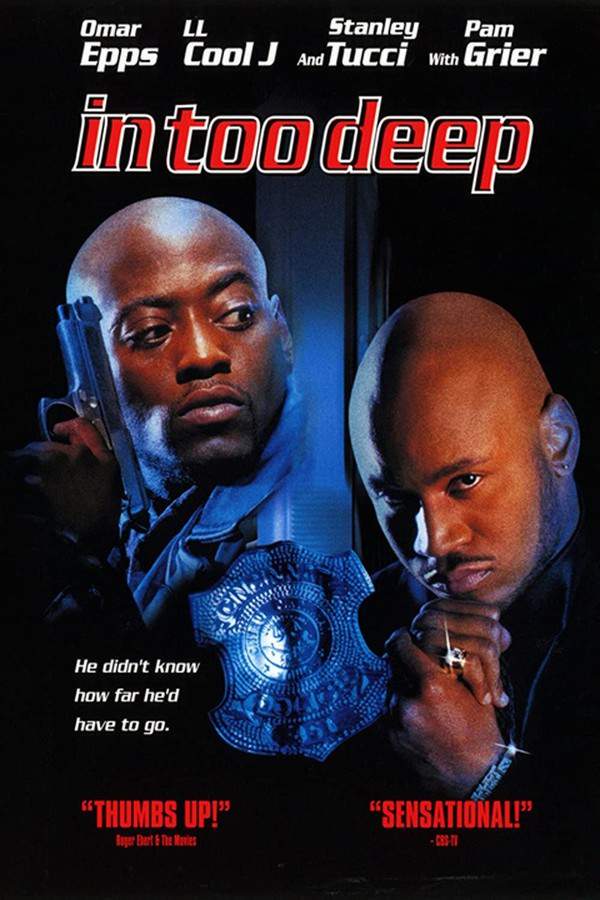
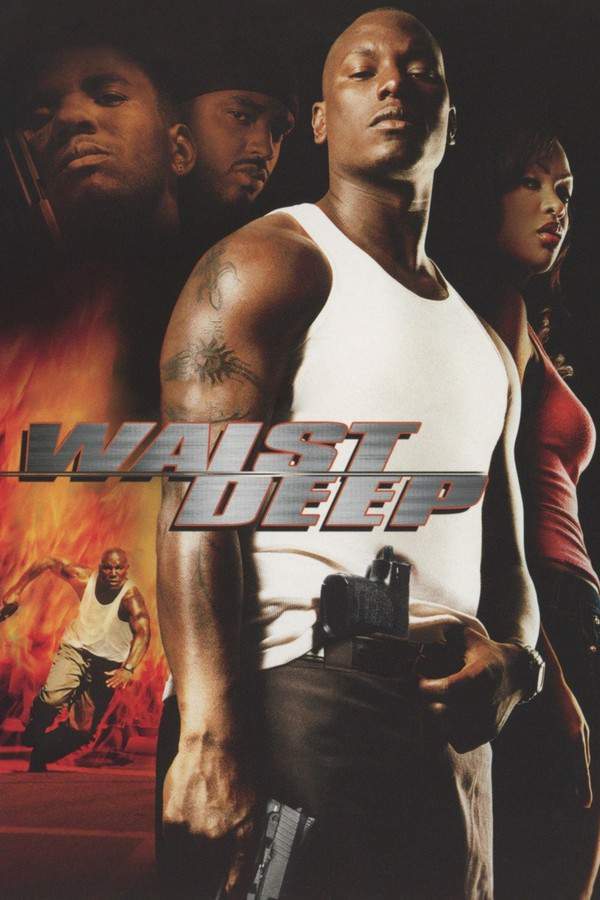
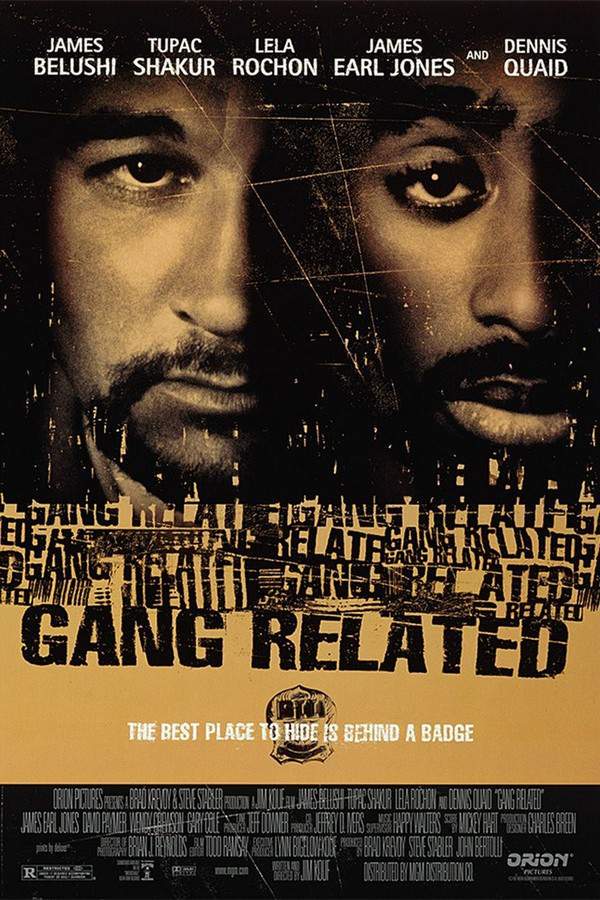
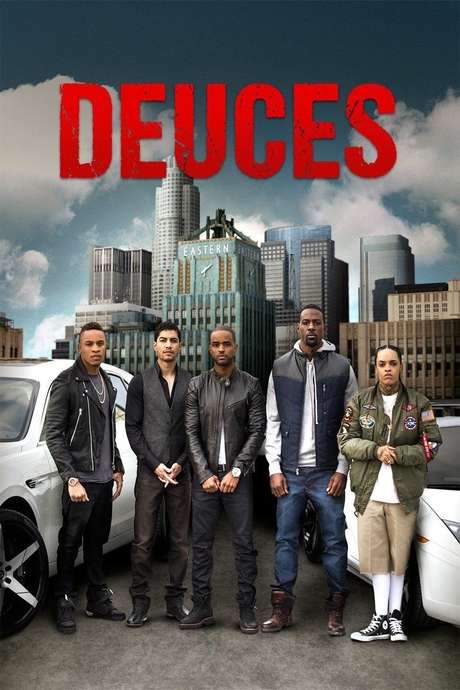
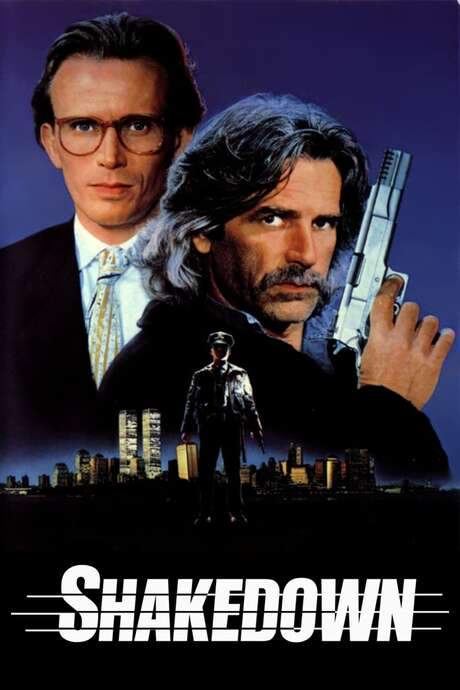
Jeffrey Cole, a fresh Cincinnati police academy graduate, dreams big about undercover work and lands an undercover assignment the very day of his graduation. He is tasked with taking down the statewide crack kingpin known as Dwayne Gittens, a ruthless underworld boss whose reach earns him the nickname “God.” Cole goes deep undercover, adopting the alias J. Reid from Akron, Ohio, and quickly learns that he must prove real street credibility to be welcomed into God’s inner circle.
As Cole/Barely-Breathing-Undercover navigates the treacherous world of Gittens’ crew, he earns the crew’s trust—though only superficially. He follows orders that push him toward violence, including a mission where God sends him to kill a man the boss has marked for death. Cole trails the target and, with a calculated misfire, deliberately misses his shots, a risky move meant to show his loyalty while keeping his cover intact. The crew believes he’s loyal but sources doubt his exact nerve, a doubt that does not stop Cole from forming a genuine bond with one member of the crew, Breezy T., whose presence adds a complex layer to his mission as he spends more time in the Gittens orbit.
Back at the top, Cole’s superiors watch closely, impressed by how close he has gotten to God and the level of detail he provides about the organization. Yet this success strains the line between lawman and criminal, a concern voiced by Preston D'Ambrosio, who worries that Cole is losing himself to the role of J. Reid. The anxiety over Cole’s safety grows until he is placed on forced hiatus, sent far from the city into a wooded retreat to clear his head and reclaim his identity.
During this pause, Cole meets Myra, an aspiring model who crosses paths with him in a photography class. A real romance blossoms, giving Cole a glimpse of a life outside the undercover grind. D'Ambrosio notices the drift away from undercover work and tries to persuade him to return to the case, but the higher-ups—District Attorney Daniel Connelly and DEA agent Rick Scott—argue that Cole is the only officer deep enough inside Gittens’ operation to truly bring the kingpin down. Their decision paves the way for Cole’s return to the Gittens case, even as Myra gradually distances herself, sensing the danger that looms.
As Cole reengages with the assignment, the brutality within Gittens’ organization intensifies. Gittens grows more unhinged, resorting to torture, dismemberment, and violent punishments within his inner circle, especially when a second-in-command oversteps by flirting with Gittens’ lover or mother—an act that triggers a ruthless response. The violence filters into the streets, and Cole’s own grip on his cover tightens as he witnesses the raw ruthlessness up close.
The plan to pull Cole out again is thwarted when Connelly and Scott push forward with a sting operation that targets a meeting between Gittens and his suppliers. A gunfight erupts as police close in, and Gittens calmly orders his crew to lay down their weapons and surrender. In a pivotal moment, Cole steps in to shield Gittens, creating a tense standoff where his two identities collide—Jeffrey Cole, the officer who must do his duty, and J. Reid, the undercover persona who has earned the trust of the very man they are trying to topple. It is Angela Wilson, a seasoned detective who knows how to reach the man beneath the mask, who steadies him and reminds him of who he is—Jeffrey Cole—urging him to lower his weapon.
With Gittens eventually taken into custody after read of his Miranda rights, the trial becomes Cole’s defining moment. He testifies against Gittens and his organization, laying out the inner workings of the operation and the chain of command. His testimony is instrumental in securing a conviction, and he also advocates for Breezy T., helping to secure a reduced sentence for the crew member who had become an unexpected ally in the field. Gittens is convicted and sentenced, and the moment is quiet but heavy with consequence as he shares a final, ambiguous look with Cole before the kingpin is hauled away.
In the aftermath, a press conference celebrates the conviction, but Cole’s mind lingers on the personal cost of his undercover life. He and Myra drive away, the car’s radio turned off as Myra acknowledges that his undercover work was the crucial force behind Gittens’ downfall. The film closes on an instructive note: Cole, now forever shaped by his experience, teaches a new generation of undercover officers about the delicate balance between their duty and their identity, stressing the importance of never letting the cover become the person.
The story is framed as a true account inspired by real cases, including Darryl “God” Whiting and Boston Housing Officer Jeff Coy. Coy’s life ended tragically by suicide three years after the case, while Whiting was found guilty and sentenced to life without parole, with an additional 240 years running concurrent. The ending reinforces a sobering message about the toll of undercover work and the enduring impact of truth-telling in the line of duty.