Plot Explained Spoilers guaranteed!
Plot Explained

Browse by genre

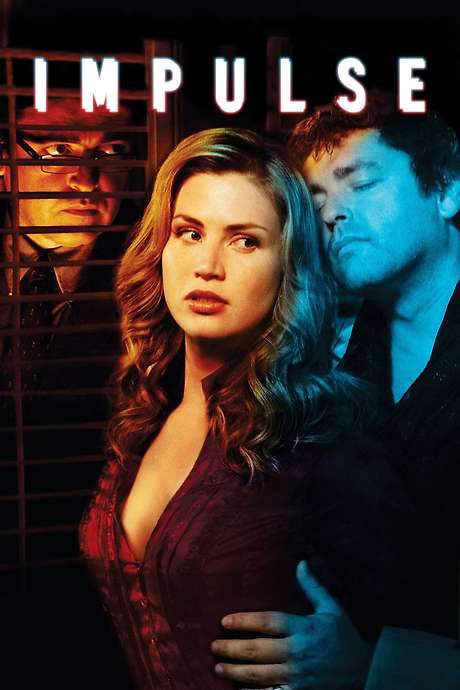
Impulse (1990) movie poster

Plot Summary

Impulse (1990) Plot Summary Explained

Release, runtime and language
1990 · 109 mins · English
Loading streaming availability…
Directed by
Sondra Locke
Starring
Elaine Kagan, David L. Crowley, Lynne Thigpen, Theresa Russell, Jeff Fahey, Nick Savage

Undercover as a sex worker, a Los Angeles vice cop finds her professional disguise colliding with her personal life, forcing her to juggle fragile relationships while navigating a deadly maze of murder and deception. As the investigation spirals, she must keep control or become another victim.

On this page (6)
  1. 1 Where to watch
  2. 2 What happens: full plot
  3. 3 Plot questions answered
  4. 4 Movie threads
  5. 5 Movies like Impulse
  6. 6 Every angle
Loading streaming availability…

Full plot summary · contains spoilers

What Happens in Impulse: Full Plot Summary

The whole story of Impulse (1990) explained, from the opening scene to the final frame: every key event, every twist and what it all adds up to. Read it as a quick recap before the sequel, to check a scene you missed, or to finally understand what really happened.

Lottie Mason, Theresa Russell, works as a decoy for the LAPD’s vice squad, a role that drags her into dangerous moral gray areas and puts her under the watchful eye of a ruthless system. She faces ongoing harassment from her superior, Lieutenant Joe Morgan, George Dzundza, whose blunt authority casts a long shadow over her days on the job. Even so, Lottie finds the sting operations thrilling and often entertains thoughts of losing control, a pull that tugs at the boundaries between duty and personal impulse.

Her partner, Stan Harris, Jeff Fahey, a detective in the same department, begins to romance Lottie, bringing warmth and a fragile sense of normalcy to their high-stakes lives. Their budding relationship grows alongside the intensifying demands of the case, and the pair eventually share a quiet moment of intimacy that softens the edge of their professional lives.

The mission escalates when a sting operation ends with Lottie killing a drug dealer and two of his thugs. Exhausted and rattled, she heads home after a tire blows out on the way, pulling into a gas station to get the tire fixed. A drink at a nearby bar leads her to a startling encounter with mobster Tony Perón, a key witness in the looming trial of Luna. Tony, who has fled New York for Los Angeles, is introduced in a tense, perilous moment as Lottie pretends to be a prostitute under the alias "Carla." Tony asks Lottie to accompany him to a Beverly Hills mansion, and she agrees, hoping to keep a low profile.

Inside the mansion, a volley of gunshots shatters the quiet. Lottie hides as a killer roams the house, and when she returns to the foyer Tony lies dead. She cleanses her fingerprints in the bathroom and calls 911, disguising her voice to mask her involvement. In Tony’s pocket, she discovers an airport locker key and pockets it for herself. The police, led by Stan among them, descend on the scene as questions begin to mount.

Driven by curiosity, Lottie goes to the airport to retrieve the locker and discovers a suitcase stuffed with $1 million in hundred-dollar bills. She leaves the suitcase in the locker and returns home, only to wake up to national news reports about Tony’s murder. As witnesses are questioned at the bar, a forensic sketch is produced and circulated. Lottie returns to the airport, once again, and ultimately takes the suitcase with her, stashing it in her apartment while she wrestles with what to do next.

Lottie’s personal and professional lives become intertwined as she and Stan grow closer. They spend a night together, a moment of warmth that contrasts with the surrounding crime and deception. The morning after, Lottie tries to tell Stan what happened, but fear and uncertainty keep her from confessing. Meanwhile, Stan analyzes the sketch and 911 tapes, and his suspicions grow that Lottie might be the elusive “Carla.” He confronts her in a drunken reckoning, and the trust between them strains to a breaking point as she tries to explain.

In a calculated move, Stan heads to the district attorney with a plan to trap Tony’s killer. A false development is publicized on television, featuring footage of a sunglasses-clad Lottie declaring that she can identify the killer, a setup designed to flush out the culprit. That night, Lottie camps out in an abandoned house, waiting for the assassin. A man arrives briefly but leaves when police converge on the scene. The killer, Vic Dimarjian, enters the house, and Lottie responds with decisive action, shooting him to death. Vic, before dying, claims he killed Tony to avoid testifying against Luna.

With the danger closing in, Lottie resigns from the LAPD and plans a vacation. Morgan remains prickly and abrasive, convinced that Lottie is connected to Tony’s missing money from the New York drug killing. He shadows her to the airport and confronts her in a bathroom, where he discovers the suitcase filled with baseball cards instead of cash. Stan arrives to intervene, rendering Morgan unconscious, and then hands Lottie the keys to his car, revealing that he has stored Tony’s money in the trunk. Lottie contemplates reclaiming the money but decides against it. Rather than flee with the cash, she goes back inside to the airport bar and insists that Stan turn the money over to authorities before they share a final drink, signaling a hard-won decision to do the right thing in a perilous world.

Last updated: October 09, 2025 at 15:06

Was this helpful?

Plot questions answered

Impulse Plot Explained: Your Questions Answered

The questions people ask most about Impulse (1990): what happens in the confusing scenes, why the characters do what they do, the twists, hidden details and what the ending means. Each answer contains spoilers.

Q1

Why does Lottie agree to go to Tony Perón's mansion after meeting him at the bar?

Lottie encounters mobster Tony Perón at a bar while waiting for her tire to be fixed. Recognizing him as a key witness in the upcoming Luna trial, she pretends to be a prostitute named Carla and agrees to accompany him to his Beverly Hills mansion. This decision is strategic, she sees it as an opportunity to gather intelligence on a high-profile case, though it puts her in grave danger. The choice also ties into her recurring fantasy about losing control, as she ventures into a precarious situation without backup.

Foreshadowing: Earlier scenes establish Lottie's thrill-seeking nature and her job-related fantasies about losing control, making this reckless decision consistent with her character arc.

  • tony Perón
  • carla alias
  • beverly hills mansion
  • undercover
  • luna trial
Q2

Why does Lottie clean her fingerprints and call 911 with a disguised voice after Tony is killed?

After gunshots ring out at the mansion and Lottie discovers Tony dead, she realizes she has no alibi and is implicated by her presence. Cleaning her fingerprints removes physical evidence connecting her to the scene, while calling 911 with a disguised voice allows her to report the murder without revealing her own involvement. She pockets the airport locker key she finds in Tony's pocket, turning a crime scene into an opportunity. This moment marks her first major moral compromise, setting her on a path of deception.

Foreshadowing: The tense atmosphere of the sting operation and the violence she just witnessed at the drug dealer's killing foreshadow her willingness to take extreme measures to protect herself.

  • fingerprints
  • 911 call
  • disguised voice
  • crime scene
  • evidence
Q3

Why does Lottie take the million dollars from Tony Perón's locker instead of reporting it?

Lottie retrieves the locker key from Tony's pocket and discovers $1 million in cash at LAX. Instead of turning it in as evidence, she hides it in her apartment. The money represents both immense temptation and a dangerous liability. Initially, she leaves it in the locker, but after seeing news reports about Tony's murder and a forensic sketch circulating, she returns and takes the suitcase. The money symbolizes the moral corruption she fights throughout the film, and keeping it reflects her growing entanglement in the criminal world she pretends to infiltrate.

Foreshadowing: Her fantasies about losing control and her thrill-seeking personality foreshadow her susceptibility to such temptation.

  • airport locker
  • one million dollars
  • suitcase
  • theft
  • temptation
Q4

Why does Stan become suspicious that Lottie might be Carla?

Stan investigates the forensic sketch from witnesses at the bar and analyzes the 911 tapes. He notices similarities between Lottie and the composite drawing, and his familiarity with her voice leads him to suspect she is the mysterious Carla. This suspicion intensifies when Lottie cannot provide a clear alibi for the night of Tony's murder. Their confrontation occurs after Stan has spent the night with her, he confronts her in a drunken state, creating tension that strains their budding romantic relationship and professional partnership.

Foreshadowing: The forensic sketch being circulated and the 911 audio analysis plant the seeds for Stan's investigation.

  • forensic sketch
  • 911 tapes
  • carla identity
  • stan harris
  • suspicion
Q5

How does the plan to trap Tony's killer work?

Stan collaborates with the district attorney to devise a media sting. A false development is publicized on television, featuring footage of a woman wearing sunglasses, Lottie, declaring she can identify Tony's killer. The purpose is to draw out the assassin by making him believe someone can testify against him. The plan works: it sets up the abandoned house stakeout where Lottie becomes bait, ultimately leading to Vic Dimarjian confronting her.

Foreshadowing: This plan connects to earlier scenes where Stan analyzes evidence and works with law enforcement to identify the killer.

  • district attorney
  • television stunt
  • trap killer
  • media strategy
  • vic dimarjian
Q6

Why did Vic Dimarjian kill Tony Perón?

Vic Dimarjian is revealed as Tony's killer when he confronts Lottie at the abandoned house. Before dying from her gunfire, Vic admits he killed Tony to prevent him from testifying against Luna in court. Tony was a key witness in the upcoming trial, and eliminating him would protect the criminal operation. This revelation clarifies the murder's motive and connects the seemingly random violence to the larger criminal conspiracy surrounding Luna.

Foreshadowing: The earlier reference to Tony being a key witness in Luna's trial foreshadows this exact motive.

  • vic dimarjian
  • tonys murder
  • luna
  • testify
  • killer motive
Q7

Why does the suitcase contain baseball cards when Lieutenant Morgan finds it?

This is a critical twist in the film. Morgan confronts Lottie at the airport, believing she has Tony's missing drug money. He forces her into a bathroom and discovers the suitcase, but it contains baseball cards instead of cash. The implication is that someone switched the money beforehand, or this was a setup. Stan later reveals he moved the actual $1 million to his car trunk, keeping it safe from Morgan while giving Lottie a chance to make her own choice about the money.

Foreshadowing: The earlier scene where Lottie considers what to do with the money hints at her internal conflict, but the swap itself is a surprise.

  • baseball cards
  • suitcase
  • lieutenant morgan
  • money switch
  • trunk
Q8

Why does Lottie decide to turn the money in instead of keeping it?

After discovering the money is in Stan's car trunk, Lottie faces a final moral choice: take the $1 million and flee, or do the right thing. She chooses integrity, deciding against taking the cash. At the airport bar, she insists Stan turn the money over to authorities before they share a final drink. This decision represents her reclaiming her moral compass after a night of deception, theft, and violence. It's a hard-won victory that costs her career but restores her character integrity.

Foreshadowing: Her earlier hesitation to take the money and her guilt about deceiving Stan foreshadow this ultimate choice.

  • moral choice
  • turn money in
  • integrity
  • airport bar
  • confession
Q9

Why does Lottie resign from the LAPD?

Lottie resigns from the LAPD after the events at the mansion, the murder investigation, and her moral compromises catch up with her. The job has pushed her into dangerous situations, forced her to commit crimes (like cleaning fingerprints and stealing money), and created an impossible dual life. By resigning, she attempts to escape the corruption and danger that define her professional life. However, Morgan's continued pursuit shows that leaving the force doesn't erase her entanglement in the case.

Foreshadowing: The ongoing harassment from Morgan and the moral gray areas of her vice work foreshadow her decision to leave.

  • resign
  • LAPD
  • career
  • lieutenant morgan
  • leaving force
Q10

How does Lottie and Stan's relationship develop throughout the movie?

Stan, Lottie's partner, initiates romance, bringing warmth into her dangerous life. They share a date, which leads to intimacy. After spending the night together, Lottie tries to confess what happened at Tony's mansion but can't find the words. Their trust is tested when Stan suspects she might be Carla. They reconcile partially during the plan to trap the killer, and at the film's end, they share a drink at the airport bar after deciding to turn the money in. The relationship remains strained but hopeful, symbolizing Lottie's possibility for genuine connection beyond her double life.

Foreshadowing: Their early scenes together establish warmth that contrasts with the dark criminal world surrounding them.

  • stan harris
  • romance
  • relationship
  • intimacy
  • trust
Q11

What does "losing control" mean for Lottie throughout the film?

"Losing control" is a recurring theme reflecting Lottie's internal struggle between her professional duty and her dangerous impulses. As an undercover decoy, she constantly walks a moral line. Her job involves pretending to be someone else, and she fantasizes about surrendering to her impulses. This manifests in reckless decisions like going to Tony's mansion alone, cleaning fingerprints, and stealing the money. The film explores whether she'll give in to corruption or reclaim her integrity. Her final choice to turn the money in represents her mastering her impulses rather than being controlled by them.

Foreshadowing: The opening scenes establish this theme through Lottie's internal monologue about wanting to lose control.

  • losing control
  • impulses
  • temptation
  • moral compromise
  • identity
Q12

Why does Lieutenant Morgan suspect Lottie has Tony's money?

Lieutenant Morgan is convinced Lottie obtained the missing money from Tony Perón's New York drug killing. He shadows her to the airport, confronts her in a bathroom, and searches her belongings. Morgan's suspicion stems from his knowledge of the case and his belief that Lottie, as the last person with access to Tony, must have taken the cash. His aggressive pursuit represents the institutional corruption and pressure she faces within the LAPD. Even when he "finds" baseball cards in the suitcase, his obsession with the money drives the final confrontation.

Foreshadowing: Morgan's earlier harassment and his knowledge of the missing drug money foreshadow his persistent suspicion.

  • lieutenant morgan
  • missing money
  • suspicion
  • airport confrontation
  • police corruption
Q13

What happens in the final confrontation at the airport?

The final confrontation occurs at Los Angeles International Airport. Morgan corners Lottie in a bathroom, convinced she's hiding the money. He discovers the suitcase with baseball cards, creating confusion. Stan arrives, renders Morgan unconscious, and reveals he moved the actual money to his car trunk. Lottie must then choose whether to take the money and flee or turn it in. She chooses integrity, returning to the airport bar with Stan where they agree to hand over the cash to authorities. The scene resolves the central moral conflict while leaving their relationship's future uncertain.

Foreshadowing: This confrontation ties together the locker subplot, the money swap, and Lottie's internal moral struggle.

  • airport confrontation
  • morgan
  • stan
  • final scene
  • resolution

Movie threads

More Movies Like Impulse, by Mood & Story

Curated lists built around what makes Impulse tick: the same mood, the same kind of story or the same emotional payoff. Each list explains why these movies belong together.

Movies about undercover identity crisis like Impulse

Stories where deep-cover agents find their professional mask becoming their reality. Find more movies like Impulse where an undercover operative's fabricated life begins to consume their real one. These tense thrillers explore the psychological toll of deception, moral compromise, and the blurred lines between duty and survival in gritty, high-stakes environments.

  • paranoid
  • claustrophobic
  • morally gray
  • anxious
  • hard-boiled
  • gritty
  • Tone: tense, paranoid, morally gray
  • Pacing: fast, relentless
Why these movies?

The story pattern: Narratives in this thread follow a character who must maintain a false identity under extreme pressure. The central conflict is internal as much as external, charting their descent into moral gray areas and the struggle to hold onto their original self and values as the operation spirals.

Why they belong together: These films are grouped by their shared focus on the psychological unraveling of an undercover agent. They create a claustrophobic, paranoid mood where the protagonist's greatest enemy is often the persona they've been forced to adopt, leading to heavy emotional weight and tense, high-intensity pacing.

Gritty neo-noir movies with moral compromises like Impulse

Hard-boiled crime stories where protagonists are forced into ethically murky choices. If you liked the morally gray world of Impulse, explore similar neo-noir thrillers. These films feature cynical protagonists, police corruption, and complex investigations where doing the right thing comes at a great personal cost, resulting in bittersweet or bleak endings.

  • gritty
  • morally gray
  • anxious
  • hard-boiled
  • cynical
  • urban decay
  • Tone: tense, dark, bleak
  • Pacing: fast, procedural
Why these movies?

The story pattern: The narrative pattern involves a protagonist, typically a detective or cop, investigating a crime that reveals systemic corruption. They are tempted or forced to compromise their ethics to achieve a semblance of justice, culminating in an ending that feels more like survival than victory.

Why they belong together: These movies share a distinct neo-noir vibe: a gritty, anxious atmosphere, a focus on moral ambiguity, and a world where institutions are corrupt. The pacing is often fast and tense, driven by a central investigation, and the emotional journey is heavy, leading to an emotionally complex conclusion.

If you liked this

Movies Like Impulse

Similar movies to Impulse: the same genre, themes or kind of story. Each one comes with its own plot summary, timeline and ending explained.

Browse all movie summaries

Every angle

Impulse (1990) Explained: Plot, Timeline & Characters

Everything about Impulse in one place: what happens in the plot summary, the timeline in chronological order, the characters and meaning and a spoiler-free summary. What's After the Movie adds the cast, box office and post-credit scenes.

Coming soon on iOS and Android

The Plot Explained Movie Summary App

Plot summaries, endings explained and timelines on your phone. Catch up on any movie in minutes, save your favorites and never miss a twist again.

Be the first to know when we launch. Your email stays private, always.

Learn more about the app