










Plot Explained Spoilers guaranteed!
Plot Explained

Browse by genre

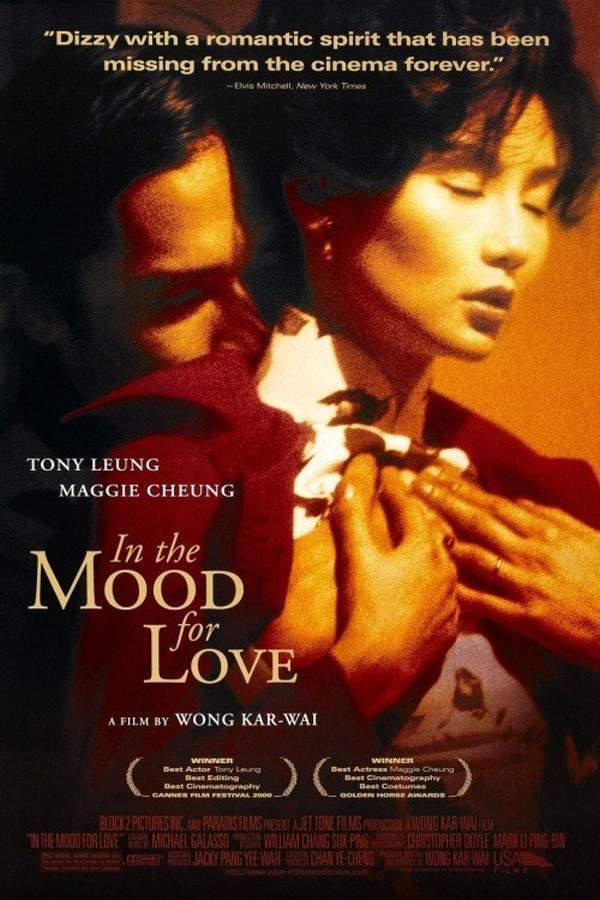
In the Mood for Love (2001) movie poster

Spoiler-Free Summary

In the Mood for Love (2001) Spoiler-Free Summary – What It's About

Release, runtime and language
2001 · 98 min · Chinese
JustWatch #788 110
Directed by
Kar Wai Wong
Starring
Tony Leung Chiu Wai, Maggie Cheung

In 1960s Hong Kong, Chow Mo-wan and Su Li-zhen, both recently moved into the same apartment building, develop a connection after discovering their spouses are having an affair. As they investigate the betrayals, a deep and complex relationship blossoms between them, filled with unspoken feelings and longing. They navigate the intricacies of their emotions while bound by social constraints and the unspoken rules of the era, leading to a poignant exploration of love, loss, and regret.

On this page (6)
  1. 1 Where to watch
  2. 2 What it is about
  3. 3 Is it worth watching?
  4. 4 After you watch
  5. 5 Movie threads
  6. 6 Every angle

Where to watch

Where to Watch In the Mood for Love (2001)

Where can you watch In the Mood for Love? Stream, rent or buy it in the US, including on HBO Max, Philo and Shout! Factory TV: current JustWatch availability with up-to-date prices.

Streaming availability powered by JustWatch

Spoiler-free summary · safe to read

What Is In the Mood for Love About? (No Spoilers)

The plot of In the Mood for Love (2001) without spoilers: what it is about, who it follows and where it takes place, told without the twists or the ending. Enough to decide whether it is your next watch, not enough to ruin it.

In the humid, neon‑lit streets of 1960s Hong Kong, the city pulses with a mix of colonial charm and lingering tradition. The cramped apartment block where the story unfolds becomes a microcosm of a society caught between modern aspirations and restrained customs. Within this intimate setting, the atmosphere is saturated with melancholy jazz, lingering rain, and the quiet rustle of everyday rituals, creating a world that feels both timeless and achingly specific. The tone is one of restrained yearning, where every glance and unspoken word carries the weight of possibilities left unexplored.

Chow Mo-wan is a thoughtful journalist whose days are spent chasing stories while navigating the subtle expectations placed on him by family and culture. He carries an air of quiet composure, tempered by a lingering sense of loneliness that stems from an imperfect marriage. Across the hall, Su Li-zhen works as a diligent secretary, managing the demands of her profession with an understated grace that masks her own inner turbulence. Both protagonists share a common thread of isolation, bound by the invisible walls of their private lives and the societal pressure to maintain propriety.

When these two strangers discover that the fabric of their marriages has been silently torn, a tentative connection forms, rooted in shared understanding and a desire for authenticity. Their interactions are marked by polite conversation that slowly unfolds into deeper, wordless communication, hinting at an intimacy that defies the conventions of their era. The film dwells on the delicate dance of longing and restraint, inviting viewers to sense the profound emotions that thrive in the spaces between spoken words, set against the evocative backdrop of a city forever humming with unfulfilled desire.

Last updated: August 10, 2025 at 12:28

Was this helpful?

What to expect

Is In the Mood for Love Worth Watching? What It Feels Like

Is it dark, sad, slow, intense or confusing? The mood of In the Mood for Love (2001) in a few tags, without a word about how it ends. Each tag opens a list of movies that feel the same.

After you watch

Seen In the Mood for Love? Now Read the Spoilers

Once you have watched In the Mood for Love (2001), come back for the full story: the plot summary with spoilers, the timeline in chronological order, the characters and meaning.

Movie threads

More Movies Like In the Mood for Love, by Mood & Story

Curated lists built around what makes In the Mood for Love tick: the same mood, the same kind of story or the same emotional payoff. Each list explains why these movies belong together.

Movies of restrained melancholy and unspoken longing like In the Mood for Love

Stories of profound love and loss held behind a veil of social propriety. If you enjoyed the quiet, aching emotions of In the Mood for Love, explore similar films. This collection features movies where profound longing and romantic melancholy are expressed through subtlety and restraint, often bound by social conventions.

  • melancholic
  • longing
  • restrained
  • poignant
  • nostalgic
  • quiet
  • Tone: melancholic, poignant, bittersweet
  • Pacing: slow, deliberate, atmospheric
Why these movies?

The story pattern: Narratives in this thread revolve around emotional restraint. Characters grapple with powerful feelings—often love, desire, or regret—but are constrained by circumstance, duty, or societal expectations. The plot is driven by internal conflict rather than external action, building to a poignant, often bittersweet conclusion that emphasizes the beauty and pain of what remains unfulfilled.

Why they belong together: Movies are grouped here for their shared focus on internal emotion conveyed through subtlety. They possess a melancholic tone, deliberate pacing, and a visual style that evokes nostalgia and longing. The experience is less about dramatic plot and more about the resonant, quiet space between characters.

Atmospheric slow-burn character studies similar to In the Mood for Love

Character-driven stories where mood and setting are as important as the plot. For viewers who appreciated the immersive, atmospheric quality of In the Mood for Love, this thread highlights movies with a similar pace and focus. Discover character-driven stories where the environment and mood are central, unfolding slowly to create a deep, resonant experience.

  • slow burn
  • atmospheric
  • character driven
  • contemplative
  • dreamlike
  • nuanced
  • Tone: reflective, dreamlike, nuanced
  • Pacing: slow, immersive, lingering
Why these movies?

The story pattern: The narrative pattern is one of gradual revelation. Instead of a complex plot, the story unfolds through careful observation of characters in their environment. The central conflict is often internal or interpersonal, explored through small moments and significant glances. The setting—whether a specific time period or a detailed location—acts as a silent character, shaping the emotions and outcomes.

Why they belong together: These films are connected by their deliberate pacing, high attention to visual atmosphere, and a primary focus on character psychology. They share a 'slow-burn' quality that invites reflection and values emotional authenticity over narrative twists, creating a deeply immersive and contemplative viewing experience.

Every angle

In the Mood for Love (2001) Explained: Plot, Timeline & Characters

Everything about In the Mood for Love in one place: what happens in the plot summary, the timeline in chronological order, the characters and meaning and a spoiler-free summary. What's After the Movie adds the cast, box office and post-credit scenes.

Coming soon on iOS and Android

The Plot Explained Movie Summary App

Plot summaries, endings explained and timelines on your phone. Catch up on any movie in minutes, save your favorites and never miss a twist again.

Be the first to know when we launch. Your email stays private, always.

Learn more about the app