










Plot Explained Spoilers guaranteed!
Plot Explained

Browse by genre

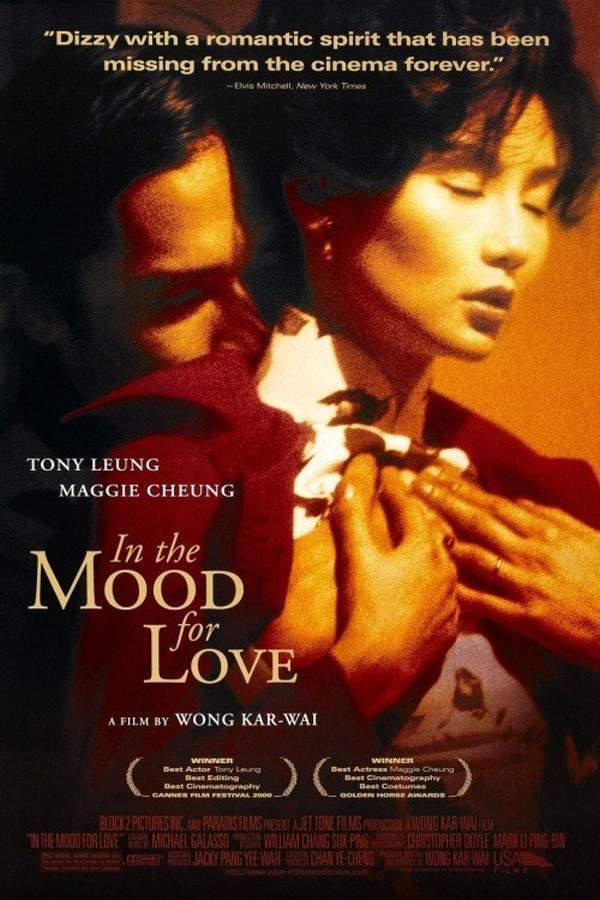
In the Mood for Love (2001) movie poster

Characters & Themes

In the Mood for Love (2001) Characters, Setting & Themes Explained

Release, runtime and language
2001 · 98 min · Chinese
JustWatch #780 102
Directed by
Kar Wai Wong
Starring
Tony Leung Chiu Wai, Maggie Cheung

In 1960s Hong Kong, Chow Mo-wan and Su Li-zhen, both recently moved into the same apartment building, develop a connection after discovering their spouses are having an affair. As they investigate the betrayals, a deep and complex relationship blossoms between them, filled with unspoken feelings and longing. They navigate the intricacies of their emotions while bound by social constraints and the unspoken rules of the era, leading to a poignant exploration of love, loss, and regret.

On this page (7)
  1. 1 Where to watch
  2. 2 Characters explained (2)
  3. 3 Where & when it takes place
  4. 4 Themes & meaning (3)
  5. 5 Character & meaning questions
  6. 6 Movie threads
  7. 7 Every angle

Where to watch

Where to Watch In the Mood for Love (2001)

Where can you watch In the Mood for Love? Stream, rent or buy it in the US, including on HBO Max, Philo and Shout! Factory TV: current JustWatch availability with up-to-date prices.

Streaming availability powered by JustWatch

2 main characters · contains spoilers

In the Mood for Love Characters Explained: Who Is Who

The main characters of In the Mood for Love (2001), heroes and villains: what drives them, how they change over the course of the story and what each of them reveals about the film's bigger ideas.

  • Chow Mo-wan

    played by Tony Leung Chiu Wai

    Chow Mo-wan is a dedicated journalist who finds himself in a quiet turmoil due to his wife’s infidelity. He is introspective and creative, finding solace in the idea of collaborating with Su on a martial arts serial. Throughout the film, he wrestles with his emotions, expressing them in subtle ways while maintaining a facade of stoicism.

    • 📰 Journalist
    • 💔 Heartbroken
    • 🎨 Creative
  • Su Li-zhen (Mrs. Chan)

    played by Maggie Cheung

    Su Li-zhen is a hardworking secretary, embodying both strength and vulnerability. She navigates her own feelings of loneliness and betrayal while forming a deep connection with Chow. Her character showcases emotional depth and longing, as she becomes increasingly aware of her feelings for him amidst their shared sorrow.

    • 📞 Secretary
    • 💔 Heartbroken
    • 🌹 Longing

Last updated: October 22, 2024 at 21:53

Was this helpful?

Setting

Where and When Does In the Mood for Love Take Place?

The setting of In the Mood for Love (2001): the year and time period, the places and locations, and how they shape the characters, the mood and the tension of the story.

Time period

1962-1965

The movie takes place during the early 1960s, a period marked by post-colonial transitions in Asia and societal changes following World War II. In this time, themes of love and longing are explored against a backdrop of shifting relationships and cultural expectations.

Location

British Hong Kong, Singapore, Cambodia

British Hong Kong in the early 1960s is a vibrant, bustling place known for its unique cultural blend and colonial architecture. Singapore, a growing metropolis during this time, offers an intriguing contrast with its own burgeoning modernity. Cambodia, specifically Angkor Wat, is rich in history and spirituality, symbolizing the deep-rooted connection to the past that influences the characters' emotions.

  • 🌆 City
  • 🇸🇬 Country
  • 🏯 Historical Site

Last updated: October 22, 2024 at 21:53

Was this helpful?

3 major themes

In the Mood for Love Meaning: Themes & Message Explained

What is In the Mood for Love (2001) really about? The emotional, social and philosophical themes the film keeps returning to, its symbolism and the message beneath the surface.

  • Unrequited Love

    Unrequited love plays a crucial role in the story, as both characters grapple with the desire for connection amidst their respective marital disappointments. The poignant moments of longing reflect the struggles they face in expressing their feelings. Their relationship is marked by restraint and bittersweet encounters, leaving a lingering sense of what could have been.

  • Time and Memory

    Time is a significant theme as it influences the progression of Chow and Su's relationship. Their emotional journey unfolds over several years, emphasizing nostalgia and the impact of fleeting moments. Memories intertwine with their current lives, shaping their feelings of loss and missed opportunities.

  • Secrets

    The theme of secrets resonates throughout the film, as both Chow and Su are entangled in the mysteries surrounding their spouses’ affair. Their shared pain becomes a bond, but it is also a barrier that prevents them from pursuing their own happiness openly. The whispering of secrets into hollows symbolizes their unexpressed feelings and regrets.

Last updated: October 22, 2024 at 21:53

Was this helpful?

Character & theme questions

In the Mood for Love Characters & Meaning: Your Questions Answered

The questions people ask about In the Mood for Love (2001): who the characters really are, their relationships, what the symbols mean, where it takes place and what the movie is really about. Each answer contains spoilers.

Q1

Where is the movie set?

The film is set primarily in British Hong Kong during the early 1960s, with brief scenes in Singapore and Cambodia. Hong Kong's colonial architecture and bustling urban environment serve as the main backdrop for the story.

  • hong kong setting
  • singapore
  • cambodia
  • 1960s locations
Q2

When does the story take place?

The movie is set in the early 1960s, specifically between 1962 and 1965. This period follows World War II and is marked by post-colonial transitions in Asia, giving the story a particular cultural and historical context.

  • 1960s
  • 1962
  • 1965
  • time period
  • historical context
Q3

What role does unrequited love play in the story?

Unrequited love is central to the film, as both Chow Mo-wan and Su Li-zhen struggle with their desire for connection despite their marital disappointments. Their relationship is marked by restraint and bittersweet encounters, leaving a persistent sense of longing and what could have been.

  • unrequited love
  • longing
  • romance
  • emotional restraint
Q4

How is time treated as a theme?

Time plays a significant role in shaping Chow and Su's emotional journey, which unfolds over several years. The film emphasizes nostalgia and the impact of fleeting moments, with memories intertwining with their present lives and deepening their feelings of loss and missed opportunities.

  • time
  • memory
  • nostalgia
  • passing of time
Q5

What is the significance of secrets in the film?

Secrets drive much of the emotional tension, as both Chow and Su are haunted by the mysteries surrounding their spouses' affair. Their shared pain creates a bond but also becomes a barrier preventing them from openly pursuing happiness. The motif of whispering secrets into hollows symbolizes their unexpressed feelings and regrets.

  • secrets
  • affair
  • betrayal
  • hidden feelings
Q6

Who is Chow Mo-wan?

Chow Mo-wan is a dedicated journalist who becomes entangled in emotional turmoil when he discovers his wife's infidelity. He is introspective and creative, finding solace in writing a martial arts serial. Throughout the film, he expresses his emotions subtly while maintaining a facade of stoicism and social propriety.

  • chow mo-wan
  • tony leung
  • journalist
  • character
Q7

Who is Su Li-zhen?

Su Li-zhen, also known as Mrs. Chan, is a hardworking secretary who embodies both strength and vulnerability. After discovering her husband's affair, she forms a deep connection with Chow Mo-wan. Her character showcases significant emotional depth and longing as she becomes increasingly aware of her feelings for him amid their shared sorrow.

  • su li-zhen
  • maggie cheung
  • secretary
  • mrs chan
  • character
Q8

Why is the 1960s Hong Kong setting important?

The 1960s British Hong Kong setting provides a backdrop of colonial architecture and cultural blending that influences the characters' behavior. The era's social expectations and constraints around propriety directly impact how Chow and Su navigate their feelings, as they must balance their growing connection against the rigid social codes of the time.

  • british hong kong
  • colonial
  • 1960s hong kong
  • social constraints
Q9

What is the film's emotional tone?

The film has a melancholic tone dominated by a pervasive sense of loss, reflection, and longing. Despite the serious themes of betrayal and lost love, the emotional presentation remains restrained, preventing it from feeling overwhelming. The slow pacing and lingering shots emphasize atmosphere and the quiet passage of time.

  • melancholic tone
  • emotional tone
  • atmosphere
  • mood
Q10

What does the movie say about love?

The film explores love as something that can exist in restraint and unspoken connection rather than just open expression. It suggests that love between two people can be profound yet remain unfulfilled due to social constraints and personal circumstances, leaving lasting impacts of regret and nostalgia.

  • love
  • theme
  • message
  • meaning
  • romance
Q11

What is the nature of Chow and Su's relationship?

Chow Mo-wan and Su Li-zhen develop a deep and complex connection after discovering their spouses are having an affair. Their relationship is characterized by emotional restraint, unspoken feelings, and mutual understanding. They become each other's confidants while being bound by social constraints that prevent them from openly pursuing their own happiness.

  • chow and su relationship
  • connection
  • emotional bond
  • relationship dynamic

Movie threads

More Movies Like In the Mood for Love, by Mood & Story

Curated lists built around what makes In the Mood for Love tick: the same mood, the same kind of story or the same emotional payoff. Each list explains why these movies belong together.

Movies of restrained melancholy and unspoken longing like In the Mood for Love

Stories of profound love and loss held behind a veil of social propriety. If you enjoyed the quiet, aching emotions of In the Mood for Love, explore similar films. This collection features movies where profound longing and romantic melancholy are expressed through subtlety and restraint, often bound by social conventions.

  • melancholic
  • longing
  • restrained
  • poignant
  • nostalgic
  • quiet
  • Tone: melancholic, poignant, bittersweet
  • Pacing: slow, deliberate, atmospheric
Why these movies?

The story pattern: Narratives in this thread revolve around emotional restraint. Characters grapple with powerful feelings—often love, desire, or regret—but are constrained by circumstance, duty, or societal expectations. The plot is driven by internal conflict rather than external action, building to a poignant, often bittersweet conclusion that emphasizes the beauty and pain of what remains unfulfilled.

Why they belong together: Movies are grouped here for their shared focus on internal emotion conveyed through subtlety. They possess a melancholic tone, deliberate pacing, and a visual style that evokes nostalgia and longing. The experience is less about dramatic plot and more about the resonant, quiet space between characters.

Atmospheric slow-burn character studies similar to In the Mood for Love

Character-driven stories where mood and setting are as important as the plot. For viewers who appreciated the immersive, atmospheric quality of In the Mood for Love, this thread highlights movies with a similar pace and focus. Discover character-driven stories where the environment and mood are central, unfolding slowly to create a deep, resonant experience.

  • slow burn
  • atmospheric
  • character driven
  • contemplative
  • dreamlike
  • nuanced
  • Tone: reflective, dreamlike, nuanced
  • Pacing: slow, immersive, lingering
Why these movies?

The story pattern: The narrative pattern is one of gradual revelation. Instead of a complex plot, the story unfolds through careful observation of characters in their environment. The central conflict is often internal or interpersonal, explored through small moments and significant glances. The setting—whether a specific time period or a detailed location—acts as a silent character, shaping the emotions and outcomes.

Why they belong together: These films are connected by their deliberate pacing, high attention to visual atmosphere, and a primary focus on character psychology. They share a 'slow-burn' quality that invites reflection and values emotional authenticity over narrative twists, creating a deeply immersive and contemplative viewing experience.

Every angle

In the Mood for Love (2001) Explained: Plot, Timeline & Characters

Everything about In the Mood for Love in one place: what happens in the plot summary, the timeline in chronological order, the characters and meaning and a spoiler-free summary. What's After the Movie adds the cast, box office and post-credit scenes.

Coming soon on iOS and Android

The Plot Explained Movie Summary App

Plot summaries, endings explained and timelines on your phone. Catch up on any movie in minutes, save your favorites and never miss a twist again.

Be the first to know when we launch. Your email stays private, always.

Learn more about the app