Plot Explained Spoilers guaranteed!
Plot Explained

Browse by genre

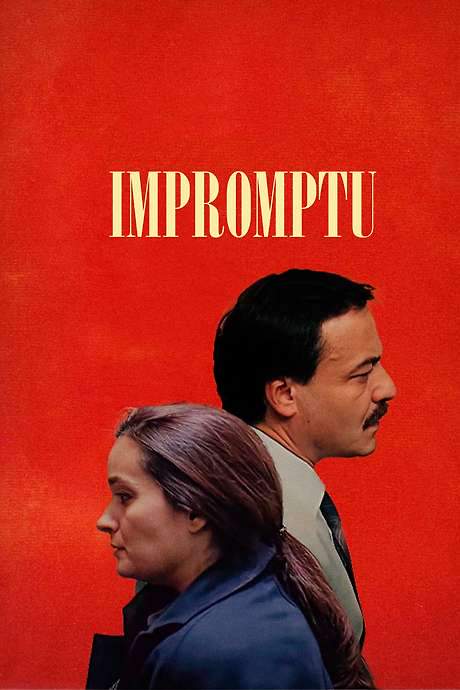
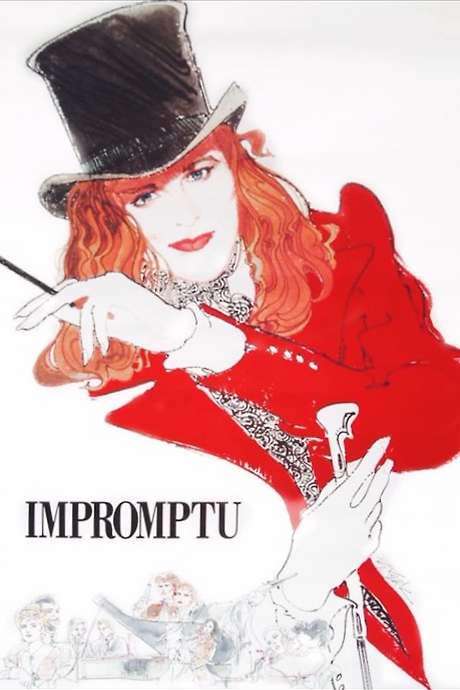
Impromptu (1991) movie poster

Characters & Themes

Impromptu (1991) Characters, Setting & Themes Explained

Release, runtime and language
1991 · 107 mins · English
Loading streaming availability…
Directed by
James Lapine
Starring
Emma Thompson, Mandy Patinkin, Hugh Grant, Anna Massey, Julian Sands, Judy Davis

In 1830s France, renowned pianist and composer Frédéric Chopin becomes the object of affection of the determined, independent writer known as George Sand, a woman famed for her scandal‑defying lifestyle. Their budding romance pits artistic passion against societal expectations, charting the turbulent courtship that would shape both their lives.

On this page (8)
  1. 1 Where to watch
  2. 2 Characters explained (14)
  3. 3 Where & when it takes place
  4. 4 Themes & meaning (4)
  5. 5 Character & meaning questions
  6. 6 Movie threads
  7. 7 Movies like Impromptu
  8. 8 Every angle
Loading streaming availability…

14 main characters · contains spoilers

Impromptu Characters Explained: Who Is Who

The main characters of Impromptu (1991), heroes and villains: what drives them, how they change over the course of the story and what each of them reveals about the film's bigger ideas.

  • Duchess D'Antan (Emma Thompson)

    A driven socialite who dreams of staging a Parisian-style salon in the provinces. She adores attention, mingles with luminaries, and even dons her husband's clothes, provoking both fascination and derision. Her ambition to influence the artistic circle sets the stage for many social machinations at the estate.

    • 🎭 Drama
    • 🏰 Aristocracy
    • 👗 Fashion
  • George Sand (Judy Davis)

    A formidable and independent writer who uses a male pseudonym to navigate society. She pursues Chopin with boldness, writes passionate letters, and challenges conventional norms with fearless appetite for romance and artistic collaboration. Her wit and resolve complicate the lives of everyone around her.

    • 🎭 Drama
    • 🧭 Literature
    • 👗 Identity
  • Frédéric Chopin (Hugh Grant)

    A frail yet brilliant composer whose health and sensitivity make him susceptible to pressure from Sand and the salon world. He is drawn to Sand's intensity but remains wary of being overwhelmed by her forceful affection. His responsiveness to affection and fear of exposure shape his decisions throughout the house party and beyond.

    • 🎼 Music
    • 💫 Romance
    • 🧠 Intellect
  • Marie d'Agoult (Bernadette Peters)

    The mistress of Liszt who resents Sand's prominence and schemes to undermine her rival. She manipulates information to protect her own position within the circle, even if it means orchestrating deceit. Her actions shape Chopin's perceptions and the dynamics of rivalries among the guests.

    • 🎭 Drama
    • 🏛️ Aristocracy
    • 🧠 Strategy
  • Franz Liszt (Julian Sands)

    A celebrated pianist whose friendship with Chopin and involvement with d'Agoult complicate the relationships at the estate. He quarrels with d'Agoult over Sand's influence and becomes part of the web of artistic alliances and jealousies. His presence underscores the tension between genius and personal loyalty.

    • 🎹 Music
    • 🎭 Drama
    • 🧭 Loyalty
  • Alfred de Musset (Mandy Patinkin)

    A witty writer, host, and participant in performances that lampoon the aristocracy. He becomes entangled in the romantic and social intrigues, contributing to the party's atmosphere with a sharp tongue and theatrical sensibility. His duel with Mallefille intensifies the film's themes of honor and public display.

    • 🎭 Drama
    • 🖋️ Literature
    • 🎯 Competition
  • Eugène Delacroix (Ralph Brown)

    A painter who seduces the Duchess and sketches her portrait, bringing visual art into the web of romantic and social intrigue. His presence adds a visual, sensual dimension to the salon’s dynamics and highlights the era's painterly culture.

    • 🎨 Visual Arts
    • 🧭 Influence
    • 🧪 Intuition
  • Félicien Mallefille (Georges Corraface)

    The children's tutor who trespasses into the hostess's world and later challenges Chopin to a duel. His intrusion and ambition reflect the disruptive presence of outsiders in elite circles and the lengths some will go to secure legitimacy through association with Sand.

    • 📚 Education
    • 🗡️ Conflict
    • 🧭 Intrusion
  • Maurice (David Birkin)

    A character present in the estate's social milieu, contributing to the lively, interconnected group of guests. He embodies the bustling, interconnected world of artists and patrons who orbit Sand and Chopin.

    • 🎭 Drama
    • 🏛️ Society
  • Duke D'Antan (Anton Rodgers)

    The hunting-obsessed husband of the Duchess, whose practicality and disregard for social performances create friction in the household. His discomfort with the guests' brilliance highlights the contrast between provincial life and Parisian high society.

    • 🏰 Aristocracy
    • 🗡️ Honor
    • 🐎 Tradition
  • Priest (André Chaumeau)

    A local priest who represents the moral and social oversight of the community. His presence grounds the story in traditional values amid the salon's experiments with identity and romance.

    • ⛪ Religion
    • 🧭 Society
  • Chopin's Valet (Claude Berthy)

    A minor aide who assists Chopin, adding to the portrait of the composer’s life and routine within the social whirl surrounding the estate.

    • 🧰 Servitude
    • 🎵 Music
  • Ursule (Annette Milsom)

    A supporting character who helps fill in the domestic life of the estate, contributing to the atmosphere of a bustling, hosted gathering.

    • 🏠 Domestic Life
    • 🧭 Social
  • Baroness Laginsky (Elizabeth Spriggs)

    A notable guest who embodies the social hierarchy and the playful but critical glimpses into aristocratic circles during the house party.

    • 🎭 Drama
    • 🏛️ Aristocracy

Last updated: October 04, 2025 at 13:54

Was this helpful?

Setting

Where and When Does Impromptu Take Place?

The setting of Impromptu (1991): the year and time period, the places and locations, and how they shape the characters, the mood and the tension of the story.

Time period

1836

Set in the year 1836, the narrative sits in the midst of the Romantic era, where artists and writers navigated salons, flirtations, and social hierarchies. The period features fashionable hostesses, bustling intellectual circles, and salon-driven networks that influence reputations. The time frame anchors the events of invitation, performance, injury, and retreat that shape the relationships among Sand, Chopin, Liszt, Musset, and their circle.

Location

Paris, French countryside (Duchess d'Antan's estate), Majorca

The story unfolds around a Parisian salon culture and a provincial country house where the invited luminaries gather. It also follows the characters' retreat to Majorca for convalescence, moving the action from opulent drawing rooms to more intimate settings. The settings reflect a Romantic era world of high society, art, and personal ambition, with both urban and rural backdrops driving the plot.

  • 🎭 Drama
  • 🏛️ Aristocracy

Last updated: October 04, 2025 at 13:54

Was this helpful?

4 major themes

Impromptu Meaning: Themes & Message Explained

What is Impromptu (1991) really about? The emotional, social and philosophical themes the film keeps returning to, its symbolism and the message beneath the surface.

  • Romance & Rivalry

    Love is shown as both a magnet and a weapon, drawing Sand and Chopin together while provoking jealousy and strategic maneuvering among their peers. The pursuit is shaped by social theatrics, with participants calculating how to win affection without sacrificing status. Rivalries among artists and lovers drive much of the drama, testing loyalties and exposing vulnerabilities.

  • Gender & Identity

    George Sand embraces a masculine persona and dresses in non-traditional attire, challenging gender norms of the time. The Duchess mimics male persona as part of social performance, blurring lines between gender expectations and personal ambition. These choices expose the pressures women faced to secure influence through appearance and bravado within a male-dominated cultural world.

  • Artistic Rivalry

    A tapestry of famous artists—Chopin, Liszt, Musset, and Delacroix—competes for recognition, inspiration, and influence within a fashionable salon. Their ambitions collide with personal relationships, leading to provocations, pranks, and a lingering sense of competition. The environment rewards brilliance but punishes perceived insincerity, making artistry inseparable from social power.

  • Deception & Letters

    Deception threads through the plot, most clearly in the forged letter that d'Agoult signs, manipulating Chopin's perceptions. Miscommunication and misattribution fuel misunderstandings, culminating in dramatic confrontations and strategic moves. The letter and its consequences reveal how intimacy can be weaponized within high-society circles.

Last updated: October 04, 2025 at 13:54

Was this helpful?

Character & theme questions

Impromptu Characters & Meaning: Your Questions Answered

The questions people ask about Impromptu (1991): who the characters really are, their relationships, what the symbols mean, where it takes place and what the movie is really about. Each answer contains spoilers.

Q1

Where is the movie set?

The story takes place in three main locations: a Parisian salon, the French countryside at the Duchess d'Antan's estate, and later Majorca where the characters retreat for convalescence. These settings move from opulent drawing rooms to intimate provincial settings, reflecting the Romantic era's blend of high society and artistic retreat.

  • paris
  • majorca
  • french countryside
  • salon
  • setting
  • romantic era
Q2

What time period does the film depict?

The movie is set in 1836, during the height of the Romantic era. This period was characterized by fashionable salons, bustling intellectual circles, and social hierarchies that influenced reputations. The year anchors the events among artists like Sand, Chopin, Liszt, and Musset.

  • 1836
  • romantic era
  • 19th century
  • historical setting
  • time period
Q3

What are the main themes of the film?

The movie explores four major themes: Romance & Rivalry, where love becomes both attraction and a weapon among artists; Gender & Identity, focusing on George Sand's masculine persona and challenges to gender norms; Artistic Rivalry, examining competition among famous figures like Chopin, Liszt, and Musset; and Deception & Letters, particularly the forged letter that manipulates Chopin's perceptions.

  • romance
  • rivalry
  • gender identity
  • artistic rivalry
  • deception
  • themes
Q4

Who is George Sand in the movie?

George Sand is a formidable, independent writer who uses a male pseudonym to navigate 1830s French society. Played by Judy Davis, she pursues Chopin with boldness, writes passionate letters, and challenges conventional norms with her fearless appetite for romance and artistic collaboration.

  • george sand
  • judy davis
  • writer
  • pseudonym
  • protagonist
Q5

Who is Frédéric Chopin in the story?

Frédéric Chopin is a frail yet brilliant composer portrayed by Hugh Grant. His sensitivity and health issues make him susceptible to pressure from Sand and the salon world. He is drawn to Sand's intensity but remains wary of being overwhelmed by her forceful affection.

  • frederic chopin
  • hugh grant
  • composer
  • pianist
  • musician
Q6

What role does salon culture play in the story?

Salon culture is central to the narrative, serving as the primary arena where artists and writers navigate social hierarchies, flirtations, and power dynamics. Fashionable hostesses like the Duchess d'Antan bring together luminaries, and these gatherings influence reputations and shape romantic and professional rivalries.

  • salon culture
  • social hierarchy
  • paris society
  • aristocracy
  • intellectual circles
Q7

How does the movie address gender and identity?

The film explores gender fluidity through George Sand's embrace of masculine persona and non-traditional attire, challenging 1830s gender norms. The Duchess also mimics male persona as social performance. These choices expose the pressures women faced to secure influence within a male-dominated cultural world.

  • gender norms
  • masculine persona
  • george sand
  • dress
  • identity
  • society
Q8

Who are the rival artists in the movie?

The film features a tapestry of famous artists competing for recognition: composer Frédéric Chopin, pianist Franz Liszt, writer Alfred de Musset, and painter Eugène Delacroix. Their ambitions collide with personal relationships, creating provocations, pranks, and a lingering sense of competition within the fashionable salon environment.

  • franz liszt
  • alfred musset
  • eugene delacroix
  • artists
  • rivalry
  • competition
Q9

Who is the Duchess d'Antan?

The Duchess d'Antan, played by Emma Thompson, is a driven socialite who dreams of staging a Parisian-style salon in the provinces. She adores attention, mingles with luminaries, and even dons her husband's clothes. Her ambition to influence the artistic circle sets the stage for many social machinations at her estate.

  • duchess d'antan
  • emma thompson
  • hostess
  • salon
  • socialite
Q10

How does deception factor into the story?

Deception threads through the plot most clearly in the forged letter that Marie d'Agoult signs, manipulating Chopin's perceptions. This miscommunication and misattribution fuels misunderstandings, culminating in dramatic confrontations and revealing how intimacy can be weaponized within high-society circles.

  • forged letter
  • deception
  • marie d'agoult
  • miscommunication
  • manipulation
Q11

Why do the characters go to Majorca?

The characters retreat to Majorca for convalescence, moving the action from opulent Parisian and provincial French settings to more intimate surroundings. This shift reflects the Romantic era practice of seeking health and solitude in warmer climates, and it provides a more private backdrop for the developing relationship between Sand and Chopin.

  • majorca
  • convalescence
  • health
  • retreat
  • setting change
Q12

What is the tone and emotional weight of the film?

The movie has a bittersweet tone, dominated by a poignant blend of creative triumph and the personal costs of difficult love. The intensity is medium, generated from the clash of strong personalities and societal defiance, balanced by witty dialogue and salon settings. The ending focuses on private happiness achieved away from society, suggesting a win tempered by ongoing challenges.

  • bittersweet
  • tone
  • emotional weight
  • ending
  • romance
  • artistic triumph

Movie threads

More Movies Like Impromptu, by Mood & Story

Curated lists built around what makes Impromptu tick: the same mood, the same kind of story or the same emotional payoff. Each list explains why these movies belong together.

Movies about scandalous artistic love affairs like Impromptu

Passionate, turbulent romances that clash genius with societal conventions. If you liked the passionate and defiant romance in Impromptu, explore more movies about famous artists and writers whose love lives defied convention. These films capture the bittersweet blend of creative genius and societal scorn, offering similar sophisticated and romantic dramas.

  • romantic
  • passionate
  • defiant
  • sophisticated
  • melancholic
  • historical
  • Tone: bittersweet, passionate
  • Pacing: steady, character-driven
Why these movies?

The story pattern: These narratives follow brilliant, often controversial figures as they embark on love affairs that challenge the strictures of their time. The central conflict arises from the friction between personal desire and public expectation, charting a course of passionate highs and melancholic sacrifices.

Why they belong together: They are grouped by their shared focus on a specific type of historical romance—one fueled by artistic genius and societal rebellion. The mood is consistently passionate, sophisticated, and bittersweet, with a steady pace that allows for deep character exploration amidst turbulent relationships.
Bittersweet historical romance movies like Impromptu

Elegant love stories where profound connection is tempered by poignant sacrifice. Find more films like Impromptu that deliver a sophisticated and emotionally resonant period romance. These movies feature compelling characters in elegant settings, whose love stories are deeply felt but ultimately tinged with a realistic, bittersweet poignancy.

  • bittersweet
  • romantic
  • sophisticated
  • melancholic
  • witty
  • elegant
  • Tone: bittersweet, romantic
  • Pacing: steady, deliberate
Why these movies?

The story pattern: The journey typically involves two strong-willed individuals from different worlds finding a deep, intellectual, and emotional bond. Their romance unfolds with sophistication and wit, but is persistently challenged by societal norms, past entanglements, or personal circumstances, leading to an ending that is fulfilling yet realistically complex.

Why they belong together: They share a specific emotional mix: the earnestness of true romance balanced by the melancholy of real-world limitations. The pacing is steady, allowing the relationship to develop naturally, and the tone consistently blends witty, romantic moments with a underlying sense of poignant reality.

If you liked this

Movies Like Impromptu

Similar movies to Impromptu: the same genre, themes or kind of story. Each one comes with its own plot summary, timeline and ending explained.

Browse all movie summaries

Every angle

Impromptu (1991) Explained: Plot, Timeline & Characters

Everything about Impromptu in one place: what happens in the plot summary, the timeline in chronological order, the characters and meaning and a spoiler-free summary. What's After the Movie adds the cast, box office and post-credit scenes.

Coming soon on iOS and Android

The Plot Explained Movie Summary App

Plot summaries, endings explained and timelines on your phone. Catch up on any movie in minutes, save your favorites and never miss a twist again.

Be the first to know when we launch. Your email stays private, always.

Learn more about the app