Plot Explained Spoilers guaranteed!
Plot Explained

Browse by genre

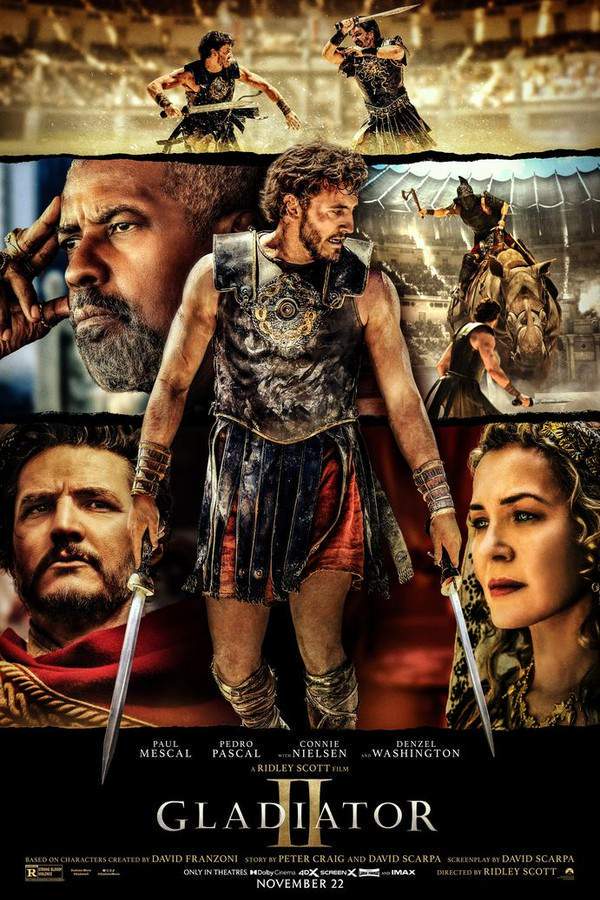
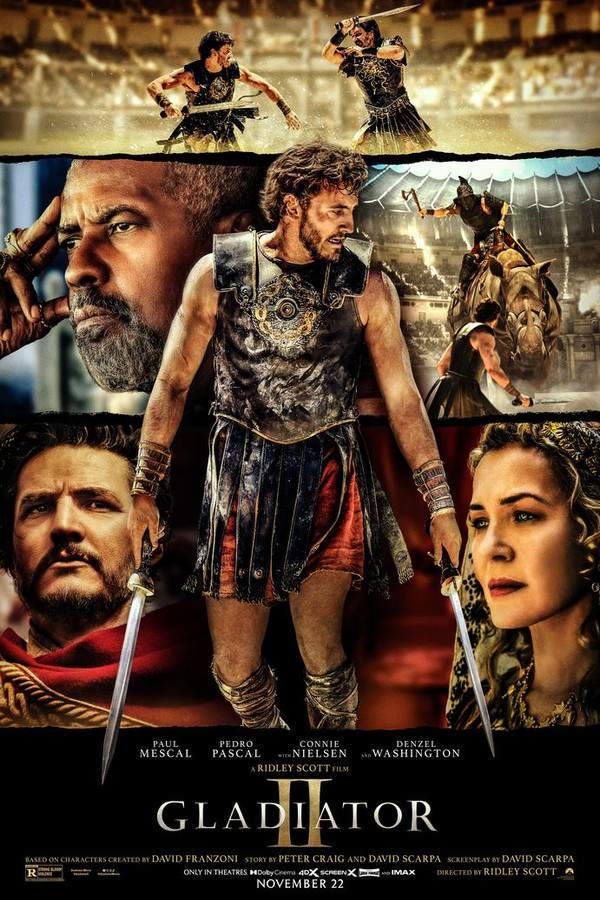
Gladiator II (2024) movie poster

Ending Explained

Gladiator II (2024) Ending Explained – Final Scene & Meaning

Release, runtime and language
2024 · 2 h 28 m · English
Echo score 65
Loading streaming availability…
Directed by
Ridley Scott
Starring
Lior Raz, Connie Nielsen, Pedro Pascal, Paul Mescal, Tim McInnerny, Denzel Washington
Budget
$250M

Years after the death of Maximus, Lucius is forced into the Colosseum after his home is conquered by tyrannical Emperors ruling Rome with an iron fist. Driven by rage and with the future of the Empire hanging in the balance, he must confront his past to find strength and fight for freedom.

On this page (7)
  1. 1 Where to watch
  2. 2 What happens at the end
  3. 3 Final events in order
  4. 4 Ending questions answered
  5. 5 Movie threads
  6. 6 Movies like Gladiator II
  7. 7 Every angle
Loading streaming availability…

Ending explained · contains spoilers

What Happens at the End of Gladiator II?

How Gladiator II (2024) ends, what the final scene means, which earlier moments set it up and how to read the ending if the film leaves it open. The full ending explained, with every spoiler.

At the end of Gladiator II, Lucius Verus finds himself caught between his past and his future. Throughout the film, he has struggled with his identity as a Roman, despite having lived most of his life away from Rome in Numidia. The movie’s final scenes reveal that despite his initial rejection of his Roman heritage and his hatred for Rome’s corruption, fate pulls him back toward his origins. The visual storytelling, guided by Ridley Scott’s direction, shows how all of Lucius’s efforts to distance himself from his Roman identity ultimately fail. He is magnetically drawn to his destiny as a Roman, and the story concludes with him accepting this reality, recognizing that his past and his heritage are inescapable parts of who he is.

The final shot signifies this awakening—Lucius realises that his efforts to sever ties with Rome have only been superficial. The film ends with the implication that Lucius is now fully embracing his role within Rome's complicated political landscape, a stark contrast to his earlier rejection. This ending sets the stage for Gladiator III, where Lucius, now a politician, must grapple with the responsibilities of leadership and his heritage. Unlike Maximus, who sought revenge and had no lasting ties to Rome, Lucius's journey revolves around reconciliation with his Roman identity and understanding the weight of his future as a leader. This storyline promises a more politically driven narrative, reflecting modern themes of power, corruption, and the legacy of family, making Lucius a potential new figure for Rome’s future.

Last updated: June 25, 2025 at 09:03

Was this helpful?

The last 4 events

How Gladiator II Ends: The Final Events in Order

The last events of Gladiator II (2024) in chronological order, the run-up to the ending explained above. The complete timeline has all 15 events, scene by scene.

Open the full timeline
  1. Reunion and Preparation

    Lucius and Lucilla reconcile, with Lucilla revealing Lucius's true lineage as Maximus’s son. Together, they prepare for the inevitable showdown against their oppressors, fueling Lucius's motivation to lead a revolt.

    Where
    Rome
  2. The Gladiatorial Revolt

    Empowered by their resolve, Lucius rallies the gladiators in a revolt against their oppressors. Armed with ancient weapons, they charge into battle, leading to a fierce confrontation where loyalties are tested and lives are lost.

    Where
    Colosseum, Rome
  3. Showdown with Macrinus

    In a climactic encounter outside Rome, Lucius confronts Macrinus in a duel. Drawing strength from his mother's voice during the fight, Lucius defeats Macrinus, emerging as a symbol of hope for a united Rome.

    Where
    Outside Rome
  4. A New Vision for Rome

    With the defeat of Macrinus, Lucius reveals his true identity to both armies, calling for unity and progress. This pivotal moment signifies a new beginning for Rome, as Lucius mourns his parents while embracing his role as its leader.

    Where
    Colosseum, Rome

Ending questions answered

Gladiator II Ending: Your Questions Answered

The questions people ask most about the ending of Gladiator II (2024): what the final scene means, how the twist works, what happens to each character and how to read the ending. Each answer contains spoilers.

Q1

Why does Lucius accept his Roman identity at the end of Gladiator II?

Lucius accepts his Roman identity because throughout the film, he realizes that his efforts to distance himself from Rome have been superficial. Despite living in Numidia and rejecting Rome's corruption, fate continuously pulls him back toward his heritage. The final scenes show that his past and bloodline are inescapable parts of who he is, leading him to embrace his role within Rome's political landscape rather than continue fighting against it.

Foreshadowing: Earlier scenes show Lucius being drawn back into Roman affairs despite his initial resistance, hinting at his inevitable acceptance.

  • lucius verus
  • roman identity
  • acceptance
  • heritage
  • destiny
Q2

What happens to Lucius's mother in Gladiator II?

Lucius's mother dies at the end of Gladiator II. Her death occurs as part of the bittersweet conclusion where Lucius achieves victory and unifies Rome, but this triumph comes at the significant cost of losing his mother. This loss adds emotional weight to his victory and marks a turning point in his journey.

  • lucilla
  • mother death
  • lucius mother
  • bittersweet ending
Q3

How is Gladiator II's ending different from the original Gladiator?

Unlike Maximus in the original Gladiator, who sought revenge and had no lasting ties to Rome, Lucius's journey revolves around reconciliation with his Roman identity rather than destruction of it. While Maximus died fighting, Lucius survives to embrace a political future. The first film ended with Maximus's death and vengeance fulfilled, but Gladiator II sets up Lucius as a leader who must now grapple with the responsibilities of power and his heritage.

  • maximus
  • comparison
  • revenge vs reconciliation
  • original gladiator
Q4

What does the ending imply about Lucius's future in Gladiator III?

The ending sets up Gladiator III with Lucius as a politician rather than a gladiator. Now that he has accepted his Roman identity and unified Rome, he must grapple with the responsibilities of leadership, power, and corruption. This marks a shift from his physical fighting journey to a political one, reflecting themes of legacy, family, and modern issues of power.

  • gladiator 3
  • political future
  • lucius politician
  • sequel setup
Q5

Does Lucius unify Rome at the end of Gladiator II?

Yes, Lucius unifies Rome at the end of Gladiator II. After overcoming the tyrannical Emperors and the political conspiracy, he achieves victory that brings the empire together. However, this victory is tempered by loss, making it a bittersweet conclusion rather than an purely triumphant one.

  • unify rome
  • victory
  • empire
  • political resolution
Q6

Why does Lucius choose politics over continued gladiatorial fighting?

Lucius chooses politics because his arc is fundamentally different from Maximus's. Rather than seeking vengeance against Rome, Lucius learns to reconcile with his heritage and accept his destiny as a leader. The ending shows him embracing his role within Rome's political landscape, indicating growth from a fighter seeking revenge to a statesman concerned with the empire's future.

  • politics vs fighting
  • leadership
  • roman empire
  • character arc
Q7

What does the final shot of Gladiator II signify?

The final shot signifies Lucius's awakening to his true destiny. It visually demonstrates that his previous attempts to sever ties with Rome were only skin-deep. The shot shows him fully embracing his role within Rome's complicated political landscape, marking a complete transformation from the man who initially rejected his Roman heritage.

Foreshadowing: The visual storytelling throughout the film gradually builds toward this moment of acceptance.

  • final shot
  • awakening
  • visual storytelling
  • acceptance
Q8

Why can't Lucius escape his Roman heritage?

Lucius cannot escape his Roman heritage because despite his conscious efforts to distance himself from Rome while living in Numidia, fate continuously draws him back. The film portrays his Roman identity as inescapable, embedded in his bloodline and destiny. His mother's connections and his own past keep pulling him into Rome's orbit until he finally accepts what was always meant to be.

Foreshadowing: From the moment his home is conquered, Lucius is thrust back into Roman affairs regardless of his wishes.

  • heritage
  • bloodline
  • destiny
  • inevitable
  • numidia
Q9

How is Lucius's journey different from Maximus's in the Gladiator series?

Lucius's journey differs from Maximus's in key ways: Maximus sought revenge against Rome for killing his family and wanted to destroy the empire, while Lucius learns to reconcile with his Roman identity and eventually leads it. Maximus died a warrior's death, but Lucius survives to become a political leader. Where Maximus represented resistance, Lucius represents acceptance and future-oriented leadership.

  • maximus
  • lucius comparison
  • character differences
  • legacy
Q10

Why is Gladiator II's ending considered bittersweet?

Gladiator II's ending is bittersweet because while Lucius achieves his goals, unifying Rome and accepting his destiny, he loses his mother in the process. The victory comes at a significant personal cost, leaving Lucius to reflect on his past while stepping into an uncertain future as Rome's new leader. The triumph is shadowed by grief and the heavy burden of leadership.

  • bittersweet
  • mother death
  • victory and loss
  • emotional ending

Movie threads

More Movies Like Gladiator II, by Mood & Story

Curated lists built around what makes Gladiator II tick: the same mood, the same kind of story or the same emotional payoff. Each list explains why these movies belong together.

Spectacular Revenge Epics like Gladiator II

High-stakes stories of personal vengeance set against vast, oppressive worlds. For viewers who enjoyed Gladiator II, this section features movies with similar stories of brutal, personal vengeance set in epic worlds. Find other action-packed dramas where a hero's quest for revenge shakes the foundations of an empire or society.

  • revenge-driven
  • brutal
  • epic
  • grieving
  • oppressive
  • determined
  • Tone: dark, vengeful
  • Pacing: fast, relentless
Why these movies?

The story pattern: The narrative follows a hero who suffers a great personal tragedy at the hands of a powerful antagonist. Forced into a brutal world, they must hone their skills and endure immense suffering to rise up and confront their enemy, often in a public, spectacular climax that has wider consequences.

Why they belong together: These movies are grouped by their core focus on a revenge-driven plot, high-intensity action, dark tone, and the emotional weight of the protagonist's loss. They share a fast pacing with relentless stakes and a bittersweet resolution where victory comes at a great personal cost.
Movies about Fighting Tyranny like Gladiator II

Stories of rebellion against brutal regimes in harsh, unforgiving settings. If you liked the oppressive Roman Empire in Gladiator II, explore these movies about rebellion against corrupt and tyrannical rulers. Discover similar stories set in harsh worlds where freedom is won through sacrifice and violent spectacle.

  • oppressive
  • tyrannical
  • rebellious
  • spectacle
  • brutal
  • political
  • Tone: dark, oppressive
  • Pacing: fast, high-stakes
Why these movies?

The story pattern: The narrative is defined by the power dynamic between a ruthless ruling class and the oppressed. The hero, often a former insider or a victim of the regime, becomes a symbol of resistance. The story unfolds through daring acts of defiance and large-scale battles that test the very foundations of the tyrannical system.

Why they belong together: These films share a core theme of fighting political corruption and oppression. They feature a dark, heavy tone, fast-paced action, and a world where violence is a tool of control and rebellion. The focus is on the spectacle of power and the high cost of freedom.

If you liked this

Movies Like Gladiator II

Similar movies to Gladiator II: the same genre, themes or kind of story. Each one comes with its own plot summary, timeline and ending explained.

Browse all movie summaries

Every angle

Gladiator II (2024) Explained: Plot, Ending, Timeline & Characters

Everything about Gladiator II in one place: what happens in the plot summary, the timeline in chronological order, the characters and meaning, the ending explained and a spoiler-free summary. What's After the Movie adds the cast, box office and post-credit scenes.

Coming soon on iOS and Android

The Plot Explained Movie Summary App

Plot summaries, endings explained and timelines on your phone. Catch up on any movie in minutes, save your favorites and never miss a twist again.

Be the first to know when we launch. Your email stays private, always.

Learn more about the app