Plot Explained Spoilers guaranteed!
Plot Explained

Browse by genre

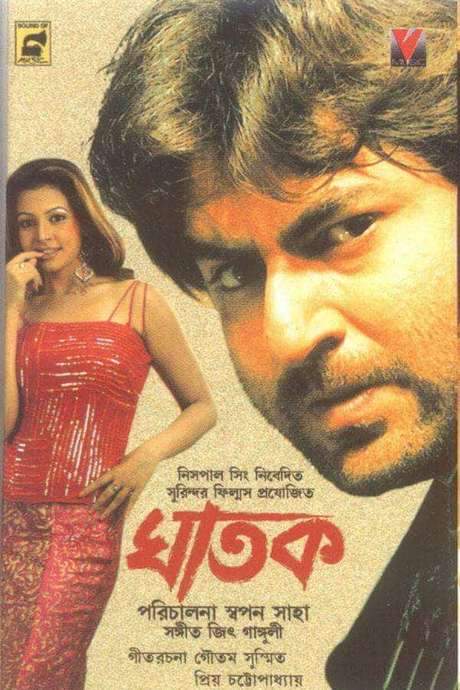
Ghatak (2006) movie poster

Plot Summary

Ghatak (2006) Plot Summary Explained

Release, runtime and language
2006 · 135 mins · Bengali, Bangla
Loading streaming availability…
Directed by
Swapan Saha
Starring
Rajesh Sharma, Koel Mallick, Sumit Ganguly, Shankar Chakraborty, Jeet, Anshu Bach

After relocating to Kolkata with his younger brother Raju, Bijoy tries to lead a modest, ordinary life. The peace shatters when political thugs murder Raju to secure an election victory, forcing Bijoy to confront the two anti‑social forces and seek justice for his brother's death.

On this page (6)
  1. 1 Where to watch
  2. 2 What happens: full plot
  3. 3 Plot questions answered
  4. 4 Movie threads
  5. 5 Movies like Ghatak
  6. 6 Every angle
Loading streaming availability…

Full plot summary · contains spoilers

What Happens in Ghatak: Full Plot Summary

The whole story of Ghatak (2006) explained, from the opening scene to the final frame: every key event, every twist and what it all adds up to. Read it as a quick recap before the sequel, to check a scene you missed, or to finally understand what really happened.

The film opens amidst the chaos of Kolkata, showcasing a series of gruesome murders targeting local goons. DSP Ranabir Roy, a stern and formidable police officer, apprehends the killer after witnessing him commit these heinous acts. During the interrogation, he confronts Bijoy, the vengeful man behind these murders, calling him a "criminal." This provokes Bijoy, leading him to recount the harrowing events that shaped his fate.

Flashback: Bijoy arrives in Kolkata, intent on providing a better education for his younger brother, Raju. However, they quickly become embroiled in the political turmoil of the area, where they witness Bablu Koley, a local terror and opposition party leader, brutally kill a passerby in front of an onlooking crowd. The ensuing chaos draws the attention of the police, who mistakenly apprehend several innocent bystanders, including Bijoy and Raju. They witness Satyabrata Roy, a respected Human Rights lawyer, as he arrives to offer support. Satyabrata takes Bijoy and Raju under his wing, providing them refuge in his home.

With a newfound sense of normalcy, Bijoy begins working as a taxi driver, while Puja, Satyabrata’s daughter and a school teacher, helps enroll Raju in her school. Their lives begin to intertwine, and a romantic bond blossoms between Bijoy and Puja. However, tensions arise when Bindu Mashi, a candidate from the ruling party, comes into conflict with Satyabrata, making requests to drop the legal case against her. Mashi's refusal leads to tragedy, as she murders Satyabrata in an act of desperation, witnessed by Raju.

With danger encroaching, Mashi dispatches her henchmen to eliminate Raju, while Bablu also aims to use him as leverage against Mashi. Following the advice of Puja and her mother, Bijoy attempts to return Raju to their village. However, an explosive confrontation unfolds at the railway station, resulting in Raju being shot amidst a gang war.

Bijoy’s admission to Ranabir that only someone like him can eradicate such societal threats gains the officer’s admiration. Released from police custody, Bijoy plans his revenge, knowing that more lives like Raju's hang in the balance. As the city braces for a fierce election campaign between Bablu and Mashi, Bijoy becomes embroiled in their rivalry. He gains notoriety for settling scores against goons who prey on the innocent.

As election day arrives, Ranabir finds himself managing difficult situations at the polling booths, encountering Munna, Mashi's enforcer, who resorts to violence and intimidation. When Puja stands her ground against Munna during the voting, a physical confrontation ensues. Bijoy intervenes, unleashing his furious rage on Munna and cementing his reputation as a protector.

Meanwhile, Bindu Mashi retaliates by plotting against Bijoy, threatening Puja, which only amplifies Bijoy's desire for vengeance. He finds himself in a dangerous dance with the local political elite, as corrupt minister Binoy Samanta. Facing betrayals from every side, Bijoy's bravery shines as he stands resolute against these forces, ultimately leading to intense confrontations with both Mashi and Bablu, who conspire to destroy him.

However, Bijoy faces dire circumstances when he is captured and disposed of, only to be rescued by compassionate citizens. Eventually, he marries Puja, seeking some semblance of hope for a better future. Yet, the cycle of violence cannot be escaped, as he steps onto the political battlefield once more.

As Bijoy confronts Bablu and Mashi, he does so with a sense of purpose, showcasing his determination to eradicate the criminals plaguing Kolkata. This leads to a tense showdown that culminates in shocking confrontations, ultimately drenching the streets in violence yet again. With his enemies vanquished, Bijoy grapples with the implications of his actions.

Through heart-stopping moments and moral complexities, Bijoy faces a choice: to flee the city to protect his family or to stay and honor his brother's memory. In the end, he resolves to remain, buoyed by the vision of Raju, vowing to build a brighter future despite the darkness looming over them.

Last updated: October 02, 2026 at 03:21

Was this helpful?

Plot questions answered

Ghatak Plot Explained: Your Questions Answered

The questions people ask most about Ghatak (2006): what happens in the confusing scenes, why the characters do what they do, the twists, hidden details and what the ending means. Each answer contains spoilers.

Q1

Why did Bijoy start killing goons in Kolkata?

Bijoy began targeting local criminals in Ghatak as an act of revenge for his younger brother Raju, who was fatally shot during a gang war at the railway station. After losing Raju and seeing that the corrupt political machinery protected the very thugs responsible, Bijoy concluded that the police and legal system would never deliver real justice. He took it upon himself to eliminate the goons terrorizing Kolkata's streets, transforming his personal grief into a violent crusade against the criminal underworld.

Foreshadowing: The film's opening murders mirror the same lawlessness Bijoy and Raju witnessed on their first day in Kolkata, when Bablu Koley killed bystanders in public without consequence.

  • bijoy
  • vigilante
  • revenge
  • raju
  • goons
  • kolkata
Q2

Why did Bindu Mashi murder Satyabrata?

Bindu Mashi killed Satyabrata Roy out of political desperation, after he refused to drop a legal case against her ahead of the assembly elections. As a respected Human Rights lawyer, Satyabrata's continued opposition threatened to expose her criminal activities and ruin her candidacy. Cornered and unable to silence him through legal or political means, Mashi resorted to murder, a crime that Raju unfortunately witnessed, setting off the chain of events leading to his own death in Ghatak.

Foreshadowing: Earlier, Mashi is shown making veiled threats and 'requests' to Satyabrata, hinting that her patience was running out and violence was imminent.

  • bindu mashi
  • satyabrata
  • murder
  • human rights
  • lawyer
  • political
Q3

How did Raju get killed at the railway station?

Raju was fatally shot during a violent gang confrontation at the railway station in Ghatak, as Bijoy attempted to send him back to their village for safety. Both Bindu Mashi and Bablu Koley had their henchmen hunting for Raju, since he was the only eyewitness to Satyabrata's murder and could testify against Mashi. The two rival factions clashed at the station, and in the crossfire, Raju was hit by bullets from Mashi's men, instantly turning Bijoy's life upside down.

Foreshadowing: Puja and her mother had warned Bijoy that Raju was no longer safe in Kolkata, and the plan to flee came only after multiple threats had already been issued.

  • raju
  • railway station
  • murder
  • witness
  • bindu mashi
  • bablu koley
Q4

Why did both Bablu and Mashi want to capture Raju?

Raju was the sole witness to Bindu Mashi's murder of Satyabrata, making him a dangerous liability for her political career. Bablu Koley, the opposition leader, wanted to capture Raju to use him as leverage against Mashi, potentially exposing her crime to destroy her campaign. This made Raju valuable to one side and expendable to the other, and the resulting race to grab him is what triggered the deadly shootout that claimed his life in Ghatak.

Foreshadowing: Immediately after Satyabrata's death, both factions begin mobilizing their men, signaling that Raju's status as a witness put a target on his back.

  • raju
  • witness
  • bablu
  • bindu mashi
  • leverage
  • satyabrata murder
Q5

Why did Bijoy become a vigilante instead of trusting the police?

Bijoy's faith in the legal system collapsed after Raju's murder, because the police had previously arrested innocent bystanders like him and Raju instead of going after real criminals like Bablu. The corrupt officer Basak and complicit politicians made it clear that law enforcement worked for the powerful, not the victims. Channeling his rage, Bijoy decided that only direct, violent action could rid Kolkata of the goons the system refused to touch, a philosophy he openly shares with DSP Ranabir in Ghatak.

Foreshadowing: During Raju's funeral, Bijoy's silence and rigid posture hint that his grief is already hardening into something colder and more dangerous.

  • bijoy
  • vigilante
  • police
  • corruption
  • revenge
  • raju
Q6

What caused the political rivalry between Bablu and Mashi?

Bablu Koley and Bindu Mashi were leaders of opposing political parties gearing up for the same assembly election in their Kolkata constituency, and both relied on criminal networks to maintain power. Their rivalry escalated as each tried to outmanoeuver the other through intimidation, vote rigging, and targeted violence, with the local population caught in the middle. This toxic competition in Ghatak created the volatile environment that ultimately cost Raju his life and gave Bijoy the opening to play them against each other.

Foreshadowing: The very first flashback scene shows Bablu killing innocents in the street while a political rally is being set up, hinting at the electoral violence to come.

  • bablu koley
  • bindu mashi
  • election
  • political rivalry
  • kolkata
Q7

How did Bijoy survive after being captured and disposed of?

Bijoy was captured and left for dead by the combined forces of Bablu and Bindu Mashi after they briefly allied to eliminate him in Ghatak. However, ordinary citizens of Kolkata, who had watched him protect the innocent and stand up to the political thugs, intervened to rescue him. This grassroots support underscored the central theme of the film, that the people's faith in Bijoy outlasted the corrupt machinery trying to destroy him.

Foreshadowing: Bijoy's growing reputation among common people, seen in the polling booth scene, lays the groundwork for why they would later risk themselves to save him.

  • bijoy
  • captured
  • rescued
  • citizens
  • kolkata
  • political thugs
Q8

Why did DSP Ranabir let Bijoy go after catching him?

DSP Ranabir Roy released Bijoy because he recognized that the legal system had failed people like Raju, and that Bijoy's brutal actions, while criminal, were targeting the very goons the corrupt police refused to pursue. Bijoy's blunt admission that 'only someone like me can eradicate such societal threats' resonated with Ranabir's own frustrations. Though Ranabir could not officially condone murder, his admiration for Bijoy's courage in Ghatak led him to look the other way, effectively giving Bijoy a free hand to act as the city's unofficial protector.

Foreshadowing: Ranabir's reaction during the opening interrogation shifts from hostility to quiet respect as Bijoy's backstory unfolds.

  • ranabir roy
  • dsp
  • bijoy
  • police
  • interrogation
  • release
Q9

What happened when Bijoy confronted Munna at the polling booth?

On election day in Ghatak, Munna, Bindu Mashi's enforcer, began intimidating and physically assaulting voters at a polling booth to manipulate the vote count in Mashi's favor. When Puja stood up to Munna and refused to back down, Munna attacked her, triggering Bijoy's intervention. Bijoy unleashed a furious beating on Munna in full view of the crowd, instantly cementing his reputation as the protector of ordinary citizens against the political machine's thuggery.

Foreshadowing: Earlier, Bijoy had already begun confronting small-time goons, but the polling booth scene is where he becomes a public symbol of resistance.

  • munna
  • polling booth
  • bijoy
  • puja
  • election
  • violence
Q10

Why did Bijoy decide to stay in Kolkata instead of fleeing with his family?

After avenging Raju and marrying Puja, Bijoy faced a final choice in Ghatak, to leave the city and protect his new family, or stay and continue fighting the entrenched political-criminal nexus. He chose to remain because leaving would have meant abandoning the very people Raju died trying to protect, and surrendering the city back to thugs like Bablu and Mashi's successors. Haunted and sustained by the memory of Raju, Bijoy resolved to build a better future in Kolkata rather than escape from one.

Foreshadowing: Bijoy's closing vision of Raju echoes an earlier memory of them arriving in Kolkata together, giving the ending a circular, oath-like quality.

  • bijoy
  • ending
  • kolkata
  • family
  • raju
  • choice
Q11

How did Puja get abducted at the hospital?

Bindu Mashi, growing increasingly desperate to neutralize Bijoy in Ghatak, orchestrated Puja's kidnapping by using a nurse disguised as a hospital staff member to lure her into a trap. The abduction was designed to draw Bijoy out of hiding and leave him emotionally vulnerable. However, Mashi underestimated Bijoy's resolve, and he tracked her down, forcing Puja's release and turning her own scheme into another step toward her downfall.

Foreshadowing: Mashi is shown earlier threatening Puja directly, foreshadowing that she would eventually escalate from intimidation to abduction.

  • puja
  • kidnapping
  • hospital
  • bindu mashi
  • bijoy
  • nurse
Q12

What was the role of Satyabrata in Bijoy's life?

Satyabrata Roy served as a father figure and protector to Bijoy and Raju after rescuing them from wrongful police arrest in Ghatak, offering them shelter, education, and a path into respectable society. His home gave Bijoy the stability to start working as a taxi driver and to build a romance with his daughter Puja. Satyabrata's murder at Mashi's hands is therefore not just a political crime but a deeply personal blow that shatters Bijoy's only real family in Kolkata.

Foreshadowing: Satyabrata's willingness to stand up to Mashi early on signals that his principled defiance would eventually make him a target.

  • satyabrata
  • bijoy
  • raju
  • shelter
  • human rights
  • father figure
Q13

Why did the corrupt minister Binoy Samanta turn against Bijoy?

Binoy Samanta, a powerful and corrupt minister in Ghatak, initially tolerated Bijoy's vigilante actions because they disrupted his political rivals, but he turned hostile once Bijoy began threatening the entire ecosystem of corruption, not just individual goons. Bijoy's refusal to be controlled, bribed, or co-opted made him dangerous to Samanta's own interests. Facing betrayals from every side, including the police and politicians, Bijoy was forced to confront Samanta's network as well, making the minister one of several powerful enemies arrayed against him.

Foreshadowing: Bijoy's early refusal to align with any political faction hints that he would eventually clash with figures like Samanta who profit from the status quo.

  • binoy samanta
  • minister
  • corruption
  • betrayal
  • bijoy
  • political
Q14

Why did Bijoy kill Bablu Koley?

Bijoy murdered Bablu Koley in Ghatak as direct retribution for his role in Raju's death and for years of terrorizing innocent residents of their neighborhood. Bablu's gang had been one of the factions clashing at the railway station when Raju was shot, and he represented the kind of unchecked political thuggery that Bijoy had sworn to eliminate. By killing Bablu in a shocking, public display of power, Bijoy sent a message to the remaining criminals and to Mashi that no one in the system was beyond his reach.

Foreshadowing: Bijoy's calm, deliberate preparation before the killing mirrors the same stillness he showed at Raju's funeral, signaling a man who has crossed a line.

  • bablu koley
  • bijoy
  • revenge
  • murder
  • raju
  • vigilante

Movie threads

More Movies Like Ghatak, by Mood & Story

Curated lists built around what makes Ghatak tick: the same mood, the same kind of story or the same emotional payoff. Each list explains why these movies belong together.

Vigilante revenge against political corruption like in Ghatak

Grieving underdogs rise to dismantle brutal political machines one bloodied step at a time. Movies like Ghatak where a grieving protagonist wages a brutal, methodical war against corrupt politicians, criminal gangs, and compromised authorities. If you liked the dark, gritty vigilante energy of Ghatak and want more films where righteous fury fuels a personal crusade against systemic corruption, this thread is for you. Expect heavy themes, graphic violence, and high stakes confrontations with powerful enemies.

  • vengeful
  • gritty
  • brooding
  • righteous fury
  • political
  • brutal
  • Tone: dark, vengeful, somber
  • Pacing: variable, explosive bursts
Why these movies?

The story pattern: A peaceful protagonist is shattered by the murder or harm of a loved one at the hands of a corrupt political or criminal faction. After initial helplessness, the protagonist transforms into a methodical, almost unstoppable vigilante, systematically dismantling the enemy network through escalating violence. Romance and domestic life exist as fragile threads that get repeatedly threatened. The narrative often reveals the protagonist's losses through flashback or interrogation framing, building toward a climactic confrontation where justice is brutally achieved but at enormous personal cost.

Why they belong together: These films share the emotional core of grief transformed into focused, righteous violence against corrupt power structures. They blend action and drama with political commentary, feature brooding anti-heroes operating outside the law, and balance explosive action sequences with quieter domestic or romantic moments. The pacing is typically variable, with bursts of intensity punctuating character development, and the storytelling tends to be complex with multiple factions and shifting motives.

Bittersweet vigilante justice with heavy emotional cost like in Ghatak

Vigilante victories won at devastating personal cost leave wounds no revenge can heal. Movies like Ghatak where vigilante violence against corrupt powers succeeds but the personal toll is devastating. If you liked how Ghatak wove righteous fury with tender romance and ended on an uneasy, bittersweet note rather than clean triumph, this thread collects similar films. Expect heavy emotional weight, complex moral lines crossed, and protagonists who lose as much as they gain in their fight for justice.

  • bittersweet
  • brooding
  • costly justice
  • moral compromise
  • grief
  • fragile hope
  • Tone: bittersweet, somber, heavy
  • Pacing: variable with emotional peaks
Why these movies?

The story pattern: The protagonist's crusade against injustice achieves its primary goal, but the journey leaves deep scars on everyone involved. Romance and family ties are repeatedly tested, often surviving but visibly damaged. The narrative builds toward climactic confrontations that resolve the central conflict while exposing the moral compromises required to get there. Endings lean bittersweet: justice is served, but no one walks away whole, and the audience is left holding both relief and unease.

Why they belong together: These films share an unwillingness to offer pure catharsis despite delivering on the promise of revenge. They balance genre action with emotional realism, treating violence as costly rather than glamorous, and pair a dark, brooding tone with heavy emotional weight and bittersweet conclusions. The result is a coherent experience for viewers who want intensity and resolution without easy triumph.

If you liked this

Movies Like Ghatak

Similar movies to Ghatak: the same genre, themes or kind of story. Each one comes with its own plot summary, timeline and ending explained.

Browse all movie summaries

Every angle

Ghatak (2006) Explained: Plot, Timeline & Characters

Everything about Ghatak in one place: what happens in the plot summary, the timeline in chronological order, the characters and meaning and a spoiler-free summary. What's After the Movie adds the cast, box office and post-credit scenes.

Coming soon on iOS and Android

The Plot Explained Movie Summary App

Plot summaries, endings explained and timelines on your phone. Catch up on any movie in minutes, save your favorites and never miss a twist again.

Be the first to know when we launch. Your email stays private, always.

Learn more about the app