Plot Explained Spoilers guaranteed!
Plot Explained

Browse by genre

Spring in a Small Town (1948) movie poster

Plot Summary

Spring in a Small Town (1948) Plot Summary Explained

Release, runtime and language
1948 · 94 mins · Chinese
Directed by
Fei Mu
Starring
Yu Shi, Li Wei, Wei Wei, Cui Chaoming, Zhang Hongmei

A married couple living in a desolate small town in post-WWII China are paid a surprise visit by an old friend of the husband’s.

On this page (5)
  1. 1 What happens: full plot
  2. 2 Plot questions answered
  3. 3 Movie threads
  4. 4 Movies like Spring in a Small Town
  5. 5 Every angle

Full plot summary · contains spoilers

What Happens in Spring in a Small Town: Full Plot Summary

The whole story of Spring in a Small Town (1948) explained, from the opening scene to the final frame: every key event, every twist and what it all adds up to. Read it as a quick recap before the sequel, to check a scene you missed, or to finally understand what really happened.

The film largely stays faithful to Fei Mu's original vision, centering on Zhang Zhichen, a city doctor, who visits his old friend Dai Liyan shortly after Japan's defeat; Liyan is frail, and Zhang suspects the illness may be more psychological than physical, a sign of the era's unsettled mood.

During the visit, Zhang meets Zhou Yuwen and Dai Xiu, Dai Liyan's wife and sister, whose presence adds memory and tension to the reunion.

Ten years earlier, Zhang and Yuwen shared a passionate affair. With Liyan's illness keeping him largely out of the picture, the rekindled attraction grows as they are drawn to one another again, creating a quiet but dangerous electricity in the house.

At [Dai Xiu's] birthday, as drinks flow, the mutual attraction becomes evident to all, especially to Liyan, who feels betrayed. Too weak in spirit to bear the sight of his wife with another man, he begs Zhang to stay, and the emotional strain culminates in a crisis that leads to an overdose attempt, saved by a friend.

Zhang, sensing the peril his presence could bring, decides that departing is the best path for everyone involved.

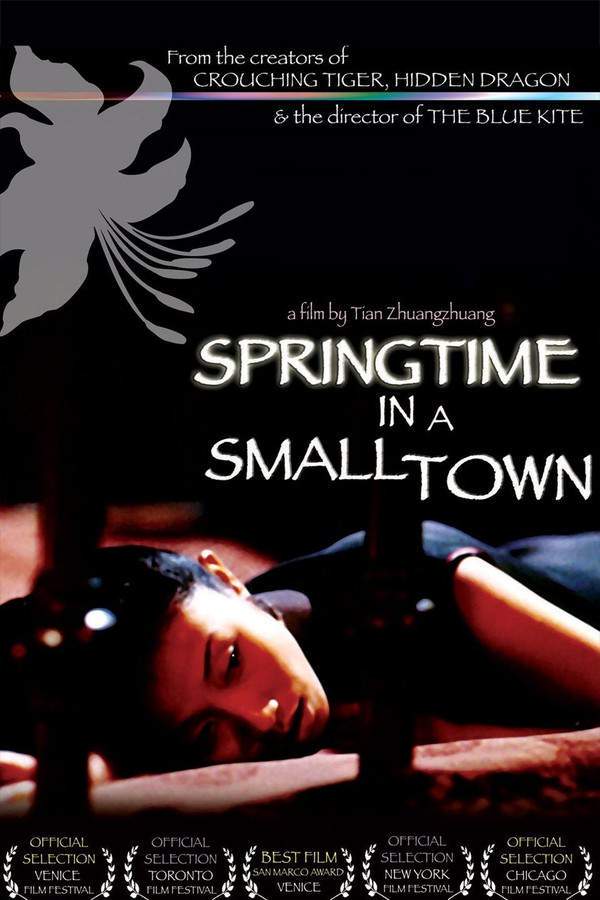
While faithful to the core plot, Tian's remake drops the original's voice-over narration by Yuwen, marking a tonal shift in how inner thoughts and motives are conveyed.

Last updated: February 24, 2026 at 09:48

Was this helpful?

Plot questions answered

Spring in a Small Town Plot Explained: Your Questions Answered

The questions people ask most about Spring in a Small Town (1948): what happens in the confusing scenes, why the characters do what they do, the twists, hidden details and what the ending means. Each answer contains spoilers.

Q1

Why does Zhang decide to leave after Liyan's suicide attempt?

Zhang decides to leave because he realizes his continued presence is causing more harm than good. After witnessing Liyan's overdose attempt, he understands that his rekindled attraction to Yuwen has destabilized the household and contributed to Liyan's emotional breakdown. Choosing to depart is his attempt to restore peace, even though it means sacrificing his own desires.

  • zhang departure
  • liyan suicide
  • love triangle resolution
Q2

Why does Liyan attempt suicide during Dai Xiu's birthday?

Liyan attempts suicide because he is emotionally shattered by witnessing the growing attraction between his wife Yuwen and his old friend Zhang. Too physically weak and psychologically fragile to confront the situation directly, he sees no way out except through a desperate act of overdose. The birthday celebration, meant to be joyful, becomes the breaking point where his accumulated grief and sense of betrayal overflow.

Foreshadowing: Liyan's frail health and psychological state were established early in the film, hinting at his vulnerability to emotional devastation.

  • liyan suicide attempt
  • emotional breakdown
  • birthday scene
Q3

What was the nature of Zhang and Yuwen's past relationship?

Zhang and Yuwen shared a passionate romantic affair ten years earlier, before Yuwen became engaged to Dai Liyan. Their past love was intense enough to leave lasting emotional scars and unresolved feelings. When Zhang returns to the house, those old feelings resurface, creating the magnetic pull between them that threatens the stability of Liyan's household.

  • past affair
  • zhang yuwen romance
  • ten years ago
Q4

Why is Liyan so frail and sick throughout the film?

Liyan's illness is presented as both physical and psychological. The film suggests his frail condition stems from the psychological toll of the era, the unsettled mood following Japan's defeat and the emotional strain of his failing marriage. Zhang, a doctor, notes that Liyan's illness may be more psychological than physical, reflecting the deeper emotional malaise affecting post-war China.

  • liyan illness
  • frail health
  • post-war china
Q5

What does Liyan mean when he begs Zhang to stay and help care for Yuwen?

When Liyan begs Zhang to stay, he is not simply asking for companionship. He is expressing his desperation to keep his household intact and his fear of losing Yuwen. By asking Zhang to stay and help care for Yuwen, Liyan is essentially pleading with Zhang not to pursue Yuwen romantically while also acknowledging his own inability to fulfill her emotionally or physically due to his illness.

  • liyan plea
  • zhang stay
  • emotional desperation
Q6

Why is Dai Xiu's birthday significant to the plot?

Dai Xiu's birthday serves as the catalyst that brings all the underlying tensions to the surface. The celebration creates an intimate atmosphere where drinks flow and social restraints relax. It is during this gathering that the mutual attraction between Zhang and Yuwen becomes unmistakably obvious to everyone, including Liyan. The birthday thus acts as a pressure cooker that forces the hidden emotions into the open.

  • dai xiu birthday
  • tension escalation
  • party scene
Q7

Why does Yuwen ultimately stay with Liyan instead of leaving with Zhang?

Yuwen remains with Liyan because the film presents her as a complex character torn between past passion and present duty. While she clearly still has feelings for Zhang, she cannot abandon her ill husband, especially after his suicide attempt. The emotional weight of the crisis, combined with the social and moral obligations of the time, compels her to stay. The film leaves her choice ambiguous but emotionally heavy.

  • yuwen choice
  • marriage duty
  • staying with liyan
Q8

What happens after Zhang leaves the house?

After Zhang departs, the household is left to grapple with the aftermath of the emotional crisis. The immediate tension resolves, but the underlying problems remain unresolved. Liyan survives but the fundamental issues in his marriage persist. Yuwen is left in a state of unfulfilled longing. The film ends on a bittersweet note, suggesting that while the physical triangle has been broken, the emotional echoes of their brief reunion will linger.

  • zhang departure ending
  • bittersweet conclusion
  • lingering consequences
Q9

Why is the film so melancholic and slow-paced?

The film's melancholic tone and slow pacing reflect its themes of unfulfilled love, emotional isolation, and the lingering trauma of war. The small, desolate town setting creates a claustrophobic atmosphere that mirrors the characters' emotional imprisonment. The slow pacing allows viewers to sit with the characters' internal conflicts rather than relying on plot action, emphasizing the emotional weight of their impossible situation.

  • melancholic tone
  • slow pacing
  • atmosphere
Q10

Why does Zhang visit Liyan after the war?

Zhang visits Liyan as an old friend, likely drawn by a sense of duty or curiosity about his former friend's condition in the post-war period. As a city doctor, he may have come with professional interest in Liyan's health, but the visit also brings him back into contact with Yuwen, reawakening old emotions. The timing, shortly after Japan's defeat, adds context to the sense of transition and unsettledness in everyone's lives.

  • zhang visit
  • old friend
  • post-war reunion

Movie threads

More Movies Like Spring in a Small Town, by Mood & Story

Curated lists built around what makes Spring in a Small Town tick: the same mood, the same kind of story or the same emotional payoff. Each list explains why these movies belong together.

Movies about repressed desire and marital strife like Spring in a Small Town

Stories where unspoken emotions simmer beneath the surface of relationships. If you appreciated the subtle tension and unspoken emotions in Spring in a Small Town, explore these movies about quiet marital strife and repressed desire. Discover similar dramas where characters navigate complex feelings of loyalty and infidelity in a restrained, atmospheric style.

  • melancholic
  • repressed
  • tense
  • introspective
  • lonely
  • quiet
  • Tone: melancholic, tense
  • Pacing: slow, deliberate
Why these movies?

The story pattern: These narratives typically revolve around a central, often static, location where characters are forced to confront their unhappiness. A catalyst, like an old flame's arrival, disrupts a fragile equilibrium, leading to a slow-burn exploration of 'what if' scenarios that ultimately resolve with a bittersweet acceptance of reality.

Why they belong together: Movies are grouped here for their shared focus on internal conflict expressed through restraint. They prioritize mood and unspoken communication over plot, creating a palpable sense of melancholy and emotional claustrophobia that resonates with viewers seeking nuanced character studies.

Movies with atmospheric post-war melancholy like Spring in a Small Town

Character-driven stories set against the bleak backdrop of a society picking up the pieces. Viewers of Spring in a Small Town who were captivated by its desolate post-war setting will find more films with a similar atmosphere of melancholy. These movies use their historical context to explore themes of emotional isolation and the lingering scars of conflict on a personal level.

  • melancholic
  • desolate
  • lonely
  • somber
  • introspective
  • bleak
  • Tone: melancholic, bleak
  • Pacing: slow, contemplative
Why these movies?

The story pattern: The plot is often secondary to the exploration of a mood. The narrative follows characters as they wander through physically and emotionally scarred landscapes, dealing with themes of illness, fractured relationships, and a pervasive sense of loss, leading to resolutions that are seldom wholly happy.

Why they belong together: These films are united by their use of a post-war setting not for action, but as a amplifier for internal emotional states. They share a heavy, melancholic tone, slow pacing, and a focus on the psychological weight of survival and the difficulty of rebuilding normal life.

If you liked this

Movies Like Spring in a Small Town

Similar movies to Spring in a Small Town: the same genre, themes or kind of story. Each one comes with its own plot summary, timeline and ending explained.

Browse all movie summaries

Every angle

Spring in a Small Town (1948) Explained: Plot, Timeline & Characters

Everything about Spring in a Small Town in one place: what happens in the plot summary, the timeline in chronological order, the characters and meaning and a spoiler-free summary. What's After the Movie adds the cast, box office and post-credit scenes.

Coming soon on iOS and Android

The Plot Explained Movie Summary App

Plot summaries, endings explained and timelines on your phone. Catch up on any movie in minutes, save your favorites and never miss a twist again.

Be the first to know when we launch. Your email stays private, always.

Learn more about the app