Plot Explained Spoilers guaranteed!
Plot Explained

Browse by genre

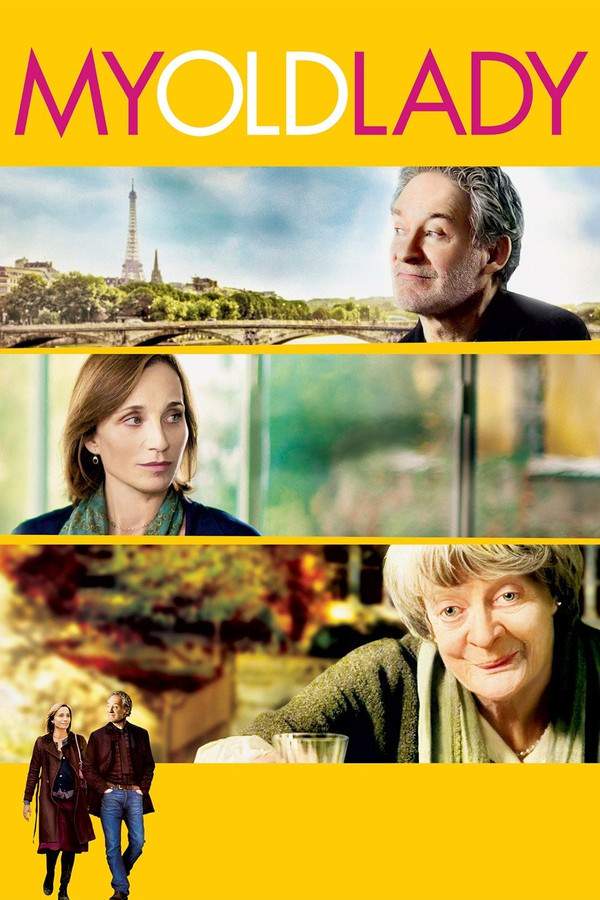
My Old Lady (2014) movie poster

Plot Summary

My Old Lady (2014) Plot Summary Explained

Release, runtime and language
2014 · 107 min · English
JustWatch #11,749 12
Directed by
Israel Horovitz
Starring
Maggie Smith, Kristin Scott Thomas, Kevin Kline

A bewildered New Yorker unexpectedly inherits a large apartment in Paris, but discovers it’s already occupied by a lively octogenarian and her devoted daughter. He finds himself entangled in their lives and the apartment's history, uncovering long-held secrets and forming an unlikely connection with the two women. Navigating the complexities of his inheritance, he learns valuable lessons about family, belonging, and the enduring power of human connection.

On this page (6)
  1. 1 Where to watch
  2. 2 What happens: full plot
  3. 3 Plot questions answered
  4. 4 Movie threads
  5. 5 Movies like My Old Lady
  6. 6 Every angle

Where to watch

Where to Watch My Old Lady (2014)

Where can you watch My Old Lady? Stream, rent or buy it in the US, including on Amazon Prime Video, Darkroom and Fawesome: current JustWatch availability with up-to-date prices.

Streaming availability powered by JustWatch

Full plot summary · contains spoilers

What Happens in My Old Lady: Full Plot Summary

The whole story of My Old Lady (2014) explained, from the opening scene to the final frame: every key event, every twist and what it all adds up to. Read it as a quick recap before the sequel, to check a scene you missed, or to finally understand what really happened.

Jim, a down-and-out New Yorker, travels to Paris with a plan to sell a large, valuable apartment in a coveted district that he has inherited from his estranged father. The trip quickly veers off course when he discovers that the apartment isn’t empty at all—the old woman who occupies it, Mathilde, lives there with her daughter Chloé. What begins as a practical real estate venture soon reveals a far more complicated and emotionally charged situation.

The heart of the conflict is the peculiar ownership arrangement known as a viager—a centuries-old French system in which a buyer can take possession only after the seller dies. In Jim’s case, this means he will not hold the title to the apartment until Mathilde’s passing, and in the meantime he owes her a monthly life annuity of €2,400. The arrangement comes as a shock to him: his father never explained the deal, and a language barrier with the French lawyer who handles the paperwork compounds the confusion. With no money of his own and no place to live, Jim negotiates a fragile living arrangement: Mathilde will allow him to stay in the apartment if he pays rent, a small mercy that still leaves him scrambling for cash.

To cover the looming payments, Jim resorts to taking and selling pieces of the apartment’s furniture and even pressing a prospective buyer of his own contract for advance payments. The situation is morally murky, but Jim is drawn into a tangle of practical needs and personal history. He tries to gauge Mathilde’s health, and one of Mathilde’s English students—who also happens to be her doctor—tells him she remains in excellent health. The daily life of the old woman includes odd pairings: she trades English lessons with the local fishmonger, a detail that hints at a stubborn vitality beneath the surface.

As their conversations unfold, Mathilde asks Jim about his visits to France over the years, a topic that underscores Jim’s distance from the country that now holds his stake and potential future. He reveals that his mother once viewed France as enemy territory, a sentiment that mirrors his own estrangement from his father and the life he might have had. The next practical challenge emerges when Jim arranges a meeting at a café with Chloé and a developer, François Roy, to discuss possibly selling part of the house by dividing it into two separate apartments. Neither party is enthusiastic about selling a chunk of the family home, so Jim works out a modest deposit with Roy while he contemplates the options.

Jim’s pursuit of cash leads him to follow Chloé after a class, watching her as she meets a male companion at a café and then spots him later at a hotel. What begins as a probing attempt at leverage shifts into a tense confrontation as Jim tries to blackmail her to avoid the next €2,400 payment. The web of secrets grows thicker when Jim uncovers a long-standing affair between Mathilde and his father, an affair that began seven years before Jim was born and persisted while both partners were married. The revelation reframes Jim’s understanding of his own childhood and the emotional terrain that shaped his mother’s life and his own.

Facing this new, painful context, Jim attempts to make Mathilde see how deeply their shared history has touched him and his mother. He reveals the pain of feeling unloved and ignored, a hurt that sent him down a path of drinking and a series of failed marriages. Mathilde, in turn, bears her own burden of a past marked by failed suicides—one of which Jim watched occur when he was away at college—adding a heavy layer of tragedy to their already fraught relationship.

The emotional powder keg continues to tilt when, after meeting with Roy again to discuss the sale, Jim returns to the apartment and notices a photograph of himself with Chloé from when he was ten. Mathilde remarks that it is the only time Jim has ever set foot in the apartment, and she also notes that his father stopped visiting after Jim’s mother died. The moment prompts Jim to confess that he once slit his wrists at age forty, a revelation that deepens the sense of shared pain between him and Mathilde. Despite the weight of these revelations, his father’s proximity in the same city remains a haunting presence, and Jim realizes that the past cannot be easily disentangled from present decisions.

As the two generations confront the ways their parents’ adultery shaped their lives, Chloé and Jim find common ground. They recall their childhoods and the moment when Chloé realized her mother’s affair—an awareness that coincided with Jim’s own early attempts to stave off another family crisis. The emotional resonance between them grows, and their bond becomes a focal point for what remains possible in a future that might still be financially precarious.

In a tense, candid exchange, Chloé asks Mathilde whether she and Jim share a father, and Mathilde responds with uncertainty. Jim overhears this, prompting him to undergo blood tests to determine paternity. When the results finally arrive, they confirm that Jim and Chloé are not related, a finding that shifts the dynamic of what they might become, both in their relationship and in their plans for the apartment.

Ultimately, Jim faces a crucial choice about the future of the property. He is tempted by Roy’s multi-million-euro offer, but the revelation of their non‑related status gives him pause. He decides to decline the cash-out deal for now, choosing instead to rely on the more modest, long-term income that could come from selling en viager. Mathilde points out that they do not need to chase large sums to secure a future; the arrangement could still work, especially given their relatively young ages. In the end, the story threads together loss, memory, and a cautious optimism: the past might be painful, but it can also become the foundation for a more stable and humane path forward, should they choose to redefine what they want from the apartment, their lives, and the possibility of a shared, renewed future.
Last updated: October 09, 2025 at 16:20

Was this helpful?

Plot questions answered

My Old Lady Plot Explained: Your Questions Answered

The questions people ask most about My Old Lady (2014): what happens in the confusing scenes, why the characters do what they do, the twists, hidden details and what the ending means. Each answer contains spoilers.

Q1

How does the viager ownership system work in the movie?

The viager is a French property arrangement where a buyer purchases a property but only takes ownership after the seller dies. In Jim's case, he cannot claim the Paris apartment until Mathilde passes away, and he must pay her a monthly life annuity of €2,400 in the meantime. This unusual setup is what creates the central conflict of the film, trapping Jim in a financially precarious position.

Foreshadowing: The viager terms are introduced early when Jim discovers the apartment isn't empty, setting up the entire conflict.

  • viager
  • french property
  • life annuity
  • inheritance
  • apartment
Q2

Why did Jim's father leave him a viager apartment?

Jim's father left him the apartment through the viager system, but never explained the arrangement to his son. The film reveals Jim's father had a long-standing affair with Mathilde that began seven years before Jim was born. The inheritance appears to be his father's way of providing for Mathilde while tying Jim to the apartment and, indirectly, to the affair's consequences.

Foreshadowing: The true reason for the inheritance only becomes clear when Jim uncovers the affair between his father and Mathilde.

  • father
  • inheritance
  • viager
  • mathilde
  • affair
Q3

Why does Jim try to blackmail Chloé?

Jim follows Chloé to a hotel after suspecting her of infidelity, then attempts to blackmail her to avoid paying the €2,400 annuity. Driven by desperation and financial ruin, Jim resorts to manipulation as a way to escape his mounting debts. The act reflects his downward spiral and moral compromises under extreme pressure.

Foreshadowing: Jim's earlier financial desperation (selling furniture, asking for advance payments) foreshadows his willingness to cross ethical lines.

  • blackmail
  • chloe
  • payment
  • annuity
  • money
Q4

What is the affair between Mathilde and Jim's father?

Mathilde and Jim's father carried on a secret affair for years, beginning seven years before Jim was born while both were married to other people. The affair continued throughout Jim's childhood, profoundly affecting his mother and shaping Jim's own emotional trauma. This revelation completely reframes Jim's understanding of his family history.

Foreshadowing: Mathilde's comment about Jim's father stopping visits after his mother's death hints at the depth of their relationship.

  • affair
  • father
  • mathilde
  • adultery
  • secret
Q5

Why did Jim slit his wrists at age forty?

Jim confesses to Mathilde that he slit his wrists at forty years old, a result of feeling unloved and ignored throughout his life. The revelation comes during an emotional exchange where both share their deepest wounds, Mathilde reveals her own history of suicide attempts. Jim's act symbolizes the devastating emotional legacy of his fractured family.

Foreshadowing: Mathilde mentions her own past suicide attempts earlier, creating context for Jim's confession.

  • suicide
  • wrists
  • depression
  • trauma
  • emotional pain
Q6

Are Jim and Chloé related by blood?

No, the DNA test confirms Jim and Chloé are not related. When Mathilde hints at uncertainty about whether they share a father, Jim undergoes blood testing. The results show they have different fathers, allowing them to pursue a romantic relationship without the shadow of incest.

Foreshadowing: The photo of Jim and Chloé from when they were ten, which Mathilde points out, raises early questions about their connection.

  • paternity
  • dna test
  • related
  • chloe
  • father
Q7

Why does Jim turn down Roy's multi-million euro offer?

Jim declines Roy's lucrative offer to sell the apartment because the paternity test reveals he and Chloé are not related, giving them a real chance at building a future together. Rather than taking a quick cash payout, Jim chooses to rely on the viager income, believing they can make a modest living from the arrangement given their relatively young ages.

Foreshadowing: Chloé's earlier statement that she wants to stay in the apartment influences Jim's decision to reject the sale.

  • roy
  • offer
  • sale
  • apartment
  • money
  • decline
Q8

What is Mathilde's history with suicide attempts?

Mathilde reveals she has a history of failed suicide attempts, one of which Jim actually witnessed while he was away at college. This devastating detail adds layers of tragedy to her character and explains some of the emotional weight she carries. The shared trauma creates an unexpected bond between her and Jim.

Foreshadowing: The emotional intensity between Mathilde and Jim builds throughout their conversations, making her confession feel like a culmination of trust.

  • suicide
  • mathilde
  • attempts
  • trauma
  • history
Q9

What does the childhood photo of Jim and Chloé reveal?

The photograph shows Jim and Chloé together when they were ten years old, the only time Jim ever visited the apartment as a child. Mathilde notes that Jim's father stopped visiting after Jim's mother died, suggesting the affair and its consequences deeply affected everyone's movements and relationships over decades.

Foreshadowing: This moment connects the children's pasts in a way neither Jim nor Chloé fully understood until now.

  • photo
  • childhood
  • chloe
  • memory
  • father
Q10

Why does Jim follow Chloé to the hotel?

Jim follows Chloé after her class because he suspects she's having an affair or hiding something that could affect his financial situation. His desperation to avoid the next €2,400 payment drives him to surveil her, hoping to find leverage. The confrontation at the hotel reveals Jim's moral deterioration under financial stress.

Foreshadowing: Earlier, Jim is already selling furniture and seeking advance payments, showing his growing desperation.

  • chloe
  • follow
  • hotel
  • surveillance
  • money

Movie threads

More Movies Like My Old Lady, by Mood & Story

Curated lists built around what makes My Old Lady tick: the same mood, the same kind of story or the same emotional payoff. Each list explains why these movies belong together.

Inheritance Dramas with Family Secrets like My Old Lady

A life-changing inheritance forces a confrontation with uncomfortable family truths. If you liked the way My Old Lady used an apartment inheritance to unravel a father's past, you'll enjoy these movies where a legacy brings hidden truths to light. Discover similar stories of financial struggle, family estrangement, and quiet self-discovery.

  • introspective
  • melancholic
  • strained
  • hopeful
  • reflective
  • uncomfortable
  • Tone: bittersweet, reflective
  • Pacing: steady, conversational
Why these movies?

The story pattern: The narrative pattern follows a protagonist, often at a low point, receiving an inheritance that initially seems like a solution but quickly becomes a complicated puzzle. The story unfolds through conversations and discoveries in a specific location, leading to strained relationships, unexpected alliances, and a reevaluation of family and self.

Why they belong together: Movies in this thread share a focus on inheritance as a narrative catalyst, blending financial stakes with deep emotional and familial revelations. They feature a steady, character-driven pace, a bittersweet tone balancing pain and hope, and medium emotional weight from serious but not overwhelming themes.

Movies about Unlikely Late-Life Friendships like My Old Lady

Unlikely friendships blossom from difficult circumstances, offering a chance for renewal. Fans of My Old Lady's portrayal of the bond between Jim, Mathilde, and Chloé will appreciate these films about unlikely connections formed later in life. Find similar movies with bittersweet moods, steady pacing, and themes of redemption and human connection.

  • hopeful
  • reflective
  • strained
  • melancholic
  • introspective
  • heartwarming
  • Tone: bittersweet, hopeful
  • Pacing: steady, character-focused
Why these movies?

The story pattern: The emotional journey centers on withdrawn or disillusioned characters who are reluctantly drawn into the lives of others. Through shared spaces and forced proximity, initial tension gives way to mutual understanding and support. The arc is one of gradual emotional thawing, where connection offers a pragmatic, if imperfect, path forward.

Why they belong together: These films are grouped by their focus on nuanced, non-romantic relationships that develop under strained conditions. They share a bittersweet, hopeful tone, a steady pacing that allows characters to breathe, and a medium emotional weight that feels authentic and earned rather than overly sentimental.

If you liked this

Movies Like My Old Lady

Similar movies to My Old Lady: the same genre, themes or kind of story. Each one comes with its own plot summary, timeline and ending explained.

Browse all movie summaries

Every angle

My Old Lady (2014) Explained: Plot, Timeline & Characters

Everything about My Old Lady in one place: what happens in the plot summary, the timeline in chronological order, the characters and meaning and a spoiler-free summary. What's After the Movie adds the cast, box office and post-credit scenes.

Coming soon on iOS and Android

The Plot Explained Movie Summary App

Plot summaries, endings explained and timelines on your phone. Catch up on any movie in minutes, save your favorites and never miss a twist again.

Be the first to know when we launch. Your email stays private, always.

Learn more about the app