Plot Explained Spoilers guaranteed!
Plot Explained

Browse by genre

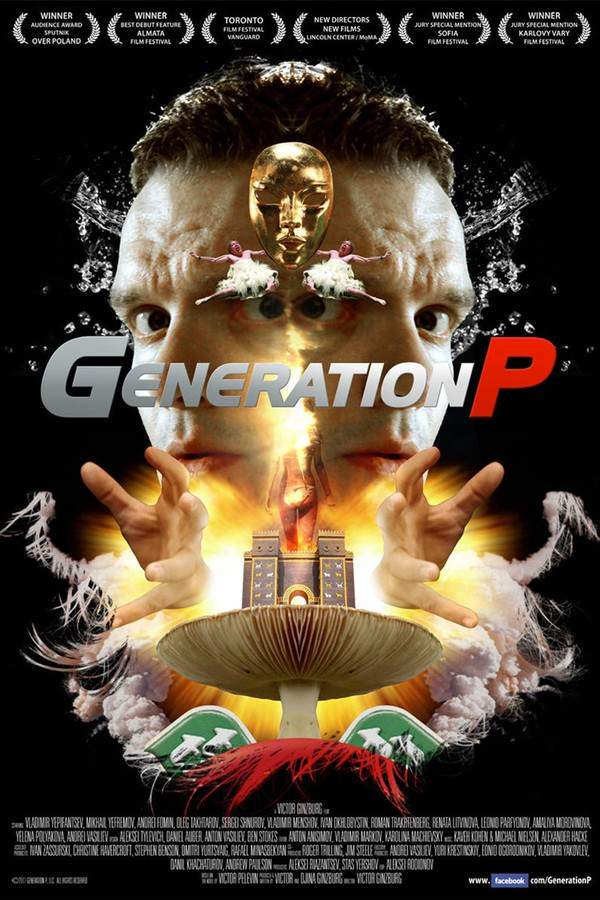
Generation P (2012) movie poster

Timeline

Generation P (2012) Timeline Explained – Every Event in Order

Release, runtime and language
2012 · Russian
Loading streaming availability…
Directed by
Victor Ginzburg

A darkly comedic and tragic fantasy, the film follows a poet’s unexpected rise through Russia’s burgeoning advertising industry during the chaotic Moscow of the 1990s. Set against the backdrop of emerging globalized crime, it explores ambition, disillusionment, and the unpredictable nature of a new era.

On this page (6)
  1. 1 Where to watch
  2. 2 Events in order (14)
  3. 3 Timeline questions answered
  4. 4 Movie threads
  5. 5 Movies like Generation P
  6. 6 Every angle
Loading streaming availability…

14 events in order · contains spoilers

Generation P Timeline: Events in Chronological Order

Every key event of Generation P (2012) in order, scene by scene, with when and where it takes place. Use it to untangle flashbacks, time jumps and parallel storylines, to refresh your memory before the sequel or to find the exact scene you are thinking of.

  1. Babylen's Transformation

    Following the fall of the Soviet Union, Babylen Tatarsky, a graduate student and poet, finds himself homeless on the streets of Moscow. This drastic change in his life sets him on a journey of self-discovery and adaptation in a chaotic post-Soviet society.

    When
    1990s
    Where
    Moscow
  2. The Rise of a Copywriter

    As Tatarsky navigates his new reality, he discovers his talent for creating Russian versions of Western advertisements. His success as a copywriter marks a turning point, introducing him to a world defined by consumerism and materialism.

    When
    1990s
    Where
    Moscow
  3. Seeking Meaning

    Despite his professional achievements, Tatarsky grapples with existential questions about meaning in a culture overwhelmed by self-indulgence. He begins to explore the underlying forces that shape desires and beliefs within this new societal framework.

  4. Patterns in Chaos

    During his quest for understanding, Tatarsky becomes attuned to coincidences that hint at hidden patterns in life. This realization prompts him to search for a deeper truth within the chaos surrounding him.

  5. Influence of Mesopotamian Practices

    Tatarsky's journey takes an intriguing turn when he reads about Mesopotamian religious practices, leading him to contemplate the connection between ancient beliefs and contemporary life. This newfound knowledge shifts his perspective on spirituality and existence.

  6. Altered States of Consciousness

    Tatarsky enhances his quest with the consumption of hallucinogenic mushrooms, cocaine, and vodka. This indulgence helps him access altered states of consciousness, further fueling his search for meaning in a fractured reality.

  7. Messages from the Beyond

    Using a ouija board, Tatarsky channels messages from Che Guevara, who pens a treatise on identity, consumerism, and the impact of television. This supernatural encounter deepens Tatarsky's understanding of the forces at play in modern society.

  8. Revelations about Politics

    As Tatarsky delves deeper into the world of advertising and media, he uncovers unsettling truths about politics and reality. He realizes that the events portrayed on television are fabrications designed to manipulate public perception.

  9. Corporate Pyramid Climb

    Tatarsky ascends to the pinnacle of the advertising industry, only to discover the shocking connection between his firm and the goddess Ishtar. This revelation reveals the eerie underbelly of the corporate world steeped in myth and power.

  10. Confronting Phukkup

    In a dramatic turn of events, Tatarsky learns that his firm's primary aim is to prevent the awakening of Ishtar's enemy, the canine Phukkup. The potential chaos and destruction that could ensue fuels his inner conflict regarding his role in this dark narrative.

  11. Ritual Sacrifice

    Tatarsky ultimately participates in a ritual sacrifice, solidifying his position within the mythology of advertising. This event seals his fate as he becomes intertwined with Ishtar's realm, blurring the lines between reality and illusion.

  12. Becoming Ishtar's Regent

    After the ritual, Tatarsky is elevated to the role of Ishtar's regent, embodying her presence in a digital form. This transformation signifies his complete immersion into the world of advertising and illusion, stepping away from his authentic self.

  13. Ubiquitous Television Presence

    In the concluding chapter, Tatarsky's electronic double permeates Russian television, symbolizing the persistent influence of media on public consciousness. This shift marks a poignant irony as he had once sought the unmediated reality beyond the illusion.

  14. Understanding Generation P

    The epilogue reveals that the 'P' in Generation P signifies 'Generation Pizdets,' highlighting the disillusionment felt by many in the post-Soviet era. This commentary underscores the film's critique of modern societal values and the impact of consumer culture.

Last updated: March 08, 2025 at 15:50

Was this helpful?

Timeline questions answered

Generation P Timeline Explained: Your Questions Answered

When does it happen, and why in that order? The questions people ask about the chronology of Generation P (2012): time jumps, flashbacks, cause and effect between scenes and the correct order of events, each answered with spoilers.

Q1

Why does Babylen Tatarsky become a copywriter?

After the Soviet Union collapses, Tatarsky finds himself homeless and without prospects. He discovers he has a talent for creating Russian adaptations of Western advertisements, which becomes his means of survival in the new capitalist Moscow. This profession represents his adaptation to the chaotic post-Soviet reality.

Foreshadowing: His transition from aspiring poet to commercial copywriter foreshadows his later transformation into a living embodiment of advertising.

  • babylen tatarsky
  • copywriter
  • advertising
  • post-soviet
  • career change
Q2

What does the 'P' in Generation P stand for?

The epilogue reveals that 'P' stands for 'Pizdets,' a Russian profanity roughly translating to 'screwed.' This means the title is 'Generation Screwed,' representing the film's bitter commentary on the disillusionment of a generation caught in the chaos of post-Soviet capitalism and consumer culture.

  • generation p
  • title meaning
  • pizdets
  • disillusionment
  • post-soviet
Q3

What is the goddess Ishtar's role in the film?

Ishtar is the enigmatic entity that Tatarsky's advertising firm secretly serves. She is intertwined with the vast imagery of advertising itself, and the firm's true purpose is to maintain vigilance against her adversary, the dog deity Phukkup. After a ritual sacrifice, Tatarsky becomes Ishtar's regent and 3-D counterpart, essentially becoming her physical embodiment.

Foreshadowing: Tatarsky's early exploration of Mesopotamian religious practices hints at the mythological dimensions that will later envelop his life.

  • ishtar
  • goddess
  • mythology
  • advertising
  • ritual
  • regent
Q4

What is Phukkup and why does its awakening matter?

Phukkup is Ishtar's enemy, depicted as a canine deity whose awakening threatens to unleash chaos and turmoil. The advertising firm Tatarsky works for exists partly to prevent Phukkup's awakening, suggesting a mythological war behind the surface of commercial enterprise.

  • phukkup
  • dog deity
  • ishtar
  • threat
  • awakening
Q5

Why does Tatarsky become Ishtar's regent?

After participating in a significant ritual sacrifice, Tatarsky is elevated to the role of Ishtar's regent, essentially becoming her 3-D counterpart and bridegroom. This transformation represents his complete immersion into the mythological world underlying advertising, where he transitions from seeker to being intertwined with the very illusion he sought to escape.

Foreshadowing: His earlier quest for meaning and his exploration of ancient religions prepare him for this mythological ascension.

  • tatarsky
  • ishtar
  • regent
  • transformation
  • ritual sacrifice
Q6

Why does Tatarsky's digital double appear on Russian television?

In the final chapter, Tatarsky's electronic double becomes ubiquitous on Russian television, symbolizing the final irony of his journey. He initially sought to pierce through the veil of falsehoods in media to find genuine reality, but his transformation into Ishtar's regent means he now manifests as the ultimate illusion, a digital avatar dominating the very medium he sought to understand.

Foreshadowing: His growing understanding of TV as fabrication planted the seeds for this ironic reversal.

  • digital double
  • television
  • illusion
  • media
  • irony
Q7

What is the significance of the ouija board scene with Che Guevara?

Using a ouija board, Tatarsky channels messages from Che Guevara, who writes a treatise on identity, consumerism, and television's impact. This surreal encounter represents Tatarsky's deepening understanding of the forces shaping modern society, connecting revolutionary ideals with the new consumer culture that has replaced them.

Foreshadowing: This supernatural experience fuels his realization that much of reality is fabricated.

  • ouija board
  • che guevara
  • channeling
  • consumerism
  • television
Q8

Why does the film include hallucinogenic substances in Tatarsky's journey?

Tatarsky uses mushrooms, cocaine, and vodka to access altered states of consciousness, which fuel his surreal quest for meaning. These substances represent both his search for truth beyond ordinary perception and the self-destructive hedonism of the new Russian elite. The drug-induced visions provide the surreal, hallucinatory dimension that characterizes the film's narrative.

  • hallucinogens
  • mushrooms
  • cocaine
  • vodka
  • visions
  • altered states
Q9

What revelation does Tatarsky have about television and politics?

Tatarsky uncovers that much of what appears as reality on television and in politics is merely fabrication, events are staged to manipulate public perception. This realization drives his quest to find genuine truth behind the mediated reality, though the ultimate truth remains elusive.

Foreshadowing: This revelation sets up the bitter irony of his later transformation into television content itself.

  • television
  • politics
  • fabrication
  • manipulation
  • reality
Q10

Why does Tatarsky seek meaning in the advertising world?

Despite professional success as a copywriter, Tatarsky grapples with existential questions about meaning in a culture consumed by materialism and self-indulgence. His journey into advertising becomes a quest to understand the underlying forces that shape desires and beliefs in post-Soviet society, eventually leading him to discover hidden patterns and deeper significance amid the chaos.

Foreshadowing: His initial attraction to patterns in coincidences foreshadows his later mythological discoveries.

  • meaning
  • advertising
  • consumerism
  • quest
  • spirituality
Q11

What is the film's critique of post-Soviet society?

The film presents a darkly comedic and tragic critique of post-Soviet Russia, depicting the chaotic transition from communist ideology to wild capitalism. It explores how a generation sought meaning in the new consumerist culture only to find disillusionment, manipulation, and the replacement of one form of control with another, the 'Generation Pizdets' (screwed) caught between ideology and commerce.

  • post-soviet
  • capitalism
  • consumerism
  • disillusionment
  • society critique
Q12

Why does Tatarsky transform from someone seeking truth to becoming an illusion?

This transformation represents the film's central irony and tragic arc. Tatarsky initially seeks to pierce through the veil of falsehoods in media to find genuine reality. However, his ascent through the advertising world and his immersion in its mythological underpinnings lead him to become the ultimate illusion, Ishtar's regent manifested as a digital double on television. He becomes what he sought to escape, embodying the very manipulation he tried to understand.

Foreshadowing: The progression from his early skepticism about TV to his later domination of it completes this tragic cycle.

  • transformation
  • illusion
  • truth
  • irony
  • becoming

Movie threads

More Movies Like Generation P, by Mood & Story

Curated lists built around what makes Generation P tick: the same mood, the same kind of story or the same emotional payoff. Each list explains why these movies belong together.

Surreal corporate satires like Generation P

Biting satires where ambition becomes a hallucinatory nightmare within corporate systems. Discover movies like Generation P that use dark comedy and surrealism to critique consumerism and corporate power. If you enjoyed the hallucinatory journey through the advertising world of post-Soviet Russia, you'll find similar themes of ambition, manipulation, and disillusionment in these stories.

  • satirical
  • surreal
  • disorienting
  • cynical
  • hallucinatory
  • oppressive
  • Tone: dark, cynical, satirical
  • Pacing: variable, with surreal bursts
Why these movies?

The story pattern: The narrative follows a protagonist who enters a seemingly powerful industry, only to discover its foundations are built on illusion and corruption. Their initial ambition is warped as they ascend, leading to a psychological unraveling that forces them to confront the hollow nature of the system they serve, often culminating in a bittersweet or tragic realization.

Why they belong together: Movies in this thread share a specific blend of dark satire, surreal visual language, and a thematic focus on the corrosive effects of consumer culture and corporate manipulation. They create a disorienting, intellectually challenging experience that is both cynical and visually inventive.

Movies about psychological unraveling like Generation P

Character-driven journeys where perception fractures under extreme pressure. Explore films featuring protagonists who undergo a psychological collapse, similar to the journey in Generation P. If you were fascinated by the poet's drug-fueled descent and manipulation within a chaotic new era, these movies offer other intense character studies about the loss of self and reality.

  • disorienting
  • hallucinatory
  • melancholic
  • oppressive
  • psychological
  • tragic
  • Tone: dark, melancholic, disorienting
  • Pacing: variable, psychological
Why these movies?

The story pattern: The plot is a character study where the protagonist's internal world is the primary battleground. They start with a clear identity or goal, but external forces and their own choices lead to a fragmentation of their psyche. The narrative structure often becomes increasingly nonlinear or surreal to mirror their mental state, building towards an ending that is intellectually provocative but emotionally heavy.

Why they belong together: These films are grouped by their intense focus on a central character's mental and emotional breakdown. They share a high intensity, heavy emotional weight, and often use complex, disorienting storytelling techniques to put the audience directly into the protagonist's deteriorating perspective.

If you liked this

Movies Like Generation P

Similar movies to Generation P: the same genre, themes or kind of story. Each one comes with its own plot summary, timeline and ending explained.

Browse all movie summaries

Every angle

Generation P (2012) Explained: Plot, Timeline & Characters

Everything about Generation P in one place: what happens in the plot summary, the timeline in chronological order, the characters and meaning and a spoiler-free summary. What's After the Movie adds the cast, box office and post-credit scenes.

Coming soon on iOS and Android

The Plot Explained Movie Summary App

Plot summaries, endings explained and timelines on your phone. Catch up on any movie in minutes, save your favorites and never miss a twist again.

Be the first to know when we launch. Your email stays private, always.

Learn more about the app