Plot Explained Spoilers guaranteed!
Plot Explained

Browse by genre

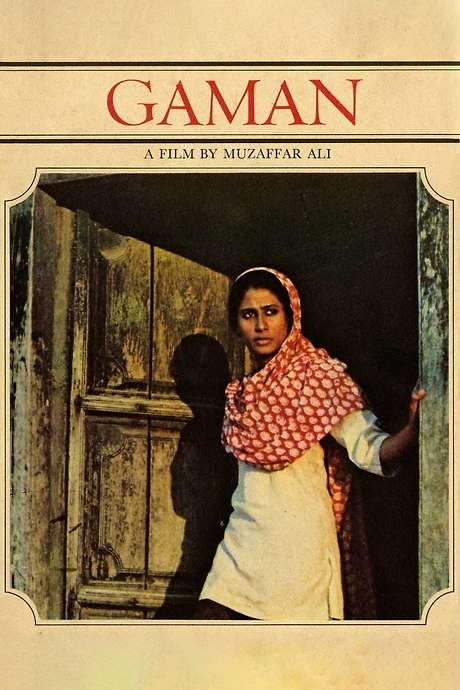
Gaman (1978) movie poster

Timeline

Gaman (1978) Timeline Explained – Every Event in Order

Release, runtime and language
1978 · 119 mins · Hindi
Directed by
Muzaffar Ali
Starring
Sulabha Deshpande, Satish Shah, Nana Patekar, Farooq Shaikh, Smita Patil, Arvind Deshpande

Despite their determination and effort, two working class friends in Bombay struggle to improve their lives.

On this page (5)
  1. 1 Events in order (11)
  2. 2 Timeline questions answered
  3. 3 Movie threads
  4. 4 Movies like Gaman
  5. 5 Every angle

11 events in order · contains spoilers

Gaman Timeline: Events in Chronological Order

Every key event of Gaman (1978) in order, scene by scene, with when and where it takes place. Use it to untangle flashbacks, time jumps and parallel storylines, to refresh your memory before the sequel or to find the exact scene you are thinking of.

  1. Ghulam Hasan decides to move to Bombay

    Ghulam Hasan from Kotwara decides to relocate to Bombay in search of a better life. He leaves behind his ailing mother and his wife. The move is urged by his close friend Lalulal Tiwari, who believes the city offers opportunity. The decision sets the stage for a new, challenging chapter in his life.

    Where
    Kotwara, Uttar Pradesh, India
  2. Ghulam arrives in Bombay and begins seeking work

    On arriving in Bombay, Ghulam begins seeking work and adapting to urban life. He starts in a lowly role as a taxi cleaner while he learns the rough-and-tumble of the trade. Lalulal helps him secure the starting job, setting him on a path that could lead to more independence.

    Where
    Bombay, Maharashtra, India
  3. Ghulam trains and becomes a taxi driver

    Ghulam trains hard and learns to drive, eventually earning a position as a taxi driver. He remains determined to support his family despite the hard grind of city life. The taxi job becomes the centerpiece of his daily routine in Mumbai.

    Where
    Bombay, Maharashtra, India
  4. Financial struggle to visit Kotwara

    Despite his best efforts at work, Ghulam cannot save enough money to visit Kotwara and his family. The dream of returning home remains distant as city expenses and responsibilities mount. The physical and emotional gap between his current life and his homeland widens.

    Where
    Bombay, Maharashtra, India
  5. Lalulal's problems and housing trouble

    Lalulal, despite years in Bombay, faces his own troubles. He has a sweetheart, Yashodra, but cannot afford a decent apartment and lives in a shanty tenement. The housing is slated for demolition by the Bombay Municipal Corporation, underscoring the precariousness of their urban existence.

    Where
    Bombay, Maharashtra, India
  6. Ghulam learns of his mother's illness

    Ghulam receives a letter from his wife informing him that his mother's health has deteriorated. The news heightens his sense of urgency to help his family back home. He feels the practical pressure to send money or return, intensifying the choices before him.

    Where
    Bombay, Maharashtra, India
  7. Lalulal arranges money and advises money orders

    Lalulal manages to arrange some money to help Ghulam's family. He advises Ghulam to send funds by money order rather than traveling back home, highlighting the costs and risks of a long trip. This act shows Lalulal's concern but also the strain of their own lives.

    Where
    Bombay, Maharashtra, India
  8. Tragic murder of Lalulal and Yashodara

    Lalulal and Yashodara are murdered by Yashodara's family, who want her to go to Dubai for work to support them. The event shocks Ghulam and shatters his already fragile sense of security in the city. It marks a decisive turning point in his emotional state and priorities.

    Where
    Bombay, Maharashtra, India
  9. Ghulam contemplates returning to Kotwara

    The murders become a catalyst for Ghulam to contemplate returning to Kotwara. He resolves to go home and reconnect with his roots and family. Yet he is hampered by inertia and the pull of city life.

    Where
    Bombay, Maharashtra, India
  10. Procrastination delays the return

    Despite the stated intention to return, Ghulam's procrastination keeps him from leaving Bombay. He remains a taxi driver, continuing to chase the city’s opportunities and dreams. The film ends with a sense that the city of dreams is both alluring and imprisoning.

    Where
    Bombay, Maharashtra, India
  11. Closing image: Ghulam still driving in the city of dreams

    The closing shots show Ghulam still driving his taxi through the bustling city. The urban grind is presented as both opportunity and cost, with the city remaining his constant companion. The film leaves him as a symbol of aspiration amid ongoing struggle.

    Where
    Bombay, Maharashtra, India

Last updated: February 18, 2026 at 23:46

Was this helpful?

Timeline questions answered

Gaman Timeline Explained: Your Questions Answered

When does it happen, and why in that order? The questions people ask about the chronology of Gaman (1978): time jumps, flashbacks, cause and effect between scenes and the correct order of events, each answered with spoilers.

Q1

Why were Lalulal and Yashodhara murdered?

Yashodhara's family murdered both her and Lalulal because they wanted her to go to Dubai for work to support them financially. They opposed her relationship with Lalulal since he was poor and lived in a dilapidated shanty slated for demolition. The family saw Lalulal as an obstacle to their plans for financial gain through Yashodhara's overseas employment, leading them to eliminate the couple rather than allow the marriage.

Foreshadowing: Earlier, the story notes that Yashodhara's family was pressuring her to leave Lalulal and go to Dubai, establishing their priorities.

  • yashodhara family
  • dubai
  • murder
  • lalulal
  • poverty
Q2

Why couldn't Ghulam save enough money to visit his family?

Ghulam worked as a taxi driver in Bombay, but the income came in small amounts that barely covered his daily expenses and survival costs in the expensive city. Despite working hard at the wheel, the steady drip of money was never enough to accumulate savings for a trip back to Kotwara or to ease the burdens waiting for him at home.

  • money
  • savings
  • taxi driver
  • bombay expenses
Q3

What prompted Ghulam to consider returning to Kotwara?

The brutal murder of his close friend Lalulal and Yashodhara was the catalyst that shattered Ghulam's fragile sense of security in Bombay. The tragedy struck deep, sharpening his longing to return to Kotwara and reconnect with his roots and family. The loss of his only trusted connection in the city made him question whether staying was worthwhile.

Foreshadowing: The murders marked a decisive turning point in Ghulam's emotional state, as noted in the timeline.

  • lalulal murder
  • kotwara
  • return home
  • grief
Q4

What happened to Lalulal's shanty house?

Lalulal lived in a cramped, dilapidated shanty in Bombay that was slated for demolition by the Bombay Municipal Corporation. This added to his precarious existence in the city - despite having settled there for years, he could not secure decent housing and lived under the constant threat of losing even this unstable shelter.

  • shanty
  • demoliton
  • bombay municipal corporation
  • housing
Q5

Why does Ghulam stay in Bombay instead of returning home?

Despite resolving to return to Kotwara after the murders, Ghulam's procrastination keeps him from leaving. The rhythm of Bombay - its noise, traffic, and endless striving - drags him onward. He remains trapped between his duty and inertia, between the desire to go home and the pull of the city's opportunities. The film ends with him still behind the wheel, unable to break free.

  • procrastination
  • stuck
  • city of dreams
  • inertia
Q6

Why did Yashodhara's family oppose her relationship with Lalulal?

Yashodhara's family opposed her relationship with Lalulal because he was poor and lived in a precarious situation - his shanty was scheduled for demolition. They wanted her to go to Dubai for work to earn money and support them financially, viewing Lalulal as an obstacle to their plans. Rather than accept the marriage, they chose to eliminate both lovers.

  • yashodhara family
  • opposition
  • marriage
  • dubai
  • poverty
Q7

How did Ghulam react to news of his mother's illness?

When Ghulam received a letter from his wife informing him that his mother's health had deteriorated, it heightened his sense of urgency to help his family back home. The news intensified the practical pressure to either send more money or return to Kotwara, making his difficult choices even more pressing.

  • mother
  • illness
  • khairun
  • letter
  • kotwara
Q8

What was the significance of Ghulam and Lalulal's friendship?

Lalulal was Ghulam's close friend who urged him to come to Bombay believing the city offered opportunity. He helped Ghulam land a job cleaning taxis and supported him as he learned the trade. Lalulal also arranged money to help Ghulam's family and advised him to send funds by money order rather than traveling. When Lalulal was murdered, it shattered the fragile network of hope that kept Ghulam tethered to the city.

  • friendship
  • lalulal
  • support
  • taxi job
  • help
Q9

What does the ending imply about Ghulam's future?

The film ends with Ghulam still driving his taxi through the bustling city, symbolizing both opportunity and imprisonment. The city of dreams has brought him only loss - his friend is dead, he cannot afford to visit home, and his mother is ill. Yet he remains trapped in its rhythm, suggesting a bleak cycle of aspiration and futility where leaving seems impossible despite the pain staying causes.

  • ending
  • driving
  • city of dreams
  • trapped
  • cycle
Q10

Why did Ghulam leave Kotwara for Bombay?

Ghulam Hasan left his ailing mother and wife Khairun in Kotwara to seek a better life in Bombay. His close friend Lalulal Tiwari urged him to make the move, believing the city offered opportunities that his small hometown could not. Ghulam was spurred by hope for economic improvement, though the reality would prove far more difficult than anticipated.

  • migration
  • kotwara
  • bombay
  • opportunity
  • hope

Movie threads

More Movies Like Gaman, by Mood & Story

Curated lists built around what makes Gaman tick: the same mood, the same kind of story or the same emotional payoff. Each list explains why these movies belong together.

Movies about urban alienation and struggle like Gaman

Stories of loneliness and hardship in the overwhelming city. If you appreciated the somber portrayal of city life in Gaman, you'll find similar stories here. This collection features films about rural-to-urban migration, the loneliness of poverty, and the quiet desperation of working-class characters fighting for a better life.

  • melancholic
  • gritty
  • lonely
  • oppressive
  • hopeless
  • struggle
  • Tone: melancholic, bleak
  • Pacing: slow, deliberate
Why these movies?

The story pattern: Stories in this thread typically follow characters who move from rural areas to the city seeking opportunity, only to face harsh realities of poverty, menial labor, and profound loneliness. The narrative focuses on their daily struggles, emotional isolation, and the often tragic gap between their dreams and their grim reality.

Why they belong together: These movies are grouped together because they share a core focus on the emotional and physical hardships of urban migration. They possess a melancholic tone, a slow, observational pacing, and a heavy emotional weight centered on themes of economic struggle and existential isolation.


Quiet tragedy dramas with bleak endings like Gaman

Bleak dramas where life's small struggles culminate in profound sadness. For viewers moved by the heartbreaking realism of Gaman, this section highlights other films about quiet tragedies. These stories focus on the unspectacular but crushing disappointments of life, featuring straightforward narratives, heavy emotional weight, and profoundly sad conclusions.

  • sad
  • tragic
  • hopeless
  • bleak
  • gritty
  • emotional
  • Tone: melancholic, sad
  • Pacing: slow, reflective
Why these movies?

The story pattern: The narrative pattern involves following relatable, often working-class characters as they face relentless but mundane obstacles. Their efforts to improve their situation are met with continuous setbacks, leading not to a dramatic climax but to a gradual erosion of hope, culminating in a realistic and emotionally resonant bleak ending.

Why they belong together: These films are united by their straightforward storytelling, slow pacing that allows sorrow to build, and a consistent melancholic tone. They prioritize emotional realism over plot twists, creating a powerful sense of empathy for characters whose dreams are systematically crushed by their circumstances.

If you liked this

Movies Like Gaman

Similar movies to Gaman: the same genre, themes or kind of story. Each one comes with its own plot summary, timeline and ending explained.

Browse all movie summaries

Every angle

Gaman (1978) Explained: Plot, Timeline & Characters

Everything about Gaman in one place: what happens in the plot summary, the timeline in chronological order, the characters and meaning and a spoiler-free summary. What's After the Movie adds the cast, box office and post-credit scenes.

Coming soon on iOS and Android

The Plot Explained Movie Summary App

Plot summaries, endings explained and timelines on your phone. Catch up on any movie in minutes, save your favorites and never miss a twist again.

Be the first to know when we launch. Your email stays private, always.

Learn more about the app