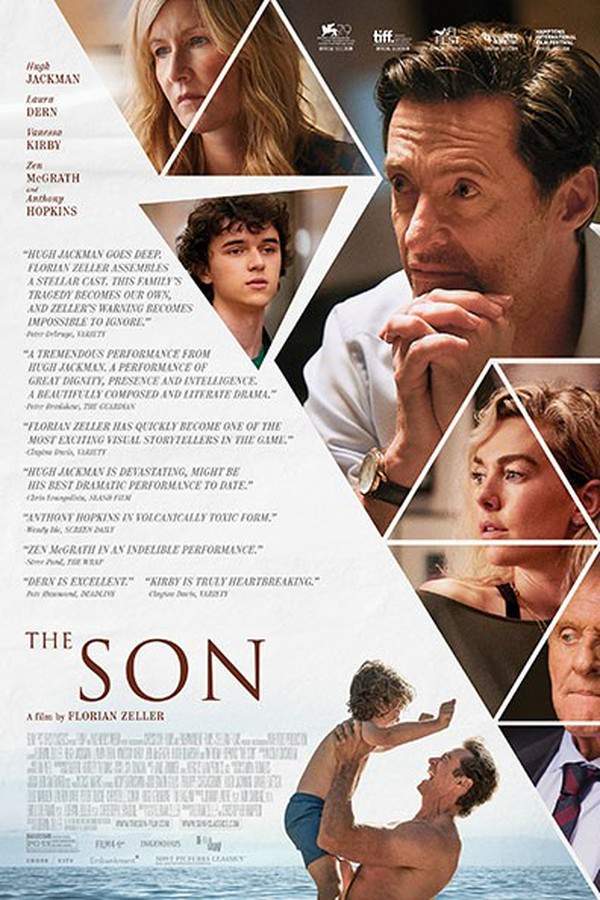
The film unfolds with intimate home videos that quietly frame a family’s life: a husband and wife at the beach with their young son, and a young man reading a short story to a small audience, hinting that their lives will change in dramatic, irreversible ways even though no one in the room seems attentive. From these soft, everyday moments, the story shifts to Bill, a businessman, and Kate, who proofs books for a living. Their bond is steady yet tightly wound, kept afloat largely by their eighteen-year-old son Sam, who is navigating the rocky transition to college.
One morning, a devastating news report breaks: a shooting spree at Sam’s school. The police arrive with devastating news—Sam is dead, and he was the gunman. Kate refuses to accept this, clinging to the memory of her son even as the people around them begin to speculate, and she spends the night restoring the room that the police have searched. As journalists swarm, the couple seeks sanctuary with Kate’s brother, Eric, and his wife, Trish. The next morning, Eric and Trish’s son Dylan sits in front of the TV and watches a video made by Sam about the looming massacre, a chilling reminder that Sam had been thinking about violence in a way that unsettles those who loved him.
Bill decides to issue a public statement, offering condolences and requesting privacy as they try to move forward, and a small family funeral follows. However, the public display of grief is uncomfortable and intrusive. Trish grows tired of Kate’s nitpicking and mothering of Dylan, though Eric defends Kate’s sensitivity because Sam was her only child. The couple eventually retreat to a motel, where Bill and Kate momentarily reconnect, rekindling a sense of closeness they had set aside.
Back at home, a teenage boy is found in Sam’s room, rummaging through his belongings. A brief scuffle ensues, during which Bill injures his hand and the intruder labels him a “psycho.” The intruder leaves with Bill’s laptop, and a new video from Sam surfaces in their mailbox. Watching it together, they hear Sam say, “Mom and Dad, I’m sorry, please don’t hate me.” This simple message becomes a flashpoint in their grieving process, triggering a long argument about what could have driven Sam to such violence. Bill resents Kate for what he sees as constant parental critique and neglect of Sam’s needs, while Kate counters that Bill’s absence—fueled by work—left Sam without a steady presence. The confrontation ends with Bill’s bitter wish that Sam had never been born, and Kate, devastated, returns to their house alone.
Bill returns to work, where his boss Harry is reluctant to give him his old role back, hinting that time off and therapy might be needed. Meanwhile, Kate crosses paths with a young co-worker, Cooper, during a routine grocery run. He follows her back to the house, only to reveal that he’s been researching Sam for a piece that aims to present him in a more human light. Kate asks him to leave, unsettled by the idea of someone probing their son’s life so soon after the tragedy. Bill’s return to work is short-lived; he feels the weight of judgment from colleagues who stare at him with suspicion. When he questions this atmosphere, Harry suggests he take more time to see a therapist, prompting Bill to quit in a fit of frustration.
The couple’s search for meaning extends to the cemetery, where Sam’s gravestone has been vandalized with the word “killer.” Bill breaks down, scrubbing the insult from the stone with bloodied hands, a stark image of a father trying to erase a cruel label. The motel becomes a temporary refuge as Kate receives a call about Bill and finds him in a weathered, hopeless slump. She gathers him up and leads him home, seeking the quiet, fragile stability they once shared.
Throughout, Sam’s voice continues to haunt the narrative, reappearing through his own short story about the boy and girl and the inevitable changes their lives endure. In the closing moment, his voice lingers with the refrain that no matter what they do, their lives will never be the same.
> Mom and Dad, I’m sorry, please don’t hate me