Plot Explained Spoilers guaranteed!
Plot Explained

Browse by genre

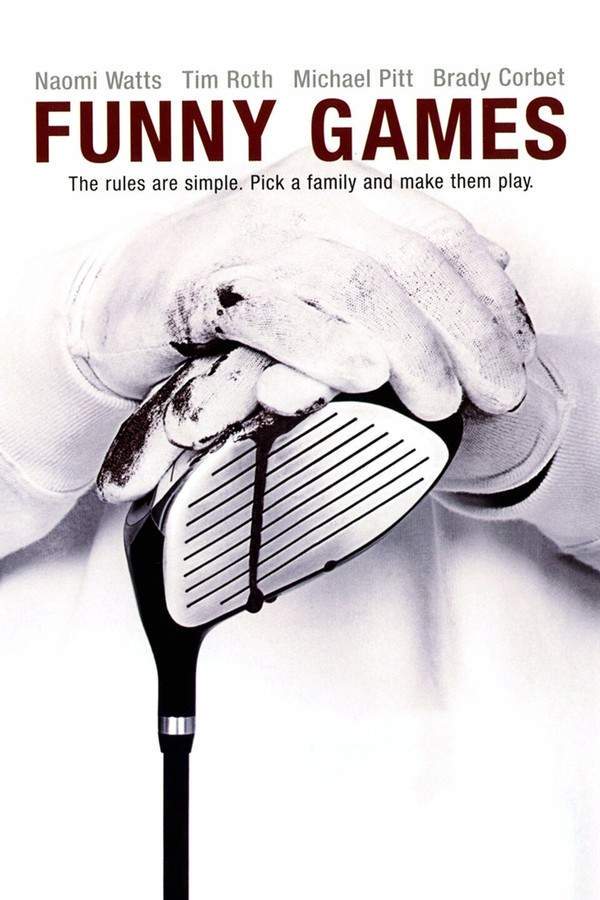
Funny Games (2007) movie poster

Timeline

Funny Games (2007) Timeline Explained – Every Event in Order

Release, runtime and language
2007 · 111 mins · English
Directed by
Michael Haneke
Starring
Tim Roth, Naomi Watts, Brady Corbet, Michael Pitt, Boyd Gaines, Siobhan Fallon Hogan

You must admit you brought this on yourself. When Ann, her husband George, and their son Georgie arrive at their holiday home, a pair of courteous, seemingly pleasant young men appear. Beneath their sweet smiles and armed with golf clubs, they begin a brutal game of terror, forcing the family to endure relentless psychological and physical torment with only until the next day to survive.

On this page (5)
  1. 1 Events in order (12)
  2. 2 Timeline questions answered
  3. 3 Movie threads
  4. 4 Movies like Funny Games
  5. 5 Every angle

12 events in order · contains spoilers

Funny Games Timeline: Events in Chronological Order

Every key event of Funny Games (2007) in order, scene by scene, with when and where it takes place. Use it to untangle flashbacks, time jumps and parallel storylines, to refresh your memory before the sequel or to find the exact scene you are thinking of.

  1. Family arrives at the lake house; trouble looms with the neighbors

    George and Ann Farber, their son Georgie, and their dog Lucky arrive at the lake house for a quiet vacation. Fred, the next‑door neighbor, shows up with two men, Paul and Peter, who offer to help launch the boat but behave in a disturbingly casual way. The unsettling presence of the strangers unsettles the household from the start.

    When
    Afternoon
    Where
    Lake house
  2. Eggs borrowed, tension grows

    Peter visits to borrow eggs, drops them, and returns to apologize while pressing for more. Ann obliges, but Paul and Peter's insistence heightens the sense that something is wrong. George confronts them and slaps Paul, prompting Peter to injure George's knee with a golf club.

    When
    Afternoon
    Where
    Kitchen/Living room
  3. Hostage situation begins with a sadistic edge

    Paul directs Ann in a game of Hot and Cold to locate the dog Lucky, who has actually been killed with the golf club. The family becomes prisoners in their own home as the men tighten their grip. The ordinary vacation turns into a nightmare of control and fear.

    When
    Evening
    Where
    Living room
  4. Georgie endures a dehumanizing ordeal

    Georgie is forced into a pillowcase with her head inside while the adults are stripped and subjected to humiliating acts. Paul injures Georgie during the process, showing how far the captors will go. The family remains trapped with no immediate hope of rescue.

    When
    Evening
    Where
    Living room
  5. Georgie escapes to Fred's house and finds horror

    Georgie, in a desperate bid to find help, runs to Fred's house and discovers bloodstained evidence of the carnage. Fred discovers the disturbing truth behind the strangers and the danger they pose. The neighbors' world begins to collapse as the threat encroaches on every corner.

    When
    Night
    Where
    Fred's house
  6. Ann's captivity deepens as the games continue

    Peter binds Ann and leaves her to watch over the Farbers while Paul searches for Georgie. Ann pleads to be released, but Peter dismisses her pleas, insisting that the games must go on. The mood grows heavier as hope fades and the captors tighten their control.

    When
    Night
    Where
    Living room / Kitchen
  7. Shotgun clue and missing shells

    Georgie finds a shotgun in Fred's house, but the gun is empty. Paul returns it to Peter and reveals that two shells are missing, heightening the stakes. The lack of ammunition makes their chances of survival feel perilously thin.

    When
    Night
    Where
    Fred's house
  8. A deadly game escalates; Georgie is killed

    The next round of the game begins, with the rule that whoever is counted out will be shot. Georgie panics and tries to flee, but Peter shoots and kills him, shattering the family’s remaining sense of safety. Paul berates Peter for his recklessness, and the two men exchange a tense plan to regroup.

    When
    Night
    Where
    Living room
  9. Despair and failed escape attempts

    George and Ann grieve their loss but resolve to survive. Ann manages to free herself and attempts to call for help, only to discover the phone is malfunctioning. She is recaptured by Peter and Paul, and the terror resumes inside the house.

    When
    Night
    Where
    House
  10. The endgame begins; a brutal choice and a do over

    Peter stabs George as the next round of games begins, and Ann faces a grim choice between a slow, painful death and a quick shotgun murder. While the moment of decision nears, Ann seizes a shotgun on the table and shoots Peter. Paul then grabs the remote and rewinds the scene to before Ann's kill, breaking the fourth wall and asserting control over the narrative.

    When
    Night
    Where
    Living room
  11. Final violent act; the couple is taken to the boat

    With the do-over in effect, Paul and Peter kill George and carry Ann out to the family boat, binding and gagging her. They push her into the water to drown, and then march toward the next target, continuing their predatory games beyond the Farber home as the tension remains razor-sharp.

    When
    Night
    Where
    Boat
  12. A final chilling wink to the audience

    The killers knock on the Thompsons' door to request some eggs, and Paul glances at the camera with a smirk, implying that the violence will continue beyond the frame. The scene closes with a meta nod to the audience as the cruelty persists. The cycle of terror leaves the viewer unsettled and complicit by watching.

    When
    Ending
    Where
    Thompsons' house

Last updated: October 09, 2025 at 15:10

Was this helpful?

Timeline questions answered

Funny Games Timeline Explained: Your Questions Answered

When does it happen, and why in that order? The questions people ask about the chronology of Funny Games (2007): time jumps, flashbacks, cause and effect between scenes and the correct order of events, each answered with spoilers.

Q1

Why does Paul rewind time after Ann kills Peter?

Paul rewinds time because the killers control the rules of their game and refuse to let Ann break them. When she successfully grabs the shotgun and kills Peter, Paul uses a remote control to rewind the film to before that moment, asserting his authority over the narrative. This fourth-wall-breaking moment is a direct commentary on genre conventions, audiences expect the protagonist to triumph, so Haneke subverts this by allowing the villains to literally erase Ann's victory.

Foreshadowing: Earlier, Paul explains the 'rules' of their games multiple times, establishing that they view themselves as the ones in control of the narrative.

  • paul rewinds
  • fourth wall
  • movie ending
  • ann kills peter
  • funny games ending
Q2

What happens to George and Ann at the end?

George is stabbed to death by Peter in the final game. After the rewind, Ann is unable to prevent this. She is then bound and gagged, taken out to the family boat by Paul and Peter, and pushed into the water to drown. The killers succeed in killing both parents and continue their predatory pattern.

Foreshadowing: The film establishes early on that Paul and Peter view their victims as disposable and the games as entertainment with no real stakes for them.

  • george death
  • ann death
  • ending
  • boat scene
  • drowning
Q3

Why do Paul and Peter target the Farber family?

Paul and Peter target the Farber family seemingly at random, selecting victims based on opportunity rather than any specific grievance. Their motivation appears to be pure sadism, they derive pleasure from inflicting psychological and physical torment on innocent people. The film presents their violence as meaningless and pointless, emphasizing the senselessness of random cruelty.

Foreshadowing: Fred's odd behavior when introducing the two men hints that they may have targeted this family specifically, but the film never provides a concrete motive.

  • motivation
  • sadistic
  • random violence
  • paul and peter
  • why kill
Q4

Why is the shotgun empty when Georgie finds it?

The shotgun is empty because Paul and Peter deliberately removed the shells to heighten the psychological torture. When Georgie finds the gun and is told to shoot Paul, the gun fails to fire, this is part of their cruel game. The missing shells are later revealed in Paul's hand, showing he controlled the entire situation and was enjoying the family's false hope.

Foreshadowing: Earlier, Paul casually mentions 'counting out' the next victim, establishing that they are playing games with predetermined outcomes.

  • shotgun
  • empty gun
  • georgie
  • missing shells
  • cruel game
Q5

Why is the movie called Funny Games?

The title refers to the sickening 'games' Paul and Peter force the family to play, Hot and Cold, the pillowcase ordeal, the counting game. The word 'funny' is deeply ironic given the horror depicted. More importantly, Haneke uses the title to comment on how cinema treats violence as entertainment, suggesting audiences are complicit in watching these 'fun' violent games.

Foreshadowing: Paul repeatedly emphasizes that they should 'not forget the fun of the games' when Ann asks why they don't just kill them.

  • title meaning
  • funny games meaning
  • irony
  • violence as entertainment
Q6

What happens to Georgie in the movie?

Georgie is subjected to extreme psychological abuse, he is forced into a pillowcase with his head inside, physically hurt by Paul when he doesn't comply, and later shot and killed by Peter. After Georgie panics and tries to escape during a counting game, Peter shoots him. His death is shown briefly and without graphic detail, but it marks the point where the family's hope truly dies.

Foreshadowing: Peter's trigger-happy nature is hinted at earlier when he beats George's knee with a golf club without hesitation.

  • georgie death
  • child dies
  • killed
  • pillowcase scene
Q7

What does the ending scene mean when Paul and Peter knock on the Thompson's door?

The ending shows Paul and Peter going to the neighboring Thompson house and requesting eggs, mirroring the beginning when Peter asked Ann for eggs. This implies the cycle of violence will continue with another family. The final shot of Paul smirking at the camera makes the viewer complicit, suggesting that just as we watched the Farbers' ordeal, we will now watch the Thompsons face the same terror.

Foreshadowing: The entire film mirrors itself, starting with an egg request and ending with one, showing the repetitive, cyclical nature of the violence.

  • thompsons
  • ending
  • cycle
  • eggs
  • continues
  • next family
Q8

Why does Ann strip naked during the games?

Paul and Peter force Ann to strip as part of their dehumanizing games, designed to strip victims of dignity and control. This is not motivated by sexual gratification but by psychological sadism, forcing a mother to expose herself in front of her child creates maximum humiliation and demonstrates their absolute power over the family.

Foreshadowing: The degradation begins with killing the family dog, establishing that no boundary is off-limits.

  • ann stripped
  • forced to strip
  • humiliation
  • degradation
  • control
Q9

Why does Paul explain the rules of the games to the family?

Paul explains the rules because the games are not just about violence, they are about control and entertainment. By making the family understand and participate in the rules, Paul creates a power dynamic where the victims are complicit in their own torment. This also allows the killers to derive psychological pleasure from watching hope and despair alternate.

Foreshadowing: Paul's explanation of 'Hot and Cold' to find Lucky demonstrates how he uses games as a framework for cruelty.

  • rules
  • games
  • paul explains
  • control
  • sadism
Q10

What happens to Fred and the neighbor family?

When Georgie escapes to Fred's house, he discovers the Thompsons have been murdered, Fred likely killed them or was killed during the intruder's earlier attack on that home. The timeline suggests Fred and his wife were the first victims, which is why Fred acted strangely when introducing Paul and Peter at the beginning. Their murders establish that the killers had already claimed victims before targeting the Farbers.

Foreshadowing: Fred's odd behavior and his mention of the Thompsons early on foreshadow that something terrible has already happened to them.

  • fred death
  • neighbors killed
  • thompsons
  • fred killed
Q11

Why is Fred acting strange when he brings Paul and Peter?

Fred is acting strangely because he is either already dead or being controlled by Paul and Peter. The film reveals that Fred and his wife (the Thompsons) were likely the first victims. Fred's odd introduction of the two men serves to get them inside the Farber home, making the family more vulnerable from the start.

Foreshadowing: The ending confirms the Thompsons are dead when Paul and Peter go to their house, retroactively explaining Fred's strange behavior.

  • fred behavior
  • strange
  • introduction
  • thompson
  • controlled
Q12

Why do the killers use golf clubs?

Paul and Peter use golf clubs because they are readily available at a lake house vacation property, golf is a common activity in such settings. The weapon choice also carries symbolic weight: golf is a leisurely, upper-class sport, and using it as a tool of violence twists the mundane into something sinister. Peter's first violent act is striking George's knee with a golf club, establishing the weapon as their signature.

Foreshadowing: Paul's request to test his golf club before things turn violent is an early warning sign that goes unnoticed.

  • golf clubs
  • weapon
  • why golf
  • violence
  • symbolism

Movie threads

More Movies Like Funny Games, by Mood & Story

Curated lists built around what makes Funny Games tick: the same mood, the same kind of story or the same emotional payoff. Each list explains why these movies belong together.

Brutal Home Invasion Thrillers Like Funny Games

Stories where the safety of home becomes a brutal psychological battleground. If you liked the relentless terror and psychological torment of Funny Games, explore more movies like it. This collection features chilling home invasion stories where families are subjected to sadistic games, creating an atmosphere of unbearable tension, helplessness, and bleak outcomes.

  • terrifying
  • hopeless
  • sadistic
  • claustrophobic
  • brutal
  • unsettling
  • Tone: tense, dark, bleak
  • Pacing: steady, methodical
Why these movies?

The story pattern: The narrative typically follows a linear, escalating structure where intruders breach a domestic space, not just for robbery but for the explicit purpose of psychological and physical torture. The conflict is intensely personal, pitting ordinary people against antagonists who relish their suffering, often leading to a foregone conclusion of despair.

Why they belong together: These films are grouped together because they share a core premise that generates extreme tension and emotional weight. They focus on the visceral fear of violated safety, the dynamics of helplessness, and the chilling cruelty of antagonists who treat human suffering as a sport, resulting in a cohesive, deeply unsettling viewing experience.

Meta Horror Movies That Break the Rules Like Funny Games

Horror films that break the fourth wall to question the viewer's role. For viewers who appreciated the fourth-wall-breaking audacity of Funny Games, this list features similar movies like it that deconstruct the horror genre. These films blend intense scares with a critique of violence, creating a uniquely unsettling and thought-provoking experience for fans of self-aware cinema.

  • unsettling
  • self-aware
  • intellectual
  • cruel
  • cold
  • psychological
  • Tone: unsettling, cold, tense
  • Pacing: steady, deliberate
Why these movies?

The story pattern: These narratives often follow standard horror or thriller plots but are punctuated by direct address, narrative resets, or other devices that shatter immersion. This creates a dual journey: the characters' suffering and a parallel commentary on why we watch such suffering, leading to an ending that often implicates the viewer.

Why they belong together: They are grouped by their shared metafictional approach to horror. Beyond the surface-level scares, they actively engage with the viewer, creating a sense of complicity and challenging passive consumption. This intellectual layer, combined with high-intensity horror, makes for a distinct and memorable category.

If you liked this

Movies Like Funny Games

Similar movies to Funny Games: the same genre, themes or kind of story. Each one comes with its own plot summary, timeline and ending explained.

Browse all movie summaries

Every angle

Funny Games (2007) Explained: Plot, Timeline & Characters

Everything about Funny Games in one place: what happens in the plot summary, the timeline in chronological order, the characters and meaning and a spoiler-free summary. What's After the Movie adds the cast, box office and post-credit scenes.

Coming soon on iOS and Android

The Plot Explained Movie Summary App

Plot summaries, endings explained and timelines on your phone. Catch up on any movie in minutes, save your favorites and never miss a twist again.

Be the first to know when we launch. Your email stays private, always.

Learn more about the app