Plot Explained Spoilers guaranteed!
Plot Explained

Browse by genre

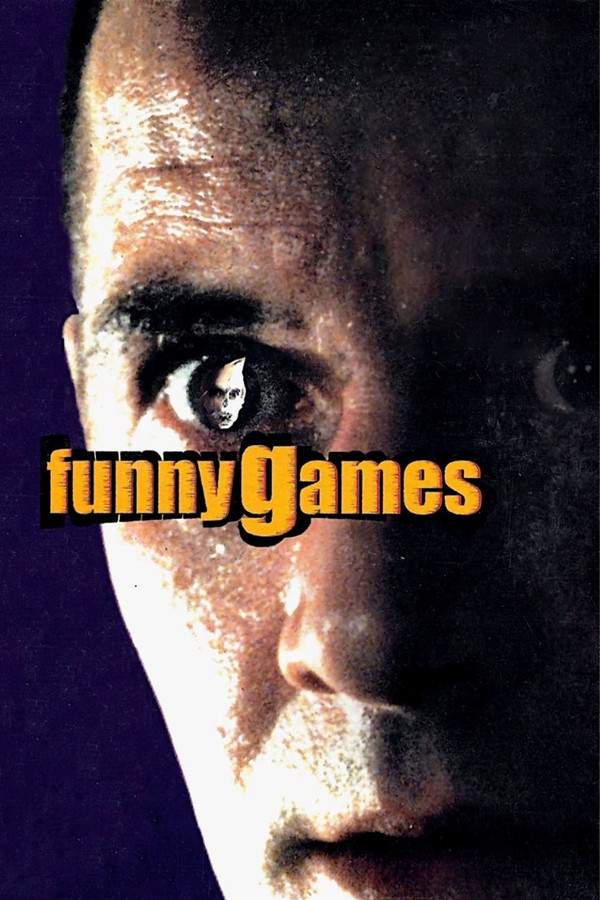
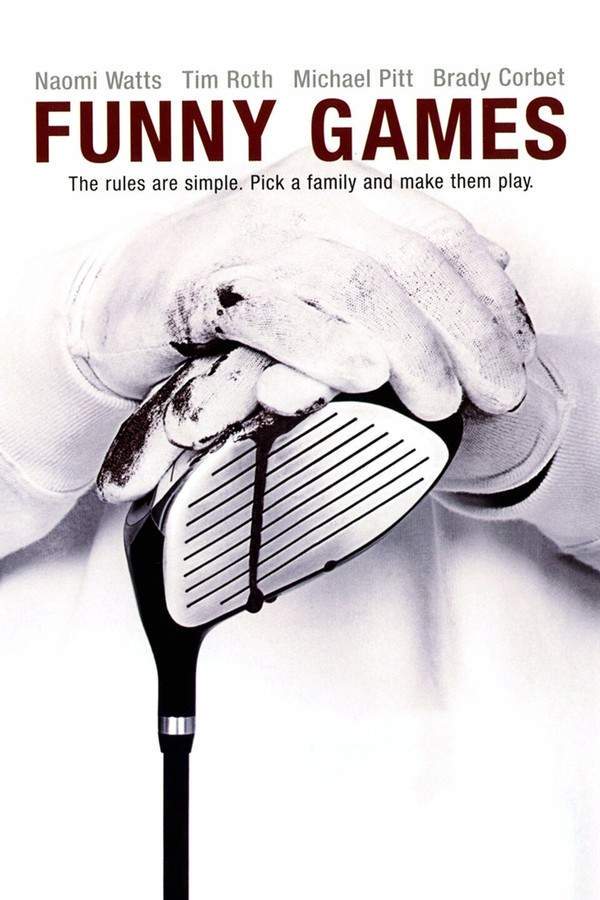
Funny Games (2008) (2008) movie poster

Plot Summary

Funny Games (2008) (2008) Plot Summary Explained

Release, runtime and language
2008 · 111 min · English
JustWatch #8,431 11
Directed by
Michael Haneke
Starring
Tim Roth, Naomi Watts, Michael Pitt

During a seemingly idyllic family vacation in the Austrian countryside, their peace is shattered by the arrival of two polite but deeply unsettling young men. What begins as a cordial visit quickly escalates into a terrifying ordeal as the men’s charming facade crumbles, revealing a sadistic game of torment. The family finds themselves trapped in a nightmare, struggling to survive the escalating violence and psychological manipulation while desperately seeking an escape from their tormentors.

On this page (6)
  1. 1 Where to watch
  2. 2 What happens: full plot
  3. 3 Plot questions answered
  4. 4 Movie threads
  5. 5 Movies like Funny Games (2008)
  6. 6 Every angle

Where to watch

Where to Watch Funny Games (2008) (2008)

Where can you watch Funny Games (2008)? Stream, rent or buy it in the US, including on Amazon Video, Apple TV Store and Fandango At Home: current JustWatch availability with up-to-date prices.

Streaming availability powered by JustWatch

Full plot summary · contains spoilers

What Happens in Funny Games (2008): Full Plot Summary

The whole story of Funny Games (2008) (2008) explained, from the opening scene to the final frame: every key event, every twist and what it all adds up to. Read it as a quick recap before the sequel, to check a scene you missed, or to finally understand what really happened.

The film opens on a seemingly happy family: George Farber, portrayed by Tim Roth, his wife Ann, played by Naomi Watts, their son Georgie, and their beloved dog as they arrive at their serene lake house. Nearby, their neighbor Fred is seen socializing with two young men, Peter and Paul, who, while friendly at first, quickly unveil their dark intentions. As they visit to borrow some eggs, Ann is busy in the kitchen while George and Georgie are outside near the lake, preparing their boat. However, this friendly interaction takes a sinister turn when the eggs they return are found broken.

Ann's frustration grows as the two return again demanding more eggs, leading to a violent altercation in which Peter shatters George's leg with a golf club, which escalates into a terrifying hostage situation for the family. Ann's attempt to call for help is thwarted when she realizes their cellphone is damaged beyond use, inadvertently destroyed by Peter earlier.

As their nightmare unfolds, Paul demands that Ann accompany him on a search for their dog, which he has brutally killed. When other neighbors arrive, Ann manages to deceive them, portraying her captors as friends until they leave, tightening the grip of terror around her family. The captors force the Farbers to partake in cruel and twisted games to determine their fates. During these unsettling games, Paul often mocks Peter, creating a disturbing dynamic between the two.

A panic-stricken Georgie attempts a brave escape only to be thwarted when he tries to use a shotgun against Paul, which tragically fails to fire. The oppressive tension heightens when Paul and Peter engage in a deadly counting-out game, leading to the heartbreaking death of young Georgie, shot by Peter in a moment of panic. This horrifying act leaves George and Ann devastated yet fueled with a lingering will to survive.

Determined to find a way out, Ann makes a desperate attempt to flee, but is soon recaptured by the sadistic men. After brutally stabbing George, the situation escalates as Paul offers Ann a horrific choice: a prolonged suffering for her husband or an instant death with the shotgun. In a moment of defiance, Ann seizes the opportunity to grab the shotgun, killing Peter in the process. This act of rebellion enrages Paul, who disregards the events that just unfolded, literally rewinding time to before Ann's act of defiance, breaking the fourth wall in a chilling twist.

On this new 'do-over' of events, Paul swiftly regains control, disarming Ann and reminding her of the so-called rules they are bound to. The dark cycle culminates as they brutally murder George and take Ann, now bound and gagged, onto their boat the following morning. Tragically, they throw her into the lake to drown while smugly adhering to their twisted bets. This shocking conclusion leads them back to their neighbors, where they casually request more eggs, reigniting their gruesome cycle of violence.
Last updated: May 13, 2025 at 20:30

Was this helpful?

Plot questions answered

Funny Games (2008) Plot Explained: Your Questions Answered

The questions people ask most about Funny Games (2008) (2008): what happens in the confusing scenes, why the characters do what they do, the twists, hidden details and what the ending means. Each answer contains spoilers.

Q1

Why does Paul rewind time after Ann kills Peter?

Paul rewinds time because he and Peter are depicted as having complete control over the family's fate. When Ann manages to grab the shotgun and kill Peter, she breaks the 'rules' of their sadistic game. Paul literally breaks the fourth wall and reverses events to restore Peter to life, demonstrating that the family has no hope of escaping their ordeal. This meta-fictional twist emphasizes the film's theme that evil is inescapable and cannot be defeated.

Foreshadowing: The men's earlier discussion about betting whether the family would survive until morning establishes their belief that they control the outcome.

  • paul rewind
  • time reversal
  • fourth wall
  • ann kills peter
  • movie twist
Q2

Why do Peter and Paul target the Farber family?

The film does not explicitly explain Peter and Paul's motivation beyond their desire for sadistic entertainment. They present themselves as neighbors borrowing eggs, but their true intent is to subject the family to their twisted games. Their motivation appears to be pure sadism - they derive pleasure from psychological and physical torture, treating the family's suffering as a form of sport.

Foreshadowing: The men's overly friendly demeanor and insistence on borrowing eggs despite broken ones hints at their ulterior motives from the start.

  • peter paul motivation
  • why attack family
  • sadistic killers
  • home invasion
Q3

Why can't Ann call for help on her phone?

Ann cannot call for help because Peter deliberately destroyed the family's cellphone earlier in the day. When he visited the house the first time, he dropped the phone into the sink, breaking it beyond repair. This was a deliberate act to cut off the family's ability to contact emergency services, ensuring they were trapped with no means of escape.

Foreshadowing: Peter's casual interaction in the kitchen while Ann was cooking provided the opportunity to sabotage the phone.

  • broken phone
  • cant call police
  • no help
  • phone destroyed
Q4

Why is Georgie killed in the film?

Georgie is killed during a counting-out game that Peter and Paul force the family to play. When Georgie panics and tries to run away from the house, Peter shoots him in a moment of impulse. His death serves as a devastating turning point that destroys any remaining hope the family has. The murder of a child underscores the men's complete lack of mercy and the futility of attempting to resist their captors.

Foreshadowing: Earlier hints of escalating violence and the men's threats about 'playing by the rules' foreshadow the fatal outcome.

  • georgie death
  • child killed
  • georgie shot
  • peter kills boy
Q5

Why do Peter and Paul force the family to play games?

Peter and Paul force the family to participate in sadistic games because it amuses them and fulfills their desire for psychological torture. Paul explicitly states they are betting on whether the family will survive until morning. The games serve as both entertainment for the captors and a method of breaking the family's spirit through uncertainty and humiliation.

Foreshadowing: Paul's early suggestion of a 'bet' on the family's survival establishes the games as the central mechanism of their torment.

  • games
  • bet on family
  • sadistic games
  • torture games
Q6

What happens at the end of the movie?

At the end, after the time rewind eliminates Ann's brief victory, Peter and Paul murder George and take Ann on the boat. They throw her into the lake to drown while bound and gagged. The men then return to the neighbors' house and casually ask for more eggs, initiating their cycle of violence again with a new family. The film ends with them repeating the same predatory pattern.

Foreshadowing: The recurring egg-borrowing motif throughout the film foreshadows this cyclical return to violence.
  • movie ending
  • ann dies
  • boat scene
  • thrown in lake
  • 结局
Q7

What is the significance of the eggs in the movie?

The eggs serve as a recurring motif that represents the false pretext of neighborly civility and the cyclical nature of the violence. Peter and Paul's repeated requests for eggs mask their true intentions, and the broken eggs symbolize the shattering of the family's peaceful vacation. At the end, asking for eggs again signifies their return to predator mode, ready to victimize another family.
Foreshadowing: The very first interaction between the men and family revolves around borrowing eggs, establishing the motif early.

  • eggs meaning
  • egg symbolism
  • borrowed eggs
  • cycle of violence
Q8

Why don't the neighbors help when Ann tries to signal them?

When other neighbors arrive at the house, Ann manages to convince them that everything is fine, presenting Peter and Paul as friends. This is her desperate attempt to not alert the captors, but it backfires - the neighbors leave believing the family is safe. Additionally, the Farbers' dog, which might have attracted attention, was already killed by Paul earlier, removing another potential alert system.

Foreshadowing: Ann's initial lie to the neighbors during the egg-borrowing scene shows her pattern of trying to defuse situations.

  • neighbors
  • no help
  • missed chance
  • ann lies
Q9

Why does Paul mock Peter during the games?

Paul mocks Peter to establish a disturbing dynamic between the two captors, showing that even among sadists, there is a hierarchy. Paul views himself as more clever and in control, while he sees Peter as more impulsive and prone to mistakes. This rivalry adds psychological complexity to the villains and highlights Paul's superiority complex, which becomes evident when he takes over completely after Peter is killed.

Foreshadowing: Early interactions between the two men hint at Paul's dominant personality and Peter's more volatile nature.

  • paul mocks peter
  • relationship between killers
  • peter and paul dynamic
Q10

What is the message or theme of Funny Games?

Funny Games explores the theme of evil's inescapability and challenges the audience's expectations of horror movie conventions. By having Paul break the fourth wall and rewind time, the film emphasizes that the family cannot win against pure sadism. The movie also comments on violence in media - forcing viewers to confront their own complicity in watching torture. The bleak ending suggests violence is a repeating cycle that continues unchecked.

Foreshadowing: The meta-fictional elements and repeated motifs of eggs and games reinforce the theme of cyclical violence.
  • movie theme
  • meaning
  • evil
  • violence critique
  • audience complicity

Movie threads

More Movies Like Funny Games (2008), by Mood & Story

Curated lists built around what makes Funny Games (2008) tick: the same mood, the same kind of story or the same emotional payoff. Each list explains why these movies belong together.

Home invasion psychological torment movies like Funny Games (2008)

Stories where a domestic sanctuary becomes a cage for sadistic psychological games. If you liked the relentless mind games and terror of Funny Games, explore more movies like it. This list features similar thrillers and horror films about home invasions where psychological torment is the primary weapon, creating an unbearably tense and emotionally heavy viewing experience.

  • terrifying
  • oppressive
  • anxious
  • cruel
  • claustrophobic
  • hopeless
  • Tone: dark, tense, bleak
  • Pacing: variable, unpredictable
Why these movies?

The story pattern: The narrative typically begins with a peaceful domestic setting that is shattered by the arrival of outsiders. The conflict is not just about physical survival but about breaking the victims' wills through elaborate, sadistic games. The power dynamic is starkly uneven, with the invaders controlling every aspect of the situation, leading to a prolonged and hopeless ordeal.

Why they belong together: Movies in this thread are united by their core premise of home invasion used as a stage for psychological torture. They share a high intensity, a dark and bleak tone, and a heavy emotional weight, focusing on the visceral fear of being trapped and mentally dismantled in your own space.

Metafictional horror and cruel twist movies like Funny Games (2008)

Horror films that break reality's rules to comment on violence and the audience. For viewers who appreciated the shocking, fourth-wall-breaking commentary of Funny Games, this list curates similar movies that play with narrative reality. Discover films like Funny Games that use metafictional devices and cruel plot twists to create a uniquely disturbing and thought-provoking horror experience.

  • unsettling
  • cruel
  • mind-bending
  • brutal
  • cold
  • anxious
  • Tone: dark, unsettling, bleak
  • Pacing: variable
Why these movies?

The story pattern: Stories in this thread deliberately rupture the illusion of the narrative to address the audience or comment on the nature of the story being told. They often feature unexpected resets, direct address, or rule-breaking events that negate character agency, creating a sense of futility and emphasizing a thematic point about spectacle, fate, or the viewer's complicity.

Why they belong together: These films are grouped by their shared use of metafictional elements to enhance the horror. They go beyond simple scares to question the very fabric of storytelling and the audience's relationship to on-screen suffering, resulting in a complex, unsettling, and often bleak viewing experience.

If you liked this

Movies Like Funny Games (2008)

Similar movies to Funny Games (2008): the same genre, themes or kind of story. Each one comes with its own plot summary, timeline and ending explained.

Browse all movie summaries

Every angle

Funny Games (2008) (2008) Explained: Plot, Timeline & Characters

Everything about Funny Games (2008) in one place: what happens in the plot summary, the timeline in chronological order, the characters and meaning and a spoiler-free summary. What's After the Movie adds the cast, box office and post-credit scenes.

Coming soon on iOS and Android

The Plot Explained Movie Summary App

Plot summaries, endings explained and timelines on your phone. Catch up on any movie in minutes, save your favorites and never miss a twist again.

Be the first to know when we launch. Your email stays private, always.

Learn more about the app