Plot Explained Spoilers guaranteed!
Plot Explained

Browse by genre

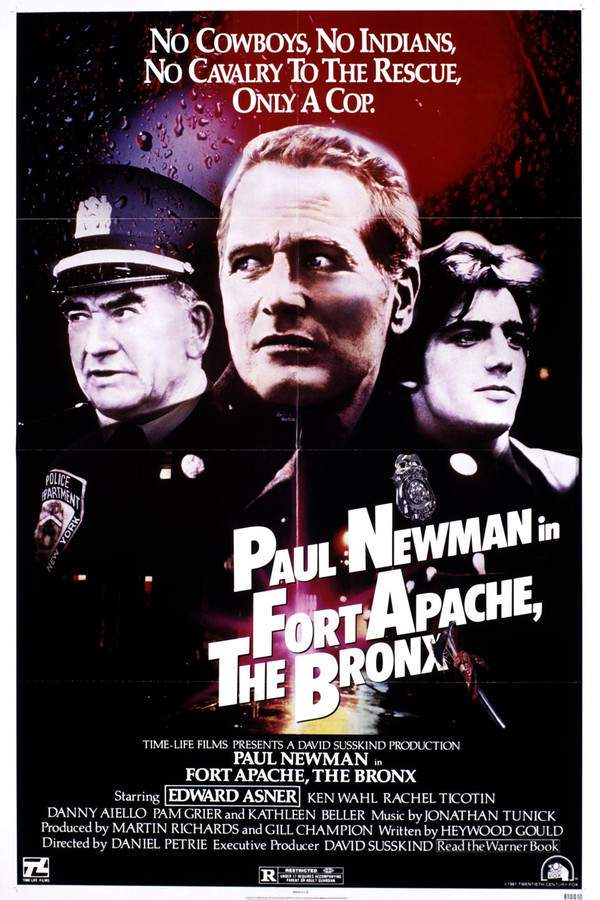
Fort Apache the Bronx (1981) movie poster

Plot Summary

Fort Apache the Bronx (1981) Plot Summary Explained

Release, runtime and language
1981 · 125 min · English
Loading streaming availability…
Directed by
Daniel Petrie
Starring
Paul Newman, Edward Asner, Danny Aiello, Jaime Tirelli, Pam Grier, Rachel Ticotin

A determined police officer finds himself caught between his commitment to justice and the brutal realities of the Bronx. He relentlessly pursues the truth, uncovering a web of corruption within his own precinct. His uncompromising stance puts him at odds with colleagues who are willing to protect their power through any means necessary, leading to a tense and explosive confrontation.

On this page (6)
  1. 1 Where to watch
  2. 2 What happens: full plot
  3. 3 Plot questions answered
  4. 4 Movie threads
  5. 5 Movies like Fort Apache the Bronx
  6. 6 Every angle
Loading streaming availability…

Full plot summary · contains spoilers

What Happens in Fort Apache the Bronx: Full Plot Summary

The whole story of Fort Apache the Bronx (1981) explained, from the opening scene to the final frame: every key event, every twist and what it all adds up to. Read it as a quick recap before the sequel, to check a scene you missed, or to finally understand what really happened.

At the 41st Police Precinct in the South Bronx, veteran officer Murphy (Paul Newman), who has dedicated 18 years to his career, finds himself coasting along, striving to be a good cop while minimizing the chaos that comes with it. He believes in harmonizing effective police work with a sense of social responsibility. However, the peace is disrupted when the new Precinct Captain, Connolly (Edward Asner), steps in. Having volunteered for the daunting role, Connolly is set on capturing the elusive cop killer responsible for the tragic shootings of police officers.

The situation escalates as the local community begins to erupt in protest against law enforcement, leading to riots that shake the already fragile trust between the residents and the police force. The precinct earned the nickname Fort Apache due to its critical role in the neighborhood, yet now finds itself under siege. Connolly, in his determination, orders a crackdown on even the most trivial infractions to flush out the murderer.

Things take a darker turn for Murphy when he witnesses his colleague Morgan (Danny Aiello) commit the shocking act of murdering an innocent man. This moment forces Murphy to grapple with his moral compass, confronting the dilemma of whether to stand up against his fellow officer. Compounding this troubled relationship with justice is Murphy’s connection to the community; his girlfriend, Isabella (Rachel Ticotin), a Dominican nurse, is caught in her own struggle with drug abuse, intensifying his internal conflict.

After a traumatic shootout at the hospital claiming numerous casualties— many of whom he knows personally—Murphy is compelled to reassess his priorities. Ultimately, he faces a pivotal choice: to advocate for what is truly best for the community he serves or to allow the weight of his conscience to dictate his actions, leading him to a decision that could change everything.

Last updated: October 25, 2024 at 09:58

Was this helpful?

Plot questions answered

Fort Apache the Bronx Plot Explained: Your Questions Answered

The questions people ask most about Fort Apache the Bronx (1981): what happens in the confusing scenes, why the characters do what they do, the twists, hidden details and what the ending means. Each answer contains spoilers.

Q1

Why didn't Murphy immediately report that he saw Morgan murder someone?

Murphy witnessed his colleague Morgan kill an innocent man but struggled with whether to report him because doing so would mean betraying a fellow officer and potentially destabilizing the precinct during an already chaotic period. Murphy's internal conflict was compounded by his complicated relationship with the community and his girlfriend Isabella's drug problems, leaving him paralyzed between his moral duty and his loyalty to his fellow officers.

Foreshadowing: Earlier scenes establish Murphy's approach of balancing effective policing with social responsibility, which makes his silence about Morgan's crime even more psychologically complex.

  • murphy
  • morgan
  • murder
  • witness
  • police corruption
Q2

What did the nickname Fort Apache refer to?

The 41st Police Precinct in the South Bronx earned the nickname Fort Apache because it operated like an isolated outpost in a hostile territory, constantly under siege from community hostility, riots, and violence. The name reflected the extreme isolation and constant danger faced by officers stationed there.

Foreshadowing: The precinct's critical yet precarious role was established early when the community protests began, creating an atmosphere of siege mentality.

  • fort apache
  • 41st precinct
  • bronx
  • nickname
  • police station
Q3

Why did Captain Connolly's tough crackdown strategy fail?

Connolly ordered a harsh crackdown on minor offenses hoping to flush out the cop killer and restore order, but his aggressive tactics only deepened the rift between police and the community. The heavy-handed approach fueled more protests and riots, making the already fragile trust between residents and law enforcement collapse further.

Foreshadowing: The arrival of Connolly brought immediate tension, as his eagerness to capture the cop killer clashed with the community's growing anger toward police.

  • connolly
  • crackdown
  • police strategy
  • riots
  • community tension
Q4

What triggered the hospital shootout in the movie?

The hospital shootout was a devastating violent incident that occurred at a South Bronx hospital, claiming numerous casualties including people Murphy personally knew. This traumatic event forced him to confront the real-world consequences of the violence plaguing his community and deepened his reassessment of what it means to serve and protect.

Foreshadowing: The escalating tensions between police and the community had been building throughout the film, with protests and unrest reaching a breaking point.

  • hospital
  • shootout
  • casualties
  • murphy
  • tragedy
Q5

How did Isabella's drug problem impact Murphy's decisions?

Murphy's girlfriend Isabella, a Dominican nurse, struggled with drug addiction, adding significant personal turmoil to his already stressful life. This subplot intensified his internal conflict and forced him to confront the reality of addiction affecting people he loved, mirroring the broader drug crisis destroying the community he served.

Foreshadowing: Isabella's struggles were introduced early, showing Murphy's deep connection to the community beyond his professional duties.

  • isabella
  • drugs
  • addiction
  • relationship
  • murphy
Q6

Did Murphy ever report Morgan for the murder he witnessed?

The summary indicates Murphy faced a pivotal choice regarding Morgan's crime. His internal struggle between loyalty to fellow officers and his moral obligation to justice represents the central ethical dilemma of the film, ultimately forcing him to decide what he truly stands for.

Foreshadowing: Murphy's earlier approach of trying to minimize chaos while maintaining police effectiveness directly conflicts with his duty to report criminal behavior by a colleague.

  • morgan
  • murphy
  • report
  • crime
  • ethical dilemma
Q7

Why was the relationship between police and the Bronx community so hostile?

The South Bronx community had deep-seated distrust toward police due to aggressive policing tactics, systemic brutality, and the perception that officers protected their own rather than serving the public. This hostility manifested in protests, riots, and the nickname Fort Apache, reflecting how residents viewed the precinct as an occupying force rather than a protective service.

Foreshadowing: The summary establishes from the beginning that Murphy believed in balancing effective policing with social responsibility, acknowledging the tension existed before the story even began.

  • bronx
  • community
  • police
  • protests
  • riots
  • trust
Q8

What was Murphy's final decision at the end of the movie?

Murphy faced a critical choice between advocating for what was truly best for the community or following the weight of his conscience. The bittersweet ending suggests he chose to act on behalf of the community's interests, though this decision came at a significant personal cost rather than offering a clear moral victory.

Foreshadowing: His earlier dilemma about whether to expose Morgan's crime foreshadows this larger decision about where his loyalty ultimately lies.

  • murphy
  • choice
  • decision
  • community
  • conscience
  • ending
Q9

Who was the cop killer that Captain Connolly was trying to capture?

The cop killer was an elusive individual responsible for the shootings of police officers that prompted Connolly to volunteer for the difficult role at the 41st Precinct. The summary doesn't reveal the killer's identity, but capturing this person was Connolly's primary motivation for his aggressive crackdown strategy.

Foreshadowing: Connolly's arrival was directly tied to his determination to catch this cop killer, driving much of the conflict in the film.

  • cop killer
  • shooter
  • connolly
  • capture
Q10

Why did Murphy stay at the 41st Precinct for 18 years?

Murphy spent 18 years at the 41st Precinct because he genuinely believed in serving the South Bronx community while trying to minimize the chaos that came with effective policing. He was renowned for his commitment to balancing law enforcement duties with social responsibility, making him a respected but conflicted figure.

Foreshadowing: His reputation for harmonizing police work with community responsibility was established at the start, explaining his moral struggles throughout the film.

  • murphy
  • 18 years
  • precinct
  • dedication
  • community

Movie threads

More Movies Like Fort Apache the Bronx, by Mood & Story

Curated lists built around what makes Fort Apache the Bronx tick: the same mood, the same kind of story or the same emotional payoff. Each list explains why these movies belong together.

Police corruption dramas like Fort Apache the Bronx

Stories of cynical cops battling systemic rot while trying to hold onto their ideals. If you liked the gritty realism and institutional failure in Fort Apache the Bronx, explore more movies like it. This thread features hard-hitting crime stories set in troubled precincts, where officers confront corruption from within and the moral decay of their city.

  • gritty
  • tense
  • cynical
  • morally conflicted
  • chaotic
  • anxious
  • Tone: dark, cynical, tense
  • Pacing: steady, methodical
Why these movies?

The story pattern: The narrative typically follows a principled officer or detective who uncovers a web of corruption within their own department. Their pursuit of the truth puts them in direct conflict with superiors and colleagues, leading to high-stakes confrontations and forcing them to question their role in a broken system. The journey is one of moral erosion and tense, often violent, conflict.

Why they belong together: Movies in this thread share a dark, tense tone, a steady pacing that builds to an explosive climax, and a heavy emotional weight centered on ethical dilemmas. They are united by their focus on institutional failure, the gritty texture of urban decay, and protagonists facing impossible choices.

Movies with heavy moral dilemmas like Fort Apache the Bronx

Character-driven stories where doing the right thing comes at a profound personal cost. For viewers who appreciated the heavy emotional weight and complex ethical choices in Fort Apache the Bronx, this thread gathers films with similar morally conflicted protagonists. These stories explore the personal cost of justice and the bittersweet nature of doing what's right in a broken system.

  • morally conflicted
  • heavy
  • bittersweet
  • thought-provoking
  • sobering
  • uncompromising
  • Tone: dark, morally conflicted, bittersweet
  • Pacing: steady, character-driven
Why these movies?

The story pattern: The narrative arc follows a character's deepening engagement with a systemic moral problem. Their initial commitment is tested by escalating personal risks and the realization that a pure victory is unattainable. The climax involves a difficult choice that defines their character, leading to an ending that acknowledges a hard-won, partial success tinged with loss and sacrifice.

Why they belong together: This thread groups films based on their shared focus on profound moral dilemmas, a heavy emotional weight, and a bittersweet conclusion. The connection is defined by the protagonist's internal struggle and the sobering realization that righteousness often has a steep price, creating a resonant and thoughtful viewing experience.

If you liked this

Movies Like Fort Apache the Bronx

Similar movies to Fort Apache the Bronx: the same genre, themes or kind of story. Each one comes with its own plot summary, timeline and ending explained.

Browse all movie summaries

Every angle

Fort Apache the Bronx (1981) Explained: Plot, Timeline & Characters

Everything about Fort Apache the Bronx in one place: what happens in the plot summary, the timeline in chronological order, the characters and meaning and a spoiler-free summary. What's After the Movie adds the cast, box office and post-credit scenes.

Coming soon on iOS and Android

The Plot Explained Movie Summary App

Plot summaries, endings explained and timelines on your phone. Catch up on any movie in minutes, save your favorites and never miss a twist again.

Be the first to know when we launch. Your email stays private, always.

Learn more about the app