Plot Explained Spoilers guaranteed!
Plot Explained

Browse by genre

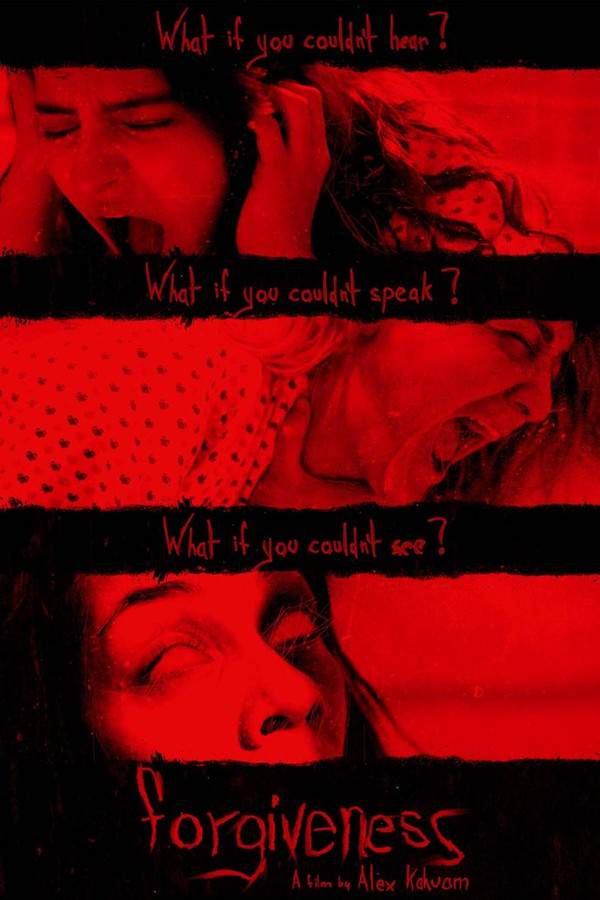
Forgiveness (2008) movie poster

Timeline

Forgiveness (2008) Timeline Explained – Every Event in Order

Release, runtime and language
2008 · 97 min · English
Loading streaming availability…
Directed by
Udi Aloni

Three strangers find themselves inexplicably trapped within a hospital, struggling with amnesia and startling physical changes. One character is now bound to a shadowy existence, another has lost the ability to speak, and a third desperately searches for her lost voice. As they try to uncover the truth behind their situation and their transformations, they must confront a disturbing reality.

On this page (6)
  1. 1 Where to watch
  2. 2 Events in order (12)
  3. 3 Timeline questions answered
  4. 4 Movie threads
  5. 5 Movies like Forgiveness
  6. 6 Every angle
Loading streaming availability…

12 events in order · contains spoilers

Forgiveness Timeline: Events in Chronological Order

Every key event of Forgiveness (2008) in order, scene by scene, with when and where it takes place. Use it to untangle flashbacks, time jumps and parallel storylines, to refresh your memory before the sequel or to find the exact scene you are thinking of.

  1. Friendship forms in wartime Poland

    Apollonia Kowalski and Esther Blumenfeld form a close friendship as children in 1940s Poland. Despite their different faiths—Roman Catholic and Jewish—they share games, secrets, and a sense of safety amid growing danger.

    When
    1940s
    Where
    Poland
  2. Separation as Esther is taken to a camp

    During the war, Esther is taken away to a Nazi concentration camp, and the two girls are abruptly separated. The bond they built is torn apart by the brutal divisions of occupation.

    When
    1940s
    Where
    Poland
  3. Families immigrate to the United States

    After the war ends, both families immigrate to the United States, each pursuing a new life apart from the other. The separation endures even as they seek safety and opportunity across an ocean.

    When
    Late 1940s
    Where
    United States
  4. Generations rise: Maria and Sarah become professionals

    Decades later, Apollonia's daughter Maria Patterson and Esther's daughter Sarah Blumenfeld have become successful professionals in the United States. Yet their achievements are tempered by the lingering memory of the Holocaust that shapes how they relate to their mothers. The distance between generations fuels mutual misunderstanding.

    When
    Late 20th century
    Where
    United States
  5. Tensions between mothers and daughters

    Both Maria and Sarah carry the weight of their mothers' past, leading to strained relationships and unspoken grievances. The memory of trauma shadows family meals, conversations, and trust.

    When
    Late 20th century
    Where
    United States
  6. Esther dies, leaving a memoir

    Esther dies, leaving a memoir of her camp experiences that is passed to Sarah. The memoir begins to shape Sarah's understanding of the family's past and complicates her view of Esther's legacy and her own mother, Maria.

    When
    Late 20th/early 21st century
    Where
    United States
  7. Apollonia in a nursing home

    Apollonia remains confined to a nursing home, and Maria's care becomes a point of tension between them. The guardianship and control issues deepen the rift as time passes.

    When
    Late 20th/early 21st century
    Where
    United States
  8. A secret is revealed

    A secret Apollonia has hidden for years is finally revealed, revealing truths that shake the family and demand accountability. The revelation forces both generations to confront painful realities.

    When
    Early 21st century
    Where
    United States
  9. Reconciliation begins

    The uncovering of the secret pushes Apollonia and Maria toward reconciliation, as understanding grows and forgiveness becomes possible. They begin to listen to each other more openly and reevaluate past judgments.

    When
    Early 21st century
    Where
    United States
  10. Maria and Sarah connect

    Maria and Sarah enter each other's lives, bridging the gap between two families fractured by war and memory. They discover common ground in shared history and the possibility of a new alliance.

    When
    Early 21st century
    Where
    United States
  11. Memoir as bridge

    Esther's memoir acts as a bridge between generations, helping both sides acknowledge pain and resilience. It provides context that softens old accusations and invites empathy.

    When
    Early 21st century
    Where
    United States
  12. A hopeful, memory-filled future

    The story ends with a fragile but hopeful future where memory, love, and newly formed bonds bind Apollonia, Maria, Esther's legacy, and Sarah. The families move forward together, forever linked by memory.

    When
    Early 21st century
    Where
    United States

Last updated: February 17, 2026 at 19:56

Was this helpful?

Timeline questions answered

Forgiveness Timeline Explained: Your Questions Answered

When does it happen, and why in that order? The questions people ask about the chronology of Forgiveness (2008): time jumps, flashbacks, cause and effect between scenes and the correct order of events, each answered with spoilers.

Q1

What secret was Apollonia hiding from her daughter?

Apollonia had been keeping a secret related to her relationship with Esther during the war. The revelation exposes a painful truth about what happened during that time and what Apollonia knew about Esther's fate. This hidden truth is what created tension between Apollonia and Maria, and when it finally comes to light, it forces both generations to confront the difficult legacy of the Holocaust and reassess their understanding of the past.

Foreshadowing: Earlier scenes establish the strained relationship between Maria and her mother, hinting that something unspoken lies at the root of their conflict.

  • apollonia secret
  • hidden truth
  • maria mother conflict
  • family secret
Q2

Why was Maria's relationship with her mother strained?

The tension between Maria and Apollonia stemmed from the secret Apollonia had been hiding. Maria sensed something was being withheld from her, creating distance and distrust. Additionally, Maria was caring for her mother in a nursing home while grappling with the weight of her mother's traumatic past, which created ongoing stress and caregiver burnout.

Foreshadowing: Timeline points 5 and 7 establish the tension between mothers and daughters as a central conflict throughout the story.

  • maria apollonia relationship
  • mother daughter tension
  • nursing home
  • caregiver stress
Q3

How did Esther's memoir help the families reconcile?

Esther's memoir, which documented her experiences in the concentration camp, provided crucial context about the past. When Sarah inherited it, the memoir became a bridge between generations. It allowed both families to understand the full scope of what was lost and suffered, softening old accusations and inviting empathy. The written record of trauma opened pathways for honest dialogue about painful truths.

Foreshadowing: Timeline point 6 marks the memoir's introduction, which begins shaping Sarah's understanding of her mother's legacy.

  • esther memoir
  • holocaust memoir
  • family healing
  • memoir as bridge
Q4

Why was the childhood friendship between Apollonia and Esther significant?

Apollonia and Esther formed a close friendship despite their different faiths, Roman Catholic and Jewish, during a dangerous time in 1940s Poland. Their bond represented a connection that transcended religious and cultural divisions during the war. When Esther was taken to a concentration camp, this friendship was violently ripped apart, and the loss of that relationship shaped both women for decades afterward.

Foreshadowing: Timeline point 1 establishes the deep friendship that makes the later separation more devastating.

  • apollonia esther friendship
  • childhood friends
  • poland war
  • catholic jewish friendship
Q5

How did the secret's revelation bring Maria and Sarah together?

Once Apollonia's secret was revealed, it forced both Maria and Sarah to confront painful realities about their families' past. This shared confrontation created a new level of understanding between them. The uncovering of hidden truths opened doors to trust and empathy, allowing the two women, who had been strangers despite their mothers' connection, to discover common ground in their shared history.

Foreshadowing: Timeline points 8 and 10 show the secret revelation directly preceding the connection between Maria and Sarah.

  • maria sarah connection
  • family reconciliation
  • shared history
  • confronting truth
Q6

Why didn't the two families stay in contact after immigrating to the US?

After the war ended, both families immigrated to the United States seeking safety and opportunity. However, the distance of years and the heavy weight of memory kept them separated. The trauma of the Holocaust and the loss of Esther created an unspoken barrier between the families, and neither reached out to reconnect despite living in the same country.

Foreshadowing: Timeline point 3 establishes the immigration and subsequent separation of the two families.

  • immigration
  • holocaust survivors
  • family separation
  • post war
Q7

What role does the Holocaust play in the story's present-day events?

The Holocaust serves as the foundational trauma that continues to shape all characters' lives decades later. The loss of Esther and the experiences she endured in the concentration camp created ripples that affected both families across generations. Even though the story takes place in the late 20th and early 21st century, the Holocaust's psychological impact remains central to the characters' relationships, their ability to trust, and their capacity for forgiveness.

Foreshadowing: Timeline points 1 and 2 establish the Holocaust as the root cause of all subsequent family conflicts.

  • holocaust trauma
  • intergenerational trauma
  • world war 2
  • lasting impact
Q8

How does the film portray forgiveness between the families?

Forgiveness in the film emerges through the gradual process of confronting painful truths. When Apollonia's secret is revealed, it forces both generations to acknowledge the complexity of their shared history. Rather than offering easy absolution, the movie suggests forgiveness comes through careful, patient dialogue and a willingness to face difficult legacies with honesty. The memoir becomes a tool for this process, helping characters move from pain toward understanding.

Foreshadowing: Timeline point 9 directly connects the secret's revelation to the beginning of reconciliation.

  • forgiveness theme
  • family reconciliation
  • confronting past
  • healing
Q9

Why were Sarah and Maria emotionally distant from their mothers?

Both Sarah and Maria carried the weight of their mothers' Holocaust trauma, which created strained relationships and unspoken grievances. Sarah inherited not only Esther's memoir but also the burden of her mother's difficult experiences. Maria dealt with her mother's secret-keeping and the complexities of caring for an aging parent in a nursing home. The memory of trauma shadowed their conversations and created barriers to genuine connection.

Foreshadowing: Timeline point 5 explicitly notes that both daughters carry the weight of their mothers' past.

  • mother daughter conflict
  • emotional distance
  • inherited trauma
  • family strain
Q10

What does the film say about memory and healing?

The movie presents memory as both a barrier and a bridge. The memoirs and memories of the Holocaust initially kept families separated and created misunderstanding. However, when properly confronted through honest dialogue, these same memories became a bridge toward healing. The story argues that facing painful legacies directly, rather than avoiding them, is necessary for genuine reconciliation and moving forward.

Foreshadowing: Timeline point 11 shows the memoir transitioning from a source of division to a tool for empathy.

  • memory healing
  • confronting memory
  • memoir as bridge
  • intergenerational healing

Movie threads

More Movies Like Forgiveness, by Mood & Story

Curated lists built around what makes Forgiveness tick: the same mood, the same kind of story or the same emotional payoff. Each list explains why these movies belong together.

Dramas about intergenerational trauma like Forgiveness

Stories where the pain of the past silently shapes the relationships of the present. Explore more movies like Forgiveness that deal with how traumatic family history impacts present-day relationships. If you were moved by the exploration of Holocaust memory and its effect on a mother-daughter bond, these slow-burn, emotionally heavy dramas will resonate.

  • melancholic
  • introspective
  • cathartic
  • strained
  • somber
  • emotionally charged
  • Tone: melancholic, reflective, emotionally charged
  • Pacing: slow, contemplative
Why these movies?

The story pattern: Movies in this thread typically follow characters, often parent-child pairs, as they navigate an emotional distance rooted in unprocessed historical events. The plot unfolds through reflection and revelation, where understanding the past is key to mending the present, leading to bittersweet resolutions that acknowledge the scars left by trauma.

Why they belong together: These films are grouped by their shared focus on inherited pain, their melancholic tone, and their slow, character-driven pacing. They create a similar viewing experience of heavy emotional weight, centered on catharsis and the complex process of coming to terms with a painful legacy.


Somber journeys of memory like Forgiveness

Quiet character studies about finding peace with a painful past. Find more emotionally heavy movies like Forgiveness, where characters confront grief and loss in a somber, reflective atmosphere. If you appreciated the slow unraveling of trauma and the search for reconciliation, these films share a similar melancholic mood and profound emotional depth.

  • somber
  • melancholic
  • grief
  • cathartic
  • reflective
  • emotionally heavy
  • Tone: somber, melancholic, bittersweet
  • Pacing: slow, reflective
Why these movies?

The story pattern: The narrative pattern involves characters burdened by a significant loss or traumatic memory, which has created emotional distance in their lives. The story is a slow-paced, introspective journey as they sift through the past, leading to a moment of confrontation and an ending that offers a complex mix of sadness and acceptance.

Why they belong together: These films are connected by their heavy emotional weight, melancholic tone, and deliberate pacing. They prioritize mood and internal character development over plot, creating a cohesive vibe of somber reflection that resonates with viewers seeking deep, cathartic stories.

If you liked this

Movies Like Forgiveness

Similar movies to Forgiveness: the same genre, themes or kind of story. Each one comes with its own plot summary, timeline and ending explained.

Browse all movie summaries

Every angle

Forgiveness (2008) Explained: Plot, Timeline & Characters

Everything about Forgiveness in one place: what happens in the plot summary, the timeline in chronological order, the characters and meaning and a spoiler-free summary. What's After the Movie adds the cast, box office and post-credit scenes.

Coming soon on iOS and Android

The Plot Explained Movie Summary App

Plot summaries, endings explained and timelines on your phone. Catch up on any movie in minutes, save your favorites and never miss a twist again.

Be the first to know when we launch. Your email stays private, always.

Learn more about the app