










Plot Explained Spoilers guaranteed!
Plot Explained

Browse by genre

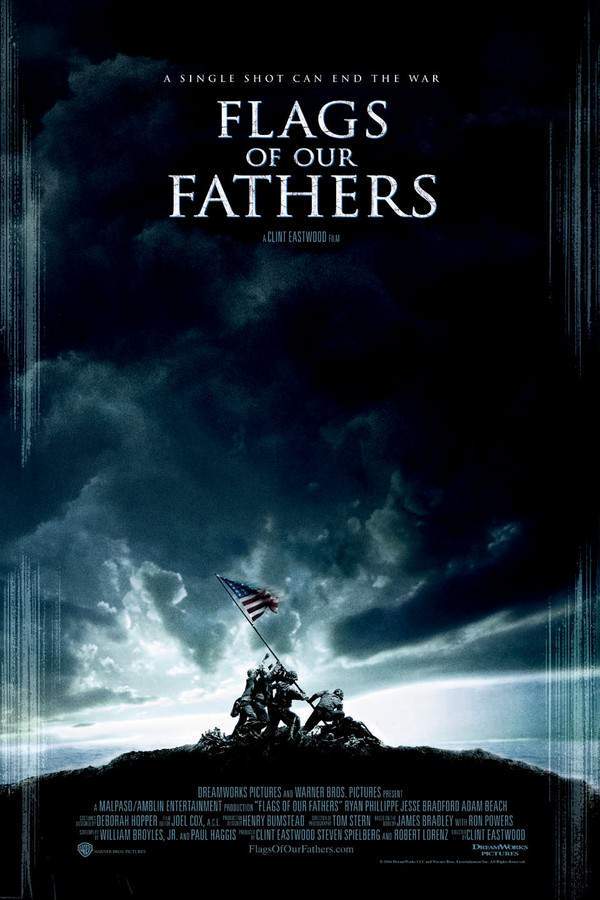
Flags of Our Fathers (2006) movie poster

Timeline

Flags of Our Fathers (2006) Timeline Explained – Every Event in Order

Release, runtime and language
2006 · 132 min · English
JustWatch #2,631 25
Starring
Adam Beach, Ryan Phillippe, Jesse Bradford, Barry Pepper
Budget
$90M

During the brutal 1945 battle for Iwo Jima, six U.S. Marines raise the American flag on Mount Suribachi, an iconic moment that captures the nation's spirit. The photograph becomes a symbol of victory, but the men behind it—John Bradley, Ira Hayes, and Franklin Souske—are forever changed. Haunted by their experiences and thrust into the role of national heroes, they grapple with the psychological toll of war and the complexities of fame while the fight for Iwo Jima rages on.

On this page (7)
  1. 1 Where to watch
  2. 2 Events in order (15)
  3. 3 Timeline questions answered
  4. 4 The book behind the movie
  5. 5 Movie threads
  6. 6 Movies like Flags of Our Fathers
  7. 7 Every angle

Where to watch

Where to Watch Flags of Our Fathers (2006)

Where can you watch Flags of Our Fathers? Stream, rent or buy it in the US, including on Amazon Prime Video, Hoopla and Kanopy: current JustWatch availability with up-to-date prices.

Streaming availability powered by JustWatch

15 events in order · contains spoilers

Flags of Our Fathers Timeline: Events in Chronological Order

Every key event of Flags of Our Fathers (2006) in order, scene by scene, with when and where it takes place. Use it to untangle flashbacks, time jumps and parallel storylines, to refresh your memory before the sequel or to find the exact scene you are thinking of.

  1. Training at Camp Tarawa

    The 28th Marine Regiment of the 5th Marine Division undergoes rigorous training at Camp Tarawa in Hawaii. This training is essential as they prepare for their upcoming mission to Iwo Jima, where they anticipate facing heavy Japanese resistance.

    Where
    Camp Tarawa, Hawaii
  2. Departure for Iwo Jima

    After completing their training, the Marines embark on a critical mission to the battleground of Iwo Jima. They join a significant invading force, set to face the infamous challenges that await them on the island.

    Where
    Iwo Jima
  3. Heavy Bombardment

    In anticipation of fierce resistance from Japanese forces, the Navy bombards suspected enemy positions for three days. This relentless assault sets the stage for the brutal beach landing that follows.

    Where
    Iwo Jima
  4. Landing on February 19, 1945

    On February 19, 1945, the Marines storm the beaches of Iwo Jima, initially met with silence. However, this quickly turns to chaos as Japanese artillery and machine guns rain down on the troops, resulting in heavy casualties.

    When
    February 19, 1945
    Where
    Iwo Jima
  5. Assault on Mount Suribachi

    Just two days later, the Marines begin their assault on the formidable Mount Suribachi. They endure intense enemy fire as they attempt to secure a position on the mountain, with the Navy continuing its bombardment above.

    Where
    Mount Suribachi, Iwo Jima
  6. Doc's Heroism

    During the intense fighting, Doc exhibits extraordinary bravery by saving multiple Marines under heavy fire. His selfless acts earn him the prestigious Navy Cross as they successfully secure Mount Suribachi.

    Where
    Mount Suribachi, Iwo Jima
  7. Flag Raising Ceremony

    On February 23, the platoon ascends Mount Suribachi and hoists the United States flag, signifying a critical victory. This moment, witnessed by Secretary of the Navy James Forrestal, becomes iconic when a historic photograph is taken by Joe Rosenthal.

    When
    February 23, 1945
    Where
    Mount Suribachi, Iwo Jima
  8. Tragic Ambush

    On March 1, as Second Platoon faces a violent ambush by a Japanese machine gun nest, tragedy strikes the group. Mike, Hank, and Harlon are all fatally wounded, leaving the remaining squad members to grapple with immense loss.

    When
    March 1, 1945
    Where
    Iwo Jima
  9. Survivors of the Squad

    With heavy hearts, Doc, Ira, and Rene find themselves as the last surviving members of their squad. As they mourn their fallen comrades, their bond grows deeper amidst the chaos of war.

    When
    March 21, 1945
    Where
    Iwo Jima
  10. Injuries and Evacuation

    Days later, Doc is injured by artillery fire while attempting to save a fellow corpsman. Despite his injuries, he survives and is evacuated as the battle concludes on March 26 with a U.S. victory at Iwo Jima.

    When
    March 26, 1945
    Where
    Iwo Jima
  11. National Recognition

    In the aftermath of the battle, Rosenthal’s photograph of the flag raising captivates the nation. This image boosts morale and leads to requests for prints from newspapers across the country.

  12. Bond Tour Begins

    The three survivors embark on a bond tour across the country to raise funds for the war effort. They receive a hero's welcome in Washington, but the pressure of their experiences weighs heavily on them.

    Where
    Washington, D.C.
  13. Confrontation over the Photograph

    Rene's task of identifying the six men in the iconic photograph leads to a heated confrontation with Ira. As emotions run high, they grapple with their war experiences, especially relating to their fallen comrades.

  14. Post-War Struggles

    After the war, the trio struggles to adjust to civilian life. Ira battles with alcoholism, Rene faces loss of opportunities, while Doc finds success in his new career running a funeral home.

  15. Legacy and Reflection

    In 1954, the U.S. Marine Corps War Memorial is dedicated, allowing the remaining flag raisers to reunite one last time. By 1994, on his deathbed, Doc reflects on their shared experiences, encapsulating the lasting impact of their sacrifices.

    When
    1954 - 1994

Last updated: November 03, 2024 at 20:21

Was this helpful?

Timeline questions answered

Flags of Our Fathers Timeline Explained: Your Questions Answered

When does it happen, and why in that order? The questions people ask about the chronology of Flags of Our Fathers (2006): time jumps, flashbacks, cause and effect between scenes and the correct order of events, each answered with spoilers.

Q1

Why was a second flag raised on Mount Suribachi?

A second flag was raised because Secretary of the Navy James Forrestal wanted the original flag as a souvenir after witnessing the first flag-raising ceremony. Colonel Chandler Johnson insisted the flag belonged to his battalion, so Rene Gagnon was sent up with Second Platoon to replace the original flag with a second one for Forrestal. It was during this second flag-raising that Joe Rosenthal took the iconic photograph.

  • second flag
  • mount suribachi
  • joe rosenthal
  • secretary forrestal
Q2

Who were the six men in the famous Iwo Jima flag-raising photograph?

The six men in Joe Rosenthal's iconic photograph were: Mike Strank (Sergeant), John 'Doc' Bradley (Navy Corpsman), Franklin Sousley, Ira Hayes, Rene Gagnon, and Harlon Block. Notably, Harlon Block was initially misidentified as Hank Hansen in the official accounts, which later caused significant conflict with Ira Hayes.

  • six men
  • flag raising photo
  • ira hays
  • rene gagnon
  • doc bradley
  • mike strank
  • franklin sousley
  • harlon block
Q3

Why did Ira Hayes confront Rene about being in the photograph?

Ira Hayes confronted Rene because he insisted he was not one of the men in the photograph. When Rene named Ira among the six flag raisers, Ira became furious and denied his presence. However, Rene ultimately named Ira anyway after being threatened with being sent back to combat, despite Ira's protests.

  • ira hays
  • rene gagnon
  • photograph confrontation
  • naming men
Q4

Why was Harlon Block misidentified as Hank Hansen in the famous photograph?

Rene Gagnon, tasked with identifying the six men in the photograph, mistakenly named Harlon Block as Hank Hansen. This error persisted in official accounts and caused turmoil when the truth emerged. Ira Hayes knew Hank Hansen was not at the base of the flag and was furious when the false identification was used during the bond tour.

  • harlon block
  • hank hansen
  • misidentification
  • photo error
Q5

What happened to Mike Strank, Hank Hansen, and Harlon Block on Iwo Jima?

On March 1, 1945, Second Platoon was ambushed by a Japanese machine gun nest. Mike Strank was fatally wounded by friendly fire. Both Hank Hansen and Harlon Block were also killed in the same ambush. These deaths occurred after the iconic flag-raising and devastated the surviving members of their squad.

Foreshadowing: The flag-raising celebration was brief, as the Marines would face a deadly ambush just days later.

  • mike strank
  • hank hansen
  • harlon block
  • ambush
  • friendly fire
  • march 1945
Q6

What happened to Iggy Ignatowski after the flag raising?

Iggy Ignatowski was captured by Japanese forces during the battle of Iwo Jima. He was brutally killed by the Japanese, adding to the trauma experienced by his fellow Marines. Doc Bradley later visited Iggy's mother after the war but apparently avoided telling her the full truth about how Iggy died.

  • iggy ignatowski
  • captured
  • japanese
  • killed
  • doc bradley
Q7

Why did Ira Hayes struggle so much after returning from the war?

Ira Hayes struggled with severe alcoholism and survivor's guilt after the war. As a Native American, he also faced discrimination that compounded his difficulties. He was plagued by guilt over his comrades' deaths and resented the hero status imposed on him during the bond tour. His struggles culminated in a public outburst before General Vandegrift, after which he was returned to his unit.

  • ira hays
  • alcoholism
  • survivor guilt
  • native american
  • post-war struggles
Q8

Why did Doc Bradley succeed financially while the other flag raisers struggled?

Doc Bradley was the only one of the three surviving flag raisers who achieved financial success after the war. He owned and ran a successful funeral home throughout his civilian life. In contrast, Ira Hayes succumbed to alcoholism and died in 1955, while Rene Gagnon struggled financially and eventually worked as a janitor.

  • doc bradley
  • funeral home
  • post-war life
  • rene gagnon
  • ira hays
Q9

Why did the bond tour create tension between the three flag raisers?

The bond tour created tension primarily because of the lie they were forced to perpetuate about Hank Hansen not being in the photograph. When Doc learned Hank's mother was on the list of deceased flag raisers, Ira condemned the entire bond drive as a sham. Treasury official Bud Gerber warned them that failing to continue would mean their comrades' sacrifices would be meaningless, so they agreed to withhold the truth.

  • bond tour
  • hank hansen
  • lie
  • treasury
  • propaganda
Q10

Was Mike Strank killed by friendly fire?

Yes, Mike Strank was fatally wounded by friendly fire during the March 1, 1945 ambush by a Japanese machine gun nest. He was the first of the three key flag raisers to die, followed closely by Hank Hansen and Harlon Block, all killed in the same ambush.

  • mike strank
  • friendly fire
  • ambush
  • march 1 1945
Q11

How did the flag-raising photograph become so famous?

Joe Rosenthal's photograph of the flag raising on Mount Suribachi was taken on February 23, 1945, and quickly became a tremendous morale booster for the nation. The imagecaptivated the country and emerged as an iconic symbol of victory. Newspapers across the nation requested prints, and the photograph eventually became the basis for the U.S. Marine Corps War Memorial dedicated in 1954.

  • joe rosenthal
  • photograph
  • famous
  • marine corps war memorial
  • symbol
Q12

Why did Ira Hayes travel to visit Harlon Block's family after the war?

After being released from jail and struggling with alcoholism, Ira Hayes traveled over 1,300 miles to visit Harlon Block's family. Heconfessed to Harlon's father that his son was indeed at the base of the famous flag, revealing the truth that had been obscured by the misidentification of Harlon as Hank Hansen.

  • ira hays
  • harlon block
  • confession
  • visit
  • truth

Movie threads

More Movies Like Flags of Our Fathers, by Mood & Story

Curated lists built around what makes Flags of Our Fathers tick: the same mood, the same kind of story or the same emotional payoff. Each list explains why these movies belong together.

Movies about the dark side of heroism like Flags of Our Fathers

Stories that question the nature of heroism against the brutal truth of lived experience. If you were moved by the exploration of psychological trauma and public image in Flags of Our Fathers, this list features movies like it that question heroic narratives. These similar war dramas and character studies focus on the difficult aftermath for individuals turned into symbols.

  • somber
  • haunting
  • reflective
  • traumatic
  • pessimistic
  • psychological
  • Tone: melancholic, cynical, reflective
  • Pacing: variable, with reflective pauses
Why these movies?

The story pattern: Narratives in this thread often use flashbacks or a non-linear structure to juxtapose a celebrated public event with the private, painful memories of those involved. The central conflict is internal, as characters wrestle with their own trauma while being forced to perform a sanitized version of their experience for a public that doesn't understand the true cost.

Why they belong together: These films are grouped together because they share a deep cynicism towards institutional glory and a profound empathy for the individuals crushed by it. They feature a similar melancholic tone, heavy emotional weight, and a focus on themes like trauma, guilt, and the gap between myth and reality.

War movies with intense combat and psychological depth like Flags of Our Fathers

Intense combat sequences contrasted with the slow, haunting psychological aftermath of survival. For viewers who appreciated the blend of gritty battle scenes and deep character study in Flags of Our Fathers, this collection highlights similar movies. These films share a variable pace, switching from fast-paced action to slow, reflective drama about survival and trauma.

  • gritty
  • traumatic
  • somber
  • intense
  • reflective
  • haunting
  • Tone: gritty, melancholic, traumatic
  • Pacing: variable, alternating intense and slow
Why these movies?

The story pattern: Stories in this thread often employ a dual timeline or flashback structure, weaving together past experiences of extreme violence with present-day struggles. The narrative rhythm is defined by this alternation, creating a powerful emotional arc that moves from external survival to internal, psychological reckoning.

Why they belong together: These movies are linked by their distinctive variable pacing and tonal balance. They deliver the raw intensity of life-or-death situations while maintaining a consistent, heavy emotional focus on the long-term psychological impact, creating a cohesive yet dynamically shifting viewing experience.

If you liked this

Movies Like Flags of Our Fathers

Similar movies to Flags of Our Fathers: the same genre, themes or kind of story. Each one comes with its own plot summary, timeline and ending explained.

Browse all movie summaries

Every angle

Flags of Our Fathers (2006) Explained: Plot, Timeline & Characters

Everything about Flags of Our Fathers in one place: what happens in the plot summary, the timeline in chronological order, the characters and meaning and a spoiler-free summary. What's After the Movie adds the cast, box office and post-credit scenes.

Coming soon on iOS and Android

The Plot Explained Movie Summary App

Plot summaries, endings explained and timelines on your phone. Catch up on any movie in minutes, save your favorites and never miss a twist again.

Be the first to know when we launch. Your email stays private, always.

Learn more about the app