Plot Explained Spoilers guaranteed!
Plot Explained

Browse by genre

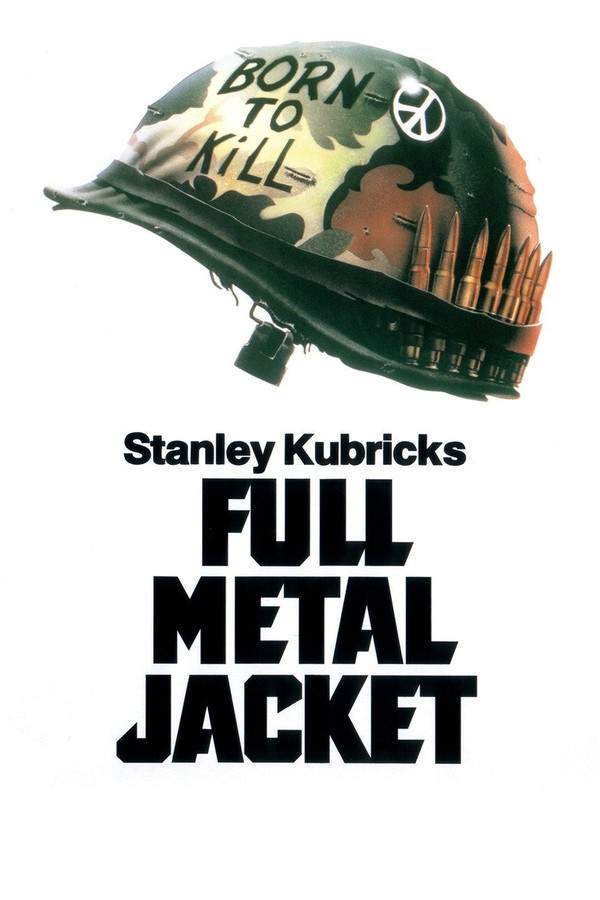
Full Metal Jacket (1987) movie poster

Plot Summary

Full Metal Jacket (1987) Plot Summary Explained

Release, runtime and language
1987 · 116 min · English
JustWatch #369 40
Directed by
Stanley Kubrick
Starring
Vincent D'Onofrio, Matthew Modine, R. Lee Ermey
Budget
$30M

Stanley Kubrick's intense film depicts the Vietnam War through the experiences of two Marines. "Joker" Davis, played by Matthew Modine, and his fellow recruit, "Gomer Pyle," endure the harsh and dehumanizing process of Marine Corps boot camp. The film follows their transformation into soldiers, highlighting Pyle’s disturbing psychological breakdown and Joker’s subsequent deployment to Vietnam as a journalist, where he confronts the brutal realities of combat.

On this page (6)
  1. 1 Where to watch
  2. 2 What happens: full plot
  3. 3 Plot questions answered
  4. 4 Movie threads
  5. 5 Movies like Full Metal Jacket
  6. 6 Every angle

Where to watch

Where to Watch Full Metal Jacket (1987)

Where can you watch Full Metal Jacket? Stream, rent or buy it in the US, including on HBO Max, TCM and YouTube Free: current JustWatch availability with up-to-date prices.

Streaming availability powered by JustWatch

Full plot summary · contains spoilers

What Happens in Full Metal Jacket: Full Plot Summary

The whole story of Full Metal Jacket (1987) explained, from the opening scene to the final frame: every key event, every twist and what it all adds up to. Read it as a quick recap before the sequel, to check a scene you missed, or to finally understand what really happened.

In 1967, amidst the tumult of the Vietnam War, a fresh group of recruits from the United States Marine Corps arrives at Parris Island to undergo rigorous basic training. Upon having their heads shaved, they are introduced to their fierce Senior Drill Instructor, Gunnery Sergeant Hartman (R. Lee Ermey), who uses extreme methods to mold the recruits into battle-ready Marines. Among these recruits are Privates "Joker" (Matthew Modine), "Cowboy" (Arliss Howard), and the corpulent, clumsy Leonard Lawrence (Vincent D'Onofrio), who earns the mocking moniker of "Gomer Pyle" as he consistently incurs Hartman's wrath.

Despite the harsh discipline imposed by Hartman, Pyle struggles to adapt, eventually being paired with Joker. With Joker's assistance, Pyle shows some improvement; however, his progress is abruptly interrupted when Hartman discovers a contraband jelly doughnut stashed in Pyle’s footlocker. Viewing this as a major failure, Hartman implements a brutal collective punishment system—every blunder Pyle makes results in punishment for the entire platoon, while Pyle himself is spared. This leads to the platoon enacting a harsh hazing ritual, known as a blanket party, where they restrain Pyle and beat him with bars of soap wrapped in towels. Following this harrowing experience, Pyle undergoes a dramatic transformation and becomes a model Marine. While this impresses Hartman, it raises alarm bells for Joker, who observes troubling signs of Pyle's mental decline, notably his bizarre behavior of talking to his M14 rifle.

After the recruits graduate, they receive their Military Occupational Specialty assignments, and Joker is designated as a Basic Military Journalist. On their final night at Parris Island, Joker encounters Pyle in the bathroom, where he is loading his rifle. Joker’s attempts to soothe Pyle are in vain as Pyle begins to execute drill commands and recites the Rifleman's Creed. The ensuing chaos awakens the platoon and Hartman, leading to a tragic confrontation. In a shocking turn of events, Pyle shoots Hartman dead before turning the weapon on himself.

Fast forward to January 1968, and we find Joker, now a Sergeant, serving as a Marine War correspondent in Vietnam for Stars and Stripes, alongside Private First Class Rafterman (Kevyn Major Howard), a keen combat photographer eager to experience the thick of battle. At the Marine base, Joker faces ridicule for his lack of the thousand-yard stare, a stark indicator of someone who has not seen war. Their routine is shattered with the onset of the Tet Offensive, as the North Vietnamese Army intensifies its assault on the base.

The following day, journalists receive updates regarding enemy advances across South Vietnam, and Joker is dispatched to Phu Bai, accompanied by Rafterman. There, they rendezvous with the Lusthog Squad, where Cowboy has now advanced to the rank of Sergeant. During the intense Battle of Hue, Joker witnesses horror as platoon leader "Touchdown" (Ed O'Ross) is killed in action. Once the area is secured by US Marines, American news personnel enter Hue, questioning Marines about their experiences and views regarding the war.

During a tense patrol, Crazy Earl (Kieron Jecchinis), the squad leader, falls victim to a booby trap, leaving Cowboy in command. As they navigate murky terrain, Cowboy orders Eightball (Dorian Harewood) to scout ahead. However, tragedy strikes as a Viet Cong sniper injures Eightball, prompting squad medic Doc Jay (John Stafford) to break rank and provide aid, only to be wounded himself. Cowboy learns that tank support is unavailable, prompting a call for withdrawal. In a moment of insubordination, Animal Mother (Adam Baldwin) disregards Cowboy's orders and attempts a rescue of the wounded men.

Despite identifying only one sniper in the vicinity, disaster ensues as both Doc Jay and Eightball lose their lives during the confrontation. As Cowboy leads an assault on the sniper’s position, Joker finds himself face-to-face with the enemy—a teenage girl. As his rifle jams, he inadvertently alerts her to his presence, but Rafterman comes to the rescue, fatally wounding her. With the squadnow united, they stand over the wounded sniper, who begs for a merciful death, igniting a moral debate among the Marines. In a moment fraught with hesitation, Joker ultimately pulls the trigger.

The Marines, now congratulating him on his "kill," march back toward camp, singing the Mickey Mouse March. Reflecting on his experiences, Joker muses that even while being "in a world of shit," he is relieved to be alive and unshackled by fear.
Last updated: November 08, 2024 at 01:17

Was this helpful?

Plot questions answered

Full Metal Jacket Plot Explained: Your Questions Answered

The questions people ask most about Full Metal Jacket (1987): what happens in the confusing scenes, why the characters do what they do, the twists, hidden details and what the ending means. Each answer contains spoilers.

Q1

Why does Pyle kill Hartman and then himself?

Pyle's killing of Hartman and subsequent suicide is the result of a complete psychological breakdown. After the brutal blanket party hazing, Pyle transformed into a model Marine on the surface, but his mind fractured. He began talking to his rifle and exhibiting erratic behavior. On their final night at Parris Island, Pyle loaded his rifle in the bathroom and began reciting the Rifleman's Creed. When Joker tried to calm him, Pyle snapped, shooting Hartman dead before turning the weapon on himself. The extreme dehumanizing treatment he received broke him completely.

Foreshadowing: Earlier, Joker notices Pyle talking to his M14 rifle and displaying troubling behavioral changes that hint at his deteriorating mental state.

  • gomer pyle
  • hartman death
  • suicide
  • military psychology
  • boot camp breakdown
Q2

Why does Pyle suddenly become a model Marine after the blanket party?

After the blanket party hazing, Pyle undergoes a dramatic transformation because the trauma essentially erases his previous identity. The beating with soap-wrapped towels breaks him psychologically, and he channeled all his energy into becoming the perfect soldier to gain acceptance and avoid further pain. Hartman praised this transformation, not recognizing that Pyle's compliance was actually a complete mental collapse rather than genuine adaptation.

Foreshadowing: Hartman's praise of Pyle's sudden improvement contrasts with Joker's growing alarm at Pyle's bizarre behavior.

  • gomer pyle
  • blanket party
  • psychological breakdown
  • military training
Q3

Why is Joker assigned as a war correspondent?

Joker receives the Military Occupational Specialty of Basic Military Journalist because of his personality and intellect. Throughout boot camp, Joker demonstrates wit, critical thinking, and a tendency to question authority, qualities that would serve a journalist. His nickname 'Joker' itself suggests a perceptive, satirical nature. The Marine Corps assigned him to Stars and Stripes to document the war, though this role puts him in the ironic position of reporting on the very conflict he was trained to fight.

Foreshadowing: Joker's independent thinking and wit during boot camp foreshadow his role as an observer rather than a conventional warrior.

  • joker
  • military journalist
  • stars and stripes
  • mos assignment
Q4

Why does the platoon turn against Pyle with the blanket party?

The platoon attacks Pyle because Hartman's collective punishment system made them all victims of Pyle's mistakes. When Hartman found a contraband jelly doughnut in Pyle's locker, he punished the entire platoon for Pyle's individual failure. This created intense resentment toward Pyle among the other recruits who suffered because of his clumsiness and violations. The blanket party was their way of channeling that frustration into direct action against the source of their punishment.

Foreshadowing: The collective punishments begin immediately after the jelly doughnut incident, building tension that leads to the blanket party.

  • blanket party
  • hazing
  • collective punishment
  • platoon
  • parris island
Q5

Why does Joker hesitate to kill the wounded Viet Cong sniper?

Joker hesitates because the sniper is revealed to be a teenage girl, forcing him to confront the human cost of war. After Rafterman kills her, she lies wounded and begs for a merciful death. This creates a profound moral dilemma, Joker sees her not as an enemy combatant but as a young woman. His hesitation represents the last vestige of his civilian morality before the harsh realities of war force him to pull the trigger, symbolizing the complete moral corrosion of combat.

Foreshadowing: The tense build-up to the sniper confrontation, including Joker's rifle jamming, creates mounting tension before the moral revelation.

  • joker
  • sniper
  • mercy killing
  • viet cong
  • moral dilemma
  • vietnam war
Q6

What is the significance of the thousand-yard stare?

The thousand-yard stare is a term for the detached, hollow look of someone who has experienced extreme trauma or combat. At the Marine base in Vietnam, Joker faces ridicule for lacking this stare, his fellow Marines see it as proof he hasn't truly experienced war. This becomes ironic because Joker, as a journalist, has witnessed death and destruction but maintained his humanity. By the end, after killing the sniper, Joker has earned that stare, symbolizing how war has fundamentally changed him.
Foreshadowing: Early in Vietnam, Joker's clean appearance and lack of thousand-yard stare mark him as an outsider among combat veterans.

  • thousand yard stare
  • joker
  • combat trauma
  • psychological effect of war
Q8

Why does Cowboy's leadership lead to casualties during the patrol?

Cowboy's decisions directly cause the deaths of Doc Jay and Eightball. After Crazy Earl is killed by a booby trap, Cowboy takes command but makes critical errors. He sends Eightball to scout ahead despite knowing the terrain is dangerous, and when Doc Jay breaks rank to help the wounded Eightball, Cowboy calls for withdrawal rather than mounting a rescue. Animal Mother defies orders and attempts a rescue, but by then it's too late. Cowboy's inexperience and cautious leadership cost two lives.

Foreshadowing: Cowboy's promotion to Sergeant from the Lusthog Squad suggests competence, but his first real command exposes his limitations under fire.

  • cowboy
  • animal mother
  • doc jay
  • eightball
  • leadership
  • patrol deaths
Q9

Why do the Marines sing Mickey Mouse March at the end?

The Marines sing the Mickey Mouse March as they march back to camp as a jarring juxtaposition between childhood innocence and the brutality they just experienced. The song represents the Mickey Mouse Club, a symbol of American childhood, which stands in stark contrast to the murder they witnessed and the moral compromise Joker made. This ironic singing demonstrates how war has corrupted their humanity, the soldiers can revert to childlike behavior while covered in blood and trauma. It underscores the film's theme of lost innocence.

Foreshadowing: Earlier, Joker reflects on being 'in a world of shit' but relieved to be alive, suggesting this survival mindset allows for such ironic behavior.

  • mickey mouse march
  • irony
  • innocence
  • war corruption
  • ending
Q10

Why does Pyle talk to his M14 rifle?

Pyle talks to his rifle because he has developed a psychotic attachment to it as his only source of stability and identity. After being broken by the blanket party and transformed into a 'model Marine,' his rifle becomes his entire world, it's the one thing that gives him purpose and discipline. This bizarre behavior is Joker's first clear warning that Pyle's mental state has seriously deteriorated. The rifle represents everything Pyle has left: his identity as a Marine, his only source of validation, and his potential instrument of violence.

Foreshadowing: Joker observes this behavior and becomes alarmed, sensing something is deeply wrong with Pyle despite Hartman's approval.

  • gomer pyle
  • rifle
  • mental breakdown
  • psychosis
  • m14
Q11

Why does Joker's rifle jam during the sniper confrontation?

Joker's rifle jamming is a plot device that creates the critical moment where he becomes vulnerable to the sniper and must rely on Rafterman for survival. This malfunction forces Joker into a helpless position, highlighting his unpreparedness for direct combat compared to his role as a journalist. The jam also creates a brief moment of tension where the teenage girl sniper almost kills him, making Rafterman's intervention more significant. It underscores Joker's identity as someone who writes about war rather than fights in it.

Foreshadowing: Throughout the Vietnam portion, Joker is established as a non-combatant, and the jammed rifle reinforces his vulnerability.

  • joker
  • rifle jam
  • sniper
  • confrontation
  • technical malfunction
Q12

Why does Gunnery Sergeant Hartman use such extreme training methods?

Hartman's extreme methods are intended to strip recruits of their civilian identities and transform them into conditioned warriors who can survive combat. He believes that breaking down individuals physically and psychologically will rebuild them into unified Marines who can function under extreme stress. Hartman views his harsh approach as necessary preparation for the realities of war, where weakness means death. However, his methods ultimately contribute to Pyle's complete psychological breakdown, demonstrating the fine line between toughening soldiers and destroying them.

Foreshadowing: Hartman's philosophy is established early, his famous line about being trained to 'squeeze the trigger' foreshadows the lethal outcomes of his training.

  • hartman
  • drill instructor
  • training methods
  • marine corps
  • psychological warfare

Movie threads

More Movies Like Full Metal Jacket, by Mood & Story

Curated lists built around what makes Full Metal Jacket tick: the same mood, the same kind of story or the same emotional payoff. Each list explains why these movies belong together.

Intense Training Camp Stories like Full Metal Jacket

Stories where extreme training pushes characters to their psychological breaking point. If you appreciated the boot camp intensity of Full Metal Jacket, explore other movies about dehumanizing training, psychological breakdowns under pressure, and the brutal process of forging soldiers. These similar films capture the grim reality of institutional conditioning and its profound psychological cost.

  • grim
  • intense
  • dehumanizing
  • psychological pressure
  • brutal
  • disciplined
  • Tone: dark, grim, intense
  • Pacing: deliberate, pressure-building
Why these movies?

The story pattern: These narratives typically follow a group of newcomers through an arduous and often cruel training regimen. A central conflict arises between the individual's identity and the institution's demand for conformity, frequently leading to a dramatic psychological climax where a character either breaks or is fundamentally reforged.

Why they belong together: Movies are grouped here for their shared focus on the psychological drama of training. They share a high-intensity, grim tone, and a deliberate pacing that builds pressure towards a critical breaking point, exploring themes of dehumanization, discipline, and survival of the self.

Bleak and Satirical War Movies like Full Metal Jacket

War films that mix brutal realism with a dark, satirical edge on combat's madness. For viewers who liked the cynical satire and brutal realism of Full Metal Jacket, this section features similar war stories with a darkly humorous or absurdist edge. Discover films that explore the moral chaos and psychological toll of combat, questioning the very nature of war itself.

  • satirical
  • brutal
  • chaotic
  • fatalistic
  • grim
  • cynical
  • Tone: dark, satirical, bleak
  • Pacing: variable, episodic, chaotic
Why these movies?

The story pattern: The narrative pattern often follows a protagonist who maintains a critical or journalistic distance from the chaos around them, serving as the audience's eyes for the absurdity. The journey is episodic, moving through various surreal or horrific encounters that cumulatively reveal the ultimate meaninglessness and moral corrosion of the war effort, leading to a bittersweet or bleak resolution.

Why they belong together: These films are united by their unique blend of a dark tone, high intensity, and satirical perspective on war. They share a heavy emotional weight, a variable pacing that mirrors the chaos of combat, and a central theme of moral ambiguity and loss of innocence in the face of institutional madness.

If you liked this

Movies Like Full Metal Jacket

Similar movies to Full Metal Jacket: the same genre, themes or kind of story. Each one comes with its own plot summary, timeline and ending explained.

Browse all movie summaries

Every angle

Full Metal Jacket (1987) Explained: Plot, Timeline & Characters

Everything about Full Metal Jacket in one place: what happens in the plot summary, the timeline in chronological order, the characters and meaning and a spoiler-free summary. What's After the Movie adds the cast, box office and post-credit scenes.

Coming soon on iOS and Android

The Plot Explained Movie Summary App

Plot summaries, endings explained and timelines on your phone. Catch up on any movie in minutes, save your favorites and never miss a twist again.

Be the first to know when we launch. Your email stays private, always.

Learn more about the app