Year: 1942
Runtime: 87 mins
Language: English
Director: John Farrow
Facing overwhelming odds in late 1941, a determined detachment of United States Marines endures a desperate siege, refusing to surrender despite having no prospect of relief or resupply. Their tenacious defense aims to thwart the Japanese Navy’s attempt to seize the island base, exemplifying purposeful courage in American history.
Warning: spoilers below!
Haven’t seen Wake Island yet? This summary contains major spoilers. Bookmark the page, watch the movie, and come back for the full breakdown. If you're ready, scroll on and relive the story!
Read the complete plot breakdown of Wake Island (1942), including all key story events, major twists, and the ending explained in detail. Discover what really happened—and what it all means.
A map overlays the opening scenes, accompanied by a voiceover that traces the United States military presence on Wake Island up to November 1941. Maj. Geoffrey Caton (played by Brian Donlevy) lands at Wake Island aboard a Pan American Clipper to assume command, and immediately clashes with the civilian contractor Shad McClosky (played by Albert Dekker) over a sprawling trench and shelter-building project. The island’s defense hinges on grit and improvisation, and Caton’s arrival sets the stage for a clash between military discipline and civilian enterprise, all while the threat of war looms larger with each passing day.
As Caton investigates, he identifies two young Privates, Aloysius K. “Smacksie” Randall and Joe Doyle, portrayed by William Bendix and Robert Preston respectively, who are already under strain in a system that prizes order over convenience. He orders them to dig a substantial trench by hand, a task meant to harden the defenses but also a microcosm of the friction between the military and the civilian workforce. McClosky’s drive to finish his large-scale trenches and living quarters on time intensifies these tensions, as the civilian crew presses forward under pressure while the military upper ranks want to maintain efficiency and readiness. The clash underscores a fragile balance on an island that is about to be tested by a far larger force.
The narrative pushes forward with the dawn of December 7, 1941. Randall’s enlistment is coming to an end, and news from Pearl Harbor jolts Wake Island into a state of high alert. Randall, unsure of what to do next, retreats with civilians to a bomb shelter as enemy aircraft close in. In the sky above, a squadron of Japanese bombers presses an overwhelming assault—four Americans push back against twenty-four attackers, managing to shoot down several planes even as the island absorbs heavy bombardment. The battle marks a brutal turning point, with human courage tested against the brutality of the air and sea onslaught.
Back on the ground, Caton makes a hard decision: he informs Lt. Bruce Cameron (played by Macdonald Carey) that his wife, Sally Cameron (uncredited, portrayed by Barbara Britton), was killed at Pearl Harbor. The personal cost of war weighs heavily on the command structure, even as the defense rigs up makeshift responses and Cameron formulates a bold plan to strike back. When a Japanese heavy cruiser comes within range, Caton orders a clever plan by Cameron to strip a fighter plane down to a bare 15 gallons of fuel while carrying a double payload of bombs, a move that tests resources, nerve, and ingenuity in equal measure. Cameron is wounded in the ensuing aerial action, but he manages to complete the mission and makes a perilous, controlled landing, before succumbing to his injuries.
With dwindling large-caliber ammunition, Caton widens the defense by dispersing his forces and equipping them with smaller weapons. Japanese air raids persist, exacting heavy damage and casualties, and the island’s last lines of defense are strained to the limit. The island endures a particularly brutal moment when the final American pilot, Captain Bill Patrick (played by Damian O’Flynn), is killed while bailing out of a damaged craft. As the air and sea dominion of the attack intensifies, the Marines and civilians fight to hold the line against overwhelming odds.
Facing a renewed Japanese demand for surrender, Caton refuses to yield and issues a stark reply, “Come and get us,” signaling that his posts should act independently and endure as long as possible. When communications fail, Caton orders the last man to depart with a written message, a moment of solitary resolve in a losing battle. McClosky returns, seeking a weapon, and together they relocate to an abandoned machine-gun position where Caton takes the gun and holds their ground. The Japanese force breaches the defenses, and one by one the principal characters fall in action. The film closes on a somber note, with a voiceover declaring the grim truth of war:
This is not the end.
Last Updated: October 09, 2025 at 11:24
Discover curated groups of movies connected by mood, themes, and story style. Browse collections built around emotion, atmosphere, and narrative focus to easily find films that match what you feel like watching right now.
Stories of isolated groups fighting against impossible odds, facing certain doom.For viewers seeking movies like Wake Island, this list features intense war and survival stories about hopeless sieges. These films share a tense, grim atmosphere where characters make a heroic final stand against overwhelming forces, often ending in tragedy.
The narrative follows a group—often soldiers or survivors—as they are surrounded and besieged by a superior enemy. The story escalates through a series of attacks and mounting casualties, creating a claustrophobic and desperate atmosphere. The plot typically moves linearly toward an inevitable, bleak conclusion where sacrifice is the central theme.
Movies are grouped here for their shared core experience: the visceral tension of a hopeless defense. They connect through high intensity, fast pacing, a bleak tone, and the heavy emotional weight of sacrifice. The primary appeal is the unflinching portrayal of courage when all hope is lost.
Unflinching war stories that focus on the heavy cost and tragedy of conflict.If you liked the somber realism of Wake Island, this collection highlights similar war dramas. These films are characterized by a heavy emotional weight, straightforward narratives of conflict, and a bleak tone that reflects the tragic costs of warfare.
The narrative pattern is a straightforward, often chronological account of a military engagement. The journey focuses on the psychological and physical toll on the characters, leading to significant loss. The ending is typically somber or tragic, serving as a poignant reminder of the human cost of war rather than a celebration of victory.
These films are united by their commitment to a sobering, heavy portrayal of war. They share a high intensity, fast or steady pacing focused on combat, and a straightforward complexity that keeps the emphasis on the visceral experience and thematic weight of sacrifice and loss.
Don't stop at just watching — explore Wake Island in full detail. From the complete plot summary and scene-by-scene timeline to character breakdowns, thematic analysis, and a deep dive into the ending — every page helps you truly understand what Wake Island is all about. Plus, discover what's next after the movie.
Track the full timeline of Wake Island with every major event arranged chronologically. Perfect for decoding non-linear storytelling, flashbacks, or parallel narratives with a clear scene-by-scene breakdown.
Discover the characters, locations, and core themes that shape Wake Island. Get insights into symbolic elements, setting significance, and deeper narrative meaning — ideal for thematic analysis and movie breakdowns.
Get a quick, spoiler-free overview of Wake Island that covers the main plot points and key details without revealing any major twists or spoilers. Perfect for those who want to know what to expect before diving in.
Visit What's After the Movie to explore more about Wake Island: box office results, cast and crew info, production details, post-credit scenes, and external links — all in one place for movie fans and researchers.
Discover movies like Wake Island that share similar genres, themes, and storytelling elements. Whether you’re drawn to the atmosphere, character arcs, or plot structure, these curated recommendations will help you explore more films you’ll love.
Wake Island (1942) Scene-by-Scene Movie Timeline
Wake Island (1942) Movie Characters, Themes & Settings
Wake Island (1942) Spoiler-Free Summary & Key Flow
Movies Like Wake Island – Similar Titles You’ll Enjoy
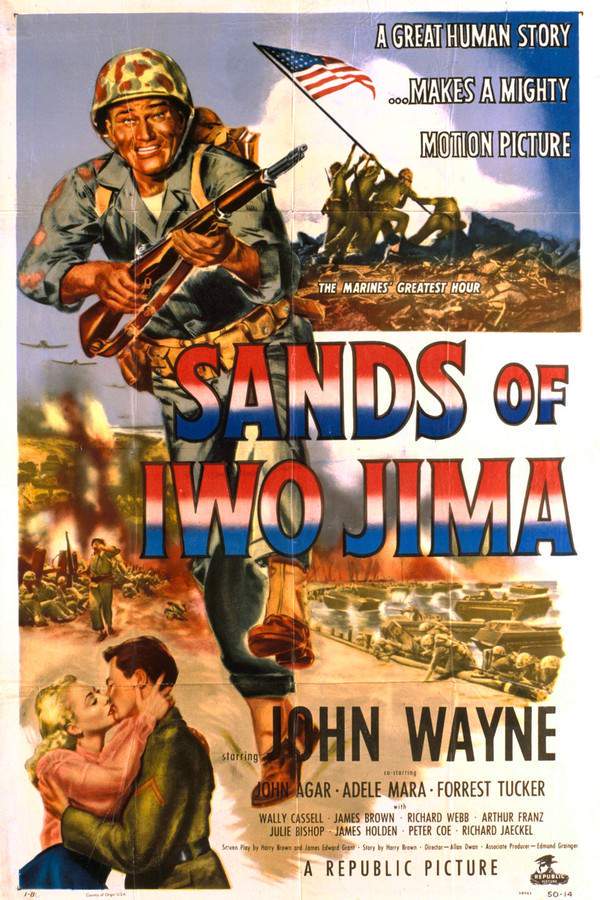
Sands of Iwo Jima (1950) Full Movie Breakdown
Midway (2019) Plot Summary & Ending Explained
Midway (1976) Spoiler-Packed Plot Recap
Dauntless: The Battle of Midway (2019) Story Summary & Characters
Battle of Blood Island (1960) Full Summary & Key Details
No Man Is an Island (1962) Complete Plot Breakdown
Tarawa Beachhead (1958) Film Overview & Timeline
Home of the Brave (1949) Detailed Story Recap
Wake Me When It’s Over (1960) Full Movie Breakdown
Beach Red (1967) Ending Explained & Film Insights
Beachhead (1954) Complete Plot Breakdown
Hell in the Pacific (1968) Story Summary & Characters
To the Shores of Iwo Jima (1945) Film Overview & Timeline
Okinawa (1952) Story Summary & Characters
Stand by for Action (1942) Detailed Story Recap