Plot Explained Spoilers guaranteed!
Plot Explained

Browse by genre

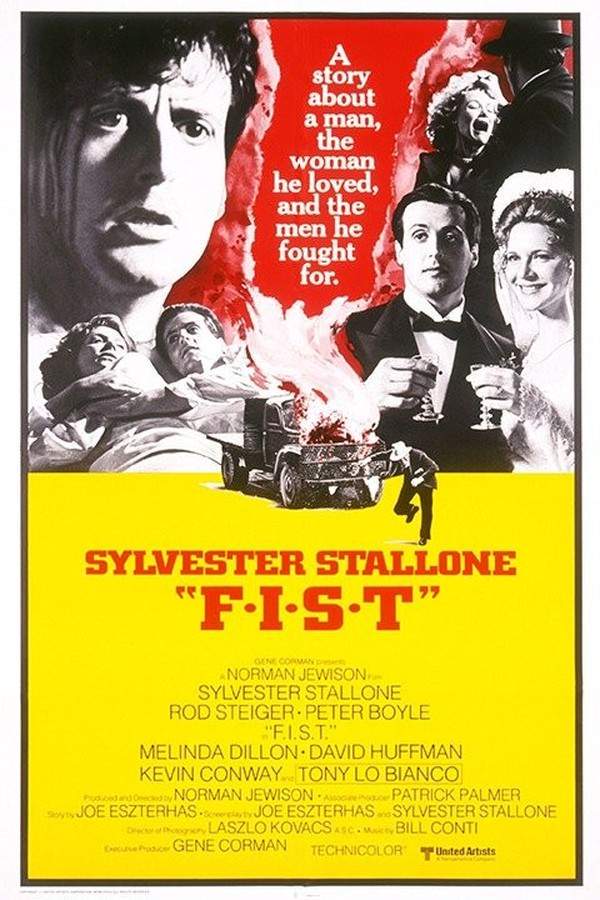
F.I.S.T. (1978) movie poster

Characters & Themes

F.I.S.T. (1978) Characters, Setting & Themes Explained

Release, runtime and language
1978 · 145 min · English
Loading streaming availability…
Directed by
Norman Jewison
Starring
Sylvester Stallone, Tony Lo Bianco, Cassie Yates, David Huffman, John Lehne, Kevin Conway

A warehouse worker named Johnny Kovak sparks a protest against unfair labor practices, leading to a powerful union movement known as the Federation of Interstate Truckers. As the union gains influence, Kovak finds himself embroiled in increasingly dangerous situations and forming alliances that threaten his life and the future of the movement he helped create. The gritty drama explores themes of power, corruption, and the fight for workers' rights.

On this page (8)
  1. 1 Where to watch
  2. 2 Characters explained (9)
  3. 3 Where & when it takes place
  4. 4 Themes & meaning (4)
  5. 5 Character & meaning questions
  6. 6 Movie threads
  7. 7 Movies like F.I.S.T.
  8. 8 Every angle
Loading streaming availability…

9 main characters · contains spoilers

F.I.S.T. Characters Explained: Who Is Who

The main characters of F.I.S.T. (1978), heroes and villains: what drives them, how they change over the course of the story and what each of them reveals about the film's bigger ideas.

  • Johnny Kovak (actor: Sylvester Stallone)

    A Hungarian-American trucker who rises from worker to major union organizer. He leads through recruiting and bold action, navigating loyalty, ambition, and the costs of leadership. Kovak embodies the push for union power amid pressure from employers and crime figures.

    • 🏷️ Leader
    • 🧭 Ambitious
    • 🤝 Loyal
  • Abe Belkin (actor: Tony Lo Bianco)

    Kovak's ally and fellow organizer who helps build the union's early strength. He becomes a trusted right-hand figure, facing increasing danger as the movement grows. Belkin's fate underscores the personal risks of political activism.

    • 🏷️ Loyal
    • 🧱 Steady
    • ⚖️ Principled
  • Anna Zarinkas (actor: Cassie Yates)

    A Lithuanian-American worker and Kovak's romantic interest. She represents personal stakes amid the labor upheaval and provides grounding amid the movement's turmoil. Anna's presence highlights the human side of the conflict.

    • 🏷️ Romantic
    • 💪 Supportive
    • 👩‍👧‍👦 Family
  • Mike Monahan (actor: David Huffman)

    A worker impressed by Kovak and Belkin, he becomes a rising figure in recruitment. He embodies the hopeful energy of the early union movement but meets a violent end, illustrating the peril of industrial activism.

    • 🏷️ Energetic
    • 🧭 Motivated
    • 🗡️martyred
  • Max Graham (actor: Rod Steiger)

    A hot-headed F.I.S.T. leader who commands influence and becomes Kovak's rival for the presidency. He embodies internal tensions and the danger of power-seeking within the union.

    • 🏷️ Rival
    • 🧠 Strategic
    • 🏛️ Powerful
  • Vince Doyle (actor: Peter Boyle)

    A local gangster who provides muscle to protect and advance union interests. His involvement deepens the crime-labor nexus surrounding the movement and complicates its ethics.

    • 🏷️ Mobster
    • 🗡️ Violent
    • 🏭 Industrial
  • Babe Milano (actor: Peter Donat)

    A crime figure who enters the scene seeking a share of the union's profits. Milano's appearance adds another layer of criminal influence to the labor struggle.

    • 🏷️ Crime Boss
    • 🧪 Corrupt
    • 🕳️ Shadowy
  • Mr. Gant (actor: John Lehne)

    A loading dock supervisor enforcing harsh, unfair practices. His actions spark Kovak's resolve to organize and push for better treatment of workers.

    • 🏷️ Authority
    • 👨‍✈️ Enforcement
    • 🕴️ Administrator
  • Boss Andrews (actor: Kevin Conway)

    A trucking firm executive who resists unionization, becoming a key antagonist to Kovak and the union's expansion efforts. His stance catalyzes conflict and drives the campaign to secure labor agreements.

    • 🏷️ Antagonist
    • 🧨 Opposer
    • 💼 Business

Last updated: October 04, 2025 at 08:02

Was this helpful?

Setting

Where and When Does F.I.S.T. Take Place?

The setting of F.I.S.T. (1978): the year and time period, the places and locations, and how they shape the characters, the mood and the tension of the story.

Time period

1937-1958

The film begins in 1937 amid the Great Depression and intense labor activism. It follows the growth of the F.I.S.T. union through the 1940s and into the 1950s, illustrating the era's labor conflicts and reorganizations. By 1958, the union has expanded into a national force, shadowed by crime and political scrutiny.

Location

Cleveland, Ohio, Midwest United States

The story unfolds at a busy loading dock in Cleveland, capturing the city’s gritty industrial atmosphere. It centers on dockside work, unfair pay practices, and the early stirrings of union organizing. The Midwest industrial landscape shapes the characters and the escalating fight for fair labor conditions.

  • 🏭 Industrial
  • 🛠️ Labor
  • 🚚 Dockyards

Last updated: October 04, 2025 at 08:02

Was this helpful?

4 major themes

F.I.S.T. Meaning: Themes & Message Explained

What is F.I.S.T. (1978) really about? The emotional, social and philosophical themes the film keeps returning to, its symbolism and the message beneath the surface.

  • Labor Rights

    The core conflict centers on securing fair pay and safe working conditions for truckers and dock workers. Leadership is tested as workers demand recognition and bargaining power against powerful employers. The narrative shows how collective action can shift the balance of power in the workplace.

  • Corruption

    As the union grows, crime figures and shell companies intrude, blurring lines between labor organizing and criminal empire building.-The story reveals how corruption within leadership and external mob influence threaten the integrity of the movement. Investigations and accusations add a layer of political risk to the union's ambitions.

  • Loyalty & Betrayal

    Friendships formed during the organizing drive are tested by ambition and danger. Allies stumble into rivalries, and trust is shattered when violence and assassination intrude. The personal costs of leadership reveal the human side of the labor struggle.

  • Conflict & Struggle

    Industrial action leads to strikes, clashes with security, and bold moves to win contracts. The narrative tracks the ripple effects of protests from the docks to the gates of trucking firms. The fight blends worker solidarity with the high-stakes gamble of power and influence.

Last updated: October 04, 2025 at 08:02

Was this helpful?

Character & theme questions

F.I.S.T. Characters & Meaning: Your Questions Answered

The questions people ask about F.I.S.T. (1978): who the characters really are, their relationships, what the symbols mean, where it takes place and what the movie is really about. Each answer contains spoilers.

Q1

Where is F.I.S.T. set?

F.I.S.T. is set in Cleveland, Ohio, in the gritty industrial Midwest. The story unfolds at a busy loading dock, capturing the city's rough working-class atmosphere. The Midwest industrial landscape shapes the characters and their fight for fair labor conditions.

  • cleveland
  • ohio
  • setting
  • industrial
  • dockyards
  • midwest
Q2

What time period does the movie cover?

The film spans from 1937, during the Great Depression and peak labor activism, through the 1940s and into the 1950s. By 1958, the F.I.S.T. union has grown into a national force. This era was marked by intense labor conflicts, reorganizations, and increasing scrutiny of union activities.

  • 1937
  • 1958
  • great depression
  • labor movement
  • time period
  • 1940s
  • 1950s
Q3

What is the F.I.S.T. union in the movie?

F.I.S.T. stands for Federation of Interstate Truckers, a union representing truckers and dock workers. It began as a movement to secure fair pay and safe working conditions. As it grew, the union became a powerful force in the trucking industry but became entangled with organized crime and political corruption.

  • fist
  • federation of interstate truckers
  • union
  • labor organization
  • truckers
Q4

What are the main themes of the movie?

F.I.S.T. explores labor rights and the fight for fair compensation in dangerous working conditions. It also delves into corruption, showing how crime figures and mob influence infiltrate the union movement. Loyalty and betrayal are central as friendships formed during organizing are tested by ambition and violence.

  • labor rights
  • corruption
  • betrayal
  • loyalty
  • themes
  • workers rights
Q5

Who is Johnny Kovak in the film?

Johnny Kovak is a Hungarian-American trucker who rises from warehouse worker to major union organizer. He leads the F.I.S.T. movement through recruiting and bold action, navigating loyalty, ambition, and the personal costs of leadership. He embodies the push for union power amid pressure from employers and crime figures.

  • johnny kovak
  • protagonist
  • leader
  • union organizer
  • hungarian american
Q6

How does corruption affect the F.I.S.T. union?

As the union grows, crime figures and shell companies intrude, blurring lines between legitimate labor organizing and criminal empire building. Mobsters like Vince Doyle and Babe Milano provide muscle but also bring criminal influence. This corruption threatens the integrity of the movement and leads to investigations and political risk.

  • corruption
  • organized crime
  • mob
  • crime figures
  • union corruption
  • fist leadership
Q7

What happens to Johnny Kovak and his allies?

The movie has a bleak ending, Kovak's idealism is corrupted by power and he is ultimately murdered. Many of his allies meet violent ends, including Mike Monahan who is killed for his involvement in the movement. The personal costs of leadership reveal the human toll of the labor struggle.

  • johnny kovak fate
  • betrayal
  • violence
  • murder
  • allies deaths
  • tragic ending
Q8

Who are the main antagonists in F.I.S.T.?

The antagonists include Boss Andrews, a trucking firm executive who resists unionization, and various crime figures like Vince Doyle and Babe Milano. There are also internal antagonists like Max Graham, a hot-headed F.I.S.T. leader who becomes Kovak's rival for the presidency. These forces create layered conflicts for the protagonist.

  • boss andrews
  • vince doyle
  • babe milano
  • max graham
  • antagonists
  • enemies
Q9

Who is Anna Zarinkas in the story?

Anna Zarinkas is a Lithuanian-American worker and Kovak's romantic interest. She represents the personal stakes amid the labor upheaval and provides grounding amid the movement's turmoil. Her presence highlights the human side of the conflict and the personal costs paid by those close to union organizers.

  • anna zarinkas
  • love interest
  • romantic subplot
  • lithuanian american
  • character role
Q10

Why does the movie have such a dark tone?

The film's dark tone reflects its tragic narrative arc, a classic story of idealism corrupted by power. Kovak begins as a champion of workers' rights but becomes entangled with organized crime and political corruption. The pervasive threat of violence, the death of allies, and the hero's murder create an unrelentingly bleak atmosphere.

  • dark tone
  • bleak ending
  • tragedy
  • moral decay
  • corruption
  • themes

Movie threads

More Movies Like F.I.S.T., by Mood & Story

Curated lists built around what makes F.I.S.T. tick: the same mood, the same kind of story or the same emotional payoff. Each list explains why these movies belong together.

Tragic Rise and Fall Stories like F.I.S.T.

Stories where ambition leads to moral decay and an inescapable downfall. If you were captivated by the moral collapse in F.I.S.T., explore these other movies about ambitious leaders whose hunger for power leads to their tragic undoing. These films share a heavy emotional weight and a dark, often bleak, tone as they chart the downfall of a once-idealistic hero.

  • tragic
  • grim
  • tense
  • corrosive
  • doomed
  • anxious
  • Tone: dark, tragic
  • Pacing: steady, epic
Why these movies?

The story pattern: The narrative follows a clear arc: the protagonist's initial noble cause is slowly corrupted by the acquisition of power. Alliances turn toxic, moral lines are crossed, and the story builds towards an inexorable, tragic conclusion where the hero is ultimately destroyed by the world they helped build.

Why they belong together: These films are grouped by their shared exploration of the corrupting nature of power and the classic tragic hero structure. They deliver a heavy, often anxious viewing experience through a steady, consequential pacing that makes the downfall feel both earned and devastating.

Gritty Crime Dramas with Moral Complexity like F.I.S.T.

Crime stories where the lines between right and wrong are permanently blurred. Fans of F.I.S.T.'s gritty portrayal of organized crime and moral compromise will find similar tension in these films. Discover movies like F.I.S.T. that explore the anxious, oppressive world of crime where good intentions are crushed by harsh realities and survival comes at a heavy cost.

  • gritty
  • tense
  • anxious
  • oppressive
  • corrosive
  • crime
  • Tone: dark, tense, gritty
  • Pacing: steady, building tension
Why these movies?

The story pattern: These narratives typically follow characters who become entangled with powerful, corrupt organizations. The plot is driven by tense negotiations, betrayals, and violent consequences, unfolding at a steady pace that allows the sense of dread and moral unease to build towards a destructive outcome.

Why they belong together: They are united by a consistently dark and tense atmosphere, a focus on the psychological toll of living within a corrupt system, and a gritty visual style. The experience is defined by high intensity, heavy emotional weight, and a pervasive feeling of anxiety and inevitability.

If you liked this

Movies Like F.I.S.T.

Similar movies to F.I.S.T.: the same genre, themes or kind of story. Each one comes with its own plot summary, timeline and ending explained.

Browse all movie summaries

Every angle

F.I.S.T. (1978) Explained: Plot, Timeline & Characters

Everything about F.I.S.T. in one place: what happens in the plot summary, the timeline in chronological order, the characters and meaning and a spoiler-free summary. What's After the Movie adds the cast, box office and post-credit scenes.

Coming soon on iOS and Android

The Plot Explained Movie Summary App

Plot summaries, endings explained and timelines on your phone. Catch up on any movie in minutes, save your favorites and never miss a twist again.

Be the first to know when we launch. Your email stays private, always.

Learn more about the app