Plot Explained Spoilers guaranteed!
Plot Explained

Browse by genre

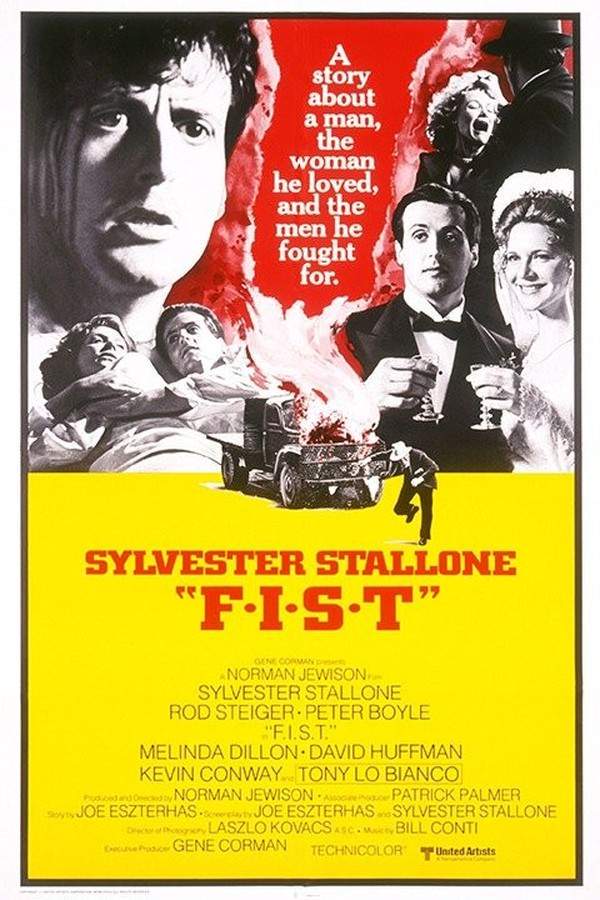
F.I.S.T. (1978) movie poster

Timeline

F.I.S.T. (1978) Timeline Explained – Every Event in Order

Release, runtime and language
1978 · 145 min · English
Loading streaming availability…
Directed by
Norman Jewison
Starring
Sylvester Stallone, Tony Lo Bianco, Cassie Yates, David Huffman, John Lehne, Kevin Conway

A warehouse worker named Johnny Kovak sparks a protest against unfair labor practices, leading to a powerful union movement known as the Federation of Interstate Truckers. As the union gains influence, Kovak finds himself embroiled in increasingly dangerous situations and forming alliances that threaten his life and the future of the movement he helped create. The gritty drama explores themes of power, corruption, and the fight for workers' rights.

On this page (6)
  1. 1 Where to watch
  2. 2 Events in order (12)
  3. 3 Timeline questions answered
  4. 4 Movie threads
  5. 5 Movies like F.I.S.T.
  6. 6 Every angle
Loading streaming availability…

12 events in order · contains spoilers

F.I.S.T. Timeline: Events in Chronological Order

Every key event of F.I.S.T. (1978) in order, scene by scene, with when and where it takes place. Use it to untangle flashbacks, time jumps and parallel storylines, to refresh your memory before the sequel or to find the exact scene you are thinking of.

  1. Gant hires Dombrowsky at the Cleveland loading dock

    Supervisor Mr. Gant hires Polish-American Lincoln Dombrowsky and warns that he will only be paid for his regular shift unless overtime is approved. He also makes clear that any merchandise damaged by the worker will come out of his pay. This establishes the harsh labor climate that triggers later tensions.

    When
    1937
    Where
    Cleveland loading dock
  2. Pay is docked and a worker is fired after tomato spill

    When Dombrowsky drops a few carts of tomatoes, his pay is docked and another worker is fired for helping recover the fallen merchandise. The punitive actions spark resentment over the unfair labor practices.

    When
    1937
    Where
    Cleveland loading dock
  3. Kovak leads a riot against unfair labor practices

    Hungarian-American Johnny Kovak mobilizes the workers to riot in response to the dockside injustices. The disturbance reveals the workers' willingness to challenge management through collective action.

    When
    1937
    Where
    Cleveland dock area
  4. Efforts to negotiate fail at Boss Andrews' office

    The laborers go to the office of Boss Andrews, believing they secure a deal. The next day Kovak and Abe Belkin learn they have been fired.

    When
    1937
    Where
    Boss Andrews' office
  5. Monahan recruits Kovak and Belkin to F.I.S.T.

    Mike Monahan, impressed by their leadership, offers them positions in the Federation of Inter State Truckers (F.I.S.T.). The offer promises payment based on the number of members they recruit.

    When
    1937
    Where
    Meeting with Monahan
  6. Kovak receives a car and meets Anna Zarinkas

    Kovak is given a car to aid recruiting, which also lets him meet Anna Zarinkas, a Lithuanian-American worker. He soon starts dating her as his recruitment work expands.

    When
    1937
    Where
    Recruitment sites
  7. Kovak's rise and clashes with business-backed opposition

    Kovak's successful recruitment propels him into a leadership role, drawing opposition from business owners and sparking conflict with hotheaded F.I.S.T. leader Max Graham. The tension foreshadows a broader struggle over control of the union.

    When
    1937–early 1940s
    Where
    Midwest and trucking firm offices
  8. Strike at Consolidated Trucking and Monahan's death

    Kovak, Monahan, and Belkin organize a strike outside Consolidated Trucking. When strikebreakers and hired security push them back, Monahan is shot while trying to ram the gates.

    When
    Early 1940s
    Where
    Consolidated Trucking gates
  9. Doyle's gang and the labor battle escalates; labor agreement signed

    Desperate for muscle, Kovak accepts help from Vince Doyle. Doyle's men attack deliveries as local mobsters and F.I.S.T. members storm the gates, pressuring management to sign a labor agreement.

    When
    Early 1940s
    Where
    Consolidated Trucking gates
  10. Expansion and personal life

    Kovak and Belkin travel the Midwest to recruit more workers, expanding F.I.S.T.'s reach. Kovak becomes wealthier and marries Anna.

    When
    Late 1940s
    Where
    Midwest
  11. 1958: F.I.S.T. becomes a major union; Graham's corruption exposed

    By 1958, F.I.S.T. has grown to about two million members. Kovak confronts Graham after learning he used union influence to funnel money to shell companies and commit violence.

    When
    1958
    Where
    F.I.S.T. HQ and West Coast
  12. Senate investigation, power struggle, and Kovak's downfall

    Now president, Kovak faces a Senate inquiry led by Madison over potential Mafia ties. After Belkin is killed, Kovak is implicated; he returns home to find Anna and the children missing and is shot by Milano's men. The film ends with the bumper sticker 'Where's Johnny?'

    When
    Late 1950s
    Where
    Senate hearing and home

Last updated: October 09, 2025 at 15:48

Was this helpful?

Timeline questions answered

F.I.S.T. Timeline Explained: Your Questions Answered

When does it happen, and why in that order? The questions people ask about the chronology of F.I.S.T. (1978): time jumps, flashbacks, cause and effect between scenes and the correct order of events, each answered with spoilers.

Q1

Why does Johnny Kovak join the F.I.S.T. union after being fired from the docks?

After Kovak and Belkin are fired for leading the dock workers' protest, Mike Monahan offers them positions in the Federation of Interstate Truckers. Monahan recognizes Kovak's natural leadership abilities and offers compensation based on how many workers they recruit, giving Kovak both a source of income and a platform to continue fighting for fair labor practices.

Foreshadowing: Earlier, Kovak spontaneously organized his fellow workers against unfair pay docking, demonstrating his capacity for leadership that Monahan later identifies.

  • fist union
  • johnny kovak
  • mike monahan
  • union recruitment
  • labor movement
Q2

How does Mike Monahan die during the Consolidated Trucking strike?

Monahan is shot and killed while attempting to ram the Consolidated Trucking gates with a truck. After strikebreakers and security forces push the picketers back, Monahan makes a dramatic, desperate move to force the gates open but is shot by company security, becoming a martyr for the union cause.

Foreshadowing: The timeline shows Monahan as a hotheaded leader whose aggressive tactics foreshadow his violent end.

  • mike monahan death
  • consolidated trucking strike
  • fist union
  • union violence
Q3

Why does Johnny Kovak enlist Vince Doyle's help during the strike?

After Monahan's death, Kovak decides to "get some muscle" and accepts help from local gangster Vince Doyle. With F.I.S.T. members unable to break through the security forces alone, Doyle's men provide the physical force needed to target delivery trucks and eventually storm the gates, pressuring Consolidated Trucking to sign a labor agreement.

Foreshadowing: Monahan's violent death demonstrates that legal union tactics are insufficient against determined corporate opposition.

  • vince doyle
  • organized crime
  • fist union
  • gangsters
  • strike violence
Q4

How does F.I.S.T. become corrupted by 1958?

By 1958, F.I.S.T. has grown to approximately two million members, but power and wealth have led to internal corruption. Max Graham, a F.I.S.T. leader, is siphoning union funds through shell companies and using violence against opponents. The union that began as a noble workers' rights movement has become entangled with organized crime and financial impropriety.

Foreshadowing: Early warnings appear when business owners try to bribe Kovak to recruit workers for non-union firms, showing the financial incentives that later corrupt the leadership.

  • fist corruption
  • max graham
  • union funds
  • organized crime
  • 1958
Q5

Who kills Abe Belkin and why?

Belkin is killed after deciding to testify against the union's corruption before Senator Madison's committee. When Doyle reveals that Belkin plans to testify against their operation, Kovak insists Belkin be spared, but Belkin is ultimately killed before he can provide testimony, silencing a key witness against the corruption.

Foreshadowing: Earlier, Belkin urges Kovak to cut ties with Milano and restore the union's moral ground, showing his growing opposition to the corrupt direction.

  • abe belkin death
  • senate investigation
  • testimony
  • max graham
  • corruption
Q6

Who kills Johnny Kovak at the end of the movie?

Kovak is shot and killed by Babe Milano's men. After returning home to discover Anna and the children missing, Kovak retrieves his pistol but is ambushed and murdered by Milano's gunmen, bringing a tragic end to the union leader who started with idealistic intentions.

Foreshadowing: Milano's earlier demands for a cut of the union's growing power establish his willingness to use violence against those who refuse.

  • johnny kovak death
  • babe milano
  • murder
  • fist union end
Q7

What happens to Anna Zarinkas and Kovak's children by the end of the movie?

After Kovak is implicated in the Senate investigation and Belkin is killed, Anna and the children disappear from their home. The movie implies they have fled or been taken away as a result of the dangerous criminal elements now surrounding Kovak's life, leaving him returns to an empty house.

Foreshadowing: The constant danger and violence that follows Kovak throughout the film foreshadows the inevitable toll on his family life.

  • anna zarinkas
  • Kovak family
  • disappearance
  • fist union danger
Q8

Why can't Kovak clean up the corruption in F.I.S.T.?

Although Kovak is disturbed by Graham's corruption and Belkin urges him to cut ties with organized crime figures, Kovak remains uncertain about abandoning allies who helped him rise to power. His hesitation to sever connections with Milano and other crime figures prevents him from taking decisive action against corruption, ultimately leading to his downfall.

Foreshadowing: Kovak's earlier decision to accept Doyle's criminal assistance during the Consolidated strike establishes the compromised foundation of his leadership.

  • kovak corruption
  • max graham
  • abe belkin
  • fist leadership
  • moral compromise
Q9

What triggers the Senate investigation into F.I.S.T.?

Senator Madison's committee subpoenas Kovak to testify about potential Mafia ties to the union. The investigation is triggered by evidence of F.I.S.T.'s entanglement with organized crime, particularly through figures like Doyle and Milano who provided muscle for union activities and now demand positions of power.

Foreshadowing: The growing influence of gangsters like Doyle and Milano within the union increasingly exposes F.I.S.T. to legal scrutiny.

  • senate investigation
  • senator madison
  • mafia ties
  • fist union
  • organized crime
Q10

Why does the movie jump to 1958 and what happens then?

The jump to 1958 marks the peak and eventual fall of F.I.S.T. By this time, the union has swelled to about two million members, but this success brings internal corruption, power struggles, and legal scrutiny. The 1958 timeline shows the consequences of the compromises Kovak made earlier, his alliance with criminals has now threatened both the union's integrity and his life.

Foreshadowing: The earlier warnings about business owner bribes and the gradual involvement of gangsters foreshadow this corruption by the late 1950s.

  • 1958
  • fist union peak
  • corruption
  • max graham
  • two million members

Movie threads

More Movies Like F.I.S.T., by Mood & Story

Curated lists built around what makes F.I.S.T. tick: the same mood, the same kind of story or the same emotional payoff. Each list explains why these movies belong together.

Tragic Rise and Fall Stories like F.I.S.T.

Stories where ambition leads to moral decay and an inescapable downfall. If you were captivated by the moral collapse in F.I.S.T., explore these other movies about ambitious leaders whose hunger for power leads to their tragic undoing. These films share a heavy emotional weight and a dark, often bleak, tone as they chart the downfall of a once-idealistic hero.

  • tragic
  • grim
  • tense
  • corrosive
  • doomed
  • anxious
  • Tone: dark, tragic
  • Pacing: steady, epic
Why these movies?

The story pattern: The narrative follows a clear arc: the protagonist's initial noble cause is slowly corrupted by the acquisition of power. Alliances turn toxic, moral lines are crossed, and the story builds towards an inexorable, tragic conclusion where the hero is ultimately destroyed by the world they helped build.

Why they belong together: These films are grouped by their shared exploration of the corrupting nature of power and the classic tragic hero structure. They deliver a heavy, often anxious viewing experience through a steady, consequential pacing that makes the downfall feel both earned and devastating.

Gritty Crime Dramas with Moral Complexity like F.I.S.T.

Crime stories where the lines between right and wrong are permanently blurred. Fans of F.I.S.T.'s gritty portrayal of organized crime and moral compromise will find similar tension in these films. Discover movies like F.I.S.T. that explore the anxious, oppressive world of crime where good intentions are crushed by harsh realities and survival comes at a heavy cost.

  • gritty
  • tense
  • anxious
  • oppressive
  • corrosive
  • crime
  • Tone: dark, tense, gritty
  • Pacing: steady, building tension
Why these movies?

The story pattern: These narratives typically follow characters who become entangled with powerful, corrupt organizations. The plot is driven by tense negotiations, betrayals, and violent consequences, unfolding at a steady pace that allows the sense of dread and moral unease to build towards a destructive outcome.

Why they belong together: They are united by a consistently dark and tense atmosphere, a focus on the psychological toll of living within a corrupt system, and a gritty visual style. The experience is defined by high intensity, heavy emotional weight, and a pervasive feeling of anxiety and inevitability.

If you liked this

Movies Like F.I.S.T.

Similar movies to F.I.S.T.: the same genre, themes or kind of story. Each one comes with its own plot summary, timeline and ending explained.

Browse all movie summaries

Every angle

F.I.S.T. (1978) Explained: Plot, Timeline & Characters

Everything about F.I.S.T. in one place: what happens in the plot summary, the timeline in chronological order, the characters and meaning and a spoiler-free summary. What's After the Movie adds the cast, box office and post-credit scenes.

Coming soon on iOS and Android

The Plot Explained Movie Summary App

Plot summaries, endings explained and timelines on your phone. Catch up on any movie in minutes, save your favorites and never miss a twist again.

Be the first to know when we launch. Your email stays private, always.

Learn more about the app