Year: 1978
Runtime: 145 min
Language: English
Director: Norman Jewison
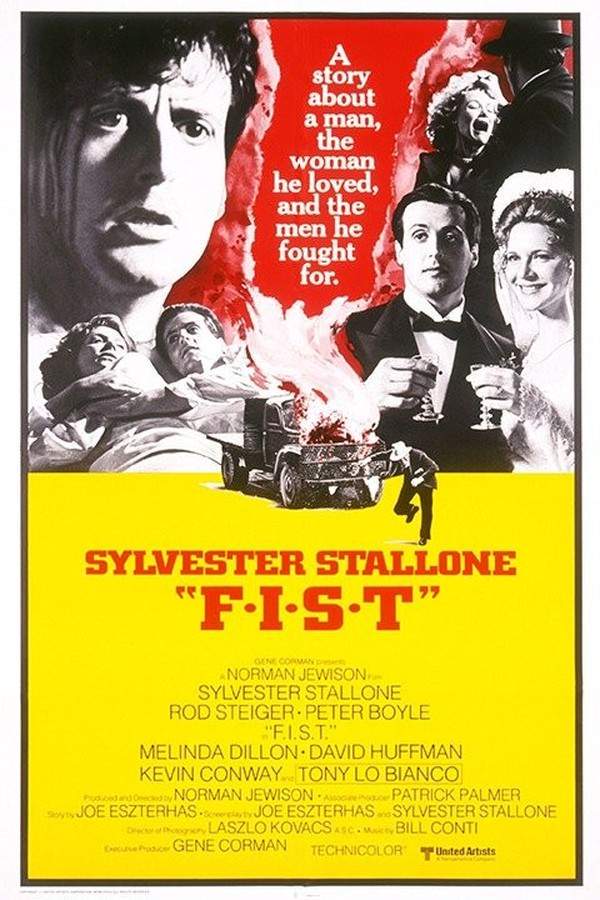
A warehouse worker named Johnny Kovak sparks a protest against unfair labor practices, leading to a powerful union movement known as the Federation of Interstate Truckers. As the union gains influence, Kovak finds himself embroiled in increasingly dangerous situations and forming alliances that threaten his life and the future of the movement he helped create. The gritty drama explores themes of power, corruption, and the fight for workers' rights.
Warning: spoilers below!
Haven’t seen F.I.S.T. yet? This summary contains major spoilers. Bookmark the page, watch the movie, and come back for the full breakdown. If you're ready, scroll on and relive the story!
Read the complete plot breakdown of F.I.S.T. (1978), including all key story events, major twists, and the ending explained in detail. Discover what really happened—and what it all means.
Johnny Kovak (Sylvester Stallone) is a working-class, Hungarian-American loader who quickly becomes fed up with unfair discipline and pay practices on a Cleveland dock in 1937. After supervisor Mr. Gant docks pay for spilled tomatoes and fires a peer who helps pick them up, Kovak’s sense of justice sparks a bold, outwardly organized response among his fellow laborers. A riot erupts as resentment grows over the resentment of unfair treatment, and the workers press their grievances toward the office of Boss Andrews. Kovak hopes to negotiate a fair deal, but the next day he and his ally Abe Belkin (Tony Lo Bianco) discover they’ve been fired, not rewarded, for standing up.
Enter the opportunity and peril of union leadership. Mike Monahan (Peter Boyle) sees real potential in Kovak’s energy and talent, offering them positions in the Federation of Interstate Truckers (F.I.S.T.), with compensation tied to how many workers they recruit. Kovak accepts, and the friendship with Belkin deepens as Kovak begins recruiting across the region. A new romance blossoms when Kovak starts a relationship with Anna Zarinkas (Cassie Yates), a Lithuanian-American worker who shares the struggle on the docks. This period marks Kovak’s rise as a force within the union movement, drawing attention from business owners who want to keep the workforce under control. When Kovak declines offers to recruit workers into non-union firms, the pressure escalates and he is violently attacked, underscoring how high the stakes have become.
As Kovak’s influence grows, Monahan and Belkin push to extend F.I.S.T.’s reach by winning a labor agreement for the workers at Consolidated Trucking. The company refuses to negotiate, so the union sets up a protest encampment outside the gates. Security and strikebreakers push the picketers back, but Kovak refuses to yield. Monahan then attempts a dramatic, retaliatory move by driving a truck at the gates, only to be shot and killed. The funeral becomes a turning point, and Kovak decides to “get some muscle,” accepting help from Vince Doyle (Kevin Conway), a local gangster. Doyle’s men target delivering trucks, and violence intensifies as mobsters join forces with F.I.S.T. members to storm the gate. Eventually, the pressure yields a labor agreement with Consolidated Trucking, signaling a hard-won victory for the union.
With the success on these docks, Kovak and Belkin travel the Midwest to recruit more workers, and Kovak experiences personal growth—he marries Anna despite the peril that shadows their work. A new crime figure, Babe Milano (Peter Donat), enters the picture, seeking his cut of the growing power. Kovak, Doyle, and Milano navigate the shifting alliances of labor, business, and crime as the union expands and consolidates influence.
By 1958, theFederation of Interstate Truckers has swelled to a monumental movement—roughly two million members—yet power and wealth have sparked internal corruption. Kovak visits Max Graham (Rod Steiger) at F.I.S.T. headquarters and is disturbed by the opulence and the appearance of money corrupting the cause. Belkin, now working on the West Coast, explains that Graham is siphoning union funds and using shell companies to profit, even resorting to violence against opponents. Graham becomes a formidable rival, and his potential presidency of F.I.S.T. is a looming threat to Kovak’s leadership.
Facing questions about integrity, Kovak contemplates how to clean the organization from within. Belkin urges him to cut ties with Milano and to restore the union’s moral ground, but Kovak remains unsure about cutting off allies who have helped him rise. The tension crescendos when Doyle reveals that Belkin plans to testify against their operation, leading Kovak to insist that Belkin be spared.
A subpoena to testify before Senator Madison’s committee follows, and Kovak learns that Belkin has been killed. The shock—and the senator’s suspicion that Kovak himself is entangled with organized crime—threatens to fracture the union from within. Returning home, Kovak discovers Anna and the children missing, the domestic consequences of the storm surrounding his public leadership. He retrieves his pistol, only to be shot and killed by Milano’s men, in a tragic end that casts a shadow over the once-promising union. The final image lingers on a truck bumper sticker reading, Where’s Johnny?, leaving the question of Kovak’s fate and the future of F.I.S.T. to the viewer’s imagination.
Last Updated: October 09, 2025 at 15:48
Discover curated groups of movies connected by mood, themes, and story style. Browse collections built around emotion, atmosphere, and narrative focus to easily find films that match what you feel like watching right now.
Stories where ambition leads to moral decay and an inescapable downfall.If you were captivated by the moral collapse in F.I.S.T., explore these other movies about ambitious leaders whose hunger for power leads to their tragic undoing. These films share a heavy emotional weight and a dark, often bleak, tone as they chart the downfall of a once-idealistic hero.
The narrative follows a clear arc: the protagonist's initial noble cause is slowly corrupted by the acquisition of power. Alliances turn toxic, moral lines are crossed, and the story builds towards an inexorable, tragic conclusion where the hero is ultimately destroyed by the world they helped build.
These films are grouped by their shared exploration of the corrupting nature of power and the classic tragic hero structure. They deliver a heavy, often anxious viewing experience through a steady, consequential pacing that makes the downfall feel both earned and devastating.
Crime stories where the lines between right and wrong are permanently blurred.Fans of F.I.S.T.'s gritty portrayal of organized crime and moral compromise will find similar tension in these films. Discover movies like F.I.S.T. that explore the anxious, oppressive world of crime where good intentions are crushed by harsh realities and survival comes at a heavy cost.
These narratives typically follow characters who become entangled with powerful, corrupt organizations. The plot is driven by tense negotiations, betrayals, and violent consequences, unfolding at a steady pace that allows the sense of dread and moral unease to build towards a destructive outcome.
They are united by a consistently dark and tense atmosphere, a focus on the psychological toll of living within a corrupt system, and a gritty visual style. The experience is defined by high intensity, heavy emotional weight, and a pervasive feeling of anxiety and inevitability.
Don't stop at just watching — explore F.I.S.T. in full detail. From the complete plot summary and scene-by-scene timeline to character breakdowns, thematic analysis, and a deep dive into the ending — every page helps you truly understand what F.I.S.T. is all about. Plus, discover what's next after the movie.
Track the full timeline of F.I.S.T. with every major event arranged chronologically. Perfect for decoding non-linear storytelling, flashbacks, or parallel narratives with a clear scene-by-scene breakdown.
Discover the characters, locations, and core themes that shape F.I.S.T.. Get insights into symbolic elements, setting significance, and deeper narrative meaning — ideal for thematic analysis and movie breakdowns.
Get a quick, spoiler-free overview of F.I.S.T. that covers the main plot points and key details without revealing any major twists or spoilers. Perfect for those who want to know what to expect before diving in.
Visit What's After the Movie to explore more about F.I.S.T.: box office results, cast and crew info, production details, post-credit scenes, and external links — all in one place for movie fans and researchers.
Discover movies like F.I.S.T. that share similar genres, themes, and storytelling elements. Whether you’re drawn to the atmosphere, character arcs, or plot structure, these curated recommendations will help you explore more films you’ll love.
F.I.S.T. (1978) Scene-by-Scene Movie Timeline
F.I.S.T. (1978) Movie Characters, Themes & Settings
F.I.S.T. (1978) Spoiler-Free Summary & Key Flow
Movies Like F.I.S.T. – Similar Titles You’ll Enjoy
The Irishman (2019) Movie Recap & Themes
Blue Collar (1978) Ending Explained & Film Insights
Hoffa (1992) Spoiler-Packed Plot Recap
Fargo (1996) Detailed Story Recap
F/X (1986) Movie Recap & Themes
Criminal Activities (2015) Complete Plot Breakdown
Above Suspicion (2019) Full Summary & Key Details
Fink! (2005) Story Summary & Characters
Framed (2002) Full Summary & Key Details
Hangfire (1991) Complete Plot Breakdown
The Sound of Fury (1950) Full Movie Breakdown
Fingers (1978) Plot Summary & Ending Explained
Truck Busters (1943) Story Summary & Characters
The FBI Story (1959) Complete Plot Breakdown
Black Fury (1935) Movie Recap & Themes