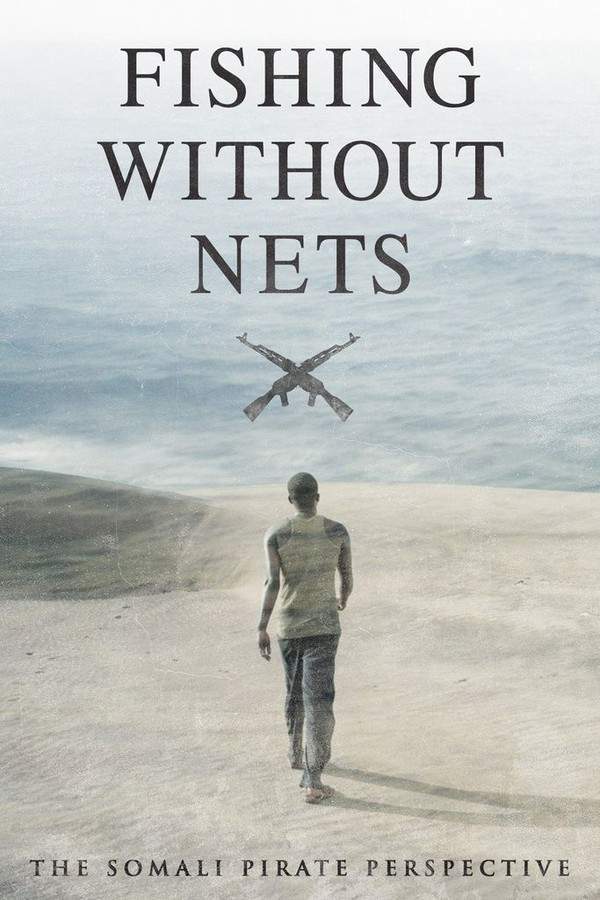
Fishing Without Nets follows Abdi, a young Somali fisherman who faces a daily struggle against poverty and a sea that seems to betray him. The film opens by painting a portrait of a hard life near the coast, where Abdi tries to provide for his family despite scarce resources. The ocean, once a source of livelihood, is shown as polluted and treacherous, complicating every catch and making the prospect of a stable future even more fragile. Against this backdrop, the story gradually shifts from the rhythms of fishing to a drastic turning point: Abdi and his crew hijack a cargo ship and take its crew as hostages, hoping to force payment and secure a life they believe they deserve.
As the tension grows, Abdi’s perspective begins to shift. He forms a fragile bond with one of the hostages, a white man named Victor, whose presence tests Abdi’s loyalty to his comrades and to the life he’s trying to protect. The relationship introduces a human dimension to the crisis, revealing that even in the most desperate circumstances, individuals can seek connection and understanding across stark divides. This budding interaction is set against a backdrop of fear, uncertainty, and the ever-present threat of violence.
The atmosphere aboard the captured vessel grows increasingly unstable. Tensions among the pirates flare as some members grow frustrated with the lack of payment and the constant sight of planes passing overhead, a reminder that their operation is under scrutiny and far from private. The cracks in the group’s cohesion widen into sharper conflicts, culminating in a direct confrontation between Khadir and his faction and the rest of the crew aboard the cargo ship. One pirate even threatens Victor, pressing him to call for money under duress, a moment that starkly exposes the coercive reality of their predicament.
Abdi’s inner conflict intensifies when he contemplates leaving the camp to return to his family and give them a chance at a safer, more stable life. Yet he is accused of stealing money and of communicating with the drones that monitor their camp, accusations that paint him as a traitor in the eyes of some of his peers. The tension escalates further as the pirates, under the influence of khat and gasoline, become volatile and impulsive. In a disturbing sequence, they force Victor to recite the shahada, a moment that underscores the film’s quiet exploration of faith, fear, and coercion in a moment of extreme pressure.
Khadir and his men intervene at a critical juncture, sparing Victor from harm but not resolving the broader conflict. The situation soon spirals into a violent assault that gives the pirates control of the cargo ship, but the victory is pyrrhic. Khadir loses his life in the struggle, and Abdi finds himself trapped, locked in a room at the bottom of the vessel as an attempted escape falters. The same pirate who killed Khadir becomes responsible for killing Victor, deepening the tragedy and cementing the price of the group’s actions.
With Victor dead and Khadir gone, Abdi makes a harrowing escape and pays tribute to Victor with a proper burial, honoring his fallen ally even in the chaos of their grim circumstances. This act of respect becomes a personal turning point for Abdi, who then resolves to pursue the money that could secure his family’s future. He navigates the ship’s corridors and decks, tracing a path toward the area where the funds are kept, determined to reclaim a chance at a better life.
In a patient, arduous search, Abdi locates the money and seizes the opportunity to step out of the cycle of violence that has dictated so much of his life. The pursuit of the cash marks a full-circle moment for the narrative: the journey that started with a desperate hijacking ends with Abdi reclaiming his agency, albeit at a significant moral and personal cost. The film closes on a note that is both hopeful and ambiguous, emphasizing resilience in the face of exploitation and the heavy burden of choices made in the name of survival.
Overall, the story presents a stark, human portrait of piracy and its consequences, anchored by Abdi’s evolving conscience. It examines the way poverty, environmental degradation, and external pressures converge to push ordinary people toward extraordinary decisions, and it follows a single character’s path from desperation to a hard-won sense of agency. The ending, with Abdi having found the money and the tale coming full circle, leaves viewers with a lingering reflection on what it means to seek a future for one’s family within a world that continually tests the limits of mercy, loyalty, and hope.