Plot Explained Spoilers guaranteed!
Plot Explained

Browse by genre

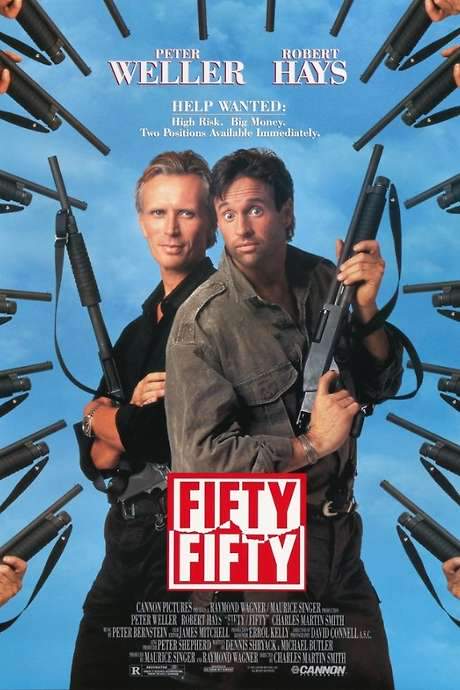
Fifty/Fifty (1992) movie poster

Plot Summary

Fifty/Fifty (1992) Plot Summary Explained

Release, runtime and language
1992 · 101 mins · English
Loading streaming availability…
Starring
Charles Martin Smith, Peter Weller, Robert Hays, Mr.Os, Lim Kay Tong, M. Rajoli

Two bickering mercenaries are hired by the CIA to overthrow a South East Asian dictator.

On this page (6)
  1. 1 Where to watch
  2. 2 What happens: full plot
  3. 3 Plot questions answered
  4. 4 Movie threads
  5. 5 Movies like Fifty/Fifty
  6. 6 Every angle
Loading streaming availability…

Full plot summary · contains spoilers

What Happens in Fifty/Fifty: Full Plot Summary

The whole story of Fifty/Fifty (1992) explained, from the opening scene to the final frame: every key event, every twist and what it all adds up to. Read it as a quick recap before the sequel, to check a scene you missed, or to finally understand what really happened.

In a tense, politically charged thriller set on the island nation of Tengara, General Bosavi clings to power as the CIA seeks to install a more palatable successor, Akhantar. The stage is set for a fragile game of power where loyalties are thin and every move carries high risk.

Two American mercenaries, Jake Wyer and Sam French, are pulled back into the fray under pressure. They arrive with no strong allegiance to either side, driven more by the lure of profit than by principle, and they are forced to confront a dangerous mission: to raise a ramshackle army capable of toppling a brutal regime. Their uneasy partnership is strained by distrust and a shared hunger for wealth, which complicates every decision they must make in the field.

The opposition gains a fragile spark from Suleta, Akhantar's beautiful and charismatic niece, whose presence injects courage and a glimmer of hope into the rebels. Her influence helps keep the cause alive even as danger closes in, reminding the fighters that there is more at stake than personal gain.

But Bosavi, ever calculating, learns of the looming insurrection and negotiates with American authorities to salvage his grip on Tengara. The CIA subsequently turns its back on the rebels, leaving them to face the regime's merciless repression and forcing them to improvise under mounting pressure. Into this maelstrom steps Martin Sprue, their morally conflicted and ultimately sympathetic agency handler, whose presence underscores the gray areas of loyalty, duty, and humanity in a crisis.

With the outside power dynamics shifting rapidly, Wyer and French confront a crushing choice: walk away from a cause they never truly believed in, or transcend their venal impulses to stand with the rebels and become the champions of a fight that has become personal. The tale weaves danger, ambition, and a quiet, stubborn hope as the unlikely band of insurgents grapples with fear, betrayal, and the enduring question of what it means to fight for something greater than oneself.

Last updated: February 18, 2026 at 23:43

Was this helpful?

Plot questions answered

Fifty/Fifty Plot Explained: Your Questions Answered

The questions people ask most about Fifty/Fifty (1992): what happens in the confusing scenes, why the characters do what they do, the twists, hidden details and what the ending means. Each answer contains spoilers.

Q1

Why does the CIA abandon the rebels after supporting the insurrection?

The CIA abandons the rebels when General Bosavi negotiates with American authorities to salvage his leadership. Once Bosavi offers a deal that serves American strategic interests, the CIA decides to support him instead of the opposition. This betrayal leaves the rebels to face Bosavi's regime alone without military backing.

Foreshadowing: Early in the film, the CIA's willingness to install a new leader shows they are motivated by self-interest, not principle.

  • cia betrayal
  • rebellion
  • political deal
  • bosavi
  • american government
Q2

Why do Jake Wyer and Sam French decide to fight with the rebels?

Initially driven by profit, Wyer and French join the rebels after the CIA abandons them. The mercenaries face a choice: abandon a cause they never believed in or stand with fighters facing certain doom. Their decision to champion the rebels represents a shift from self-interest to moral conviction, partly influenced by Suleta's courage and their growing connection to the cause.

Foreshadowing: The mercenaries' uneasy partnership and distrust early on shows they are capable of working together despite differences.

  • jake wyer
  • sam french
  • mercenaries
  • redemption
  • fight cause
Q3

Why does General Bosavi negotiate with American authorities?

Bosavi negotiates with American authorities after learning of the looming insurrection. Rather than risk losing power through military conflict, he seeks a diplomatic solution that preserves his grip on Tengara. His calculated approach allows him to strike a deal that keeps him in power despite the CIA's original plan to replace him with Akhantar.

Foreshadowing: Bosavi is described as calculating and always looking for ways to maintain control.

  • general bosavi
  • negotiation
  • cia
  • political survival
  • dictator
Q4

What is Suleta's role in the rebellion?

Suleta, Akhantar's niece, becomes a persuasive and charismatic figure in the resistance. Her presence injects courage and legitimacy into the rebel cause, helping maintain momentum when morale wavers. She reminds the fighters that there is more at stake than personal gain, and her influence helps buoy Wyer and French as they commit to the fight.

Foreshadowing: Suleta's introduction as Akhantar's niece immediately signals her political importance.

  • suleta
  • rebel leader
  • ak hantar
  • resistance
  • inspiration
Q5

Why is Martin Sprue conflicted about handling the mercenaries?

Martin Sprue, the CIA handler, feels morally conflicted because he understands the human cost of the CIA's betrayal. He remains bound by orders but sympathizes with the rebels and recognizes the value of loyalty. His inner turmoil shapes his interactions with Wyer and French, as he grapples with duty versus humanity in a crisis where his agency abandons the people they recruited.

Foreshadowing: The story describes Sprue as sympathetic from the start, indicating moral complexity.

  • martin sprue
  • cia handler
  • conflic t
  • moral dilemma
  • loyalty
Q6

How do Wyer and French raise an army to overthrow Bosavi?

Wyer and French assemble a ragtag force by pulling together disparate fighters and resources across Tengara. Starting from their position as hired mercenaries, they use their military expertise and connections to recruit rebels, defectors, and willing fighters into a unified force capable of confronting Bosavi's regime.

Foreshadowing: The timeline shows their mission begins with assembling fighters before active confrontation.

  • mercenary army
  • rebel force
  • recruitment
  • fighters
  • overthrow
Q7

Why does the CIA want to replace Bosavi with Akhantar?

The CIA supports replacing Bosavi with Akhantar because they view him as a more palatable leader for Tengara. Bosavi rules with an iron fist, keeping the population in fear, making him a liability for American interests in the region. Akhantar represents a regime the CIA believes they can work with more effectively.

Foreshadowing: The movie establishes early that the CIA seeks a regime change for strategic political reasons.

  • cia
  • ak hantar
  • bosavi
  • regime change
  • successor
Q8

Why is the partnership between Wyer and French uneasy?

Wyer and French are former colleagues brought back together under pressure, and their partnership is strained by mutual distrust and a shared hunger for wealth. Their bickering dynamic creates tension throughout the mission, complicating every decision they must make in the field. This comedic element provides levity even as the stakes remain high.

Foreshadowing: The movie description identifies them as bickering mercenaries from the start.

  • jake wyer
  • sam french
  • partnership
  • conflict
  • mercenaries

Movie threads

More Movies Like Fifty/Fifty, by Mood & Story

Curated lists built around what makes Fifty/Fifty tick: the same mood, the same kind of story or the same emotional payoff. Each list explains why these movies belong together.

Mercenary Action Movies Like Fifty/Fifty

Grizzled guns-for-hire find unexpected conscience amidst chaos. If you enjoyed the bickering mercenaries and chaotic coup in Fifty/Fifty, explore more movies where cynical guns-for-hire are tested by moral dilemmas. Fans of high-intensity films about betrayal, redemption, and morally grey anti-heroes will find similar stories here.

  • morally gray
  • action-packed
  • betrayal
  • redemption
  • tense
  • gritty
  • Tone: tense, gritty
  • Pacing: fast, chaotic
Why these movies?

The story pattern: Stories in this thread typically begin with a straightforward, high-paying job for cynical protagonists. The plot escalates as the mission reveals deeper complexities—often a political betrayal or ethical atrocity—forcing the anti-heroes to choose between their payday and a greater, unexpected cause.

Why they belong together: Movies in this thread share a core tension between violent spectacle and moral questioning. They balance gritty action with character arcs where self-serving protagonists are pushed toward redemption, creating a compelling mix of explosive set-pieces and internal conflict.

High-Stakes Political Thrillers Like Fifty/Fifty

When covert missions and political coups ignite explosive chaos. For viewers who liked the tense, high-stakes coup plot of Fifty/Fifty, this thread features more movies where political instability sparks explosive action. Explore films involving CIA operatives, foreign dictators, and covert missions that escalate into all-out warfare.

  • tense
  • suspenseful
  • political
  • coup
  • unpredictable
  • betrayal
  • Tone: tense, morally ambiguous
  • Pacing: fast
Why these movies?

The story pattern: The narrative pattern involves an external agent—a spy, a mercenary, or an operative—being drawn into a foreign conflict to destabilize a regime. The plot is driven by a series of escalating betrayals and strategic battles, building to a chaotic, large-scale confrontation with an unclear outcome.

Why they belong together: This grouping prioritizes a specific feel: the constant suspense of political maneuvering combined with the visceral impact of high-intensity combat. The shared elements are a volatile setting, a morally ambiguous goal, and a fast-paced race against time.

If you liked this

Movies Like Fifty/Fifty

Similar movies to Fifty/Fifty: the same genre, themes or kind of story. Each one comes with its own plot summary, timeline and ending explained.

Browse all movie summaries

Every angle

Fifty/Fifty (1992) Explained: Plot, Timeline & Characters

Everything about Fifty/Fifty in one place: what happens in the plot summary, the timeline in chronological order, the characters and meaning and a spoiler-free summary. What's After the Movie adds the cast, box office and post-credit scenes.

Coming soon on iOS and Android

The Plot Explained Movie Summary App

Plot summaries, endings explained and timelines on your phone. Catch up on any movie in minutes, save your favorites and never miss a twist again.

Be the first to know when we launch. Your email stays private, always.

Learn more about the app