




Plot Explained Spoilers guaranteed!
Plot Explained

Browse by genre

Mercenaries (2011) movie poster

Plot Summary

Mercenaries (2011) Plot Summary Explained

Release, runtime and language
2011 · 97 mins · English
Directed by
Paris Leonti
Starring
Billy Zane, Kirsty Mitchell, Geoff Bell, Robert Fucilla, Robert James-Collier, Vas Blackwood

Outgunned, outnumbered, and operating outside the law, ex‑British S.A.S. operative Andy Marlow now works as a mercenary. After a military coup erupts in the Balkans, he is tasked with infiltrating the hostile region to locate and extract a U.S. ambassador and his aide, navigating fierce opposition and danger at every turn.

On this page (5)
  1. 1 Where to watch
  2. 2 What happens: full plot
  3. 3 Plot questions answered
  4. 4 Movie threads
  5. 5 Every angle

Where to watch

Where to Watch Mercenaries (2011)

Where can you watch Mercenaries? Stream, rent or buy it in the US, including on Amazon Video, Google Play Movies and YouTube: current JustWatch availability with up-to-date prices.

Streaming availability powered by JustWatch

Full plot summary · contains spoilers

What Happens in Mercenaries: Full Plot Summary

The whole story of Mercenaries (2011) explained, from the opening scene to the final frame: every key event, every twist and what it all adds up to. Read it as a quick recap before the sequel, to check a scene you missed, or to finally understand what really happened.

Andy Marlow, portrayed by Robert Fucilla, is a former British S.A.S serviceman turned mercenary. In the midst of a military coup in the Balkans, where the Prime Minister of Serbia has been assassinated, Marlow operates covertly from an observation post. The upheaval is led by Olodan Cracovic, a wanted war criminal and ex-commander of the Croatian Army. His regime's recent actions have escalated tensions dramatically, particularly after his troops stormed the U.S. Embassy, taking both the U.S. Ambassador and his aide hostage.

In response to this dire situation, a decision is made to dispatch a team of mercenaries for a secretive rescue mission. Under the veil of night, Marlow and his dedicated team infiltrate Srebrenica, with the support of U.S. Armed Forces personnel who are disguised as United Nations peacekeepers; their role is strictly supportive, disallowing direct involvement in the plan. As they expertly maneuver into Olodan’s heavily guarded headquarters, the team succeeds in capturing Olodan and freeing the Ambassador along with his aide.

However, the operation is far from straightforward. Once they have liberated the hostages, they are met with a new challenge: they must navigate a perilous twenty-five-mile trek back to safety, pursued relentlessly by Olodan’s loyal right-hand man. Their escape becomes increasingly difficult as they find themselves severely outnumbered and outgunned, leading to a desperate fight for survival. As the stakes rise, Marlow and his team must rely on their training and resilience to turn the tides of what could easily become a devastating defeat.

Last updated: September 26, 2026 at 05:35

Was this helpful?

Plot questions answered

Mercenaries Plot Explained: Your Questions Answered

The questions people ask most about Mercenaries (2011): what happens in the confusing scenes, why the characters do what they do, the twists, hidden details and what the ending means. Each answer contains spoilers.

Q1

Why were mercenaries used instead of U.S. military forces to rescue the ambassador?

The U.S. government needed a way to intervene in a foreign coup without officially violating Serbian sovereignty or triggering a wider international conflict. By hiring ex-S.A.S. operatives like Andy Marlow and disguising U.S. Armed Forces personnel as United Nations peacekeepers, Washington preserved plausible deniability while still executing a high-risk extraction behind enemy lines.

Foreshadowing: The film's premise establishes that the coup happens in the Balkans, immediately signaling that any official U.S. military response would be politically explosive.

  • mercenaries
  • covert operation
  • ambassador rescue
  • US military
  • deniability
  • Srebrenica
Q2

Why did Olodan's troops storm the U.S. Embassy?

Olodan Cracovic seized the embassy to take high-value American hostages during the chaos of his coup. With the Serbian Prime Minister already assassinated, kidnapping the U.S. Ambassador gave his new regime leverage over Washington and a tool to deter foreign interference in his consolidation of power.

Foreshadowing: The assassination of the Prime Minister is shown early on, foreshadowing that Olodan is willing to escalate dramatically to secure control.

  • Olodan Cracovic
  • embassy raid
  • hostages
  • political leverage
  • coup
Q3

How did Marlow's team infiltrate such a heavily guarded headquarters?

The mercenaries moved into Srebrenica under the cover of night, relying on their S.A.S.-level training in stealth, small-unit tactics, and reconnaissance. U.S. Armed Forces troops disguised as UN peacekeepers supplied intelligence and logistical support from the outside, allowing Marlow's team to slip past outer defenses and reach Olodan undetected.

Foreshadowing: The decision to deploy the team only at night hints that stealth, not firepower, will be their primary advantage.

  • infiltration
  • Srebrenica
  • night operation
  • S.A.S.
  • stealth tactics
  • UN peacekeepers
Q4

Why did the team capture Olodan instead of just extracting the hostages?

Capturing Olodan crippled the enemy's command structure in a single blow. Without him coordinating responses, his troops lost direction, making the actual hostage extraction faster and lowering the risk of an ambush. It also gave the mercenaries a high-value prisoner to trade or interrogate if the situation deteriorated.

Foreshadowing: The fact that Olodan personally led the coup is established early, hinting that neutralizing him is more strategically valuable than a simple rescue.

  • Olodan capture
  • command structure
  • hostage extraction
  • tactical advantage
Q5

Why do Marlow and the hostages have to trek 25 miles on foot instead of being extracted by air?

Once the operation goes covert, the team cannot call in official air support without exposing the U.S. role. The surrounding 25 miles are still controlled by Olodan's loyalists, who would likely shoot down any helicopter or aircraft attempting extraction. A ground trek to a safe area with friendly U.S. troops is the only option that keeps the mission deniable, even though it is far more dangerous.

Foreshadowing: The summary's emphasis on operating covertly foreshadows that conventional extraction methods will not be available to the team.

  • 25 mile trek
  • ground extraction
  • air support
  • deniability
  • safe area
Q6

Why does Olodan's right-hand man pursue the team so relentlessly?

With Olodan captured and the American hostages taken, his regime's authority is collapsing. The right-hand man must eliminate the mercenaries and recover (or silence) Olodan to prevent the new government from being dismantled from within. Letting Marlow reach friendly lines with Olodan in tow would hand the U.S. a propaganda and intelligence victory, so the pursuit becomes an existential fight for the coup leaders.

Foreshadowing: The summary notes Olodan's troops are 'loyal,' hinting that his inner circle will not abandon the mission even after his capture.

  • right-hand man
  • pursuit
  • regime survival
  • loyalty
  • enemy forces
Q7

What role do the disguised U.S. troops play during the rescue?

The U.S. Armed Forces personnel posing as UN peacekeepers provide the essential backbone of the mission without officially entering combat. They supply intelligence, secure the surrounding perimeter, and prepare the safe extraction point 25 miles south, allowing the mercenaries to focus entirely on the assault while preserving official U.S. neutrality.

Foreshadowing: The restriction that peacekeepers cannot be 'directly involved in the plan' is established early, foreshadowing the mercenaries' burden of carrying the actual fighting.

  • US troops
  • UN peacekeepers
  • support role
  • intelligence
  • perimeter
Q8

Why is Andy Marlow chosen to lead this mission?

Marlow is a former British S.A.S. operative, meaning he has elite training in covert infiltration, close-quarters combat, and survival in hostile territory. His mercenary background also means he can operate without the political restrictions that bind active-duty soldiers, making him ideal for a deniable mission deep inside enemy-controlled Balkans.

Foreshadowing: The opening establishes his S.A.S. background before the mission begins, signaling that his training will be the team's lifeline.

  • Andy Marlow
  • S.A.S.
  • mercenary leader
  • covert infiltration
  • elite training
Q9

What triggered the military coup in Serbia?

The coup was orchestrated by Olodan Cracovic, a wanted war criminal and former Croatian Army commander who used the existing political instability to seize power. His faction assassinated the Serbian Prime Minister to eliminate the legitimate government and install his own authority, which immediately destabilized the entire region.

Foreshadowing: Olodan is introduced as a 'wanted war criminal' before the coup, foreshadowing his willingness to use extreme violence to achieve his goals.

  • military coup
  • Olodan Cracovic
  • Prime Minister assassination
  • Serbia
  • Balkans
Q10

Why are the mercenaries so badly outnumbered and outgunned during the escape?

Because the mission is officially deniable, Marlow's team cannot call in heavy U.S. firepower once the extraction begins. They are a small, lightly equipped unit moving through 25 miles of territory fully controlled by an enemy that has been alerted to their presence. The odds are intentionally stacked against them to keep the operation covert.

Foreshadowing: The team's reliance on disguised peacekeepers for support is established early, foreshadowing that they will be on their own once the shooting starts.

  • outnumbered
  • outgunned
  • deniable operation
  • firefight
  • tactical disadvantage
Q11

Why does Marlow order a strategic retreat instead of fighting head-on?

Direct engagement against superior numbers would quickly exhaust the team's ammunition and risk the lives of the rescued hostages. A measured retreat lets Marlow preserve his force, exploit terrain for cover, and chip away at the pursuing troops piecemeal, giving the hostages the best chance of reaching the safe area alive.

Foreshadowing: Marlow's S.A.S. training, established early, implies he will rely on calculated tactics rather than brute force.

  • strategic retreat
  • survival tactics
  • hostage safety
  • S.A.S. training
Q12

What is the broader impact of the mission on U.S. foreign policy?

By successfully extracting the Ambassador and aide while leaving the mercenary team deniable, the U.S. preserves its diplomatic position in the Balkans. The operation sends a message that American citizens will be protected even in hostile territory, while still allowing Washington to formally distance itself from the covert rescue if political fallout occurs.

Foreshadowing: The film opens by noting the mercenaries operate 'outside the law,' foreshadowing that the political consequences will be as carefully managed as the mission itself.

  • foreign policy
  • diplomatic impact
  • deniability
  • American citizens
  • aftermath

Movie threads

More Movies Like Mercenaries, by Mood & Story

Curated lists built around what makes Mercenaries tick: the same mood, the same kind of story or the same emotional payoff. Each list explains why these movies belong together.

Mercenary rescue thrillers like Mercenaries

Outgunned operatives racing against time to extract the innocent from hostile territory. Movies like Mercenaries where ex-military operatives take on impossible extraction jobs behind enemy lines. Expect outgunned heroes, desperate hostage rescues, and non-stop combat in hostile territory. If you liked Mercenaries and want similar high-stakes mercenary action, these gritty rescue thrillers deliver the same relentless tension and tactical warfare.

  • high stakes
  • adrenaline fueled
  • dangerous
  • relentless
  • military
  • oppressive
  • Tone: tense, gritty
  • Pacing: fast and relentless
Why these movies?

The story pattern: The protagonist, often a former elite soldier or mercenary, is hired or compelled to enter a hostile region for a clearly defined mission, usually to extract a person of value. Early on, the plan falls apart and the team is forced to improvise a long, dangerous escape while being hunted. The journey escalates in violence and desperation, with the odds growing worse until the mission is either barely completed or the team pushes to a final, often ambiguous confrontation. Character arcs are usually thin, with the focus kept firmly on action, loyalty, and survival instinct.

Why they belong together: These films share a core combination of tense tone, fast pacing, and high intensity built around military or paramilitary operations. They favor straightforward plotting, clear objectives, and continuous physical danger over emotional depth. Viewers get the same adrenaline fueled rhythm of infiltration, ambush, retreat, and close quarter combat, making them feel like natural companions for anyone drawn to the mercenary rescue subgenre.

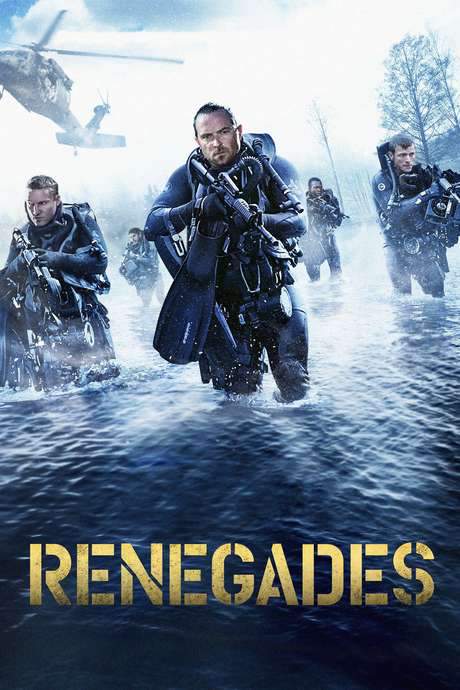
Modern war zone action like Mercenaries

Contemporary conflicts, collapsing governments, and soldiers caught in the crossfire. Movies like Mercenaries that drop viewers into contemporary conflict zones marked by military coups and political chaos. These gritty thrillers blend realistic modern warfare, hostage situations, and covert operations in places like the Balkans and Eastern Europe. If you liked Mercenaries and want similar films about political instability and soldiers fighting through hostile regions, this collection is for you.

  • war zone
  • political instability
  • gritty
  • oppressive
  • dangerous
  • modern conflict
  • Tone: tense, bleak, oppressive
  • Pacing: fast and urgent
Why these movies?

The story pattern: A foreign crisis, usually a coup, insurgency, or breakdown of order, pulls Western operatives into a volatile region where local factions are in violent conflict. The story moves from infiltration to entrapment, forcing the protagonists to operate without official backup while navigating shifting alliances and civilian danger zones. The narrative often ends on a note of ambiguity, with victory feeling costly and the larger political problem unresolved, emphasizing the messy reality of modern intervention.

Why they belong together: These films share a setting and atmosphere rather than a single plot structure. They are united by their focus on present day warfare, political instability, and the moral grayness of operating in someone else's civil war. The tone is consistently tense and bleak, pacing is fast, and the violence feels grounded rather than stylized. Together they form a recognizable subgenre of modern conflict thrillers that resonate strongly with the Balkan coup backdrop of Mercenaries.

Every angle

Mercenaries (2011) Explained: Plot, Timeline & Characters

Everything about Mercenaries in one place: what happens in the plot summary, the timeline in chronological order, the characters and meaning and a spoiler-free summary. What's After the Movie adds the cast, box office and post-credit scenes.

Coming soon on iOS and Android

The Plot Explained Movie Summary App

Plot summaries, endings explained and timelines on your phone. Catch up on any movie in minutes, save your favorites and never miss a twist again.

Be the first to know when we launch. Your email stays private, always.

Learn more about the app